ACROSS ACOUSTICS
New! In this episode, we talk to @MtwoBtwo (@UCSPPLab) and @perj44 (@UA_AS), about why instructors should use a variety of voices in the classroom, and how to talk about other ways of speaking when one feels ill-equipped to do so: https://t.co/RluLJxi6i0.
PROPAGATIONS
Find out why our editor-in-chief selected "Addressing diversity in speech science courses," for the August cover in this new blog post! https://t.co/SFLHn1a5lz
@MtwoBtwo@UCSPPLab@perj44
Do any of my linguistics/psycholinguistics colleagues have a word-reading task programmed up already in PsychoPy that we could modify? (See a word, read it aloud, advance to the next word?)
An undergraduate student in my lab is looking for 60 participants for their honors project!
Are you conversational in American Sign Language? Do you like watching movies and TV shows with ASL in them? Would you like to help increase the quality of ASL representation onscreen?
If so, you are invited to participate in a research study through the University of Oregon, to help assess the intelligibility of ASL dialogue in movies and TV shows! The survey should take around one hour to complete. Every participant will receive a $15 Amazon gift card!
Another new paper out from the lab: Intelligibility as a measure of speech perception: Current approaches, challenges, and recommendations https://t.co/umL86goeuP in @ASA_JASA with @SusannahVLevi and @kj_vanengen
SPECIAL ISSUE: RECONSIDERING CLASSIC IDEAS IN SPEECH
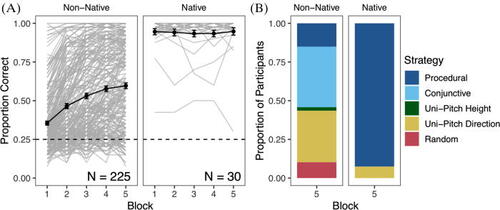
This paper revisits the notion that second-language learners acquire #speech sound categories in their target language. https://t.co/YVQnokOvf2
@MtwoBtwo @bchandra_pitt @CaseyRoark@UOLinguistics@PittCSD#acoustics
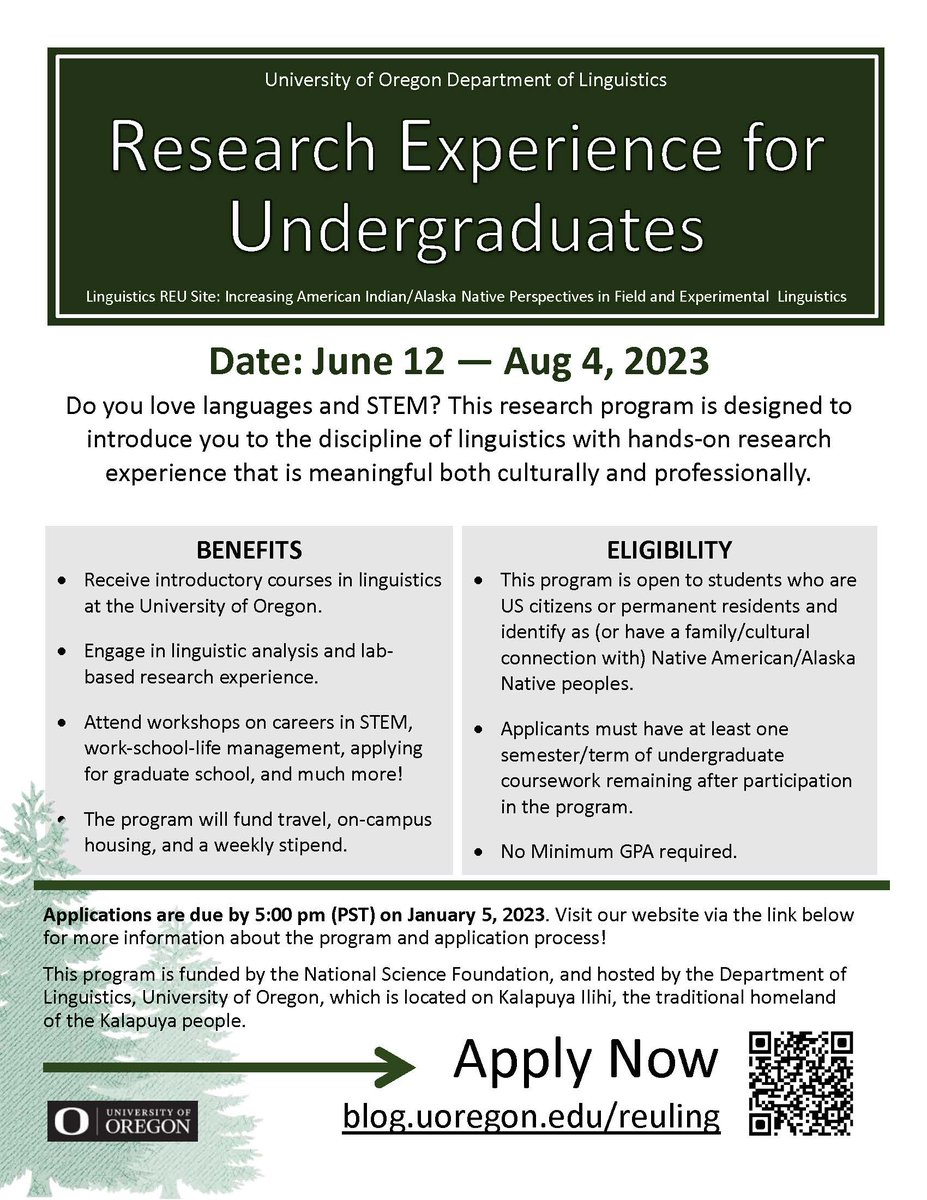
Call for Applications for the NSF Summer Research Experiences for Undergraduates (REU) Site: Increasing American Indian/Alaska Native Perspectives in Field and Experimental Linguistics, University of Oregon. Deadline is Jan. 5, 2023. https://t.co/9rEKvoJvws
This is precisely why, for each study we have about helping people learn languages, the lab has a study on helping people be better perceives. Communication requires multiple parties and intelligibilty/comprehensibility/accentedness can't be attributed just to a talker.
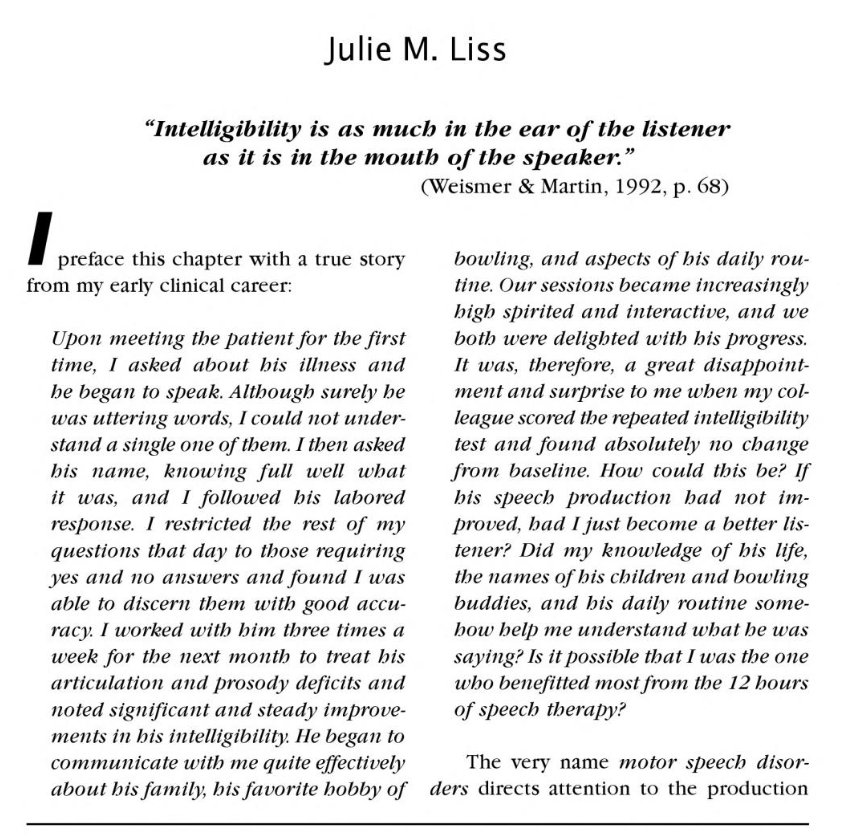
Just watching @steven_bloch 's Stephen Hawking 2022 lecture re: MND & communication. He mentioned Julie Liss - I looked her up and came across this story - it totally shook me 1/2
Spoiler alert: we don't think (most) people are. If this is the case, how should we think about what people are learning? How does this impact our understanding of current theories of L2 speech sound learning, which are predicated on categories being the target of learning?
We have a new paper out in @ASA_JASA with @bchandra_pit and @CaseyRoark in a special issue about ideas to reconsider in speech perception. We ask whether people learning new languages are really learning speech sound categories, as is commonly assumed.
Our department @UOLinguistics is hiring! We seek candidates specializing in language description based on primary data collection on an under described language or language family. Let us know if you have questions!! https://t.co/ePGXI77879