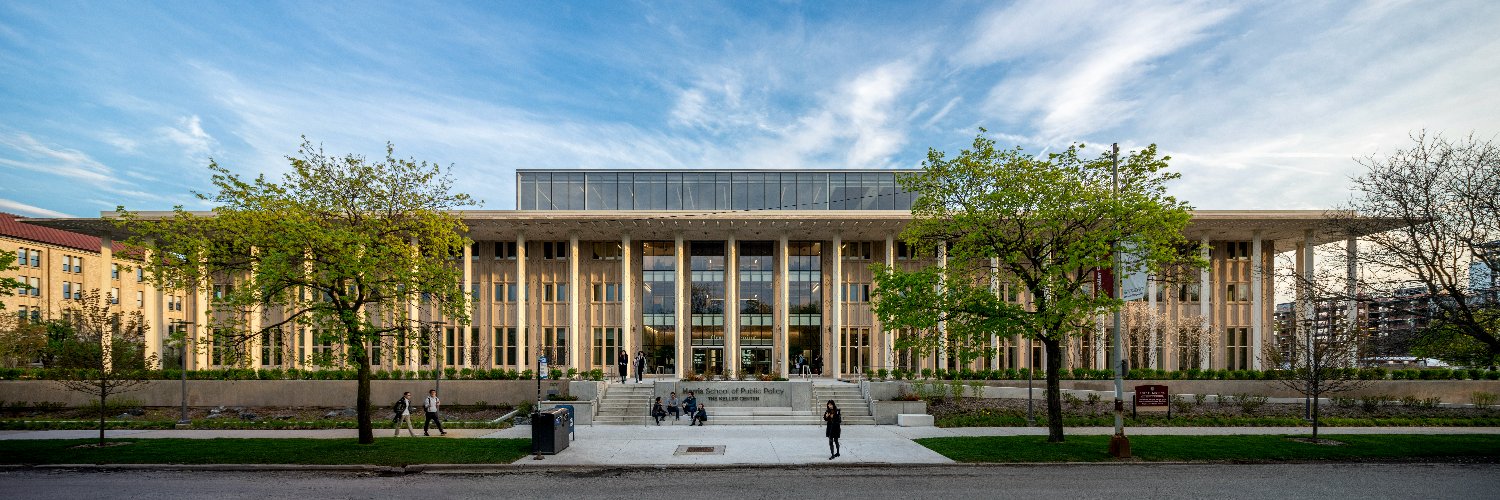
The Stone Center for Research on Wealth Inequality and Mobility advances interdisciplinary research on the origins and nature of contemporary inequalities.
Will you join us in Vancouver?
This summer, we’re partnering with @ubcVSE's Stone Centre to host the Summer School on Socioeconomic Opportunity and Inequality.
Applications are now open – we’re excited to meet you.
Learn more: https://t.co/r4AXCLgynK
Consumers are feeling the burden of higher gas prices at the pump. @sndurlauf tells @Newsweek that the “modern economy is a complex interconnected system,” warning that fuel costs can ripple through the prices of other goods.
Read more: https://t.co/igcTNoZ325
A wonderful essay by Guido Alfani @guido_alfani, reflecting both the extraordinary research he as a produced as well a vision for new directions for scholarship. One more reason why it is such an exciting time to be an economic history.
Here is a podcast Guido and I recorded a couple of years ago.
https://t.co/lq4lztQLhW
.@mivich argues that inequality is too large a problem to be solved through incremental changes.
In The Inequality Podcast, she applies that same structural lens to the changing nature of work, examining why job responsibilities keep expanding.
Listen: https://t.co/zytwvGUA62
This August, the Summer School on Socioeconomic Opportunity & Inequality will be held in Cali, Colombia🇨🇴
Designed to train early-career researchers in state-of-the-art methods, the program is co-sponsored by @icesi and @GUAmericas.
Join us: https://t.co/1FJ85ASDHw
That's a wrap on year 3⃣ of The Inequality Workshop!
Over the academic year, 300+ attendees came together to share research, exchange ideas, and deepen our understanding of inequality across disciplines.
We’ll be back soon. Until then, stay connected: https://t.co/uymN7gATjZ
Stone Center Advisor Ariel Kalil makes the case for reversing grade inflation in a new op-ed. She cautions parents against relying solely on grades to measure their children’s academic progress.
Read now → https://t.co/hL2txpl0jP
We're hiring a postdoc at MIT!
The Postdoctoral Associate will work closely with @DAcemogluMIT and @baselinescene to conduct research on the history, social implications and future of technology.
Learn more and apply by June 15: https://t.co/HNDVJ8V5PS
Will you join us in Vancouver?
This summer, we’re partnering with @ubcVSE's Stone Centre to host the Summer School on Socioeconomic Opportunity and Inequality.
Applications are now open – we’re excited to meet you.
Learn more: https://t.co/r4AXCLgynK
Unions have long been associated with higher wages and job security for their members, but does proximity to unions improve conditions for others?
@TVanheuvelen explains the mechanisms by which they do. Listen to his conversation with host Geoff Wodtke → https://t.co/tDikDg1WC3
❗ Final call to apply: Postdoctoral Research Fellow in Economics Education and Inequality.
🗓️ 12-month position starting September 2026.
🔗 https://t.co/eqtcexA4pc
📊 In @thecentersquare, Professor @sndurlauf of @UCStoneCenter says the latest labor numbers point to “stasis” in the job market: unemployment remains steady and jobs are growing, but wage growth is weak and gains are uneven across sectors and regions. https://t.co/XhEbSnj00b
At our recent public event on economic growth, Joel Mokyr explored what made the Industrial Revolution possible.
He argues that an ethos of progress took root long before it manifested as technological innovation.
Watch the full panel → https://t.co/KTnYsetNIP
Is merit about what you have already done? Or is it what you can do in the future, for both yourself and society? Renowned UChicago economist Steven Durlauf explains. #economicsforinclusiveprosperity
https://t.co/g1iZWqTjlh
Self-employment tends to run in families, but the mechanisms are unclear. Earle & Lee find that this remains true in post-communist countries, even after 40+ years. Thus suggesting that risk attitudes transmitted across generations are key.
Read → https://t.co/IzaUsJtgKT
UChicago is launching an initiative that will guarantee free tuition for families with incomes below $250,000, starting in fall 2027. The College will provide free housing and meals and waive fees for families with incomes less than $125,000. Learn more: https://t.co/65bBovWQAv
A proposals of ways to understanding different views of meritocracy and links them to assignments of students to schools and workers to firms, from @sndurlauf https://t.co/q7tT2WsIr7
A highlight for the Stone Center: convening leading scholars on economic growth to explore a millennium of history and the lessons it offers.
Thanks to all who joined us!
Two Nobel laureates joined other leading scholars at a recent @HarrisPolicy event to debate 1,000 years of history and its lessons for economic growth today.
Learn more: https://t.co/ekj6Zoq4vG
Some quick reactions to the BLS report
1. The labor market continues to exhibit general stasis. The 115000 increase in jobs exceeded expectations, which the main reason for a more positive view. However, wage growth (average hourly earnings) was lower than expected at 0.2%, which mean real wages falling, and unemployment remained steady at 4.3%. These are not blowout numbers, despite some claims of that form.
2. Underlying the overall stability are some important demographic differences. African American unemployment increased from 7.1% to 7.3%.
3. Important sectoral heterogeneities are present. Health care continues to lead the job numbers. The loss of 13000 jobs in the information sector suggest possible AI effects. Manufacturing slightly declined, so tariff policies still a failure with respect to their putative justification.
@GlobalOpp1 Thank you for the shout-out! We’re excited to share information about two additional summer schools:
📍 Vancouver, Canada — 10–12 August
📍 Cali, Colombia — 24–26 August
Learn more and register here: https://t.co/i4fvTKGRgk