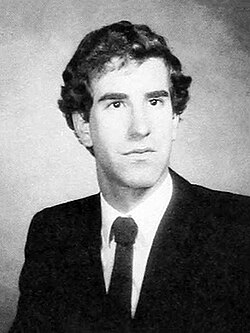
Charlie Munger sat down for the only long-form podcast interview of his 99 years on earth, and used it to explain why nobody should ever need to get rich twice:
He was one of the wealthiest investors alive, but the sharpest thing he said all evening was about a parking space, not a balance sheet:
1. You only ever need to get rich once.
Most people treat wealth like a treadmill, chasing the next multiple the moment they've made money. Munger thought that instinct was backwards. "The beauty of it is: you only have to get rich once. You don't have to climb this mountain four times. You just have to do it once." Stop trying to prove it repeatedly. Compound it once and let it sit.
2. Study the parking spaces, not the balance sheet.
Everyone who studies Costco talks about margins and membership fees. Munger went straight to the physical details of the stores. "They really did sell cheaper than anybody else in America and they did it in big, efficient stores. All the parking spaces were 10 feet wide instead of eight or nine feet or whatever they normally are." The real edge was sitting in plain sight, in decisions nobody else bothered to notice.
3. He admitted Berkshire couldn't be built again.
Asked directly whether he and Buffett could build the same empire if they started again today, aged thirty, Munger didn't dress it up. "The answer to that is no, we wouldn't." He explained why with total honesty. "We had… everybody that had unusually good results… almost everything has three things: They're very intelligent, they worked very hard, and they were very lucky." He gave luck and timing full credit, something almost no titan of his stature ever does.
4. Long partnerships don't run on a formula.
Asked for advice on keeping a decades-long partnership alive, Munger refused to offer a system. "Well, it helps if you like one another and enjoy working together." Then he went further. "But I don't use any one formula. A lot of partnerships that work well for a long time happen because one's good at one thing and one's good at another. They just naturally divide it. Each one likes what he's doing." No governance chart. Just two people doing what they're each naturally good at.
5. He only ever studies two kinds of companies.
Sixty years into investing, with every strategy imaginable available to him, Munger kept it absurdly narrow. "I only study two kinds of companies. I'm enough of a big Ben Graham follower… so if something is really cheap, even though it's a crappy company, I'm willing to consider buying it." Decades of complexity available to him, and he still chose to keep the filter this simple.
6. Brand beats infrastructure, even world-critical infrastructure.
Asked whether he'd hold TSMC, arguably the most strategically important company on the planet, he picked the consumer brand instead. "Well I don't like that as well as I like something with a real consumer brand of its own like Apple." Being essential to the world isn't the same as owning the customer's loyalty.
7. Real risk and headline risk are not the same thing.
Most investors his age were nervous about China. Munger just stated his exposure plainly. "So naturally, I'm willing to have some China risk in the Munger portfolio." He didn't flinch from a geography everyone else treated as radioactive, because he'd actually done the work on it.
8. The best buying happens when everyone else is frozen.
Munger described one of his old retail bets during a recession, when the instinct for most people is to sit still. "We just, in the middle of one of those recessions, we just bought, bought, bought, and bought. All that money went right into those stocks. Of course, we tripled it just sitting on our ass." The work was done before the recession. The recession was just the moment to act on it.
9. Recognise the rare moment when the money is simply easy.
Describing turning a small savings and loan into billions of dollars of capital for Berkshire, Munger didn't pretend it was skill alone. "It was like God just opening a chest and just pouring money. It's awfully easy money." Most of investing is grinding. Occasionally it isn't, and you have to be able to tell the difference.
10. He still worried the whole system was over-leveraged.
Even at 99, reflecting on where modern markets had drifted, Munger's concern wasn't excitement about new strategies. It was the quiet fragility underneath them. "They're making smaller and smaller profits off more and more volume, which gives them this big peak leverage risk, which I would not run myself." The system he was describing still runs on that same leverage today.
Here's the thing though....
Munger spent nearly seventy years mostly avoiding the spotlight, letting Buffett do the talking at Berkshire's meetings while he sat beside him dropping one-liners. Then, weeks before he died, he agreed to sit for the one interview format he'd never done, a long-form podcast, in his own home, over dinner. That single hour did more to spread his thinking to a new generation than decades of shareholder letters ever managed. The wisdom didn't change. The distribution did. Being willing to show up in a format built for reach turned a 99-year-old investor into required listening for founders who weren't even born when he made his fortune.
We build massive distribution and grow personal brands on X and beyond without our clients lifting a finger.
If you're a founder or VC looking for that kind of exposure, book a call below.
We average 1.5M views a week.
https://t.co/Q0m1bUEXCq
Travis Kalanick reveals why he calls himself a "wartime CEO" and how a $1.5 billion China bet turned into $9 billion in two years:
This was his first interview in nearly a decade, and it might be the rawest founder debrief you'll ever watch:
1. Moving on from a company you built from nothing.
Most founders who get pushed out spend years bitter about it. Kalanick doesn't. Asked if he's still angry about Uber, he said "First, I loved every minute. I loved every minute. But when you fall in love again, you don't think about the ex very much." He built something else to love. That's how he closed the door.
2. Attack the industry with the worst margins you can find.
Everyone assumes you build a business where the money is easy. Kalanick went straight for restaurants, one of the thinnest-margin industries on earth. He laid out the maths live: "your big costs are going to be labor--let's call it 30%, but it can range from like 25-40% of your overall revenue... Supply chain is 30%... And a successful restaurant is going to have a 10% profit margin and be really pumped about that." Brutal unit economics aren't a reason to avoid an industry. They're the invitation.
3. His entire second act is one sentence long.
After Uber, Kalanick could have chased anything. Instead he picked one lens and applied it everywhere. "My sweet spot is digitizing the physical world. And you could take that to mean a lot of different things, but it's basically treating atoms like bits." One idea, endlessly reapplied, is a strategy. Ten ideas chased at once is a distraction.
4. Steal the framework from computer science, not from your competitors.
Rather than benchmark against other food or logistics companies, Kalanick rebuilt his whole worldview from a computer architecture diagram. "Network moves bits from point A to point B. But if you're treating atoms like bits, you go: CPU manipulates the bits, what manipulates atoms? That's manufacturing. Storage stores bits, what stores atoms? That's real estate." When you run out of good analogies inside your industry, borrow one from a totally different field.
5. Defend the ugly idea if the maths actually works.
Surge pricing got Uber dragged through the press for years. Kalanick never wavered on it, because he'd already done the arithmetic. "Surge pricing in the right spot, it draws enough supply in, and fends off enough customers, and the market clears. So it's the lowest cost reliable ride." Public backlash and a correct model can exist in the same room. Don't confuse noise for evidence you're wrong.
6. Build for people who don't want to be controlled.
The gig economy debate usually gets framed as exploitation versus flexibility. Kalanick's read on drivers was blunt. "It's very difficult to organize them when they choose when they want to work. Their office is their own--it's their own. Like nobody controls it. Like there's just no control--other than the control given to the individual." He designed the whole model around that one fact.
7. Know exactly why the fight is happening.
When unions came after Uber, Kalanick didn't pretend it was a misunderstanding. He named the threat plainly. "It was very disruptive to the union and their own business model. And so they had to cut it off at the knees." If you can't say in one sentence why the incumbents are attacking you, you don't understand your own business yet.
8. Deals that scare everyone in the room are usually the ones worth doing.
Uber's exit from China through the Didi merger is treated as one of the great venture outcomes of the decade. Kalanick's own summary of it was almost casual. "I think we invested--yeah, we probably were around a billion, a billion and a half... And the Didi stake at the time, when this deal got done, was worth 8, 9, 10-- billion... So we turned a bill and a half into eight or nine... in like two years." The most stressful negotiation of your career can also be the best trade you ever make.
9. Say the true thing about your own downfall, once.
Most ousted CEOs give a polished, PR-approved version of events. Kalanick, describing the final push to remove him, didn't dress it up. He simply said: "That's when they went in for the kill. I just couldn't hang. Bottom line, I just couldn't hang." No blame, no spin. Just an admission that he ran out of road at that exact moment.
10. Hire for the collision, not the resume.
Uber's whole general manager model depended on finding a rare combination of person. Kalanick's summary of what he was actually screening for was simple. "The magic-making happens when you cross creative instincts with analytical prowess." Most candidates are strong in one lane. He was hunting for the ones who could hold both at once.
Here's the thing though....
Kalanick spent close to eight years building his next company almost entirely in stealth, employees banned from even naming it on LinkedIn. Then he stepped back out, gave this interview, went on stage after stage, and within months the industry was talking about Atoms and his comeback the same way it once talked about Uber. The company did the work in silence. His decision to go public again is what put it back in front of the entire industry overnight.
We build massive distribution and grow personal brands on X and beyond without our clients lifting a finger.
If you're a founder or VC looking for that kind of exposure, book a call below.
We average 1.5M views a week.
https://t.co/Q0m1bUEpMS
Charlie Munger sat down for the only long-form podcast interview of his 99 years on earth, and used it to explain why nobody should ever need to get rich twice:
He was one of the wealthiest investors alive, but the sharpest thing he said all evening was about a parking space, not a balance sheet:
1. You only ever need to get rich once.
Most people treat wealth like a treadmill, chasing the next multiple the moment they've made money. Munger thought that instinct was backwards. "The beauty of it is: you only have to get rich once. You don't have to climb this mountain four times. You just have to do it once." Stop trying to prove it repeatedly. Compound it once and let it sit.
2. Study the parking spaces, not the balance sheet.
Everyone who studies Costco talks about margins and membership fees. Munger went straight to the physical details of the stores. "They really did sell cheaper than anybody else in America and they did it in big, efficient stores. All the parking spaces were 10 feet wide instead of eight or nine feet or whatever they normally are." The real edge was sitting in plain sight, in decisions nobody else bothered to notice.
3. He admitted Berkshire couldn't be built again.
Asked directly whether he and Buffett could build the same empire if they started again today, aged thirty, Munger didn't dress it up. "The answer to that is no, we wouldn't." He explained why with total honesty. "We had… everybody that had unusually good results… almost everything has three things: They're very intelligent, they worked very hard, and they were very lucky." He gave luck and timing full credit, something almost no titan of his stature ever does.
4. Long partnerships don't run on a formula.
Asked for advice on keeping a decades-long partnership alive, Munger refused to offer a system. "Well, it helps if you like one another and enjoy working together." Then he went further. "But I don't use any one formula. A lot of partnerships that work well for a long time happen because one's good at one thing and one's good at another. They just naturally divide it. Each one likes what he's doing." No governance chart. Just two people doing what they're each naturally good at.
5. He only ever studies two kinds of companies.
Sixty years into investing, with every strategy imaginable available to him, Munger kept it absurdly narrow. "I only study two kinds of companies. I'm enough of a big Ben Graham follower… so if something is really cheap, even though it's a crappy company, I'm willing to consider buying it." Decades of complexity available to him, and he still chose to keep the filter this simple.
6. Brand beats infrastructure, even world-critical infrastructure.
Asked whether he'd hold TSMC, arguably the most strategically important company on the planet, he picked the consumer brand instead. "Well I don't like that as well as I like something with a real consumer brand of its own like Apple." Being essential to the world isn't the same as owning the customer's loyalty.
7. Real risk and headline risk are not the same thing.
Most investors his age were nervous about China. Munger just stated his exposure plainly. "So naturally, I'm willing to have some China risk in the Munger portfolio." He didn't flinch from a geography everyone else treated as radioactive, because he'd actually done the work on it.
8. The best buying happens when everyone else is frozen.
Munger described one of his old retail bets during a recession, when the instinct for most people is to sit still. "We just, in the middle of one of those recessions, we just bought, bought, bought, and bought. All that money went right into those stocks. Of course, we tripled it just sitting on our ass." The work was done before the recession. The recession was just the moment to act on it.
9. Recognise the rare moment when the money is simply easy.
Describing turning a small savings and loan into billions of dollars of capital for Berkshire, Munger didn't pretend it was skill alone. "It was like God just opening a chest and just pouring money. It's awfully easy money." Most of investing is grinding. Occasionally it isn't, and you have to be able to tell the difference.
10. He still worried the whole system was over-leveraged.
Even at 99, reflecting on where modern markets had drifted, Munger's concern wasn't excitement about new strategies. It was the quiet fragility underneath them. "They're making smaller and smaller profits off more and more volume, which gives them this big peak leverage risk, which I would not run myself." The system he was describing still runs on that same leverage today.
Here's the thing though....
Munger spent nearly seventy years mostly avoiding the spotlight, letting Buffett do the talking at Berkshire's meetings while he sat beside him dropping one-liners. Then, weeks before he died, he agreed to sit for the one interview format he'd never done, a long-form podcast, in his own home, over dinner. That single hour did more to spread his thinking to a new generation than decades of shareholder letters ever managed. The wisdom didn't change. The distribution did. Being willing to show up in a format built for reach turned a 99-year-old investor into required listening for founders who weren't even born when he made his fortune.
We build massive distribution and grow personal brands on X and beyond without our clients lifting a finger.
If you're a founder or VC looking for that kind of exposure, book a call below.
We average 1.5M views a week.
https://t.co/Q0m1bUEXCq
Warren Buffett was asked about his morning routine and his famously unusual diet.
His answer was very Buffetty:
"I eat exactly what I like to eat. If I liked it on my sixth birthday when we had hot dogs and hamburgers and Coke and ice cream with chocolate, I still like it. And I don't care about anything subsequently that I discovered. I discovered it all by the time I was six."
When the interviewer pushed him on health, he didn't budge:
"If somebody offered me a deal when I was 20 and said you're gonna live one year longer, instead of living to 88 you live to 89, if you eat nothing but broccoli and Brussels sprouts and onions, I wouldn't take it. That last year probably won't be that good anyway."
He was then asked how much cash he carries. The man worth $130 billion said $400, mostly because his wife likes to use cash...
"My wife likes to use cash, so I just take home a chunk of cash every now and then. She doles it out. She looks at my billfold and sees whether all the hundreds are gone."
He's had the same American Express card since 1964. He pays cash 98% of the time. He eats like a six-year-old at a birthday party and has absolutely no plans to change.
A man who has spent seven decades optimising returns on every dollar has done zero optimisation on what he puts in his mouth. That might be the most Buffetty thing about Buffett.
— Warren Buffett @WarrenBuffett
P.S. We build content infrastructure for founders and VCs.
1.5M views/week average.
If you need massive distribution or brand exposure, apply here: https://t.co/5Fl09DQERK
Warren Buffett just explained how to think about your mind and body using an analogy that has been shared hundreds of millions of times:
"If I gave you a car and it'd be the only car you're getting the rest of your life, you'd take care of it like you can't believe. Any scratch, you'd fix that moment. You'd read the owner's manual. You'd keep it garaged into all these things."
Then he brought it home...
"And you get exactly one mind and one body in this world. And you can't start taking care of it when you're 50. By that time you've rusted it out if you haven't done anything. You should really make sure that you just remember that you've just got one mind and one body to get through life with. Do the most with it."
He then pivoted to the one investment he says beats every stock, bond, or business he's ever bought:
"By far the best investment you can make is in yourself. If you invest in yourself, nobody can take it away from you."
He also told the students that communication skills alone would increase their earning potential by 50% over their lifetime. Not a new degree. Not a certification. Just learning to speak and write clearly.
"If you can't communicate, it's like winking at a girl in the dark. Nothing happens."
He took a Dale Carnegie public speaking course when he was terrified of talking in front of people. He says that $100 course gave him more return than any trade he's ever made.
— Warren Buffett @WarrenBuffett
P.S. We build content infrastructure for founders and VCs.
1.5M views/week average.
If you need massive distribution or brand exposure, apply here: https://t.co/5Fl09DQERK
Elon Musk's wealth has jumped to a record $722 billion.
That's more than most countries' GDP.
So we went digging into why and found 7 things that will change how you see him:
1/7: He takes $0 in salary from Tesla
Why is Musk worth so much?
Because Musk IS Tesla and SpaceX and Starlink.
Musk understood early that visibility compounds the same way capital does.
We grow brands for founders who want brand exposure.
Avg - 1.5 million views per week.
Book a call: https://t.co/scopd1vfl4
P.S. We build content infrastructure for founders in finance. 1.5M views/week average. Your voice, cross platform, compounding daily.
If you need distribution and brand exposure, apply here:
https://t.co/56BeAddFIv
This math genius discovered the biggest fraud in Wall Street history.
- He had evidence of a $64.8 billion scheme.
- The SEC ignores his reports for nearly a decade
- Then in 2008, the world ended
The untold story of the man who tried to stop Madoff:
Markopolos' story reveals a chilling truth:
Sometimes the biggest threat isn't the criminal.
It's the system designed to protect us.
When watchdogs become lapdogs, we all lose.