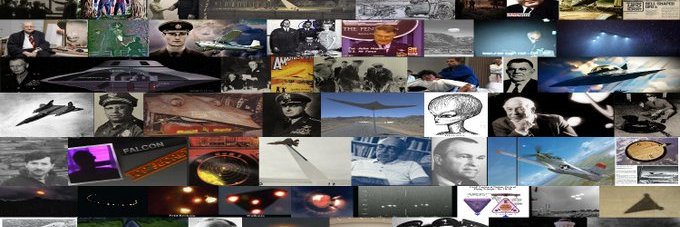
Below is a link to our #UFOhistoryGroup research compendium for the Travis Walton case. Compiled by James Carrion and myself, it includes OVER 9500 PAGES of MUFON files, transcripts, book excerpts, ai analysis, newspaper clippings and more!
https://t.co/8JHQrFMBK1
@TomTulsa is filling in for @UFOCircleJerk tomorrow...should be a good one! @AAWSNAP1947
Join @AAWSNAP1947 and I for the 9th @UFOhistoryGroup space. We will be discussing the 1975 Travis Walton abduction case.
I will post a link to our research compilation document for the case later today! Unfortunately James @UFOcirclejerk will be out of the country and unable to attend, but he has provided documents from the @MUFON archive which will be included in the document!
Make sure to hit the "Set Reminder"🔔 button below, like and share the space!
See you tmrw.
#UFOhistoryGroup https://t.co/X8ifUK16n1
Join @AAWSNAP1947 & @InfinityDisclsd for our 7th #UFOhistoryGroup space covering the history of the National Investigations Committee On Aerial Phenomena (NICAP).
Working on Special Guest Speakers now.
Hit 🔔SET REMINDER🔔
https://t.co/1UZ1fnf3co
I am very excited to announce our Special Guest Speakers for this Sunday's #UFOhistoryGroup space covering the history of NICAP. We will be joined by Mr. Jack Brewer @Brewerblogs & Mr. James Carrion @UFOCircleJerk !
Cohosts: @AAWSNAP1947 & @InfinityDisclsd
Set Reminder in quoted tweet below!
Join @UAPorSAP@AAWSNAP1947 and myself for the 6th #UFOhistoryGroup space covering Project Blue Book, the 1952 UFO flap and other noteworthy cases investigated by the Air Force's secret program.
🗓️ September 13 at 5pm EDT
This one will be a VIDEO SPACE as we dig into the documents, history, investigations, and some of the most consequential cases of the Blue Book era.
From the extraordinary wave of sightings over Washington, D.C. in 1952 to the Air Force's evolving effort to collect, analyze, explain—and sometimes struggle to explain, UFO reports, we're going back to the original records.
⚠️ IMPORTANT: X currently doesn't allow video Spaces to be scheduled in advance.
When we go live on September 13, go directly to my profile to find and join the actual VIDEO SPACE. The link will be posted there once we're live.
Before AARO. Before AAWSAP. Before modern “Disclosure.”
There was Project Blue Book. 🛸
#UFOhistoryGroup #ProjectBlueBook #UFOHistory #UAP
INFRARED AND RADAR COUNTERMEASURES (2/3)
An infrared (IR) signature refers to the variations in radiant emittance from a military object that allow it to be detected by an infrared sensing system. Detection fundamentally relies on the thermal contrast between the target and its surrounding background. This contrast is driven by two main factors: the physical temperature of the object and its surface emissivity. At ambient temperatures (around 300 K), emissivity often has a more significant influence on the target's radiant emittance than minor temperature changes.
For aircraft, the overall IR signature is a composite of several sources: radiation from the engine nozzle, the aircraft skin (which is heated internally by the engine and externally by aerodynamic friction and solar insolation), the top of the aircraft reflecting the cold sky, and the bottom reflecting heat from the earth. These signatures are most prominent in the specific atmospheric transmission windows of 3-5 μm and 8-14 μm, which are heavily utilized by threat sensors like missile seekers and Forward-Looking Infrared (FLIR) systems.
Countermeasures for Aircraft Engines
The engines (particularly turbofans and turbojets) are the primary sources of an aircraft's IR signature, contributing massive amounts of heat through the tailpipe and the exhaust plume. Countermeasures focus on these two distinct areas:
Plume Signature Suppression: The exhaust plume is a stream of hot gases heavily laden with carbon dioxide and water vapor, making it visible from almost all aspect angles. To suppress this, engineers use cycle tailoring, which cools the plume by mixing the intensely hot exhaust gases with cooler fan bypass air and free-stream air within the ejector. Other methods include engine size reduction (minimizing speed, payload, and overall airframe size to reduce thrust requirements) and employing an airframe deck behind the exhaust nozzle to physically obscure the plume from sensors below.
Hot Parts Signature Suppression: The turbine section and tailpipe radiate intense heat that must be hidden. This is primarily achieved through obscuration, utilizing serpentine ducts or exhaust nozzle plugs to physically block the direct line of sight to the hot engine interiors. Because these blocking structures inevitably absorb heat, they are subjected to active cooling using bypassed turbine fan air, inlet air, or compressor bleed air. Furthermore, emissivity control is applied by coating specific locations with materials that reflect only cooler surrounding surfaces into the viewable regions, effectively masking the internal heat.
Passive Radar Countermeasures
(Microwave Camouflage)
Passive radar countermeasures form the foundation of stealth (low observable) technology, aiming to reduce a target's Radar Cross Section (RCS) so it blends into the background noise of an enemy's radar.
The primary techniques include:
+Shaping: This fundamental technique involves designing the geometric exterior of the platform to deflect incident radar signals away from the hostile receiver. Designers meticulously avoid shapes that produce strong radar returns, such as flat plates, cylindrical surfaces, sharp edges, cavities, and particularly "corner reflectors" (structures with mutually perpendicular intersecting planes). To achieve a low RCS, stealth platforms utilize sleek, continuously varying contours, rounded shapes, or precisely angled flat facets (like a "cut-diamond" architecture) that scatter radar waves harmlessly into empty space.
Radar Absorbing Materials (RAMs): When shaping alone is insufficient, RAM coatings are applied to target surfaces. Instead of reflecting radar waves, these materials transmit the waves into their interior and dissipate the electromagnetic energy as heat through absorption or destructive interference. Dielectric absorbers rely on electrical resistance and phase cancellation, while magnetic absorbers (made of materials like ferrites or carbonyl iron dispersed in elastomers) dissipate energy magnetically and are effective at lower thicknesses.
Specific RAM designs include:
+ Salisbury Screen: A narrow-band, resonant absorber featuring a resistive sheet placed a quarter-wavelength away from a metallic backing, separated by a lightweight foam or honeycomb spacer.
+Dallenbach Layer: A single-layer homogeneous slab of lossy dielectric or magnetic material.
+Jaumann Absorber: A broadband, multilayered extension of the Salisbury screen that tapers impedance across several sheets.
+Circuit Analog Absorbers: Advanced layers where conducting materials are deposited in specific geometric patterns (like dipoles or crosses) to act as tailored electrical circuits that absorb specific frequencies.
Radar Absorbing Structures (RAS): To avoid the severe weight penalties of heavy RAM coatings, modern stealth uses RAS, where the structural materials of the vehicle itself possess radar-absorbing properties. These are typically composites made from fiberglass, quartz glass, or carbon fiber reinforced plastics that are loaded with lossy fillers, allowing them to absorb radar while providing high tensile strength and aerodynamic stiffness.
Passive Cancellation: This theoretical method involves introducing secondary echo sources on the target designed to cancel out the primary radar reflection by generating a wave with the exact opposite amplitude and phase. However, it is rarely deployed in practice because it is nearly impossible to maintain perfect cancellation across varying frequencies and viewing angles on a complex moving target.
Active Radar Countermeasures
Active Cancellation: This highly complex active technique involves the target purposefully emitting its own electromagnetic signal whose amplitude and phase are precisely calibrated to cancel out the reflected radar energy returning to the enemy. To be successful, the target's onboard systems must instantaneously and flawlessly track the incident radar signal's angle of arrival, frequency, intensity, and waveform. Due to the extreme technical difficulty of matching all these parameters dynamically, it is a formidable challenge and rarely seen in operational use.
-NotebookLM Ultra w/various war college sources
CAMOUFLAGE & DECEPTION (1/3)
The word 'camouflage' has its origin in the French word camoufler which means 'to disguise". When the word entered the English dictionary initially, it had a limited meaning, implying concealment or disguise of military objects in order to prevent detection by the enemy. The only sensor available in the early days was the human eye. The means to camouflage a military object were foliage and other locally available material.
The concept of camouflage is as old as nature, and it has been an integral part of it. All animals, small and big, are found to employ several methods of concealment and disguise for self-preservation, both in defence and offence. Practically no animal is safe, since for every animal there is a predator. Both the predator and the prey have to adopt strategies for their survival.
Thus there is an evolutionary arms race between different species and also within the same species. In the progress of biological evolution, both the predators and the prey have to constantly and equally improve their strategies and then pass them from generation to generation.
In the arms race in nature there exists a bewildering diversity in the strategies and counterstrategies adopted by different animals. All these techniques may be termed as camouflage and deception in nature.
Although there may not be a counterpart in the present day arms race to each and every strategy adopted by animals in nature, these very principles, by and large, form the basis of camouflage in war. Whether it is concealment or disguise, deception is inherent in all the methods.
Human civilization, beginning with primitive man, has been using camouflage, concealment and deception in various forms for different purposes, particularly in wars. The basic philosophy remaining one and the same, the changes that have come are in the methodology of application and the levels of sophistication.
JV Ramana Rao 1999
Defence Research & Development Organisation
The modern digital landscape is no longer just a forum for ideas; it is a contaminated ecosystem.
We find ourselves in an era of unprecedented digital toxicity, where polarization is not a byproduct of the internet but a feature.
Start moving towards resilience today.
#SMART