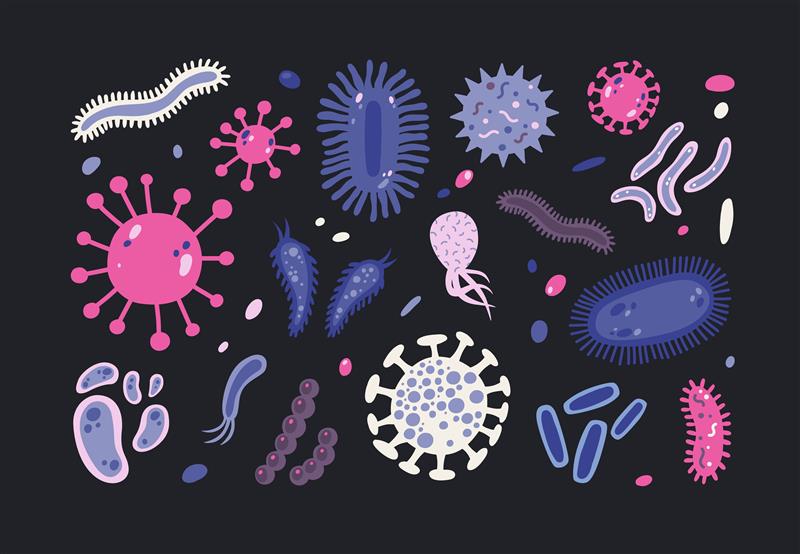
"Ebola outbreak”: few phrases carry more weight in the infectious disease community. Four experts from the University of Florida Emerging Pathogens Institute — John Lednicky, Ph.D., Soung Brice, Ph.D., Ira Longini, Ph.D., and Glenn Morris, M.D., M.P.H. & T.M. — gathered to address this specific Ebola strain and the current outbreak, drawing on lessons from previous outbreaks in the Democratic Republic of Congo and examining it at a microscopic level to understand how it operates.
Read more about the Bundibugyo outbreak on our website!
https://t.co/jVBIHJO6by
Congratulations to Luke Trimmer-Smith, Ph.D., for winning first place in the early-stage investigator poster competition at EPI Research Day 2026! 👏
Trimmer-Smith is an assistant scientist at EPI and secured first place for his collaborative study, antigenically mapping dengue serotypes over five decades.
Check out our website to learn more about his research!
https://t.co/wppLaygYMx
Congratulations to Pamela S. Salvador Dutra, Ph.D., for winning first place in the postdoctoral poster competition at EPI Research Day 2026! 👏
She accepted the award on behalf of the Dewdney Lab for their dedicated work on fungal infections in the citrus industry.
Check out our website to learn more about her research!
https://t.co/8h6LiAG224
Congratulations to Nimra Khalid, D.V.M., for winning first place in the graduate poster competition at EPI Research Day 2026! 👏
Her collaborative study explored how a common and safe pesticide targets the energy-generating mechanism of bacterial cells. This research demonstrates that the pesticide could serve as a safe alternative to antibiotics.
Check out our website to learn more about her research! https://t.co/DO1ve9SgcA
Congratulations to Sarah Acra for winning first place in the undergraduate poster competition at EPI Research Day 2026! 👏
She and her team, led by @UFPHHP Associate Professor Tracie Baker, Ph.D., studied the effect of per- and polyfluoroalkyl substances, also known as PFAS or “forever chemicals,” on zebrafish.
Check out our website to learn more about her research!
https://t.co/fef9F9A4TM
As an Atlantic cruise ship remains isolated off the South African coast due to a deadly hantavirus outbreak, the world watches with anticipation to learn more about this uncommon but dangerous infectious disease.
EPI members Safder Ganaie, Ph.D., John Lednicky, Ph.D. and Amy Vittor, M.D., Ph.D. explain the symptoms, transmission and treatment behind this rare virus.
Click the link to learn more: https://t.co/KxxJMLikVS
What if we could change the future of infectious disease?
At @UF, @NormanBeattyMD is leading the charge against #Chagas disease — uncovering how it progresses, where it’s spreading and new treatments. Because experts don’t just study diseases. They stay one step ahead of them.
Out of the hundreds of fungal disease-causing pathogens in humans, only four are considered "critical risks" to human health. The deadliest, Cryptococcus neoformans, which colonizes the brain, can be found all around us. Luis R. Martinez, Ph.D., an associate professor at the University of Florida College of Dentistry and a member of the UF Emerging Pathogens Institute, breaks down key questions surrounding this intriguing yet dangerous pathogen. https://t.co/lQIyRnToqD
Venom has a few weaknesses, but how accurate are they to real-life organisms?
#UFEPI member and infectious disease specialist Megan Stanifer, Ph.D., tells us how much of the #SpiderMan universe is fact versus fiction 🕷
Click the YouTube link in our bio for the full video of her reacting to the movies #SpiderMan3 and #Venom!
How much of the Spider-Man 3 and Venom movie could happen? What’s the science behind Venom’s weaknesses? What even are symbiotes?
#UFEPI member and #InfectiousDisease specialist Megan Stanifer, Ph.D., breaks down symbiosis and tells us how much of the #SpiderMan universe is fact versus fiction 🕷
Click the YouTube link in our bio for the full video of her reacting to the movies #SpiderMan3 and #Venom!
UF PHHP and the @UF_EPI hosted a workshop in Taiwan to train international researchers on how to use artificial intelligence to predict and prepare for infectious disease outbreaks. https://t.co/whpTvYURhD
Did you know that there are approximately one billion cases of seasonal flu each year? 🤧🤒
Dive into all things influenza so you can stay one step ahead of the virus this flu season. https://t.co/KdzRBUkPSc
Once thought to be confined to tropical regions, Burkholderia infections are emerging in the United States.
What is Burkholderia? What diseases does it cause? How big a concern is it? Read our latest expert Q&A with @TuanyokLab for all the answers.
https://t.co/LX3dJb30A5
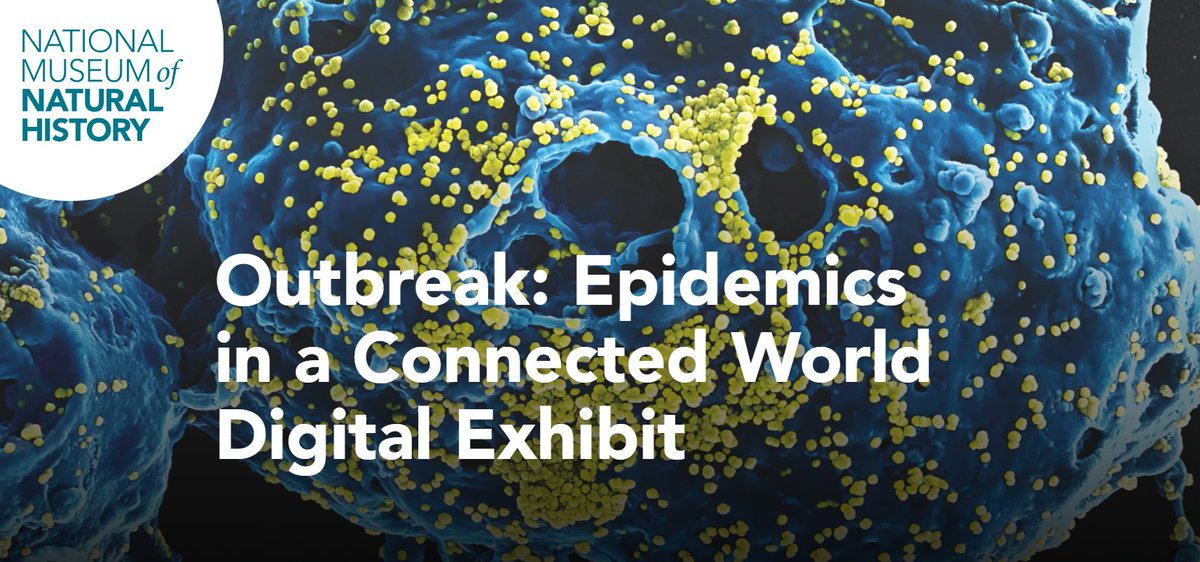
FYI, the Smithsonian Museum's National Museum of Natural History (@NMNH) has an educational and informative digital exhibit on epidemics.
The #OneHealth approach is featured prominently!
Drop in for a virtual visit: https://t.co/gTlev1jI67
Flesh-eating bacteria. Brain-colonizing fungus. Brain-eating amoeba. Haunted horned rabbit virus. Parasitic zombie fungus. Swiss-cheese brain disease. 🧟🐰🧠🧀
You don’t need a haunted house, just a microscope. Meet the microbes that keep us up at night: https://t.co/3I5EZzLKNI.
Let’s face it — bats get a bad rap. Their links to disease and their spooky association with vampires influence their notoriety. 🦇🧛
In reality, bats are remarkable. So why is it that when we hear of disease outbreaks, it always seems to be bats? https://t.co/rZzlr2xAUR
National Plant Diagnostic Network's seal of approval confirms that Florida farmers can expect "gold star quality" results from @UFPlantPath scientists.
More on this history-making accreditation ➡️ https://t.co/fx4NNfYqxB
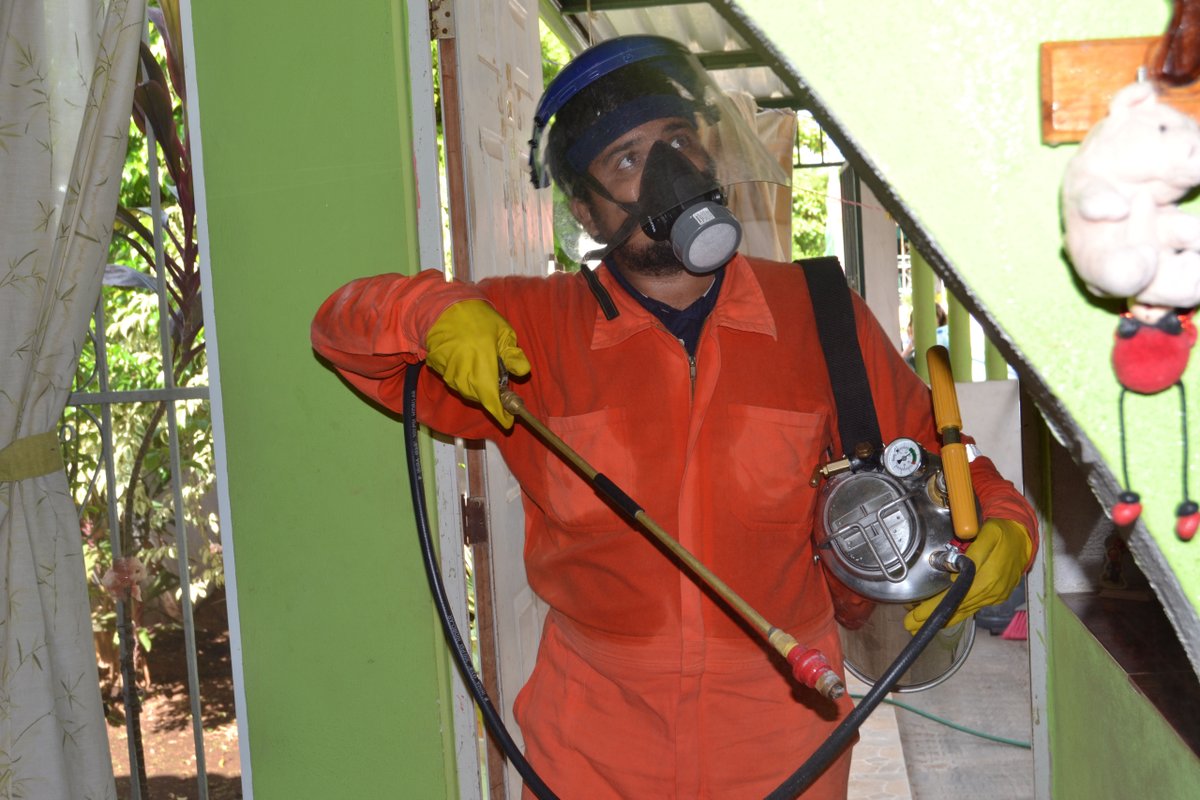
As mosquito-borne diseases like chikungunya and dengue surge in the Americas, targeted insecticide spraying might help. Ira Longini, professor of Biostatistics & @UF_EPI member, was part of a randomized trial where spraying cut community infections by 24%. https://t.co/ahzKKLLGqG
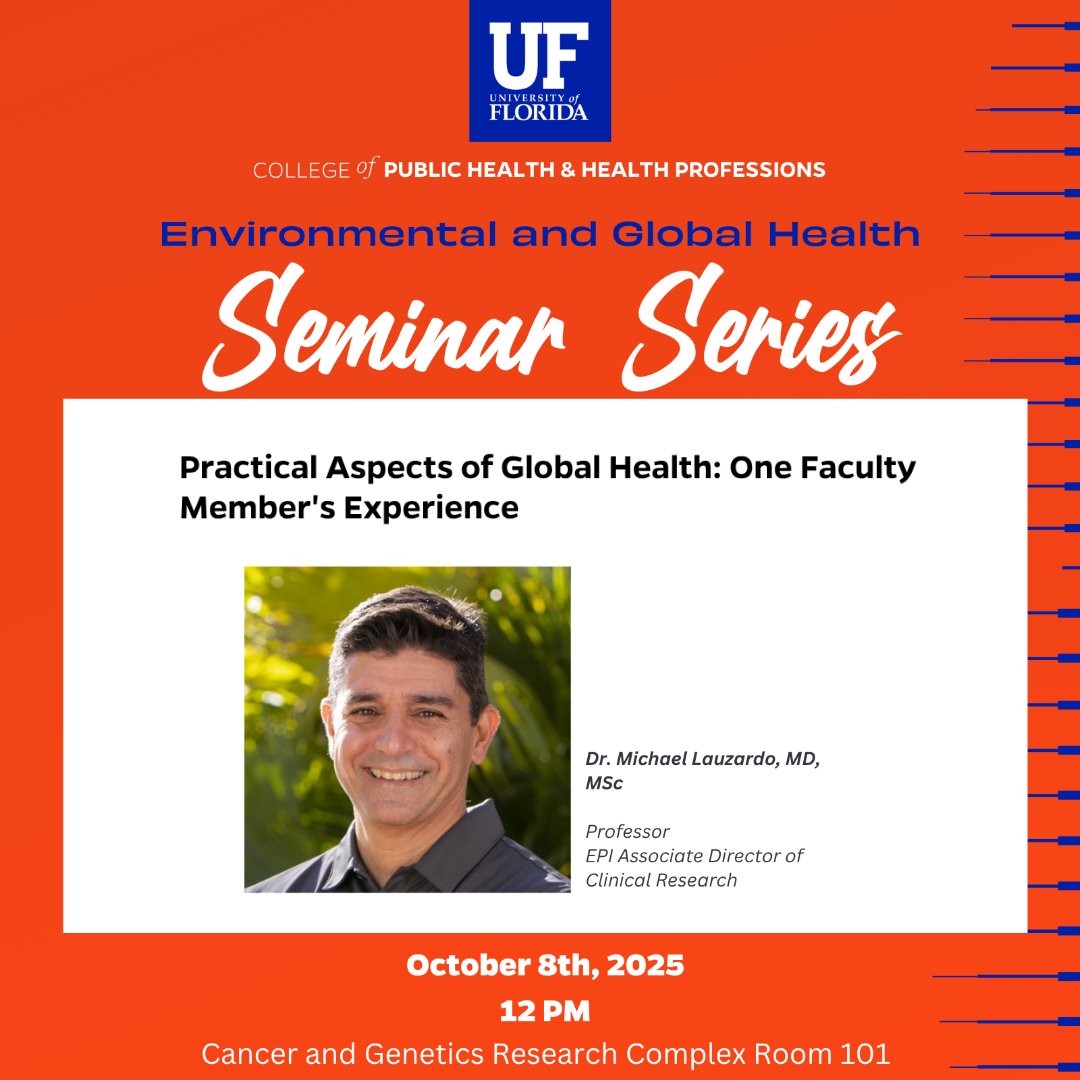
Please join the Department of Environmental and Global Health as they host their Fall 2025 Seminar Series with Professor, Dr. Michael Lauzardo from the Emerging Pathogens Institute at the University of Florida.
#UFIC#GlobalGators#EGH#SeminarSeries