Boyle, M. P., & Gabel, R. M. (2020). “Openness and progress with communication and confidence have all gone hand in hand”: Reflections on the experience of transitioning between concealment and openness among adults who stutter. Journal of Fluency Disorders, 65, 105781.
🗣️ It's the last day of National Stuttering Awarness Week! 🗣️
Our last feature highlights the value of openness, from the work of Boyle, M. P., & Gabel, R. M. (2020).
Thanks for joining us this week! We hope you've learned a little more about the lived experience of stuttering and how to be an ally to those who stutter."
🗣️ It's Day 4 of National Stuttering Awareness Week! 🗣️
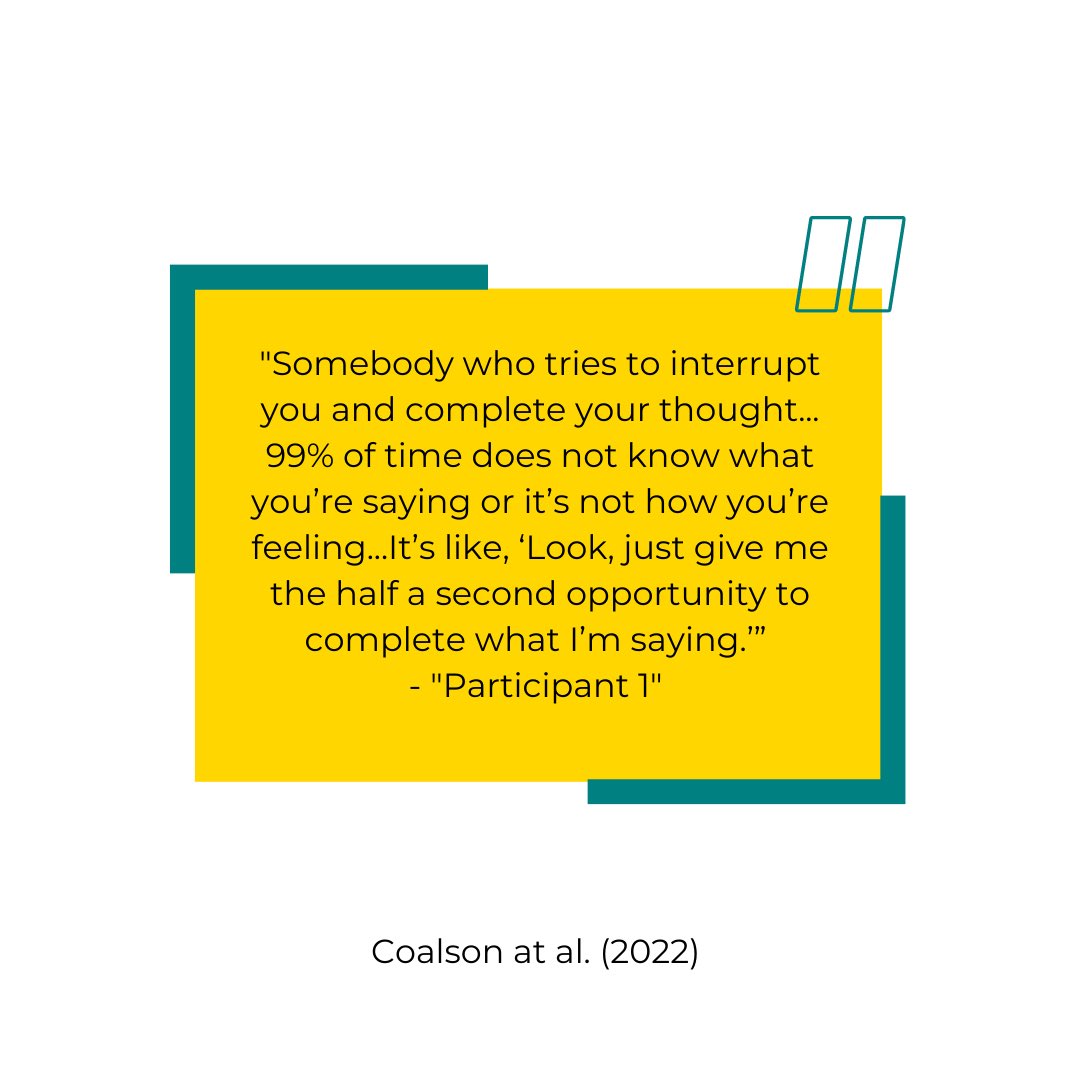
Today, we share a quote on the impact of being a patient conversation partner to people who stutter, from the work of Coalson et al. (2022).
Gerlach-Houck, H., Kubart, K., & Cage, E. (2023). Concealing Stuttering at School:“When You Can't Fix It… the Only Alternative Is to Hide It”. LSHSS, 54(1), 96-113.
🗣️ It's Day 3 of National Stuttering Awarness Week! 🗣️
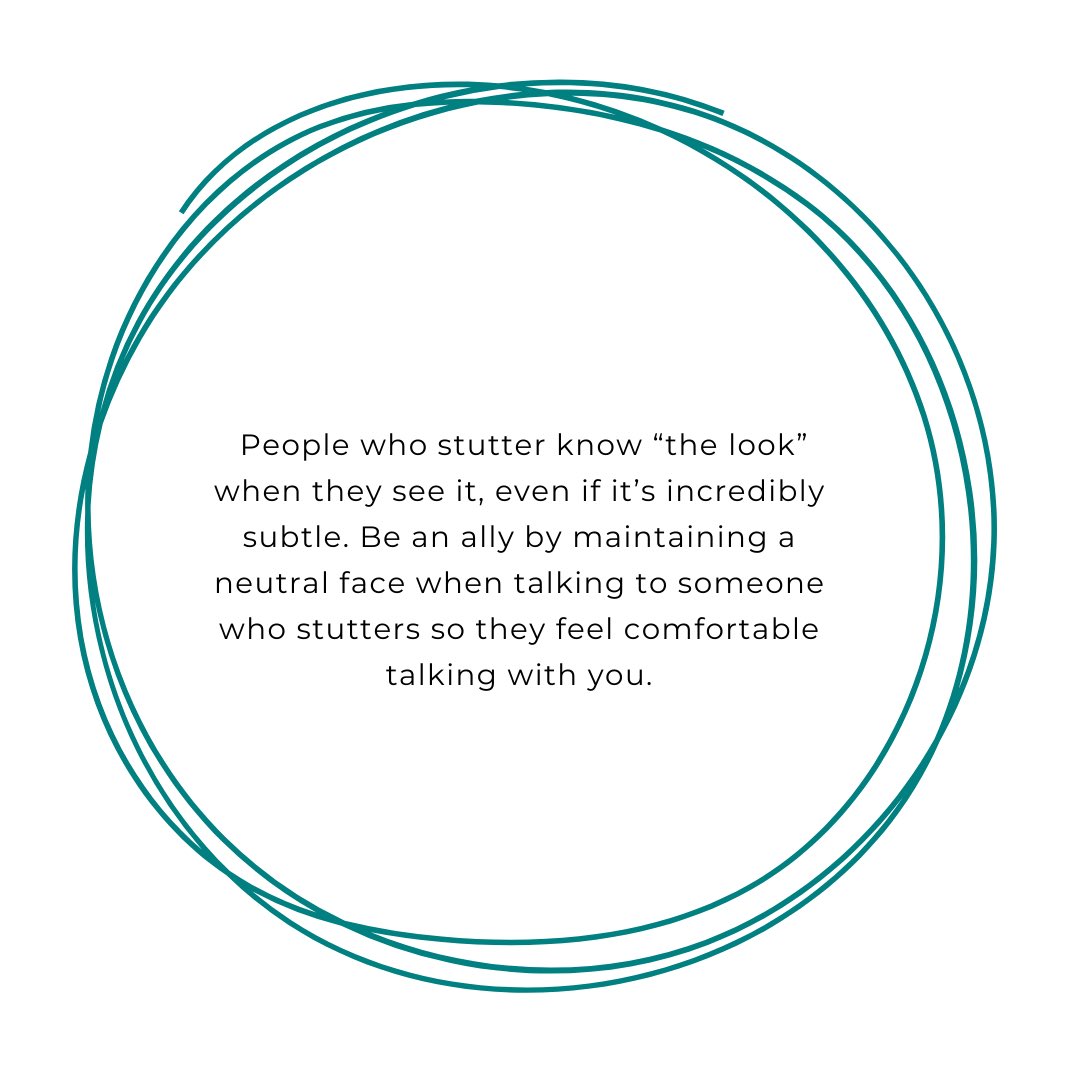
Today, we share a quote on the impact of listeners' reactions to stuttering, from the work of Gerlach-Houck, H., Kubart, K., & Cage, E. (2023).
Daniels, D.E., Boyle, M.P., & Archer, B. E. (2023). Stuttering, Intersectionality, and Identity: A Qualitative Analysis of the Experiences of Lesbian, Gay, and Bisexual Individuals Who Stutter. LSHSS, 54(1), 82-95.
🗣️ It's Day 2 of National Stuttering Awarness Week! 🗣️
Today, we share a quote on identity intersectionality from the work of Daniels, D.E., Boyle, M.P., & Archer, B. E. (2023)
for people who stutter.
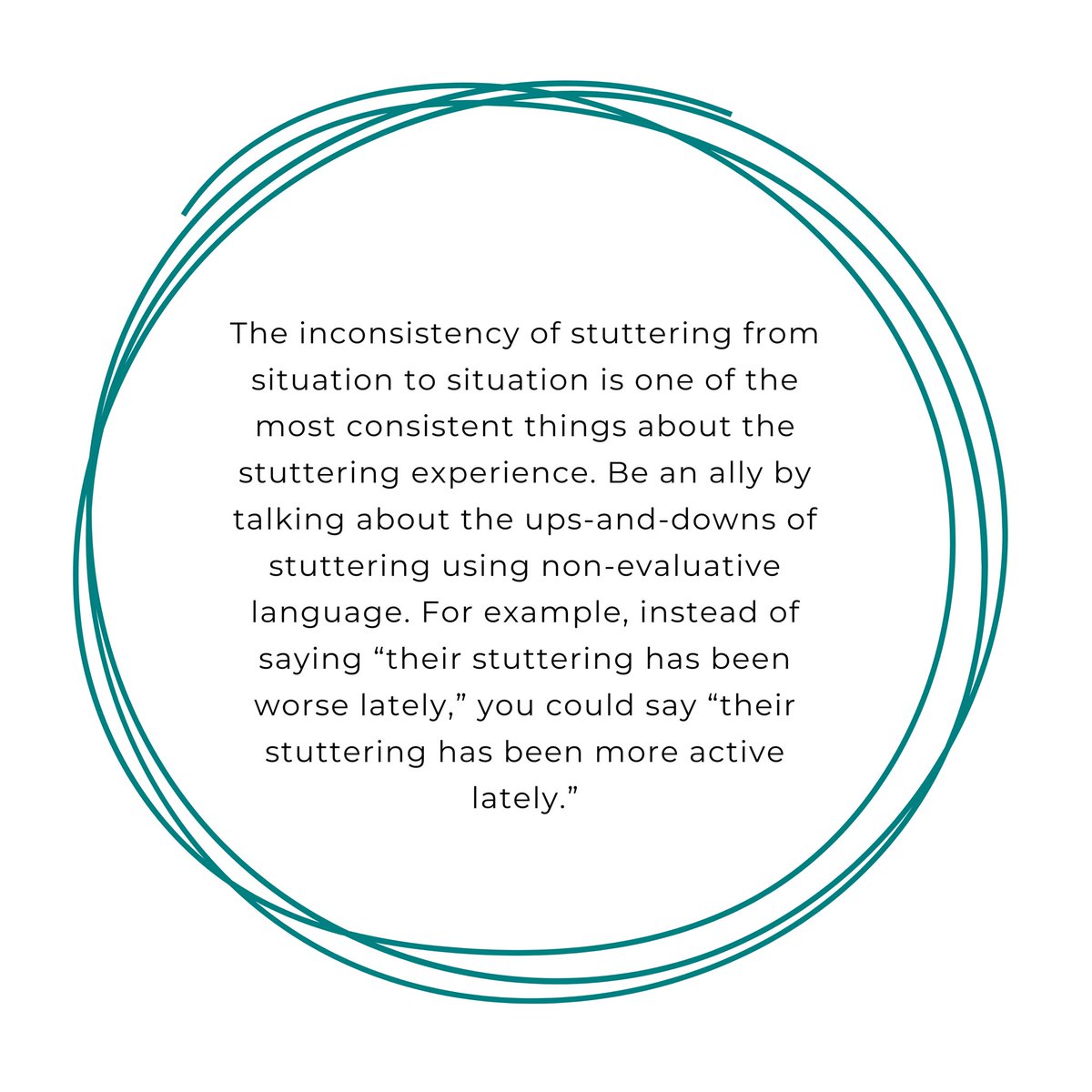
Check out this quote from an adult who stutters about the variability of stuttering. This experience is represented in the work of Tichenor, S. & Yaruss, J.S. (2018). A Phenomenological Analysis of the Experience of Stuttering. AJSLP, 27(3S), 1180-1194."
🗣️Today marks the start of National Stuttering Awareness Week!🗣️
Each day this week, we'll be featuring research on the lived experiences of people who stutter. Our hope is that by sharing firsthand experiences of stuttering, we can create a more understanding, inclusive world…
Inviting adolescents who do and do not stutter to complete a paid virtual study. Interested? Click this link to complete this brief eligibility screener. https://t.co/syqIXP7BZA
✨MEET OUR TEAM ✨Meet Peyton, one of our undergraduate research assistants! Peyton is a freshman from Cedar Falls, IA and is currently working on the Meta-analysis of mental health and well-being outcomes for people who stutter.
⚡️What we're working on⚡️ Attentional Bias
In your day-to-day interactions, people you talk to show different kinds of facial expressions and body language.
Do they avoid such negative emotional expressions because they are too much to process? We are currently using eyetracking methods to better understand how adolescents who stutter visually attend to social-emotional information -