Major-General Rabe Abubakar: The Wounds We Share
I have just read the statement by the Katsina State Government confirming the passing of Major-General Rabe Abubakar, rtd, a former military spokesman, while in captivity. Even though the statement says that “the deceased… died a natural death from complications of diabetes and hypertension,” this does not erase the horror of the circumstances in which he spent his final days. What haunts us is not only the manner of his passing, but the tragedy of a life of service ending in the hands of criminals who have exploited the dysfunctions of our society.
What happened to the General is a tragedy of immeasurable dimension. To return from a career that required putting one’s life on the line for one’s country, only to become a captive of ragtag criminals, is a fate no patriot deserves. It is a cruel reminder that this weather of insecurity is one we all breathe and feel. It bears our names, our faces, our families, and the histories of service behind its victims.
There is no dignified way to avoid the truth that, as a nation and as a government, we have let down the General and many others who have met similar fates. This does not take away from the efforts I know were ongoing to secure his release or rescue, nor from the renewed operations and proactive steps being taken to confront these criminal networks. But grief must never be managed with denial. Something more radical, more coordinated, and more sustained must be done to break this chain of tragic events. Contrary to the assumptions of some, nobody is immune.
What happened to the General is a cautionary tale for all of us in government today. The General, who once served in one of the most protected institutions in the country, could never have imagined such an ending. That is why it remains baffling when anyone assumes that those in public office are insulated from the failures and fractures of the nation. The same roads, the same communities, the same future, and the same consequences await us all.
As a northerner, I am doubly troubled by the direction in which our region has been dragged. No honest person can claim ignorance of how we got here. If we are even more honest, we must admit that the untrained, abandoned, and hopeless children on our streets are being turned into cannon fodder for present and future dysfunctions. Even if banditry and terrorism are defeated, a vulnerable demographic left without education, discipline, opportunity, or hope will remain available for other invidious agendas against the Nigerian state.
This is the part that should frighten us most. We once spoke of building human capital. Today, too many of our people are trapped in the desperate arithmetic of survival.
The government has the primary and non-negotiable responsibility to protect lives and property. But no government policy, however well designed, can fully overcome a society that refuses to confront parental irresponsibility, the abandonment of children, hostility to education in some communities, and the casual normalisation of neglect. Security is not sustained by bullets alone. It is sustained by schools, families, values, livelihoods, justice, and a population civilised enough to reject the temptations of nihilism.
And yet, we cannot afford to lose hope. Despair is exactly what these criminals want to manufacture. They want citizens to stop believing in the possibility of order, to stop trusting the state, and to stop imagining a country that can still be rescued. We must refuse them that victory. We must mourn the dead, demand better from the living, and insist that the Nigerian state still has the duty and capacity to reclaim every inch of its authority.
May Allah forgive him, grant him Aljannatul Firdaus, and comfort his family. My condolences also go to all families who have lost loved ones to this madness. May their grief not be in vain, and may our country find the courage to end this tragedy.
“Tonight, at my direction, brave American forces and the Armed Forces of Nigeria flawlessly executed a meticulously planned and very complex mission to eliminate the most active terrorist in the world from the battlefield. Abu-Bilal al-Minuki, second in command of ISIS…” - President Trump
Why do you think poverty and insecurity have persisted at this scale in Northern Nigeria? Almost every social problem you identify in Arewa today can be traced, in one way or another, to the collapse of education. Education is the reason most of us, just like our parents, are where we are today, and it remains the most transformative gift anyone can give another person.
Even the quality of our choices would change if we were sufficiently educated, from child spacing to electoral decisions. You are ashamed of becoming a bandit because you are educated, and you possess the skills to resist poverty because you are educated as well. A society that neglects education should not be surprised when poverty deepens, opportunities shrink, and insecurity finds fertile ground. That, tragically, has been the story of our region since 1960.
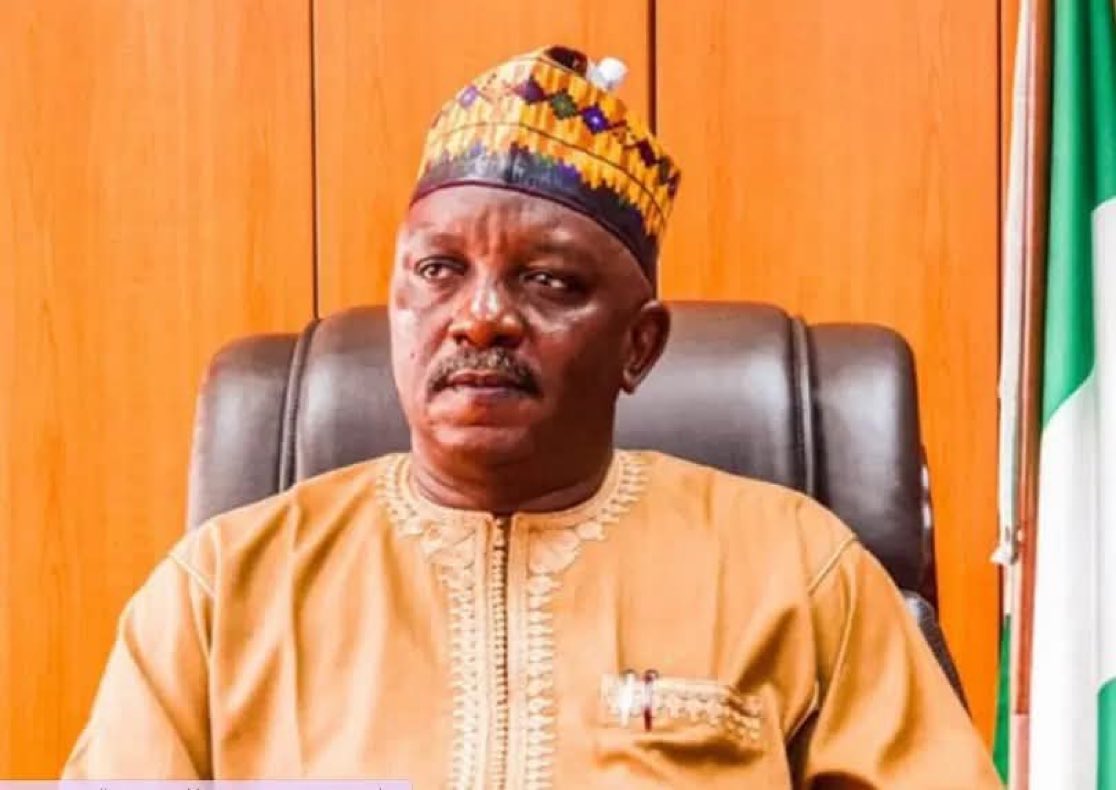
Late President Muhammadu Buhari appointed Saleh Mamman as Minister of power from a nobody, a common PHCN staff. This man thought the best thing to do is become fantastically corrupt by siphoning 33.8bn !
Money meant to better our power sector.
He has been sentenced to 75years imprisonment finally.
Our Politics of Self-Sabotage
The three-way de-marketing campaigns and cyber warfare among supporters of the three major opposition figures suggest that whatever allegations are levelled against the governing party for undermining the emergence of a robust opposition pale beside the opposition’s own apparent commitment to destroying itself.
Even with my allegiance to the party in power, I would be less than honest if I claimed not to desire a strong opposition capable of holding our democracy to account. Democracy itself requires a system of checks and balances, and it is not always practical to rely solely on the three arms of government to provide this restraint. They may, at times, be aligned in interest, especially the executive and legislative branches. This is why the vigilance of citizens and the strength of opposition parties remain among the clearest measures of a democracy. Citizens possess the moral authority to question power, while opposition parties possess the constitutional path to replace a government.
For those of us in advisory roles within government, a strong opposition also makes it easier to offer sober counsel to those in key administrative positions, because one can point to clear political evidence that X, Y, and Z constitute credible threats. But where X, Y, and Z are not only estranged and fighting among themselves, and where their supporters are more invested in tearing one another apart than presenting a coherent alternative, that persuasive leverage is lost. The opposition ceases to function as a warning signal and becomes, instead, a performance of avoidable self-sabotage.
As it stands today, even if we choose to flatter ourselves with denial, the opposition and its loudest online supporters appear to lack the logistical coherence and political foresight required to mount a disciplined challenge to the government. This is often what unrestrained ambition produces. Greed is not a strategy.
The same lesson applies, in a different but equally sobering way, to the northern political class within government today. Too many have pursued narrow self-interest at the expense of building a principled bloc capable of standing together when it matters. This is not an indictment of anyone, but a painful observation about the cost of political atomisation. It is truly sad to see how much collective influence can be diminished when personal calculations are allowed to outrun shared purpose.
Power, like opportunity, may take you as far as the river, but it cannot force wisdom upon you. Once there, it is your choice either to drink with gratitude and preserve the water for others, or to muddy it with greed, poison it with short-sightedness, and render it undrinkable for everyone, including your own thirsty self.
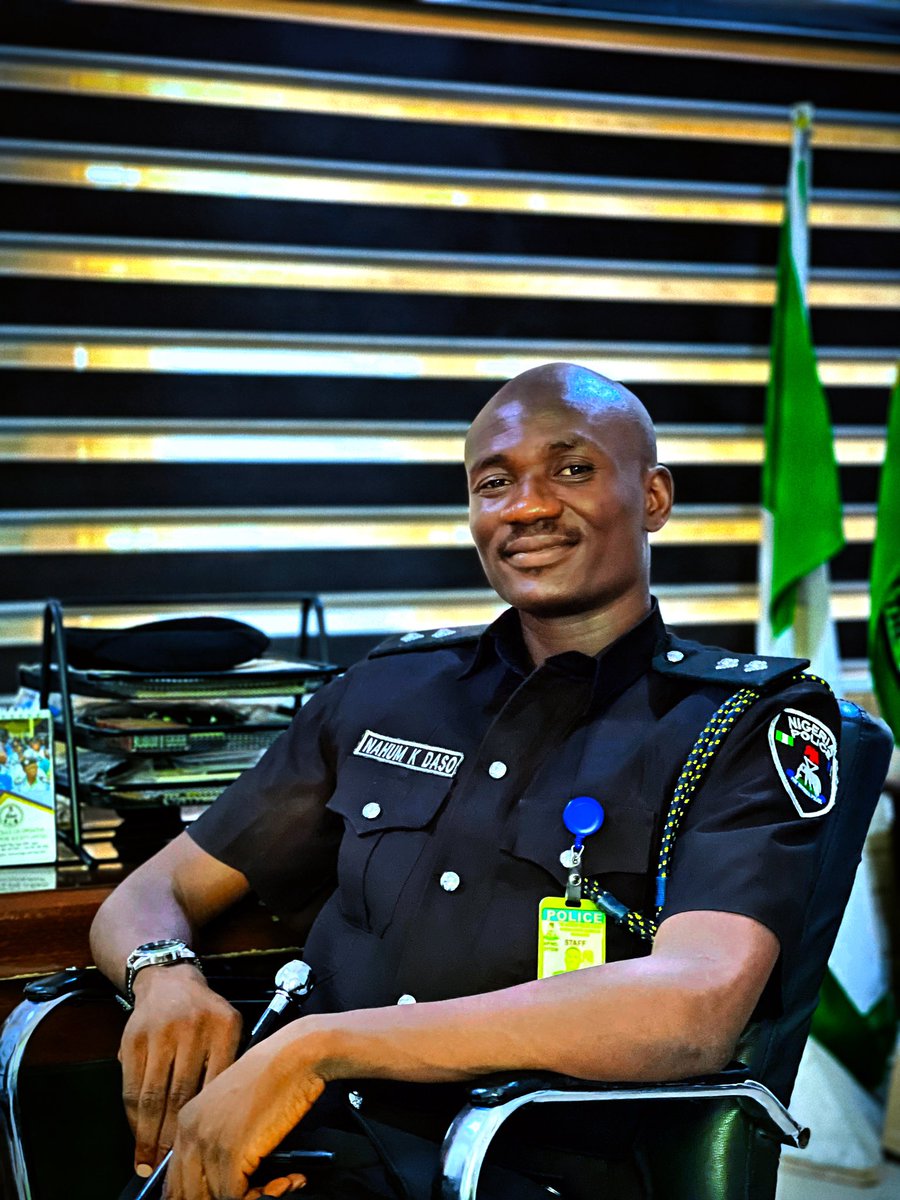
So this morning, the Lagos State rapid response squad on routine patrol of Ikeja Along came across an elderly woman whose vehicle had broken down.
Distressed and visibly in a hurry to keep an appointment, she was assisted by the patrol team, who helped fix the vehicle before she continued her journey. Kudos to the Nigerian police force.
Legacy of the Servant Leader: H.E. Umaru Musa Yar’Adua, 16 Years On
Today marks 16 years since our nation lost a dear hero, an icon of integrity, a selfless patriot, and a man I was privileged to call not just my boss, but my brother and worthy partner in service.
As I reflect on the passing of President Umaru Musa Yar’Adua, I am reminded of the shared passion we both held for a Nigeria where justice is not a slogan, but a lived reality for every citizen.
Our partnership was anchored on a common vision: to build an inclusive, united, and just nation. Yar’Adua was a man of quiet but profound conviction who believed that the strength of a country is measured by its commitment to the rule of law and the sanctity of the ballot.
He did not just lead; he served with a humility that is rare in the corridors of power, often putting national stability above personal or political gain.
His record in peace-building stands as an enduring legacy. He understood that true nation-building requires the courage to admit flaws and the sincerity to fix them.
For leaders, the life of Umaru Musa Yar’Adua serves as an enduring lesson. His example teaches us that leadership is a sacred trust, and that progress is only sustainable when it is rooted in transparency, accountability, and a genuine love for the people.
Sixteen years later, his strides continue to testify for him. As we remember this "Gentleman President," let us rededicate ourselves to the worthy causes he pursued with such passion.
I pray that Almighty Allah (SWT) continues to grant him eternal rest in Al-Jannah Firdaus.
-GEJ
2027: Maiduguri comes to a Standstill for Zulum, Gubio
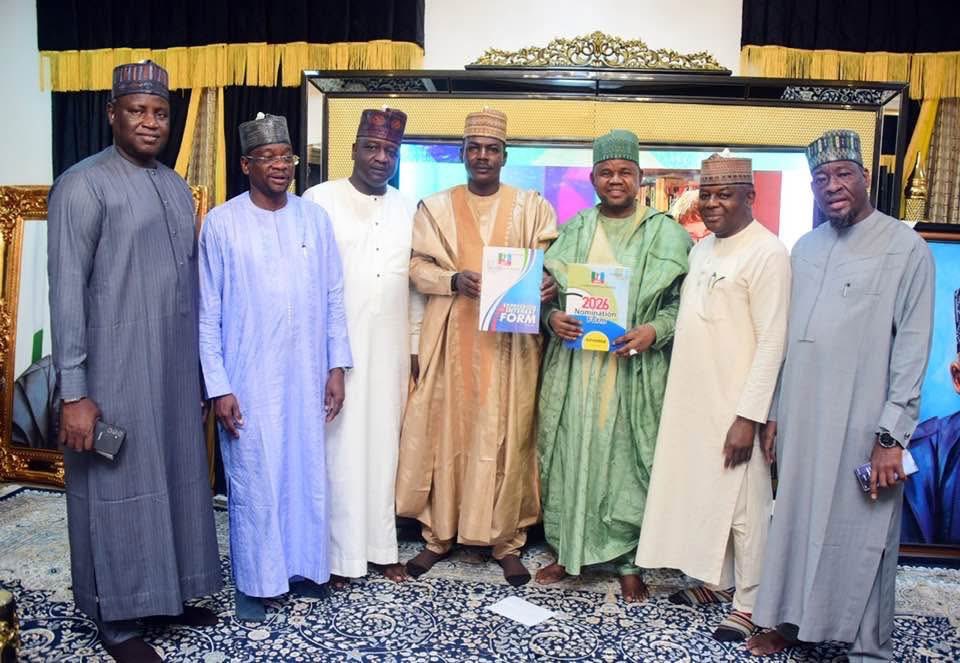
Maiduguri, Borno State capital, was brought to a standstill on Friday as thousands of jubilant supporters trooped out to welcome Governor Babagana Umara Zulum and his anointed governorship candidate, Engr Mustapha Gubio.
The mammoth crowd stretched from Muhammadu Buhari International Airport to major roads leading into the metropolis.
Governor Zulum and his entourage were returning from a high-level meeting in the nation’s capital where he formally presented Engr Mustapha Gubio to Vice President Kashim Shettima. During that closed-door session, Vice President Shettima, who was a former Borno State governor, gave his support, officially endorsing Gubio as the All Progressives Congress (APC) consensus candidate for the governorship race in 2027.
Addressing the crowd at the Government House, Zulum described the homecoming as “a testament to Borno’s unbroken unity and political maturity.”
Zulum unveiled Engr Mustapha Gubio as his preferred successor on Monday after purchasing the party’s Nomination and Expression of Interest forms for the 2027 governorship election under the APC platform.
The governor noted that the choice of Gubio was to sustain the momentum of the ongoing developmental service delivery by his administration since 2019.
On Zulum's entourage from Abuja include the Deputy Governor, Umar Usman Kadafur, the APC Deputy National Chairman, Ali Bukar Dalori, the former Governor, Maina Ma’aji Lawan, Senators Mohammed Tahir Monguno, Mohammed Ali Ndume and Kaka Shehu Lawan and the Minister of Agriculture, Abubakar Kyari.
Also part of Zulum’s entourage are the Speaker of Borno State House of Assembly, Abdulkarim Lawan, some members of the National Assembly, and party stakeholders.
Borno APC Adopts Engr. Mustafa Gubio as Consensus Governorship Candidate for 2027
Borno State Governor, Professor Babagana Umara Zulum, on Thursday formally presented Engr. Mustafa Gubio as the APC consensus governorship candidate to Vice President Senator Kashim Shettima at the Presidential Villa, Abuja.
Governor Zulum described Gubio’s emergence as the product of wide-ranging consultations among party stakeholders across the state, reflecting a strong unified position within the Borno APC.
“We commend President Bola Ahmed Tinubu for his strategic leadership, unwavering support, and guidance to both the Borno State Government and the APC,” Zulum said.
He added: “I wish to express my profound gratitude to President Bola Ahmed Tinubu for the leadership he is providing in the country and for the enormous support to Borno State as well as the APC, which has been unprecedented. The President has been instrumental in the emergence of Gubio as the consensus candidate.”
Dignitaries in attendance included:
Former Governor Senator Ali Modu Sheriff (represented by Senator Maina Ma’aji Lawan)
Deputy Governor Hon. Umar Usman Kadafur
APC Deputy National Chairman, Hon. Ali Bukar Dalori
Senators Mohammed Tahir Monguno, Mohammed Ali Ndume, and Kaka Shehu Lawan SAN
Speaker, Borno State House of Assembly, Hon. Abdulkarim Lawan
Hon. Abdulkadir Rahis and Hon. Mukhtar Betara Aliyu
My dad is the one who buys foodstuffs in the house. He buys everything in large quantities. Everything! So we've never suffered for food. The only time he eats at home is dinner. Except for weekends. One day, he said he wanted yam because he bought it in large quantity the previous month. And we told him yam is finished. He asked, "All that yams?" We answered yes. His response was, " Oga oo, I didn't even eat from it." He just went out.
We felt bad when he came back carrying bag of yams, that day I realised that he doesn't even eat much from what he worked hard for. Yet he did not stop buying.
With great respect, Mr President, prioritise internal peace and stability first, and achieve it before sniffing around global affairs. I can't believe your audacity! You must be very shameless, sir.
With great respect, Mr President, prioritise internal peace and stability first, and achieve it before sniffing around global affairs. I can't believe your audacity! You must be very shameless, sir.
Nigeria is for global peace and stability and for its friends and partners anywhere.
I am particularly concerned by the attacks on UAE's civilian and economic infrastructure. I reaffirm my support and solidarity to the President of UAE and the measures he took to safeguard civilian populations and critical infrastructure.
President Tinubu Approves ₦68 Billion for Maiduguri Emergency Power Plant, Borno Governor Zulum Commends the Swift Federal Intervention.
Borno State Governor, Professor Babagana Zulum, has expressed gratitude to President Bola Ahmed Tinubu for approving ₦68 billion in operational support for the Maiduguri Emergency Power Plant (MEPP).
The funding will be disbursed as a monthly intervention of ₦2 billion from March 2026 to December 2028, specifically to bridge the existing funding gap in the plant’s operations.
The MEPP was initiated in 2021 as a presidential intervention to address the prolonged power outage in Borno State caused by insurgents vandalising critical power infrastructure, which had left the state without electricity for nearly two years. The plant was commissioned in 2021 and later upgraded to 50MW capacity in December 2023.
In a statement issued by his Special Adviser on Media, Dauda Iliya, Governor Zulum described the approval as timely and impactful: “On behalf of the government and people of Borno State, I wish to most profoundly appreciate President Bola Ahmed Tinubu (GCFR) for approving N2 billion monthly OPEX intervention funding from March 2026 to December 2028, totaling N68 billion to bridge the existing funding gap in the operations of the Maiduguri Emergency Power Plant (MEPP).
“This has not only revived economic activities but has also significantly improved livelihoods and strengthened efforts to address security challenges.”