Europe first, then the world.
UMA was born global, with teams coming from top AI labs worldwide and international investors. We start in Europe to seize the huge opportunity right at our doorstep.
Learn more in @AWSstartups' report 👇
We hosted @Numerama in our lab for their deep dive on the humanoid race between the US and China.
Our CEO @RemiCadene on what real autonomy looks like beyond spectacular demos, and where Europe fits in.
Full video (in French) 👇
At @UMA_Robots , we are convinced that latent-space world models will unlock scaling for robotics
1 position left for the roles
🧪 Research Scientist:
https://t.co/9XYHAzKDyt
🚀 Research Engineer:
https://t.co/27BTppPQto
It will accelerate UMA’s world models that plan in latent space, simulating trajectories before a robot even moves, so safety and efficiency come by design. And because they can learn from unlabeled video rather than robot data alone, these world models can build an understanding of the physical world faster.
Excited to work along 9 other teams toward the next generation of frontier AI labs.
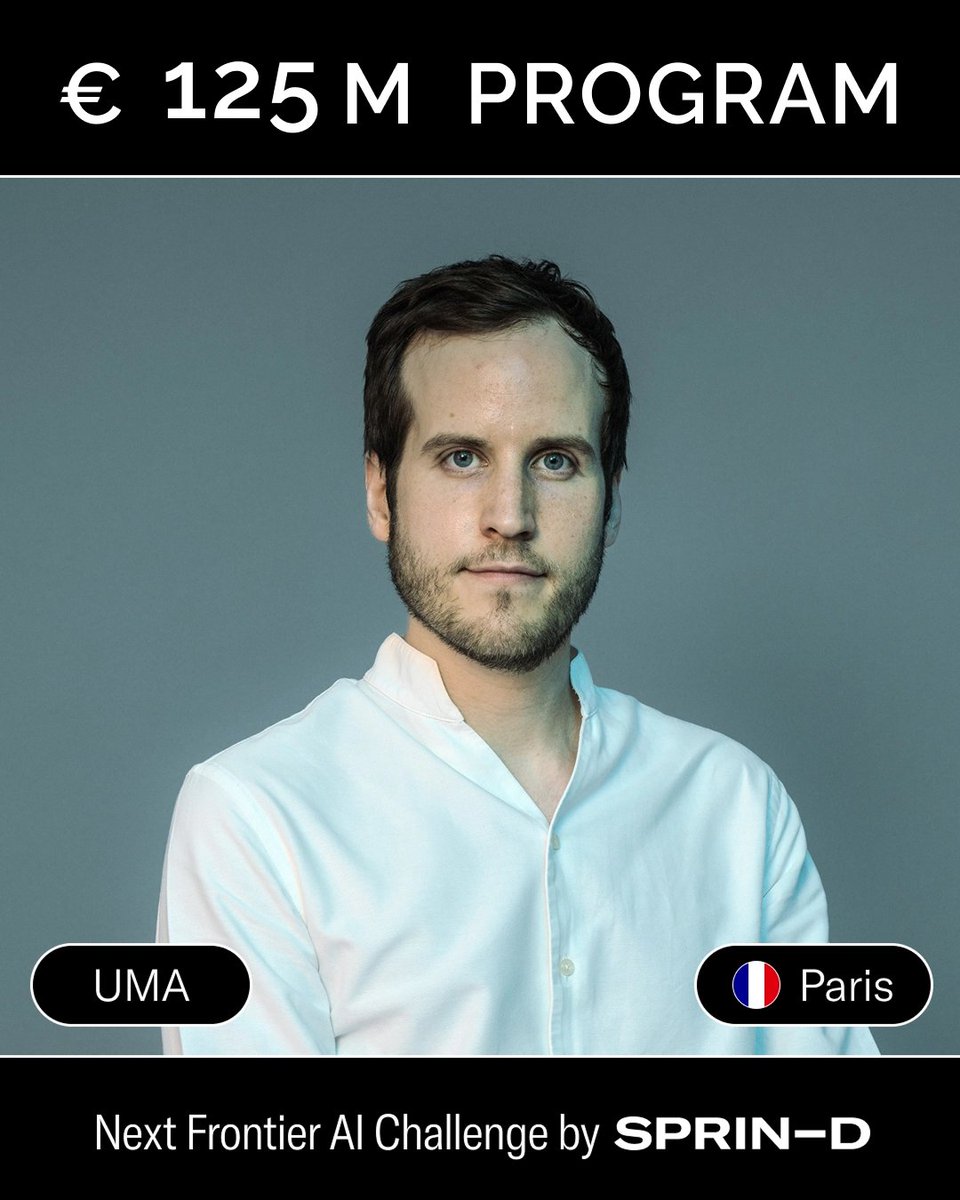
We're selected among 2% of startups for SPRIND's Next Frontier AI Challenge
This competitive program brings €125M to support teams building new AI paradigms.
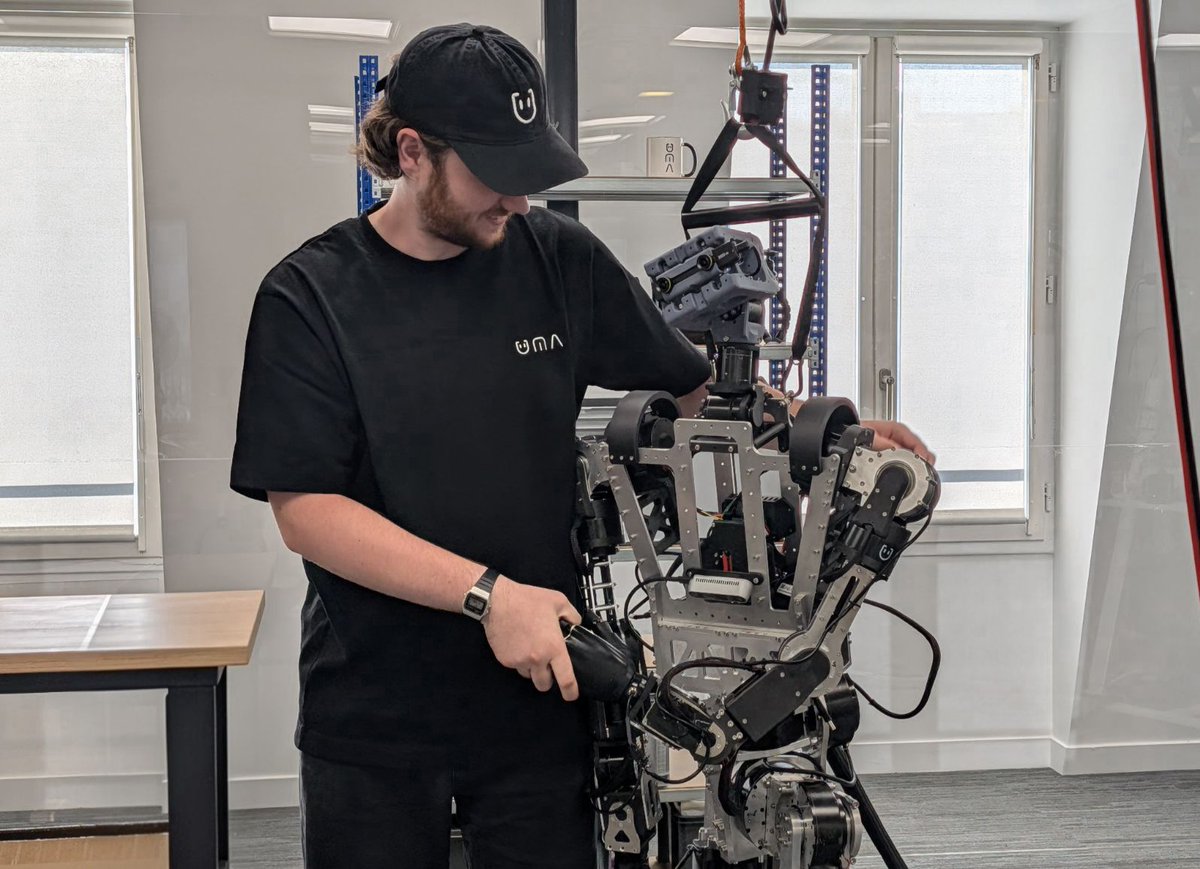
@LouisLeLay4@UMA_Robots The guy that makes our robots move!
It's amazing how much you've achieved already.
Can't wait for the next steps! (pun intended😉)
At UMA, we build and own the full stack, from hardware to software.
This allows us to bake safety in at all levels, rather than bolt it on as an afterthought.
Because trust is everything when robots share our world.
Reach out if you want to be part of this journey.
Former Tesla scientist Rémi Cadene plans to produce a humanoid AI robot for manufacturing, logistics and homes, with his Paris-based startup #UMA. He showed an early prototype at their Paris HQ yesterday :
We measure our model’s performance from a deployment perspective: how many hours can the robot run autonomously in a challenging and messy environment?
Excited by what we’ve achieved in the last 9 months.
We went from a model that could merely pick objects to one that can run autonomously for hours on challenging, high-precision tasks.
In less than 9 months, we designed and assembled a prototype of our humanoid robot, built our data pipeline, training infra, firmware, and AI stack from the ground up.
The task below requires millimeter-level precision. It's a validation of the entire pipeline.