This fortnight on the Intel we ask:
🔴 Is long-term planning still a viable strategy or just a comfort blanket?
Our expert contributors pitch in:
⚫ UNDP’s, Millie Begovic
⚫ Development Policy Lab’s, Terence Wood
⚫ The Asia Foundation’s, Yasuhiko Matsuda
Explore their three competing views, here 👉 https://t.co/aLGgkYxWwO
Don’t miss an edition, sign up to our list to get the Intel straight to your inbox 👉 https://t.co/mymdpEwTDY
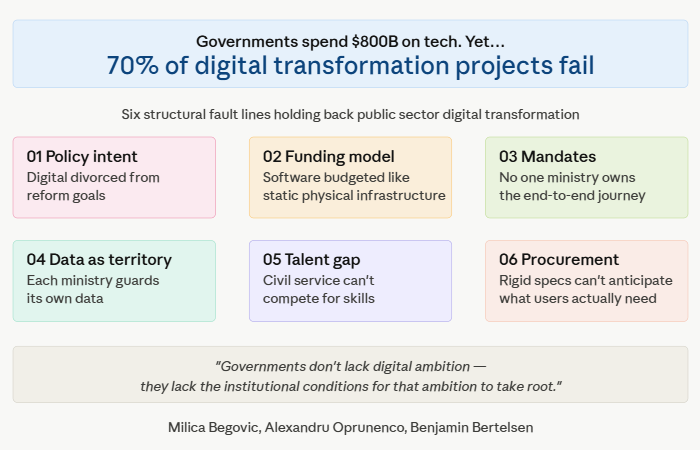
Why do 70% of #digital transformation projects in the #public sector fail to reach their goals?
The problem is rarely the technology itself but #structural conditions in which digital transformation exists.
https://t.co/ZEtzrLDAgM
Discussed wth Mahdi Amin, Adviser to 🇧🇩 Prime Minister @trahmanbnp how @UNDP_BD & Gov can leverage #AI, innovation, & global experience to deliver on national priorities. Excited to focus on Centre of Govt transformation for policy/finance coherence.
@UNDPasiapac@stefanliller
A key point in @StanfordHAI's #AI index is on #sovereignty: National AI strategies & state-backed investments in supercomputing are rising. Open-source models from the global majority are now outpacing Europe and approaching the US on GitHub, leading to more diverse models.
Introducing the #AIIndex2026: Our most comprehensive, independently sourced data analysis of AI’s trajectory, with a clear-eyed assessment of the critical gaps that remain. As AI advances rapidly, can the systems built around it keep up? Explore the data: https://t.co/WqRGeRZIjA
The relevance of 'stack thinking' to the work of governments and other organisations. 60 years since the Internet was created many of its design principles are still poorly understood. This piece describes their relevance for everything from AI to law and education, the role of centres of governments to regulation. Most public institutions are still stuck in late 19th-century silo structures: these are some of the alternatives. https://t.co/le0Fdq3Hoo
Startups in India and Indonesia are bypassing expensive Silicon Valley chips to build "frugal AI" models that run on low-end devices and offline hardware https://t.co/ZEi2vJWrKY
Systems change doesn't behave neatly and scalable. Tanya Kak from @RNP_Foundation asks: Where does “scale thinking” make sense, and where must we re-imagine our way of thinking about progress and innovation?
And how might philanthropic orgs engage?
https://t.co/bgy3BzXPaW
Engineers and physicists studied how to coordinate networks of researchers around Grand Challenges and found: you need top-down mission framing; bottom-up R&D and system-level support that connects political priorities with technical realities.
https://t.co/yjXzyZrIQ1
"From Delhi, [AI for social] impact looks neat. It fits into slides, metrics, and carefully chosen words. In interior Meghalaya, it looks nothing like that."
A view on transformation of public services outside of capitals and headquarters by @WadhwaniAI
https://t.co/UIAWuijDBu
Post #IndiaAIImpactSummit2026, @KapoorAstha looks at AI governance & how it must move beyond state-centric oversight & corporate self-regulation. She lays out new forms of sovereignty defined by the communities that build, use and are affected by AI.
https://t.co/7dKIRaarjA
The rise of #plastic is not simply a waste problem. It is an oil growth strategy. Yet regulation remains focused on the downstream (litter, recycling, waste). No recycling target can neutralise exponential production growth. @Gardiner_Beth
https://t.co/puKeNv5y9F
This heat map shows: Democratic city governments in Europe innovate for solutions and orchestration toward #green#transitions. What is missing, however, is phasing out unsustainable systems that come with a political cost.
https://t.co/tEmwFLbKdT
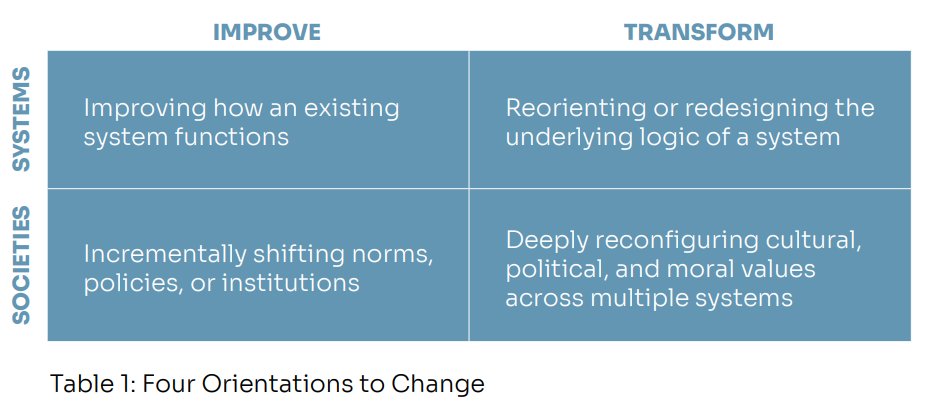
Great resource about the different levels of #systems change and their practical implications for different societal challenges. @Tamarack_Inst
https://t.co/dg9v7CyLI1
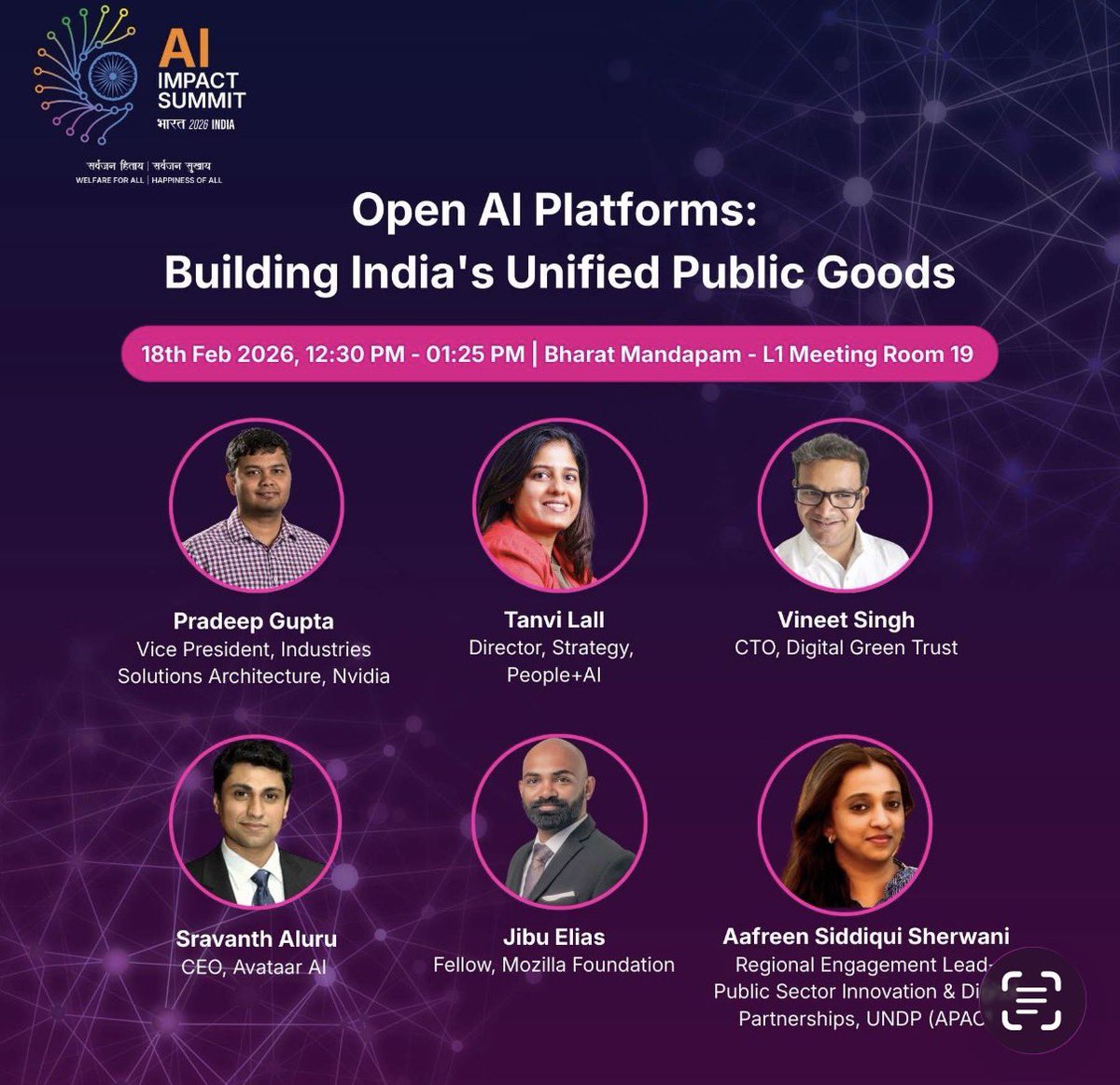
At the @OfficialINDIAai Summit?Join me today as I moderate this panel with rich experience and insights on Open AI Platforms with Pradeep Gupta @nvidia,Tanvi Lal @PeoplePlusAI, Vineet Singh @digitalgreenorg Trust, Sravanath Aluru https://t.co/Drz1r1G88H & Jibu Elias @mozilla foundation.
Happening at 11:30am-12:30 pm IST today #IndiaAIImpactSummit2026
---
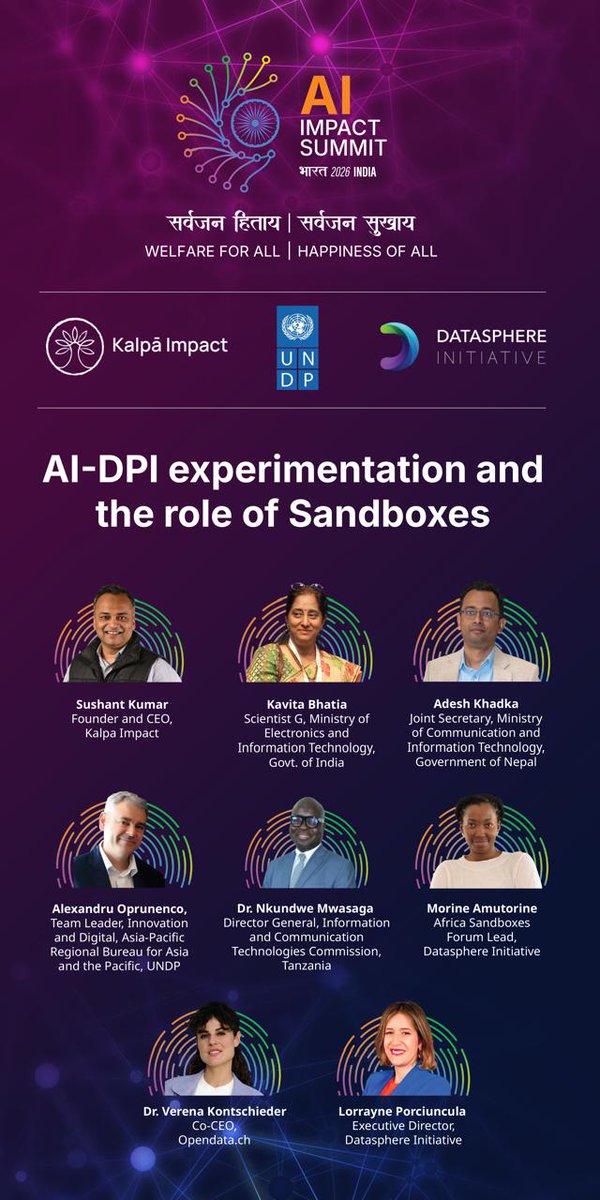
⁉️How do sandboxes provide controlled settings to test new technologies while involving diverse stakeholders and build trust?
👉🏼Follow the livestream on https://t.co/BE0JXmZne7
🤖It’s #IndiaAIImpactSummit2026 week in New Delhi! As we gear up for this global summit, India continues to demonstrate what’s possible when digital infrastructure, skills, and governance advance together with a human-centric lens.
Insights and analysis in @UNDPasiapac Next Great Divergence report amplifies main message: turning AI adoption into people-centered development outcomes is a winning strategy to make sure many more millions benefit and prosper!
Read the @UNDP report: https://t.co/KjNRg3ZbwP
#IndiaAIImpactSummit #AIforDevelopmentlead
📍At the #IndiaAISummit this week to discuss
- how #sandboxes can support accountable AI adoption in DPI systems
- what AI frameworks enable #interoperability in India & the Global South
All sessions are livestreamed here: https://t.co/Yau7fSwWGA
@AlexOprunenco@afreenundp
Driving a Green Transition in Dhangadhi
@UNDPNepal, together with Dhangadhi Sub-Metropolitan City, has implemented a Green Transition Portfolio to advance sustainable, circular, and resilient urban development. The portfolio brings together interventions across waste circularity, nature-based solutions, green skills, and inclusive governance—creating green jobs and strengthening local institutions.
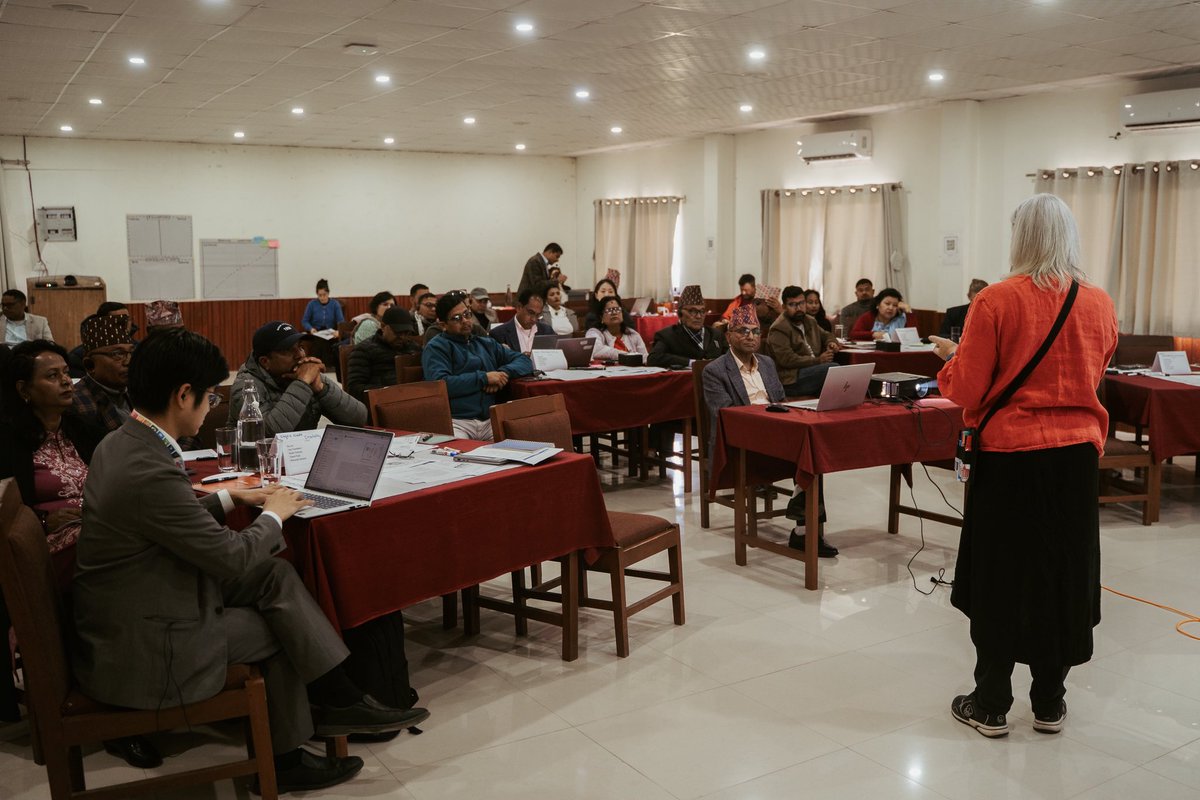
📍This week’s learning workshop created space for collective reflection on early results—documenting lessons, identifying gaps, and refining pathways to scale, replicate, and integrate successful initiatives into policy and practice.
Speaking at the event, Mayor of Dhangadhi Sub-Metropolitan City, Gopal Hamal, stated “Working together under @UNDP’s Green Transition portfolio, we are taking forward efforts to make Dhangadhi a more sustainable city. By introducing the concept of 'Upcycling', UNDP is covering areas from creating green jobs to strengthening sustainable waste management. Additionally, through initiatives that are training representatives from 84 palikas on circular and green economy practices, Dhangadhi is now emerging as a pilot model for the province and for Nepal.”
Similarly UNDP Deputy Resident Representative, Julien Chevillard added “UNDP’s Green Transition portfolio is supporting Dhangadhi with a range of interventions such as e-waste management, green restoration, green skills development, and energy-efficient buildings amongst many others. Through this workshop, we are reviewing the impact of these initiatives and making necessary adjustments to enhance their effectiveness and efficiency. I thank the Mayor for his leadership in creating an enabling space for collaboration, and for positioning Dhangadhi as a model from which other cities can learn, contributing to a more sustainable Nepal.”
Together with the local government, communities, youth, women, and the private sector, we are accelerating a green transition that works for people, planet, and prosperity.
5 yrs into our #portfolios for #systems change journey, we’ve learned: deeper change requires the right organizational and political conditions. In her latest piece, @ElaMi5, Dep. Dir. of @UNDPDigital, outlines the components of a #transformation stack.
https://t.co/Q5IwK9zV4z
Proud of our team member @afreenundp who drives systems change on multiple fronts and has been recognized by @RockefellerFdn as a #BigBets Fellow. Here, she outlines @ourcommonair's approach to move from calls to action to policies, research and clear commitments for clean air.
In our newest #BellagioBreakthroughs, #BigBets Fellow @afreenundp of @ourcommonair talks about why clean air creates healthier and more prosperous futures, what it takes to turn shared understanding into actual engagement, and the power of convening to create lasting change. https://t.co/s56rEsMjhn