📢 UIS is looking for a Consultant – International Recommendations for a Culture Satellite Account
Interested in cultural statistics, the creative economy, and data for policymaking? This consultancy opportunity with the UNESCO Institute for Statistics will support the development of international recommendations for a Culture Satellite Account, helping strengthen how countries measure the economic contribution of culture.
The role contributes to global efforts to improve data systems for culture and the creative sectors.
Learn more and apply: https://t.co/cWK1sI4WGC
#UNESCO #Culture #CreativeEconomy #CulturalStatistics #Consultancy
Strengthening Education Data Harmonization Across Latin America and the Caribbean
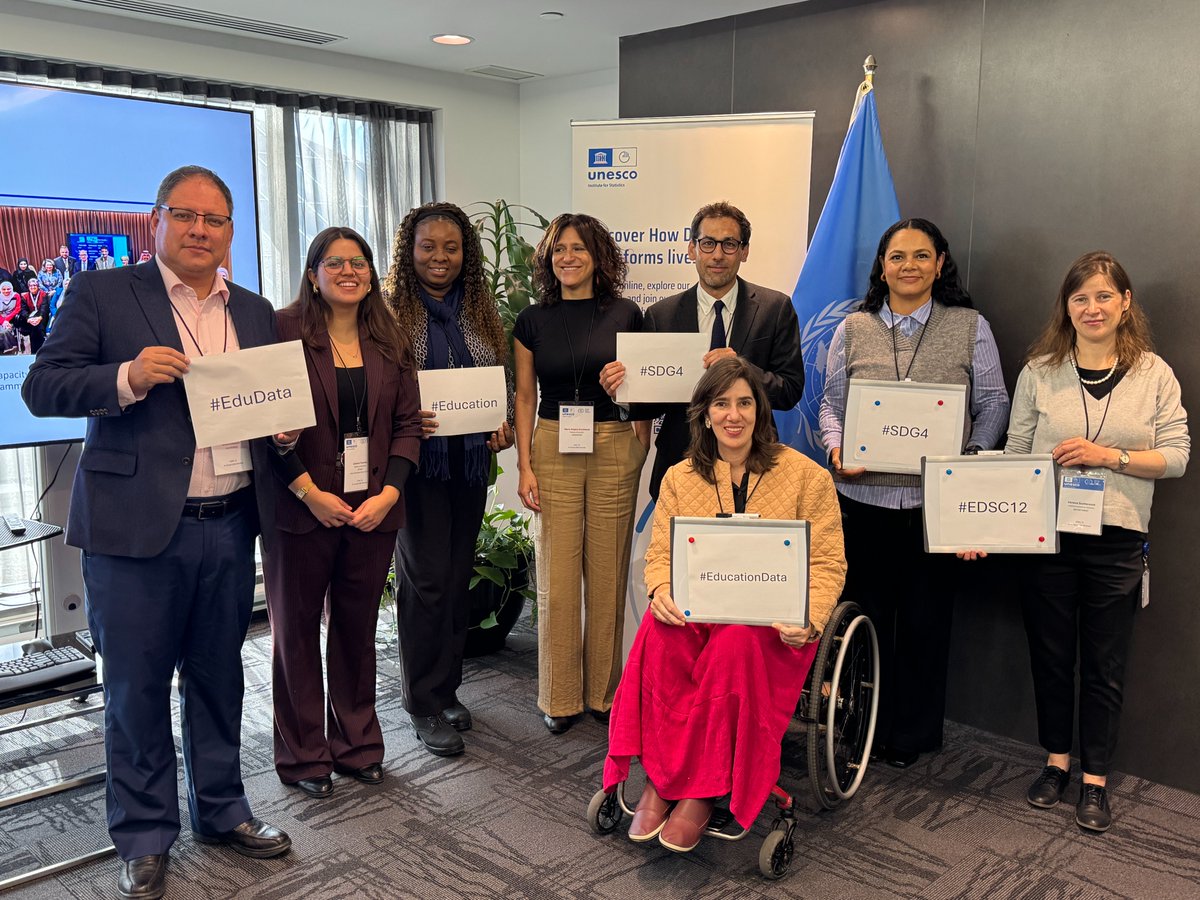
On 24 April, the Harmonization and Comparability of Education Statistics in Household Surveys in Latin America and the Caribbean Working Group was officially launched, bringing together 14+ National Statistical Offices.
Led by INEI Peru, with technical support from ECLAC and the UNESCO Institute for Statistics (UIS), the initiative aims to improve the comparability and reliability of education data to better inform policymaking.
Coordinated by the UIS Regional Field Network Advisor Manuel Alcaino, this collaboration reflects a shared regional commitment to placing evidence and comparable education data at the heart of policymaking.
#EducationData #SDG4 #UNESCO #UIS #ECLAC #LatinAmerica #Caribbean #DataForPolicy #EducationMonitoring
What if data became a catalyst for industrialization in Africa?
At #ARSTI2026 in Addis Ababa, UIS’s Rohan Pathirage explored how data can help bridge the gap between research, innovation, and industrialization.
The challenge is clear:
R&D intensity in Sub-Saharan Africa is just 0.38% of GDP, far below the 1% target. Researcher density remains around 90 per million inhabitants.
So what is changing?
Through UIS and UNESCO, countries are supported with:
• Capacity development across the full data cycle
• Hands-on technical assistance and training
• Pilot surveys and adapted methodologies
• Partnerships with initiatives like AUDA-NEPAD’s ASTII
Data must move beyond measurement.
It must drive transformation, informing policy, guiding investment, and enabling innovation.
What if data became a high-speed highway for industrialization, not a rear-view mirror?
This is the transformation we are collectively working on to accelerate.
#STIForum #ScienceTechnologyInnovation #UNESCO #UIS
Le français suit
Teachers at the heart of quality education.
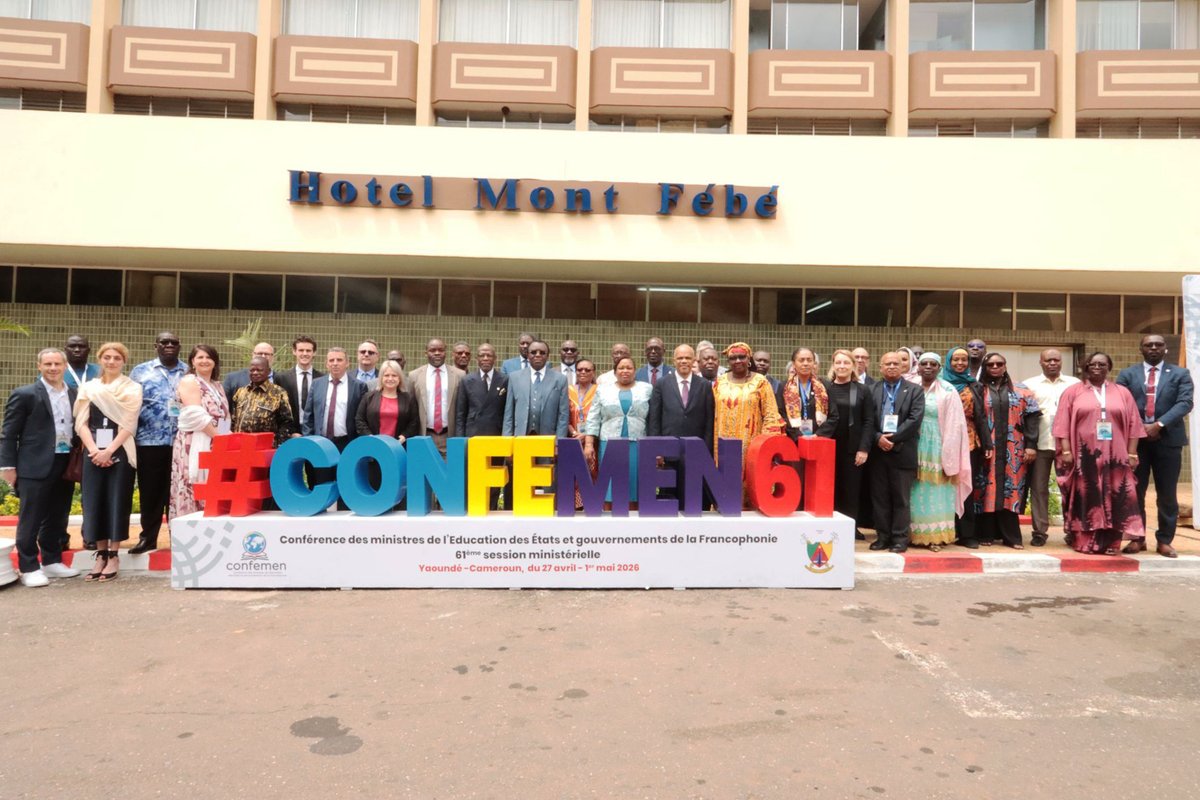
At @CONFEMEN in Cameroon, leaders highlighted a clear priority: elevating the teaching profession through stronger data systems.
UNESCO Institute for Statistics is advancing this through:
• LASER, covering 205 countries to strengthen education data ecosystems
• AMPL, active in 24 countries, improving data on foundational learning
“Elevating the teaching profession and strengthening data systems go hand in hand to achieve the sustainable transformation of education,” the Director underlined.
Explore UIS tools: https://t.co/892JppKezw
**
Les enseignants au cœur d’une éducation de qualité.
À @CONFEMEN au Cameroun, une priorité s’impose : valoriser la profession enseignante grâce à des systèmes de données renforcés.
Parmi les avancées récentes de l’ISU :
• LASER, couvrant 205 pays pour renforcer les écosystèmes de données éducatives
• AMPL, actif dans 24 pays, pour améliorer les données sur les acquis d’apprentissage fondamentaux
« Valoriser les enseignants et renforcer les systèmes de données vont de pair pour réussir la transformation durable de l’éducation », a souligné le Directeur.
Découvrez les outils : https://t.co/892JppKezw
#CONFEMEN61 #Education #Données #SDG4 #UIS #UNESCO #Africa
New appointments to the UIS Governing Board (2026–2029):
• Katarina Wizell, Head of Labour Market and Education Unit, Statistics Sweden
• Saidou Madougou, Director, Education, Science, Technology and Innovation Department, African Union Commission
• Jo-Anne Archibald, Principal Director, Culture and Creative Industries Policy Development and Monitoring Branch, Jamaica
Welcome to the new Board members.
Learn more: https://t.co/Mc0Y7vRbLK
#UNESCO #UIS #OfficialStatistics #DataForDevelopment
Le français suit.
25 years connecting the world through data.
On 21 April 2026, the UNESCO Institute for Statistics (UIS) marked its 25th anniversary in Montreal, bringing together partners, policymakers, and experts on the margins of #EDSC12.
For 25 years, UIS has been the global reference for data in education and beyond: science, culture, communication, and information.
Its mission is clear: produce data that are relevant, comparable, and actionable.
Because data are not an end in themselves.
They are a driver to connect:
→ countries
→ data and decision-making
→ global ambitions and local realities
With strong support from Canada, Quebec, Montreal, and Montreal International, UIS operates in an environment that fuels innovation.
25 years of impact.
The next 25 will be decisive.
**
25 ans à connecter le monde grâce aux données.
Le 21 avril 2026, l’ISU a célébré son 25e anniversaire à Montréal, réunissant partenaires, décideurs et experts en marge de #EDSC12.
Depuis 25 ans, l’ISU est la référence mondiale pour les données en éducation et au-delà.
Sa mission : produire des données pertinentes, comparables et exploitables.
Car les données ne sont pas une fin en soi.
Elles permettent de connecter :
→ les pays
→ les données à la décision
→ les ambitions mondiales aux réalités locales
Soutenu par le Canada, le Québec, Montréal et Montréal International, l’ISU évolue dans un environnement propice à l’innovation.
25 ans d’impact.
Les 25 prochaines années seront décisives.
#UIS #UNESCO #Montreal
#EDSC12 | Day 2: From data to decisions
Robust measurement is not optional, it is what makes data credible for real policy action.
Key takeaways:
• Financing tracked through an #equity lens
• Stronger integration of statistics for SDG 4 monitoring
• Greater country engagement in validating modelled indicators
Administrative data priorities:
Tracking participation from pre-primary to post-secondary beyond 2030, improving data on learners with disabilities, updating out-of-school estimates in crisis contexts, and scaling LASER diagnostics through country experiences.
A critical discussion on languages of learning in Sub-Saharan Africa called for better alignment between data, curriculum, and assessment to support equitable foundational learning.
Looking ahead → #EDSC13 in Paris, April 2027
The SDG 4 Scorecard on national benchmarks (2026) was unveiled ahead of its official launch.
👉 Read more: https://t.co/XUuLyK3YBY
#UNESCO #UIS #EducationData #SDG4
#EDSC12 | Day 1: From frameworks to country realities
Day one set the tone: turning global frameworks into actionable, country-level impact.
Focus areas:
• Teacher policy indicators
• Greening the curriculum
• ISCED revision updates
• Household surveys
• GAML’s ongoing work
A clear message from UIS and the GEM Report: Stronger data is key to better policies and faster progress toward #SDG4.
Country insights from Nigeria, Oman, and Lao PDR showed both progress and the challenge of aligning global standards with national realities.
Key update: UIS is revising its data dissemination calendar, main release in November, refresh in May, to improve quality, efficiency, and relevance.
Across all sessions, one thread remained: Data is the foundation of effective education systems. 👉
More here: https://t.co/XUuLyK4wrw #EducationData
#UNESCO #DataForPolicy #GlobalEducation #UIS
One day ahead of #EDSC12, discussions are already underway.
Experts and working groups are diving into education system data, household surveys, teacher indicators, and learning outcomes. Different contexts, one shared goal: better tracking progress towards #SDG4.
Measuring education goes beyond numbers. It’s about understanding learning pathways, uncovering inequalities, and informing decisions. This means strengthening indicators and clarifying their definitions.
A shared conviction is emerging: we go further when we learn from one another.
👉 Read more about the meeting here: https://t.co/Q8dZl4Y4ux
#EDSC12 #EducationData #DataForDevelopment #UNESCO #UIS
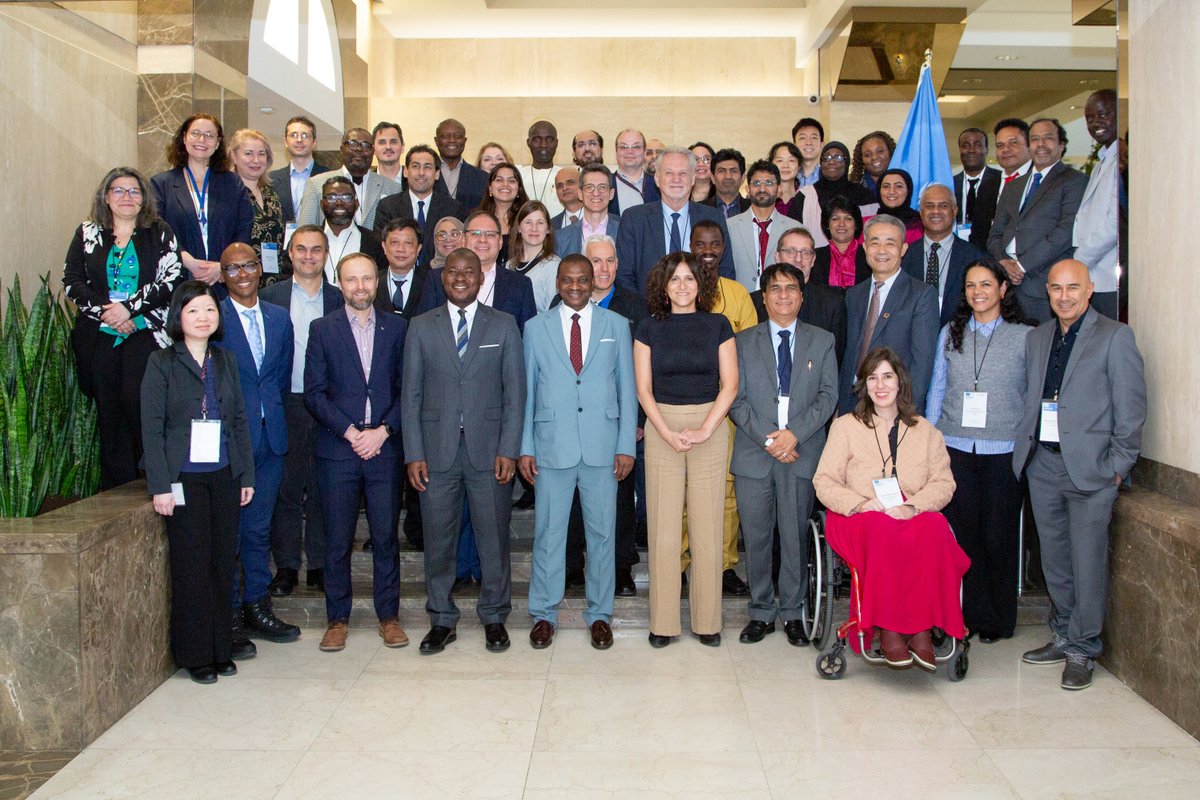
In the lead-up to 2030, the Education Data and Statistics Commission is convening in #Montreal for its 12th meeting on 21–22 April 2026.
Discussions will focus on strengthening data systems, improving #SDG4 indicators, addressing gaps in learning outcomes and equity, and advancing #innovation in data collection and use.
The meeting provides a strategic opportunity to reinforce global coordination and support countries in translating data into effective and evidence-based policies.
👉 Learn more about the meeting here: https://t.co/Q8dZl4Y4ux
#EDSC12 #EducationData #DataForDevelopment #UNESCO #UIS
New regional assessments are helping fill gaps in SDG 4.1.1 monitoring:
• LANA 2023 (4 countries)
• SEA-PLM 2024 (6 countries)
Better learning data helps shape stronger education policies.
🔎 Explore the data: https://t.co/B7E62wp5tw
#SDG4#LearningData#EducationStatistics
Are teachers meeting minimum qualification standards?
Globally, about 8 in 10 teachers meet required qualifications. Most regions remain stable, but shares remain lower in Sub-Saharan Africa.
Teacher quality is key to improving learning outcomes.
Explore the data: https://t.co/wCwP2eJMGz
#Teachers #SDG4 #EducationQuality #UISData
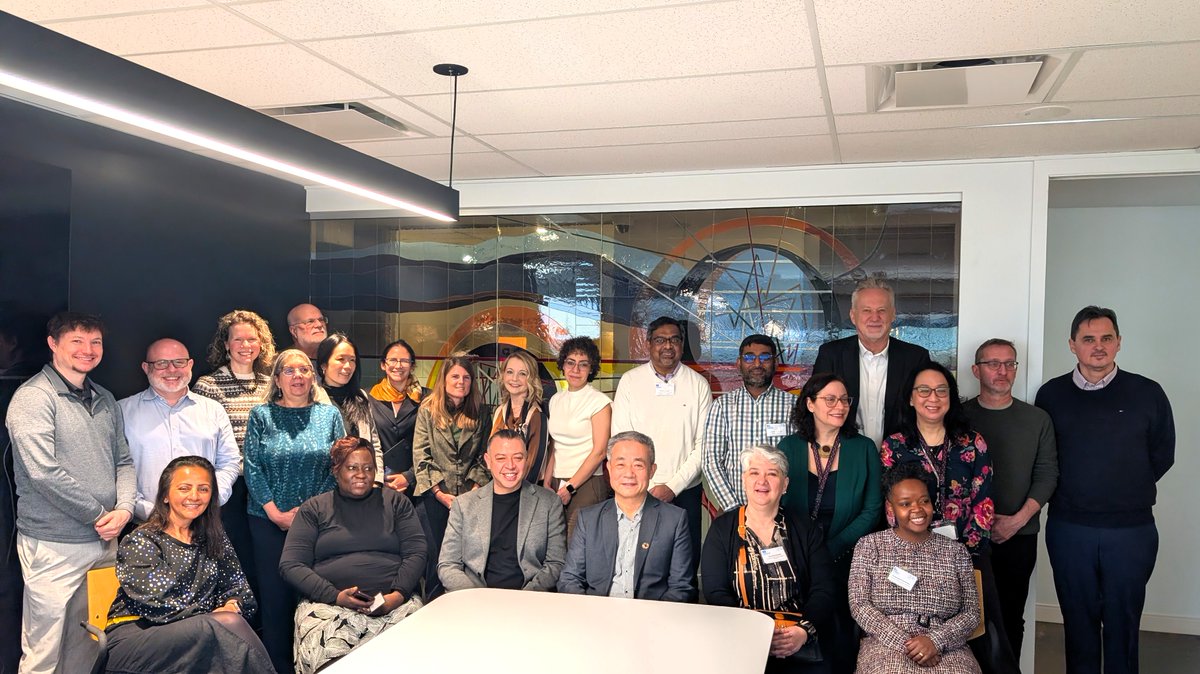
This week, @UNESCOstat convened its Technical Advisory Group in Montreal to sharpen the eligibility criteria for assessments tracking SDG indicator 4.1.1, learning outcomes for children & youth worldwide.
Huge thanks to our world-renowned experts for their dedication and expertise!
Better data = better outcomes for learners everywhere.
#SDG4 #Education
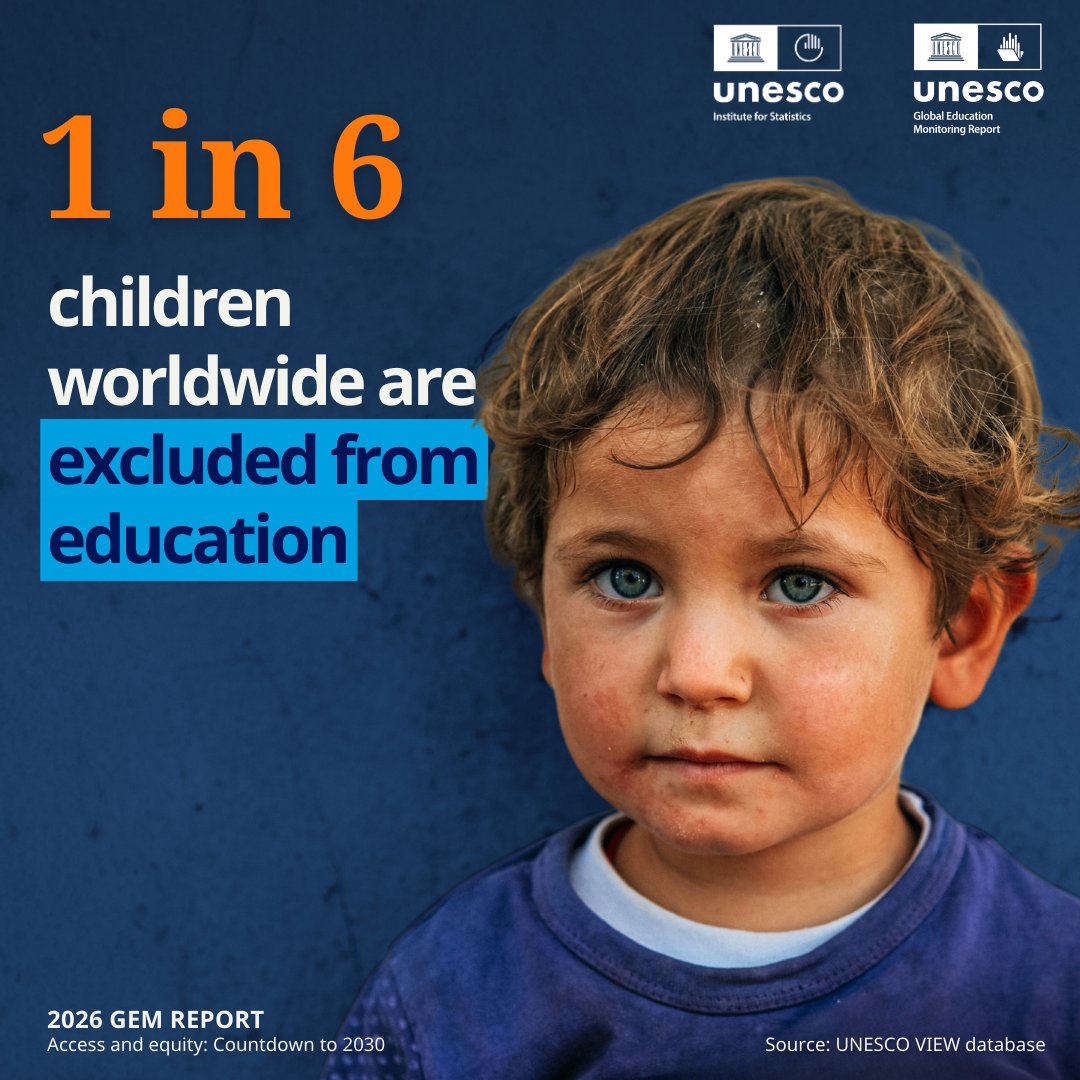
1 in 6 children worldwide are #OutOfSchool.
After major gains between 2000 and 2015, progress has slowed as systems face population growth, crises and tightening budgets.
More data in the new UNESCO @GEMReport on access and equity: https://t.co/7kvnhRdLKI
#YourStoryCounts
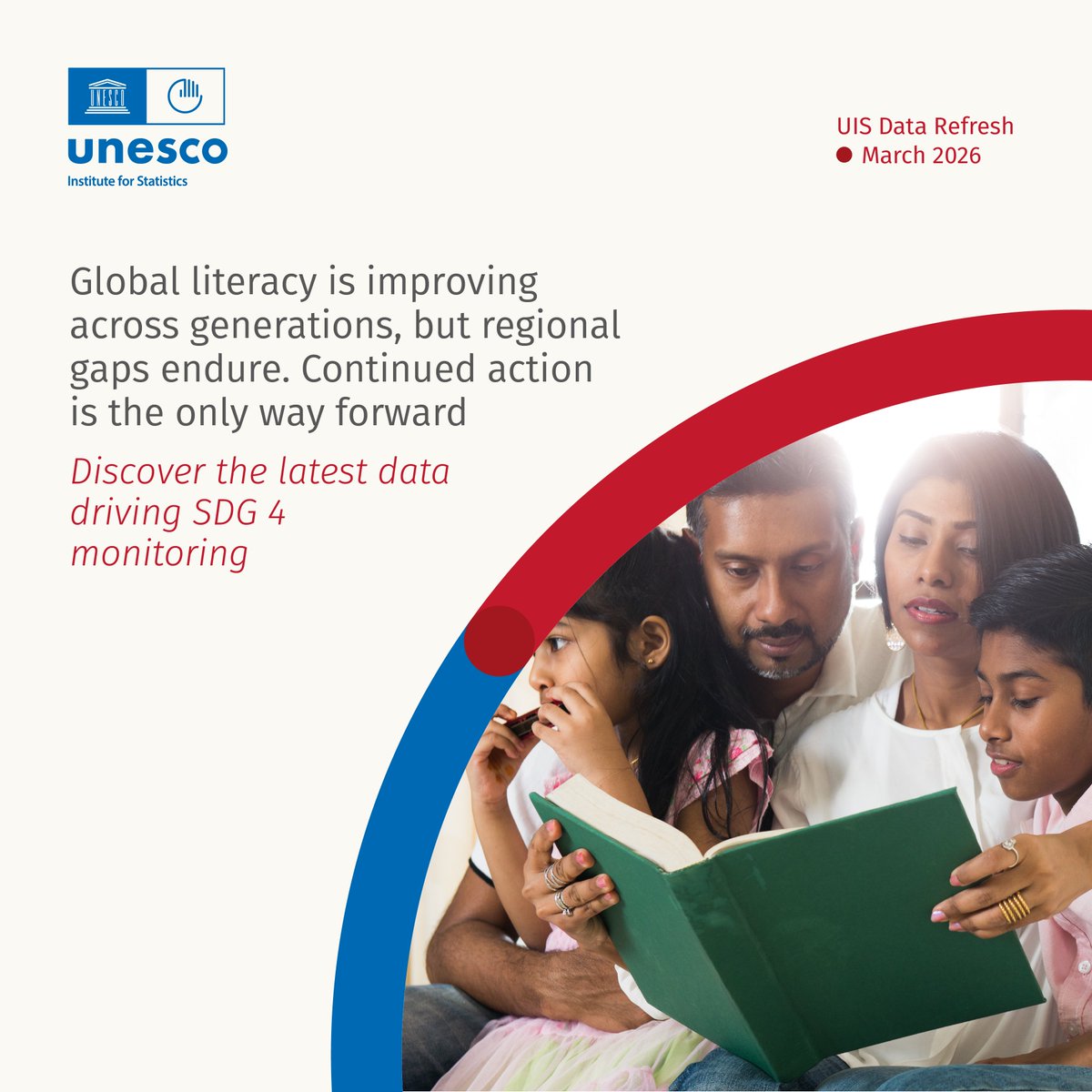
📖 Global literacy is improving.
• 93% of youth are literate
• 88% of adults are literate
Southern Asia has seen the fastest progress since 2015.
But gaps remain, with the lowest literacy rates still in Sub-Saharan Africa.
📊 Explore literacy data: https://t.co/wCwP2eJMGz #Literacy #SDG4 #UISData #GlobalEducation
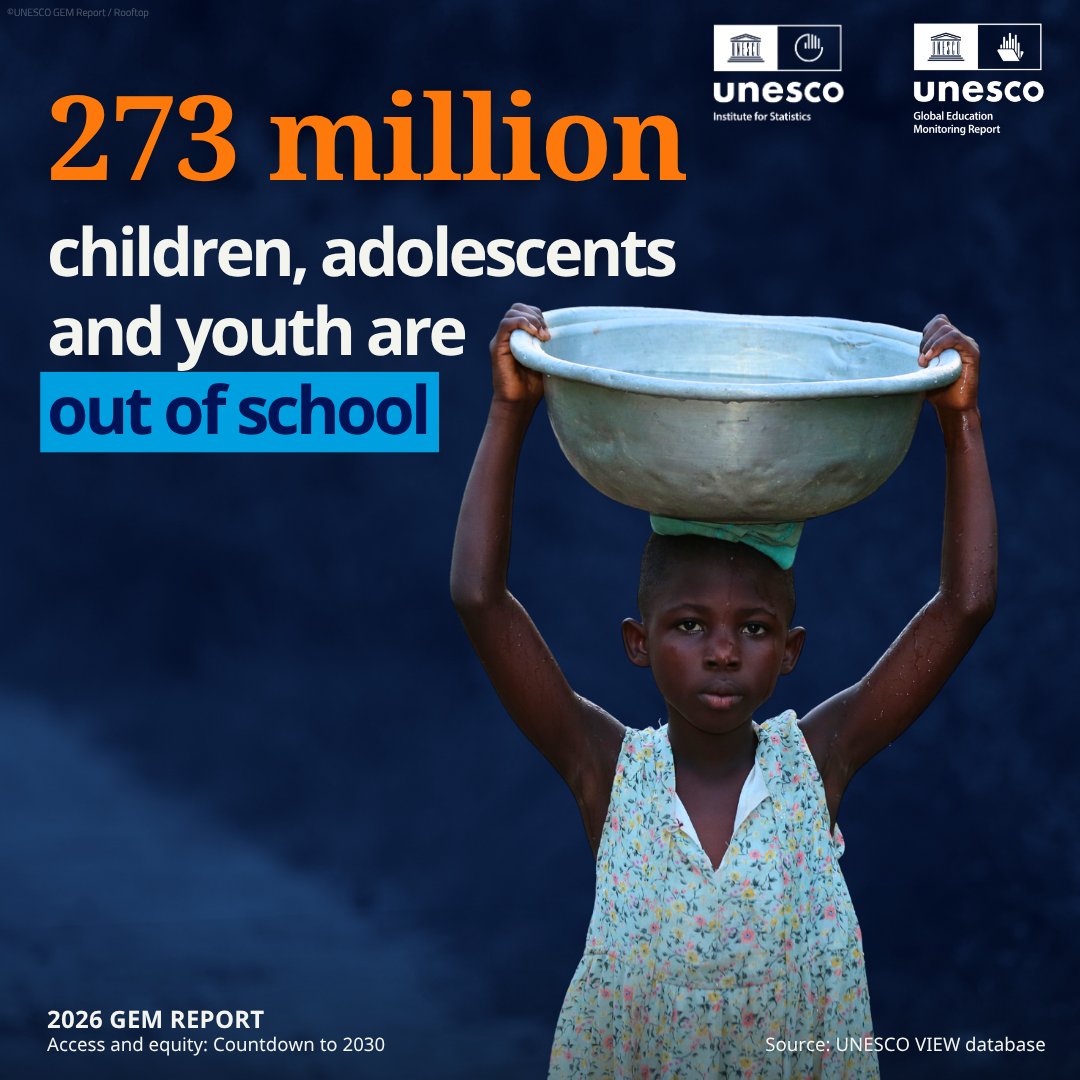
Access to education is stagnating.
In 2024, 273 million children and youth were #OutOfSchool worldwide.
Population growth, conflict & shrinking education budgets are slowing progress.
Explore the new @UNESCO#GEMReport on access & equity: https://t.co/Oay9sPH9EL
#YourStoryCounts
Strengthening education data systems starts in the classroom.
A recent @UNESCOstat - @UNESCO mission to Bhutan highlights how small data inconsistencies at school level can impact national & global indicators.
Progress were made on ISCED mapping, enrolment data, coordination & #SDG4 monitoring - because reliable data means better decisions and no learner left behind.
#DataForEducation
📖 Half of children still lack basic reading skills.
Only:
• 50% reach minimum reading proficiency
• 40% reach minimum math proficiency
Millions move through school without essential learning foundations.
📊 Explore learning outcomes data: https://t.co/wCwP2eKkw7
#SDG4 #EducationQuality #LearningOutcomes
📊 New data is here! The UIS February 2026 Education Data Refresh adds nearly 100,000 new datapoints, bringing the global database to 8.3M+ datapoints.
Growth is driven mainly by SDG 4 indicators, with all world regions reporting increases.
🔎 Explore the data: https://t.co/orH5X61cfm
#SDG4 #EducationData #GlobalEducation
Today is the International Day of Digital Learning!
UIS data shows that globally, only ~50% of primary schools have computers and Internet access for learning. In sub-Saharan Africa, just 36% of primary schools have electricity, the foundation for everything else.
Measuring gaps is the first step to closing them. Know the data: https://t.co/wCwP2eJMGz
#DigitalLearning #SDG4 #UNESCO