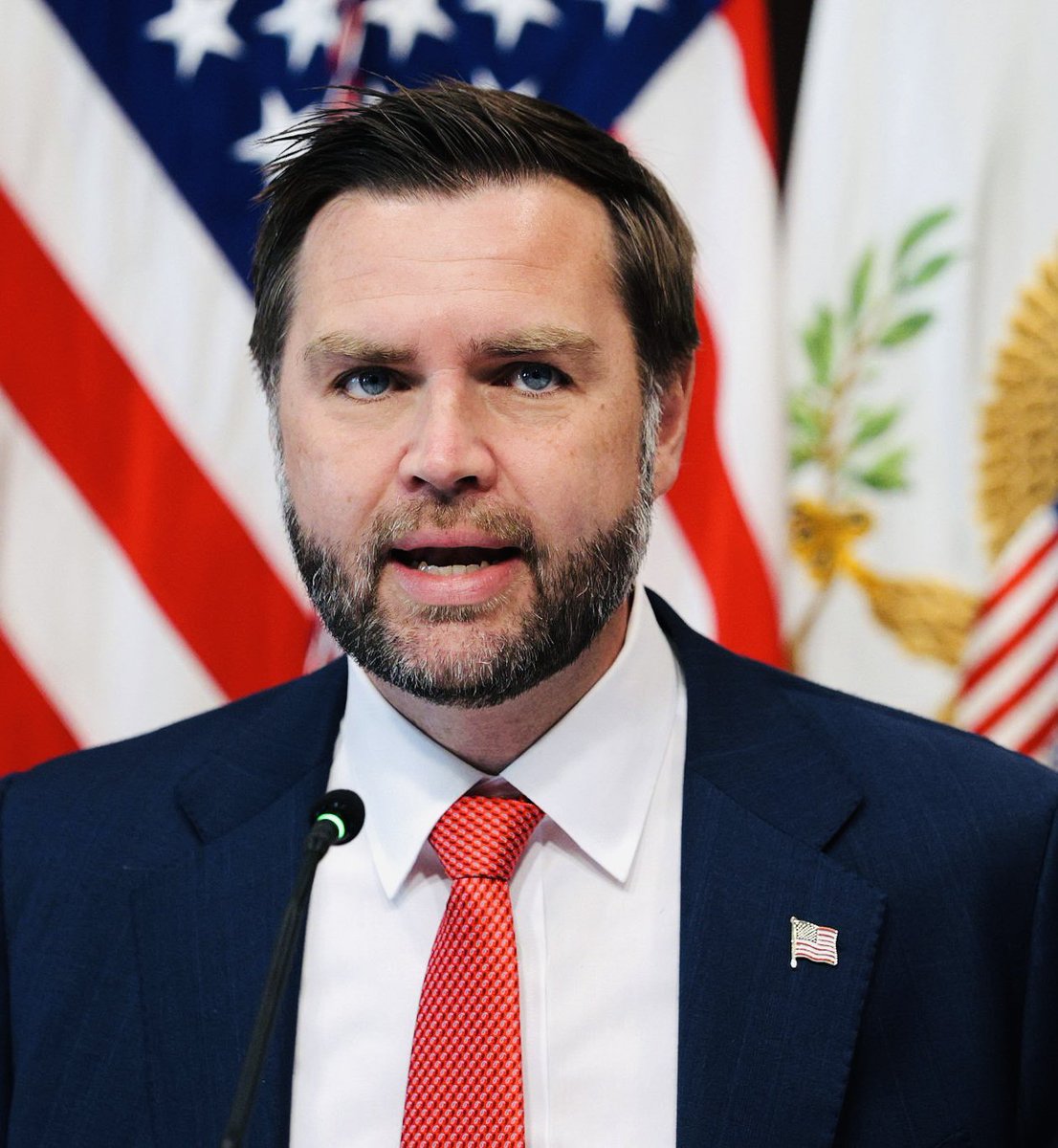
BREAKING: 🇺🇸🇧🇷 Bolsonaro’s escape comes as Brazil’s Supreme Court ordered a probe into possible illegal foreign financing of his campaign, including alleged links to U.S. Vice President J.D. Vance
"Trump admin hopes its bombing campaigns and economic sanctions will force major concessions from the Islamic Republic... "
Months of airstrikes and "maximum pressure" on Iran haven't forced a deal, yet the admin is right back to the exact same playbook. Definition of insanity.
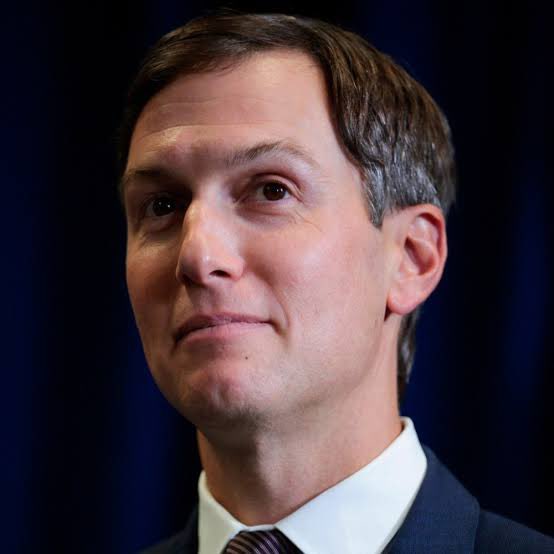
BREAKING: 🇺🇸🇮🇱🇸🇦 A bombshell Vanity Fair excerpt from Princes and Thieves alleges that Jared Kushner’s hacked iPhone exposed secret discussions in which he promised to advance the agendas of Saudi Crown Prince Mohamed Bin Salman and UAE President Mohamed Bin Zayed with Trump in exchange for their participation in a secret fund.
The two royals reportedly discussed contributions exceeding $10 BILLION before ultimately placing at least $2 BILLION into accounts for Kushner.
Here are the main points:
Phone hacked: Dutch intelligence reportedly hacked Kushner’s iPhone and discovered information about secret financial transactions.
$700 million+ transfers: One UAE-linked account allegedly contained hundreds of millions of dollars, with money transferred to various individuals.
Around $2 billion total: The investigation alleges that two accounts linked to the UAE, Saudi Arabia and Israel held approximately $2 billion.
Secret diplomacy: The accounts allegedly helped finance political and diplomatic operations in the Middle East, potentially benefiting foreign leaders.
Trump has already decided to go back to war with Iran. He just wants to wait until after the midterms.
The reason is sinister. He knows another round of bombing means another jump at the pump. Gas has been stuck around $4 a gallon, American families have already paid billions more for fuel since this war began, and most voters don't like how he's handled it. So he has done the math. Start the bombing in October and Republicans lose seats. Start it in November and the only people who lose are the ones who just voted.
Think about what that means. He isn't holding back because he has doubts about this war. He's holding back because he knows exactly what it will cost Americans, and he'd rather they find out once their votes are safely in.
That is how he thinks of voters. They matter for one day. After that, what they pay for gas, what's left of their paycheck, and what happens to their savings is their own problem. His vice president once called cheap fuel the administration's top goal. Nobody mentioned it came with an expiry date.
He also said he didn't care about the midterms. Yet here he is, timing a war around them.
So who is this war for? Certainly not the people who voted for a man who swore he would end the endless wars and clean the lobbyists and foreign influence out of Washington. It's for Netanyahu, who has been pushing for it for thirty years and has finally found a president willing to do his dirty work.
Benjamin Netanyahu, Donald Trump and Marco Rubio are constructing a new narrative for the war on Iran. Iran is no longer portrayed as a threat to Israel alone, but as an ideological regime bent on destroying Western civilisation itself.
The original case for war centred on Israel: Iran was presented as an existential threat to the Jewish people. Now the argument has expanded to encompass Europe and America.
Netanyahu speaks of a battle between civilisation and barbarism. Standing beneath the Acropolis, Rubio cast the war as a modern-day struggle between Athens and Persia, with a West whose heroes die for a cause facing an enemy supposedly devoted to death. Trump has claimed that Iran, given the chance, would have struck Los Angeles and San Diego first. The White House subsequently clarified that he meant a nuclear strike.
This is a dangerous narrative. It casts the conflict as an existential struggle between good and evil, making compromise appear like surrender and an end to the war seem impossible. Its purpose is to prepare the public for a war with no clear end.
Start with Israel. Iran's policy has never been the physical destruction of the Israeli people. After the 1979 revolution, the Islamic Republic refused to recognise two regimes: Israel and apartheid South Africa. The decision reflected its revolutionary principles and its opposition to racial domination, a principle enshrined in international law. At the time, Washington was treating Nelson Mandela's movement as a terrorist organisation, and Mandela himself remained on a US terror watch list until 2008.
Iran's position on Palestine follows a similar logic. It calls for a referendum in which Muslims, Christians and Jews would decide together on an inclusive system of government that guarantees the rights of everyone in historic Palestine. Such a process would end a political order founded on ethnic supremacy, as South Africa's transition dismantled apartheid without seeking the destruction of its people. A referendum is neither an extremist nor an apocalyptic proposition. Its underlying principle, that Palestinians should determine their political future and enjoy equal rights, has found growing support around the world, including in protests across Western cities and university campuses.
There is equally little in Iran's historical record to support claims that it has long sought to attack Europe or America. Again and again, Tehran has pursued cooperation with Washington, only to see those efforts collapse.
The record speaks for itself.
- Algiers Accords (1981). The agreements committed Washington to non-intervention in Iran's internal affairs. The United States subsequently supported Saddam Hussein during the eight-year Iran-Iraq War.
- The Lebanon hostages. Iran helped secure the release of American hostages in Lebanon after President George H. W. Bush declared that goodwill begets goodwill. The expected reciprocity never materialised.
- Bosnia. Iran helped arm besieged Bosnian Muslims with the Clinton administration's tacit acquiescence. The response was a comprehensive trade embargo.
- Afghanistan (2001). Iran helped broker the Bonn settlement that laid the foundations for a post-Taliban government. Weeks later, President George W. Bush placed Iran in his "axis of evil."
- The JCPOA (2015). Iran signed the nuclear agreement and opened the door to major Western companies, including Boeing, Airbus, Total and Renault. In 2018, Trump withdrew from the deal despite the IAEA's repeated confirmation that Iran was meeting its nuclear commitments.
- Negotiations in 2025 and 2026. Iran was engaged in negotiations in June 2025 and again in February 2026 when American and Israeli bombs fell.
- The Islamabad MoU. Iran signed the memorandum in June 2026, only for Washington to press ahead with a "southern corridor" through the Strait of Hormuz, in breach of the agreement's terms.
The historical record offers no credible basis for this new clash-of-civilisations narrative. What it shows is a recurring pattern of diplomacy pursued, agreements reached and opportunities for cooperation squandered. The civilisational script has no record to stand on. Its purpose is to turn a political conflict into an existential struggle, frighten the public into accepting an open-ended war and make any negotiated settlement look like a betrayal of the West itself.
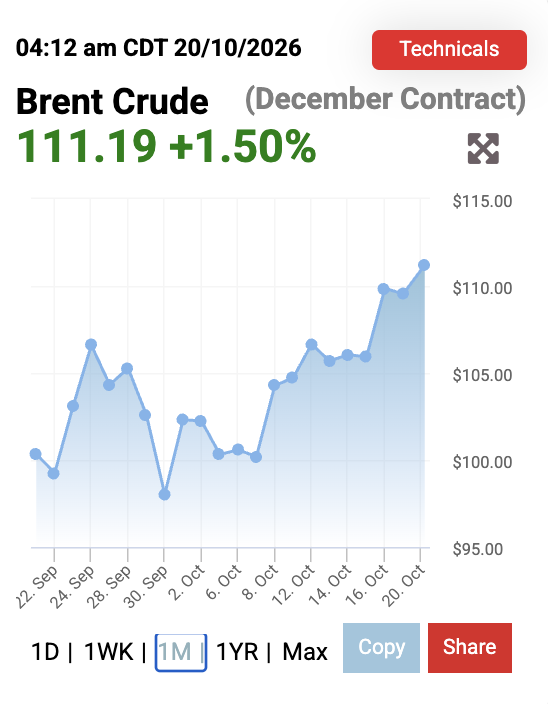
BREAKING: US oil prices extend gains above $100/barrel as geopolitical tensions in the Middle East continue to escalate.
Oil prices are now up another +17% from their October 6th low.
🇦🇱🇮🇱🇺🇸Israeli-backed regime in Albania started deploying the military the streets supported by US helicopters
Heavily armed military personnel have been deployed in Tirana’s central areas first time in years
Multiple US helicopters were also spotted coming to berat