New paper in @Nature led by @PatriceEcoEvo! We demonstrated global vulnerability of amphibians to warming, threatening 10% of >5,000 species examined. How did we do it? | https://t.co/Sq7YMaC8NP | See thread🧵
#WaterSafety | We are working with @unswbees on a tool that can accurately predict when bluebottles will arrive on which beaches.
Find out more: https://t.co/yWhs73RJLj
🏆 We are proud to announce that CCRC students Jon Page and @JiachenLuMet have been awarded the UNSW Dean's Awards for Outstanding PhD Theses 2024! 🌟 Congratulations on this well-deserved recognition of your exceptional research. 👏👏
#PhDThesis#AcademicExcellence@unswbees
New paper: https://t.co/rx8lYLVV5e
We compiled master plant species lists for 2 of the 5 oldest national parks: Royal (Australia) and Yosemite (USA) by combining herbarium vouchers + @inaturalist records + official expert park lists, extensively manually curating all records.
My recent article in @QRevBiol on how AI might influence human evolution is intended as a conversation starter. But it runs >16k words. Before you make that commitment, see this quick intro at @ConversationEDU. Then stay for the paper.
https://t.co/5QongJ3vPk
New climate challenges require a new approach. Join us this Monday for a free online event that will highlight how better coordination of Earth system science is key to addressing Australia’s environmental and economic challenges. We’ll explore a new Decadal Plan’s 14 recommendations, beginning with the urgent establishment of an Australian Institute for Earth System Science.
📆 Monday, 25 November 2024
⏰ 12pm – 12:45 pm AEDT
📍 Online (Zoom webinar)
💲 Free
🔗 Register: https://t.co/EcWhvUfR4a
Article: Fresh meltwater entering the Labrador and Irminger Seas has resulted in a slowing of the Atlantic Meridional Overturning Circulation since the 1950s
@ccrc_unsw@AntarcticSciAus@UNSWScience@unswbees
https://t.co/b2XXd0fydf
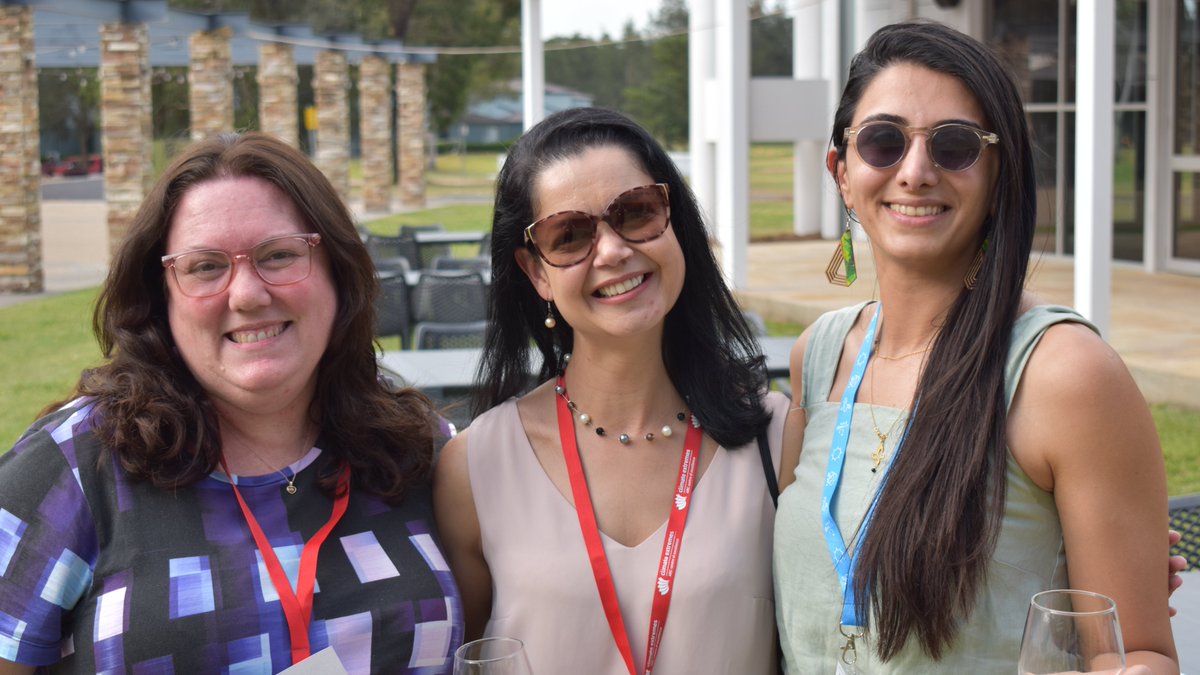
Here’s to our first annual workshop as an official @arc_gov_au Centre of Excellence.
We said a heartfelt thanks to our inspirational friends at @ClimateExtremes for their hard work over the last seven years.
Now we’re ready for more exciting research challenges ahead!
2/2
The report, launched at the #COP16 Convention on Biological Diversity, is a world-first assessment of global kelp forests, which are found across a third of the world’s coastlines, and the findings highlight the need to accelerate kelp conservation.
https://t.co/Pabs1M1ZQX
Paper alert: This new study co-authored by Laurie Menviel, a collaboration between the Université de Grenoble (France), UNSW, and the University of Bern has shed light on rapid variations in atmospheric carbon dioxide (CO2) ++
https://t.co/lGC851BLpc
@UNSWScience@unswbees
New research often revises species taxonomies. Without a clear crosswalk, old datasets & studies can be challenging to amalgamate. #R package APCalign helps solve this, aligning names to #AustralianPlantCensus. Elizabeth Wenk & colleagues @UNSW@unswbees https://t.co/AjfBejK26D
1/2 Scientists from @unswbees, used a small device, known as an accelerometer, to uncover novel findings into the behaviours of green turtle hatchlings as they emerge from their nests: https://t.co/JY8kmZw2ax
The Climate of the Future: Can we handle the heat? Hear from experts @StevenSherwood4 , @sarahinscience , @ollie_jay13 , and @jemcheng .
Join us for a seminar on 9 October, 3:30 pm - 5:00 pm AEDT.
https://t.co/67bKPzecPn
Congrats to @KatrinJM for securing Minderoo Foundation project on humid heat waves. Collaborating with @DrLouiseSlater, @ClimateNerilie, and experts like @sarahinscience,Sanaa Hobeichi, @NeginNazarian, and @YumingGuo007, they’ll build a global early warning system using AI/ML.