Some animals have incredibly strange tongues 👅
1. Chameleon 🦎
Tongue can reach up to 2× its body length.
2. Woodpecker 🐦
Its tongue wraps around the back of its skull.
3. Penguin 🐧
Has backward-facing spines on its tongue to grip slippery fish.
4. Giraffe 🦒
Tongue can grow up to 53 cm (21 in) long.
5. Blue Whale 🐋
Tongue can weigh as much as an elephant.
6. Cat 🐈
Tongue is covered with tiny backward-facing hooks.
7. Anteater 🐜
Tongue can extend over 60 cm (24 in) and is coated in sticky saliva.
8. Flamingo 🦩
Uses a pump-like tongue to filter food from water.
9. Frog 🐸
Tongue is one of the fastest biological structures ever recorded.
10. Hummingbird 🐦
Tongue traps nectar using microscopic grooves instead of a straw-like suction.
Source: National Geographic, Smithsonian Magazine, BBC Wildlife, Encyclopaedia Britannica.
🦥 Weird Animal Sleep Champions 😴🌍
1. Koala 🇦🇺 — Up to 22 hours/day
2. Little Brown Bat 🦇 — Around 20 hours/day
3. Python 🐍 — About 18 hours/day
4. Opossum 🐾 — Around 18 hours/day
5. Tiger 🐅 — Around 16 hours/day
6. Hamster 🐹 — Around 14 hours/day
7. Lion 🦁 — Around 13.5 hours/day
8. Cat 🐈 — Around 13 hours/day
9. Dog 🐕 — Around 12 hours/day
10. Elephant 🐘 — Only 2–4 hours/day
Source: National Geographic, Smithsonian Magazine, Animal Diversity Web
🧠 Top 10 Animals With the Largest Brains (Absolute Brain Weight)
🐋 1. Sperm Whale – ~7.8 kg
🐘 2. African Elephant – ~5.4 kg
🐬 3. Orca – ~5.3 kg
🐬 4. Bottlenose Dolphin – ~1.6 kg
🐋 5. Blue Whale – ~1.4 kg
🦒 6. Giraffe – ~680 g
🦍 7. Gorilla – ~500 g
🦧 8. Orangutan – ~420 g
🐎 9. Horse – ~620 g
🧑 10. Human – ~1.3–1.4 kg
Source: Smithsonian Institution, National Geographic, Encyclopedia Britannica
Who Presses the Elevator Button the Most Times Even Though It Already Works?
1️⃣ Türkiye 🇹🇷 — presses it 3 times for “insurance” 🛗
2️⃣ Italy 🇮🇹 — talks to the button like it has feelings 😤
3️⃣ USA 🇺🇸 — presses, checks phone, presses again 📱
4️⃣ Japan 🇯🇵 — politely presses once… then silently believes it will arrive 🤖
5️⃣ Brazil 🇧🇷 — presses it even after entering the elevator 😅
Portugal FIFA World Cup History 🇵🇹⚽
1930 → ❌ Did not participate
1934 → ❌ Did not participate
1938 → ❌ Did not participate
1950 → ❌ Did not participate
1954 → ❌ Did not qualify
1958 → ❌ Did not qualify
1962 → ❌ Did not qualify
1966 → 🥉 3rd place (Best result)
1970 → ❌ Did not qualify
1974 → ❌ Did not qualify
1978 → ❌ Did not qualify
1982 → ❌ Did not qualify
1986 → ❌ Group Stage
1990 → ❌ Did not qualify
1994 → ❌ Did not qualify
1998 → ❌ Did not qualify
2002 → ❌ Group Stage
2006 → 🏅 4th place (Semi-final run)
2010 → 🇿🇦 Round of 16
2014 → ❌ Group Stage
2018 → 🇷🇺 Round of 16
2022 → 🇶🇦 Quarter-finals
2026 → 🔜 Qualified / Upcoming (TBD)
Scientists recently reported a fascinating discovery in Australia: a tiny spider that uses a spring-loaded, trap-like mechanism to capture its prey with extreme speed.
Instead of relying only on a traditional web, this spider has evolved a specialized hunting strategy. It builds a small, elastic structure—similar in concept to a spring—that it holds under tension. When an insect comes close enough, the spider releases the stored energy instantly, causing the trap to snap shut in a fraction of a second.
What makes this behavior remarkable is the speed and precision. The strike happens so quickly that flying or jumping insects often don’t have time to react, making escape nearly impossible. This gives the spider a major advantage in catching fast-moving prey in its environment.
Researchers believe this adaptation is an evolutionary response to the need for more efficient hunting in competitive habitats. Instead of waiting passively like typical web-spinning spiders, this species actively “launches” its trap, combining mechanical force with timing.
The discovery also interests scientists in robotics and materials science, because the spider’s mechanism shows how biological systems can store and release energy efficiently—similar to engineered spring systems, but on a microscopic scale.
Spider-Man Series Ranking (All Major Versions)
1. Spider-Man: Into the Spider-Verse (2018)
2. Spider-Man 2 (2004) Tobey Maguire
3. Spider-Man: No Way Home (2021)
4. Spider-Man (2002) Tobey Maguire
5. The Amazing Spider-Man (2012) Andrew Garfield
6. Spider-Man: Across the Spider-Verse (2023)
7. The Amazing Spider-Man 2 (2014)
8. Spider-Man: Homecoming (2017) Tom Holland
9. Spider-Man 3 (2007)
10. Spider-Man: Far From Home (2019)
Source: IMDb, Rotten Tomatoes, Marvel & Sony Pictures films data
Christopher Nolan reportedly became interested in Cillian Murphy during early casting discussions for *Batman Begins* (2005), where Murphy auditioned for the role of Bruce Wayne. Although the part ultimately went to Christian Bale, Murphy’s screen test left a strong impression on Nolan, particularly because of his striking blue eyes and intense, slightly unsettling presence.
Nolan was impressed enough to cast Murphy as Dr. Jonathan Crane, also known as Scarecrow, one of the film’s main antagonists. The character relies heavily on psychological fear, and Murphy’s gaze was considered so effective that there were early ideas about minimizing the need for the Scarecrow’s mask, letting his facial expressions and eyes carry much of the menace on their own.
Murphy went on to reprise the role in *The Dark Knight* (2008) and *The Dark Knight Rises* (2012), becoming a recurring figure in Nolan’s trilogy. This collaboration eventually expanded far beyond Batman. Years later, Nolan cast Murphy in the lead role of *Oppenheimer* (2023), where he portrayed J. Robert Oppenheimer, earning widespread critical acclaim and major awards recognition.
So even though Murphy didn’t become Batman, his audition effectively launched a long-term creative partnership with Nolan, turning what might have been a rejection into one of the most successful actor-director collaborations in modern film.
🍜 Countries That Eat the Most Instant Noodles
🥇 China & Hong Kong — 43.7 billion servings
🥈 Indonesia — 14.5 billion servings
🥉 India — 8.3 billion servings
4️⃣ Vietnam — 8.1 billion servings
5️⃣ Japan — 5.8 billion servings
6️⃣ United States — 4.8 billion servings
7️⃣ Philippines — 4.4 billion servings
8️⃣ South Korea — 4.0 billion servings
9️⃣ Thailand — 3.9 billion servings
🔟 Nigeria — 3.0 billion servings
Source: World Instant Noodles Association (Latest Available Data)
Around Lima, Peru, vast informal settlements known as “pueblos jóvenes” (young towns) have expanded across the dry coastal desert. These areas began forming mainly in the mid-20th century when large numbers of people migrated from rural Andean regions to the capital in search of jobs, education, and better living conditions.
Because Lima sits in one of the world’s driest deserts, much of this urban expansion took place on empty, arid land at the city’s edges. Families often built their homes gradually using basic materials like bricks, wood, and metal sheets, without formal planning or full access to services such as running water, sewage systems, or paved roads—at least in the early stages.
Over time, many of these settlements have grown into large, densely populated neighborhoods. Some have been gradually integrated into the city with improved infrastructure, schools, and transportation, but others still struggle with poverty and limited public services.
Despite harsh conditions, these communities are known for strong social organization. Residents often work together to build infrastructure, lobby for government recognition, and improve living standards step by step.
Today, these shanty towns are a major part of Lima’s urban landscape, reflecting both the city’s rapid population growth and the inequality challenges facing Peru.
Lima
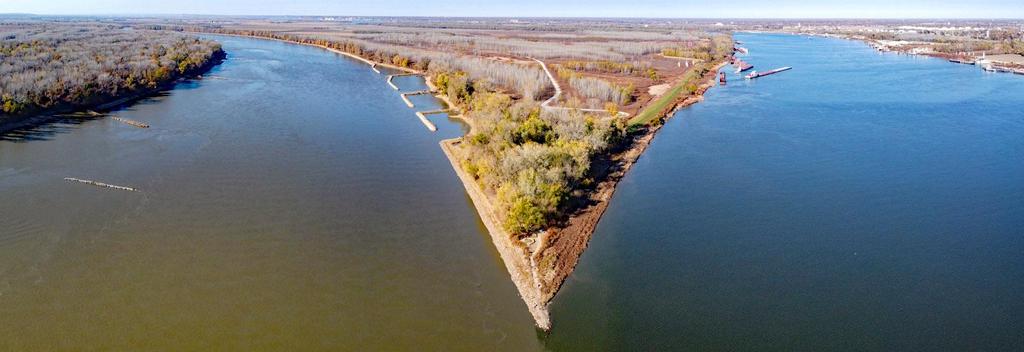
The Mississippi River system is one of the largest river networks in the world and the most important drainage system in North America. The Mississippi River and its many tributaries collect water from more than 40% of the continental United States, covering parts of 31 states before flowing into the Gulf of Mexico.
Its two most significant tributaries are the Missouri River, the longest tributary in the system, and the Ohio River, which contributes the greatest volume of water. Other major rivers, including the Arkansas and Red Rivers, help carry water from the Great Plains, the Rocky Mountains, and the southern United States into the main channel.
The watershed covers about 3.2 million square kilometers (1.2 million square miles), making it one of the largest drainage basins on Earth. Water that falls as rain or snow hundreds or even thousands of kilometers away can eventually reach the Mississippi through an intricate network of rivers and streams.
The river system is also one of the world's most important commercial waterways. Millions of tons of grain, coal, petroleum, and other goods are transported along its channels every year, supporting agriculture and industry across the United States.
Because of its enormous size and influence, the Mississippi River system has played a major role in shaping North America's geography, economy, history, and settlement patterns for centuries. It is often described as the continent's circulatory system, connecting vast regions through a single network of waterways.
Ten years ago, on June 23, 2016, the United Kingdom voted to leave the European Union in a historic referendum that reshaped British politics and its relationship with Europe. The result was close: 51.9% voted to leave the EU, while 48.1% voted to remain, with more than 33 million people taking part.
The referendum exposed deep divisions across the country. England and Wales largely supported leaving, while Scotland and Northern Ireland voted to remain. The outcome led to significant political turmoil, including the resignation of Prime Minister David Cameron, who had campaigned to stay in the EU.
Brexit officially took effect on January 31, 2020, ending the UK's 47-year membership in the European project. Supporters argued that leaving would restore national sovereignty, allow Britain to control its own laws and borders, and negotiate independent trade deals. Critics warned of economic uncertainty, trade disruptions, and reduced influence on the global stage.
The referendum remains one of the most consequential political events in modern British history. Its impact continues to shape debates over immigration, trade, national identity, and the future of the United Kingdom itself. Even a decade later, Brexit remains a defining moment that changed the course of British and European politics.
Born as 50 Cent in 1975, he grew up in the tough South Jamaica neighborhood of New York City. His childhood was marked by hardship from an early age. His mother, Sabrina Jackson, was a drug dealer who raised him alone, but she died under mysterious circumstances when he was only eight years old. After her death, he was raised by his grandparents.
Growing up in a high-crime environment, 50 Cent was exposed to street life at a young age. By his early teens, he was involved in drug dealing and often had to find ways to support himself. He later said that surviving in the streets taught him many of the skills that helped him become successful in business and music.
Despite the challenges, he developed a strong interest in boxing and spent time training as an amateur boxer. The discipline and toughness he gained from the sport helped shape his determination. His difficult upbringing later became a major theme in his music, especially on his breakthrough album Get Rich or Die Tryin', where he frequently referenced his childhood struggles and life in Queens.
His story is often cited as one of the most dramatic rags-to-riches journeys in hip-hop, transforming from a troubled youth in one of New York's toughest neighborhoods into one of the world's best-selling rap artists and entrepreneurs.
The incident became one of the most widely discussed airline allergy cases of the 2010s. During a Ryanair flight from the Canary Islands to London in August 2014, cabin crew reportedly made several announcements asking passengers not to consume nuts because a 4-year-old girl on board had a severe, potentially life-threatening nut allergy. Despite the warnings, one passenger allegedly continued eating nuts, leading to a complaint and a subsequent two-year ban from the airline.
Around 20 minutes after takeoff, the child suffered an anaphylactic reaction, a rapid and dangerous allergic response that can cause breathing difficulties, swelling, and a drop in blood pressure. Her family used an epinephrine auto-injector (often known as an EpiPen) to treat the reaction during the flight.
The case attracted significant media attention because it raised questions about balancing the medical needs of allergic passengers with the rights of other travelers. Many people assumed the reaction was caused directly by the passenger eating nuts several rows away, but allergy experts later noted that the scientific evidence for severe reactions caused solely by airborne nut particles at that distance is limited.
Research suggests that most serious allergic reactions on airplanes are more commonly linked to direct contact with allergens or contaminated surfaces rather than someone simply eating nuts several rows away. Because of this, some specialists argued that it was impossible to know with certainty whether the passenger's actions directly triggered the girl's reaction.
Even so, airlines often take precautionary measures when informed about severe allergies, including making announcements, creating buffer zones, or asking passengers to avoid certain foods. The Ryanair case remains a notable example of the challenges airlines face when trying to protect passengers with severe allergies in a confined environment thousands of meters above the ground.
The student became known as the “Bobst Boy” after secretly living in the basement of the New York University library for about eight months in the early 1970s. Unable to afford campus housing, he created a hidden living space inside the library, sleeping among unused areas and carefully avoiding detection while continuing his studies.
His story came to light when university officials discovered his situation. Rather than simply disciplining him, NYU recognized the financial hardship he was facing and stepped in to help. The university provided him with free housing and financial assistance, allowing him to complete his education without the constant fear of homelessness.
The student, Lawrence Potkewitz, went on to graduate successfully and later earned a Ph.D. in folklore from Indiana University Bloomington. He built an academic career studying folklore, myths, and cultural traditions.
The story remains one of the most unusual chapters in NYU history. It highlights both the financial struggles that some students face and the impact that timely support can have on a person's future. What began as a desperate attempt to stay in school ultimately became an inspiring example of perseverance, resilience, and the transformative power of education.
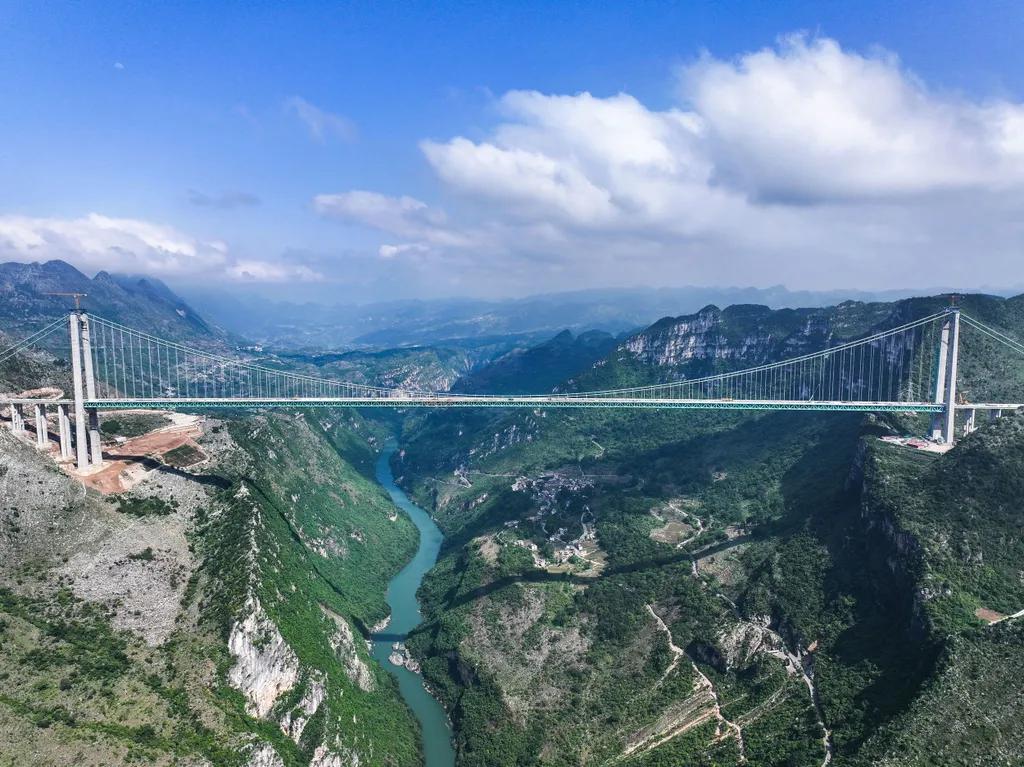
The Huajiang Canyon Bridge in China is an extraordinary engineering project that spans the dramatic Huajiang Grand Canyon in Guizhou Province. Standing about 625 meters (2,051 feet) above the river below, it is recognized as the highest bridge in the world, surpassing many famous skyscrapers in height when measured from the canyon floor.
One of its most striking features is the water drainage system. During periods of heavy rain, water flows off the bridge deck and cascades into the canyon below, creating spectacular waterfall-like streams that appear to pour directly from the sky. These temporary waterfalls can form a massive curtain of water, adding to the bridge's already breathtaking appearance.
The bridge was designed to dramatically reduce travel times across the rugged mountainous terrain of southwest China. Before modern bridges and highways, crossing these deep canyons could take hours. Today, journeys that once required long detours can be completed in just minutes.
Beyond its transportation value, the bridge has become a symbol of China's expertise in large-scale infrastructure and extreme engineering. Suspended high above one of the country's deepest canyons, it offers stunning views of steep cliffs, dense vegetation, and winding rivers far below, making it a remarkable landmark as well as a vital transportation link.