LASIK eye surgery cost $2,200 per eye in 2000. Today it's around $1,000 per eye despite 24 years of inflation. Meanwhile, an MRI that cost $1,200 in 2000 now costs $3,000+. The difference? LASIK operates in a free market with no insurance interference and minimal regulation.
When patients pay directly, providers must compete on price and quality. LASIK clinics advertise prices, offer financing, and constantly improve technology to attract customers. Compare this to hospital procedures where prices are hidden, patients never see bills, and insurance companies negotiate opaque rates that somehow always increase faster than inflation.
Cosmetic surgery follows the same pattern. Breast augmentation, rhinoplasty, and other elective procedures have become more affordable and safer over decades. Surgeons invest in better techniques and equipment because they must satisfy paying customers, not insurance bureaucrats or hospital administrators focused on maximizing reimbursements.
The lesson is clear: remove third-party payment systems and excessive regulation, and you get Austrian economics in action. Prices fall, quality rises, and innovation accelerates. Healthcare costs aren't rising because of aging populations or new technology—they're rising because we've destroyed the price mechanism that makes markets work.
The book "Excellent Advice for Living" is so good I read it in one sitting.
The book is a collection of maxims Kevin Kelly wrote to his adult children. Each maxim contains a bit of wisdom he wish he'd known earlier.
79 maxims that resonated the most (I added #57 selfishly)
1. Choose to believe that the entire universe is conspiring behind your back to make you a success.
2. Mastering the view through the eyes of others will unlock many doors.
3. If you can avoid seeking the approval of others your power is limitless.
4. The reward for good work is more work.
5. Don’t be the best. Be the only.
6. The urgent is a tyrant. The important should be your king.
7. Find smart people who will disagree with you.
8. The main thing is to keep the main thing the main thing.
9. The most counterintuitive truth of the universe is that the more you give to others the more you'll get.
10. Life gets better as you replace transactions with relationships.
11. Courtesy costs nothing.
12. Life lessons will be presented to you in the order they are needed.
13. Cultivate an allergy to average.
14. If you repeated what you did today 365 more times would you be where you want to be next year?
15. If you're alive that means you still have lessons to learn.
16. Master something. Through mastery of one thing you'll command a viewpoint to steadily find where your bliss is.
17. Trust is earned in drops and lost in buckets.
18. First, always ask for what you want. Works in relationships, business, life.
19. If nobody else does what you do you won't need a resume.
20. How to apologize: quickly, specifically, sincerely.
21. The best way to advise people is to find out what they really want to do and then advise them to do it.
22. It is certain that 99% of the stuff you are anxious about won't happen.
23. What is important is not what happened to you but what you did about what happened to you.
24. Your golden ticket is being able to see things from other people's point of view.
25. Pay attention to who you are around when you feel best. Be with them more often.
26. To get your message across follow this formula: simplify, simplify, simplify, then exaggerate.
27. You will thrive more when you promote what you love rather than bash what you hate.
28. To be interesting just tell your own story with uncommon honesty.
29. When you truly think for yourself your conclusions will not be predictable.
30. Don’t measure your life with someone else’s ruler.
31. For maximum results focus on your biggest opportunities, not your biggest problems.
32. Pay attention to what you pay attention to.
33. Do more of what looks like work to others but is play for you.
34. Don't bother fighting the old just build the new.
35. Don't compare your inside to someone else's outside.
36. When you're stuck explain your problem to others.
37. Most stories are improved significantly if you delete the first page. Start with the action.
38. A long game will compound small gains that will be able to overcome even big mistakes.
39. Constantly search for overlapping areas of agreement and dwell there.
40. It is your destiny to work on things that only you can do.
41. Make stuff that is good for people to have.
42. You'll get 10 times better results by elevating good behavior rather than punishing bad behavior.
43. Life is not a straight line for anyone.
44. Aim for tasks that you never want to stop doing.
45. Regularly scheduled sabbaths, sabbaticals, vacations, breaks, aimless walks, and time off are essential for top performance of any kind.
46. Don't mistake a clear view of the future for a short distance.
47. Efficiency is highly overrated
48. Greatness is incompatible with optimizing in the short term.
49. The greatest teacher is called "doing."
50. Figure out what time of day you are most productive and protect that time period.
51. You are much better off delivering unwelcome news to someone yourself directly.
52. Don't ever work for someone you don't want to become.
53. Take one simple thing — almost anything — but take it extremely seriously as if it is the only thing in the world
54. Be frugal in all things except in your passions.
55. About 99% of the time the right time is right now.
56. Finite games are played to win or lose. Infinite games are played to keep the game going. Seek out infinite games because they yield unlimited rewards.
57. To be remarkable, read books.
58. Be a good ancestor. Do something a future generation will thank you for.
59. Bad things can happen fast but almost all good things happen slowly.
60. To transcend the influence of your heroes copy them shamelessly like a student until you get them out of your system. That is the way of all masters.
61. Don't worry how or where you begin. As long as you keep moving, your success will arrive far from where you start.
62. It is much easier to change how you think by changing your behavior, than it is to change your behavior by changing how you think. Act out the change you seek.
63. If you meet a jerk, ignore them. If you meet jerks everywhere every day, look deeper into yourself
64. Writing down one thing you are grateful each day is the cheapest possible therapy ever.
65. Ignore what others may be thinking of you because they aren't thinking of you.
66. Passion, persistence, belief, and ingenuity are required to invent new things. Qualities the poor and young often have in abundance. Stay hungry.
67. Calm is contagious.
68. When crises strike don't waste them. No problems, no progress.
69. Your purpose is to discover your purpose. This is not a paradox. This is the way.
70. Your passions should fit you exactly but your purpose in life should exceed you.
71. Fear makes people do stupid things.
72. When someone is nasty, hateful, or mean toward you treat their behavior like an affliction or illness they have. That makes it easier to have empathy toward them which can soften the conflict.
73. You don't need more time because you already have all the time you will ever get; you need more focus.
74. Compliment people behind their back. It'll come back to you.
75. Expand your mind by thinking with your feet on a walk or with your hand in a notebook. Think outside your brain.
76. Gratitude will unlock all other virtues.
77. You choose to be lucky by believing that any setbacks are just temporary.
78. It is useful to organize your thoughts with someone you trust and admire.
79. Over the long term the future is decided by optimists. To be an optimist you don't have to ignore the multitude of problems we create; you just imagine how much our ability to solve problems improves.
The end of the year is for reflection.
After interviewing 75+ elite performers and reading hundreds of studies this year, here are...
25 lessons on peak performance for sport and life:
1. Do real things in the real world with real people. Your nervous system knows what’s fake
"I flirt with the idea that smart TVs should be illegal. I hate them so much." - @PalmerLuckey
Instead of building a TV, manufacturers feel like they need to be a services company, an app store, etc.
"I wouldn't be surprised to see @modretro make a modern technology display."
One of my favorite runs by Sweetness
Walter Payton's jab-step juke for six to ice a 27-19 #Bears win in Tampa
#DaBears
40 Years Ago Today
October 6, 1985
@DKThomp Yep. League's embrace the chaos, and I don't blame them. It's a balance between getting calls "correct" and driving activity amongst disagreement.
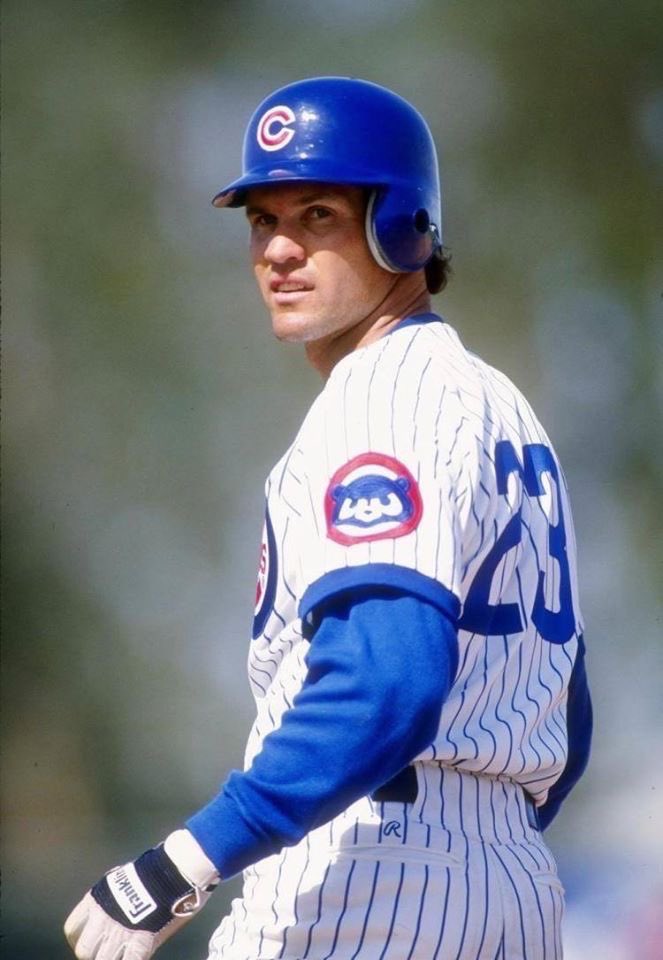
Super Sky Point to Ryne Sandberg, my favorite second baseman of all time. I will never forget the countless hours tuned into WGN with Harry Caray and Steve Stone during those beautiful childhood summers that lasted forever. Before we knew how fast time actually flies and that our heroes don’t live forever. He could hit, he could field, and he did it all with class. Ernie Banks may be Mr. Cub but Ryno capably took that mantle for my generation. Somewhere in my heart it’ll always be 1984, Harry will always be three sheets to the wind while looking for blondes in the bleachers between pitches, and Ryne Sandberg will always get the clutch hit or make the great defensive play to save the day. That’s how I remember it because that’s how it was. Nobody ever wore Cubbie blue better. St. Peter, don’t throw this man fastballs. But I’m sure Bruce Sutter already told you that. #RIP
11 Takeaways from my interview with Daniel Kahneman:
1. Delay Your Intuition: At 22, Kahneman redesigned the Israeli army’s interview system. The old way relied on gut feelings about recruits, and it failed badly. His fix: make interviewers score six specific traits separately, write each score down, then after completing all six scores, close their eyes and give an overall intuition. The interviewers revolted. “You’re turning us into robots,” one complained. But when they tested the new system, it worked dramatically better. That “close your eyes” instruction survived in the Israeli military for 50 years. Most people form an impression in seconds and spend the rest of their time confirming it. The best wait for all the information before letting their intuition speak.
2. Loss Aversion Creates Permanent Programs: When you own something, losing it hurts twice as much as getting it felt good. Once people have a benefit, you can’t easily remove it. When you try, they fight like crazy. The 100 people losing a government subsidy scream louder (and organize better) than the million paying for it. That’s why the government only grows. Every program creates fierce defenders. Nobody fights as hard for lower taxes. Once you give people something (a perk, a feature, a benefit), it’s nearly impossible to take back. The founder who wouldn’t offer free lunch on day one can’t cancel it on day 1000. Small groups losing something specific beat large groups gaining something abstract. Every time.
3. Your Rules Become Your Default: Kahneman’s phone rang during the interview. Someone wanted a book review. “My rule is I never say yes on the phone,” he said. This wasn’t about being difficult. Danny was human just like us, he often said yes to things he didn’t want to do. So he created a rule. Not a goal, not an intention, a rule. It reprogrammed his unconscious mind and turned his desired behavior into his default behavior.
4. Facts Don’t Form Beliefs: “I believe in climate change,” Kahneman said. “I believe in the people who tell me there is climate change. The people who don’t believe in climate change, they believe in other people.” This is how we form all beliefs. We don’t examine evidence and reach conclusions. We trust people we like, then adopt their views. “The reasons are not the causes of our beliefs,” he explained. They’re stories we tell ourselves afterward. Want to change someone’s mind? Facts won’t do it. They need to trust you first. If they admire you, they’ll find reasons to agree. If they dislike you, the best evidence won’t matter. Smart people believe opposite things because they trust different people.
5. The Julia Fallacy: You have the following information. Julia is graduating college. She read fluently at age four. What’s her GPA? You just thought of something around 3.8, and Kahneman knew you would. Here’s why: a four-year-old who reads fluently seems exceptional, maybe 90th percentile. So your brain assumes 90th percentile everything. “It’s idiotic statistically,” he said. Early reading barely predicts college performance. Doesn’t matter. We can’t help ourselves. Stellar interview means stellar employee. One bad presentation means the person can’t teach. Our predictions match our impressions, even when they shouldn’t.
6. Winners Want the Score, Not the Prize: Why do billionaires work 80-hour weeks? “They’re clearly not doing this because they need more money,” Kahneman observed. At that level, money becomes proof that you’re good at what you do. His research found that past $70,000, extra money doesn’t make you emotionally happier, it just makes you more satisfied with your life. And these are completely different things. Happiness is social, it’s being with people who love you. Satisfaction is conventional success: money, prestige, achievements. The tragedy? “People don’t seem to care about how happy they’ll be. They want to be satisfied with their life.” We optimize for the story we’ll tell, not the life we’ll actually live.
7. Behavior Is Situation, Not Personality: When someone acts like a jerk, “look at the situation they’re in,” Kahneman advised. We instinctively blame personality. Psychologists call this the fundamental attribution error. When others speed, we think they’re reckless. When we speed, we know we’re late for something important. “People do good things for a mixture of good and bad reasons, and they do bad things for a mixture of good and bad reasons.” The kindest person will snap under enough pressure, and the worst person will help when the conditions are right. Change the environment, change the behavior.
8. Algorithms Beat You Every Time: “If you can replace judgements by rules and algorithms, they’ll do better,” Kahneman said. Not sometimes, always. We trust our judgment and value human insight, but we’re consistently wrong about this. The real problem is that we prefer confident, intuitive leaders to analytical ones. “People want leaders who are intuitive,” Kahneman observed. We choose the leaders who make us feel good about ourselves, not the ones who make good decisions.
9. Wherever There’s Judgment, There’s Noise: An insurance company asked Kahneman to test their underwriters. Same exact cases, same information, 50 different people. The executives expected maybe 10% variation in quotes. The reality shocked them: 50% variation. One customer gets quoted $10,000, another gets $15,000 for the exact same coverage. “Wherever there is judgment, there is noise, and more of it than you think,” he said. The solution is simple: use algorithms or structured procedures. But companies would rather live with expensive chaos than admit their experts disagree with each other.
10. Legitimize Doubt: Before making a big decision, Kahneman recommended this technique: gather your team and say, “It’s two years from now. We made this decision and it was a disaster. Write down what went wrong.” He loved this because timing is everything. “When people are coming close to a decision, it becomes difficult to raise doubts,” he explained. Anyone slowing things down becomes the enemy. The premortem flips this dynamic, it doesn’t just allow dissent, it requires it. It won’t prevent every mistake, but it forces you to face the problems everyone’s trying to ignore.
11. Clear Intuitions Fool Experts: Experts see all the options. You don’t. When economists design policies or product managers add features, they imagine users comparing every possibility. But you take a job and forget the others existed. You buy a house and stop thinking about the ones you passed on. Life isn’t a menu where you see all choices side by side, it’s one door closing as another opens. “They are completely lost between clear intuitions and strong intuitions,” Kahneman said. The expert thinks small differences matter because they can see them all. You can’t see them, so they don’t. That’s why economists botch predictions and why your phone has 50 features you’ve never touched.
All of this packed into an hour? Yes please.
Elon is the greatest of all time.
We don’t fully appreciate it.
The sheer range of what he does.
And the difficulty!
A few setbacks don’t matter.
He’ll figure it out.