“I Just Can’t Wait to Be King” in THE LION KING (1994) perfectly captures Simba’s childhood. The colorful animation, impossible choreography, and boundless confidence make the song feel every bit as big as his dreams.
For the United States Bicentennial in 1976, the government funded one of the wildest short films ever made.
Created by animator Vincent Collins & produced by the United States Information Agency, the film goes on a kaleidoscopic journey through iconic
American symbols.
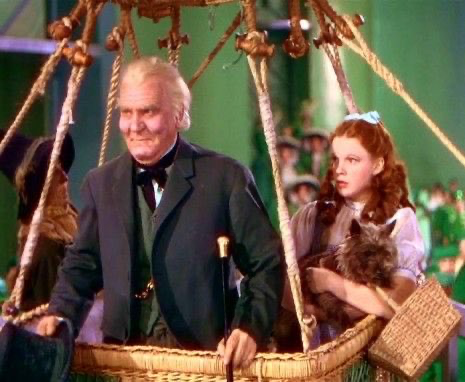
One of Hollywood’s strangest coincidences: while preparing THE WIZARD OF OZ (1939), the production bought a worn coat from a second-hand shop for the actor playing the Wizard. Later, the name of Oz creator L. Frank Baum was discovered inside a pocket, and Baum’s widow reportedly confirmed that the coat had indeed belonged to her husband.
Fun Fact:
In the early 1900’s movies were still considered a novelty by the public so they weren’t called theaters but movie houses or Odeons (basically Ancient Greek work for theatre) and since they cost around 5 cents they were called “Nickelodeon” and that’s origin of the TV Channels name
On January 29, 1820, George III died after one of the strangest and most tragic reigns in British history.
To many Americans, he is remembered simply as “the king who lost America” — the monarch whose rule coincided with the American Revolution and the birth of the United States. In the American Revolutionary War, his name became synonymous with tyranny. The United States Declaration of Independence directly condemned him as a ruler who had violated the rights of the colonies.
But the real story of George III is far more tragic than the caricature history often remembers.
For much of his early reign, George III was actually considered a hardworking and surprisingly modest monarch. Unlike many European kings of the era, he avoided extravagant affairs, valued domestic family life, and took a serious interest in farming, science, and government administration. Some even mocked him as “Farmer George” because of his fascination with agriculture.
Then his mind began to break.
Starting in the late 1760s and growing worse over the decades, the king suffered terrifying episodes of mental and physical illness. During these attacks, he reportedly talked nonstop for hours, sometimes foaming at the mouth, speaking so rapidly that attendants could barely understand him. He experienced paranoia, emotional instability, hallucinations, and violent mood swings. At times he had to be physically restrained by doctors and servants terrified he might harm himself or others.
For generations, historians believed George III suffered from Porphyria — a rare illness sometimes associated with abdominal pain, mental disturbances, and reddish or bluish urine. This theory became famous in popular culture and even inspired books and films. However, more recent historians and medical experts argue he may instead have suffered from severe bipolar disorder or another psychiatric condition. The truth remains debated because medicine in the 18th century was primitive and poorly understood mental illness.
What is certain is that his episodes became increasingly disturbing.
One famous story claims he once mistook a tree for the King of Prussia and attempted to hold a conversation with it. Some historians question whether that exact story was exaggerated by political enemies, but there are numerous well-documented accounts of bizarre behavior during his breakdowns. Witnesses described him rambling endlessly, speaking incoherently, and becoming detached from reality for days at a time.
The treatments of the era were horrific.
Doctors believed madness could be cured through restraint, bleeding, blistering, purging, and isolation. During his worst episodes, George III was strapped into restrictive garments resembling straitjackets. He was sometimes tied to chairs or confined under heavy supervision. Physicians forced toxic medications into his body while attendants monitored him constantly inside Windsor Castle.
And yet, despite being king of the largest empire on Earth, he could not escape his own collapsing mind.
By the early 1800s, George III’s condition had deteriorated catastrophically. He became permanently blind from cataracts. He gradually lost much of his hearing. His mental state deteriorated to the point that he could no longer rule effectively, leading Parliament to appoint his son as Prince Regent — the future George IV — in 1811.
The king spent his final years largely isolated from the outside world.
#archaeohistories
The burning building scene in Spider-Man 2 (2004) is Peter Parker at his purest. No powers, no suit, just running straight into danger to save a kid. That’s the whole character in one moment.
The opening of The SpongeBob SquarePants Movie (2004) is iconic. It starts like you’re about to watch a full pirate adventure, complete with sea shanty energy, and then flips straight into Bikini Bottom chaos. https://t.co/BPj6bZkcs2