US deployed 40–50% of its deployable air power against Iran — University of Chicago’s Robert Pape
'Never has the US deployed this much force against a potential enemy and not launched strikes'
@DI313_ When will the US military take away our Xi Jinping dictatorship? He's the ringleader of the axis of evil; don't forget him, Winnie the Pooh will be furious.
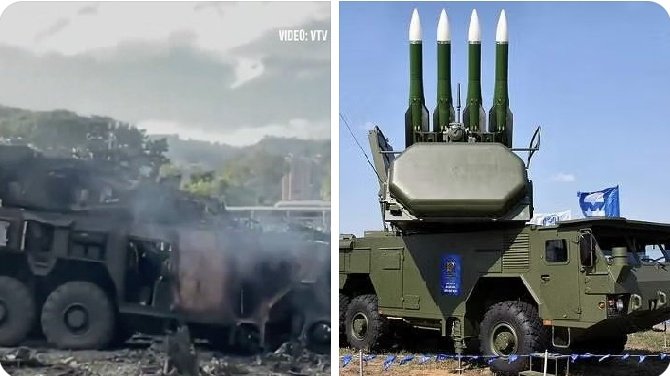
🚨🇺🇸🇷🇺🇻🇪 THE F-35 EFFECT: HOW U.S. STEALTH AIRPOWER IS ERODING THE MYTH OF RUSSIAN AIR DEFENSES
If recent reports are accurate, the U.S. F-35 is doing more than flying missions, it’s dismantling reputations.
Claims emerging from recent operations suggest that Russian-origin air defense systems, including Buk-M1 and S-300 variants, were neutralized during U.S.-led actions, with the F-35 playing a central role in suppressing and collapsing the integrated air-defense network. While official details remain limited, the implications are strategic.
For years, Russian systems were marketed as A2/AD “bubbles” capable of denying airspace to even the most advanced Western aircraft. The F-35 challenges that narrative not with spectacle, but with method: stealth penetration, sensor fusion, electronic attack, and kill chain disruption.
From a strategist’s view, this isn’t about one platform “shooting down” another. It’s about rendering radars blind, command nodes silent, and missile batteries irrelevant before they can engage. That’s how modern air wars are won.
If these outcomes are confirmed, they undercut long standing claims about the invulnerability of Russian air defenses, and explain why nations facing Russian style systems continue to prioritize the F-35 despite years of criticism.
The takeaway is blunt, air power dominance in 2025 isn’t about missiles on paper.
It’s about who owns the spectrum, the sensors, and the first move.
And that’s where the F-35 is changing the game.