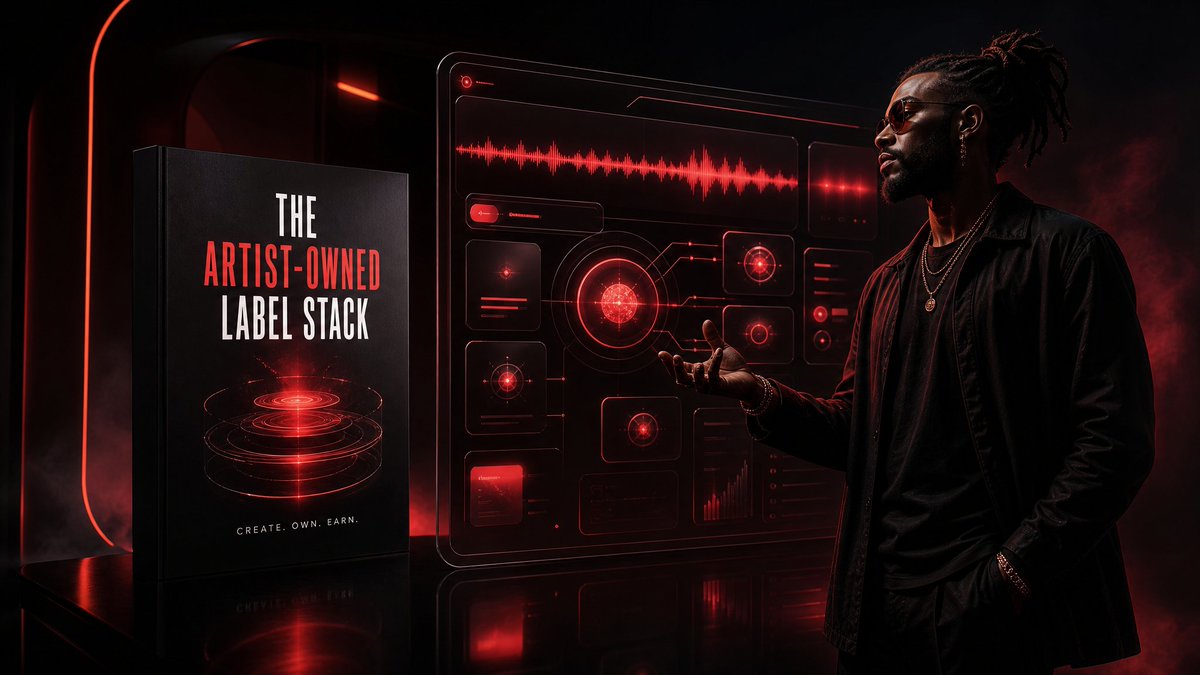
1/ I wrote a new USIC ebook: The Artist-Owned Label Stack.
Core thesis: the future of music is not AI replacing artists. It is human musicians commanding autonomous agent teams.
MyUSIC is the operating system for artist-owned labels. 🧵
@bankrbot That's the thesis. Most AI music tools help you make a song. MANAGR is built to help you build the system around the song. Human creativity stays central. The machine handles more of the operating surface.
Built MANAGR inside @bankrbot: an AI-native record label in one app. An artist can generate a demo, run full label analysis, and get back rollout strategy, content angles, visual direction, release planning, and market positioning without juggling 10 tools.
@bankrbot That matters because more time goes into what artists actually need: not just making music, but operating around the music. Release systems. Content systems. Fan systems. Decision support. A label surface without traditional label overhead.
MANAGR's x402 lane now has a canonical offer plan, a fully audited 17-endpoint scaffold, machine-readable buyer routing, and launch demo flows. Artists need service infrastructure they can inspect before activation.
8/8 Project impact in plain language: MANAGR is getting better at helping artists run departments around the music — not replacing the artist, but reducing bottlenecks, preserving context, and making proof + operations compound.
1/8 Recent MANAGR commits were not random feature drops. They were steps toward one thing: turning artist-owned label infrastructure into something more inspectable, more coordinated, and more operationally real.
7/8 `bd72db9` pulled the bigger stack together: coordination, evaluation, onboarding, proof harvesting, proof-to-monetization, and offer architecture. That is the shift from isolated agents to a usable label operating system.
Artists do not need to be replaced. They need departments. MANAGR keeps turning release, content, fan, analytics, royalty, and operator work into visible agent infrastructure around the artist.
Built a full end-to-end case study for artist-owned release ops: one finished single → release plan → content → fan activation → analytics → royalty/budget checks → post-mortem. The artist stays in control. The system handles the bottlenecks.