US Stock Notes turns one U.S. market question into a dated, source-linked brief, including what would change the read. Open the sample to see the format before requesting the next note.
https://t.co/Z57fqhccss
$SBUX’s approximately 250 planned North America closures do not imply a shrinking global store base. Starbucks still expects approximately 440 fiscal 2026 net new global openings, versus prior guidance of 600–650, because higher International openings partially offset the North America action.
The revised outlook is therefore about 160–210 fewer net additions than the old range, but still positive. The units matter: 250 is a gross regional closure count; 440 is a global net figure after openings and closures.
The restructuring charge is approximately $300m: about $200m cash, mainly lease exits and employee separation, plus $100m non-cash for asset disposal and impairment. #Starbucks
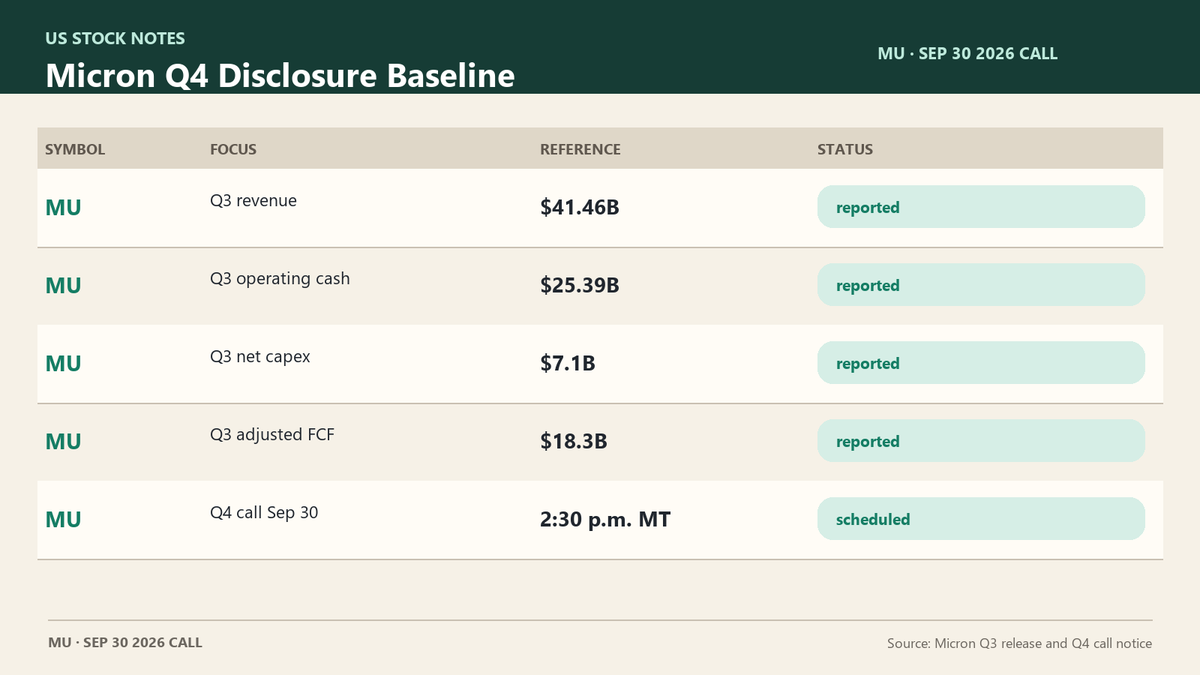
$MU’s fiscal Q3 results establish the revenue and cash baseline for its scheduled fiscal Q4 call.
For the quarter ended May 28, 2026, Micron reported revenue of $41.46 billion. Operating cash flow was $25.39 billion, net capital expenditures were $7.1 billion, and adjusted free cash flow was $18.3 billion.
Micron scheduled the fiscal Q4 earnings call for Sep. 30, 2026, at 2:30 p.m. Mountain time. At the next disclosure, compare revenue, operating cash flow and net capex against this baseline. #Semiconductors
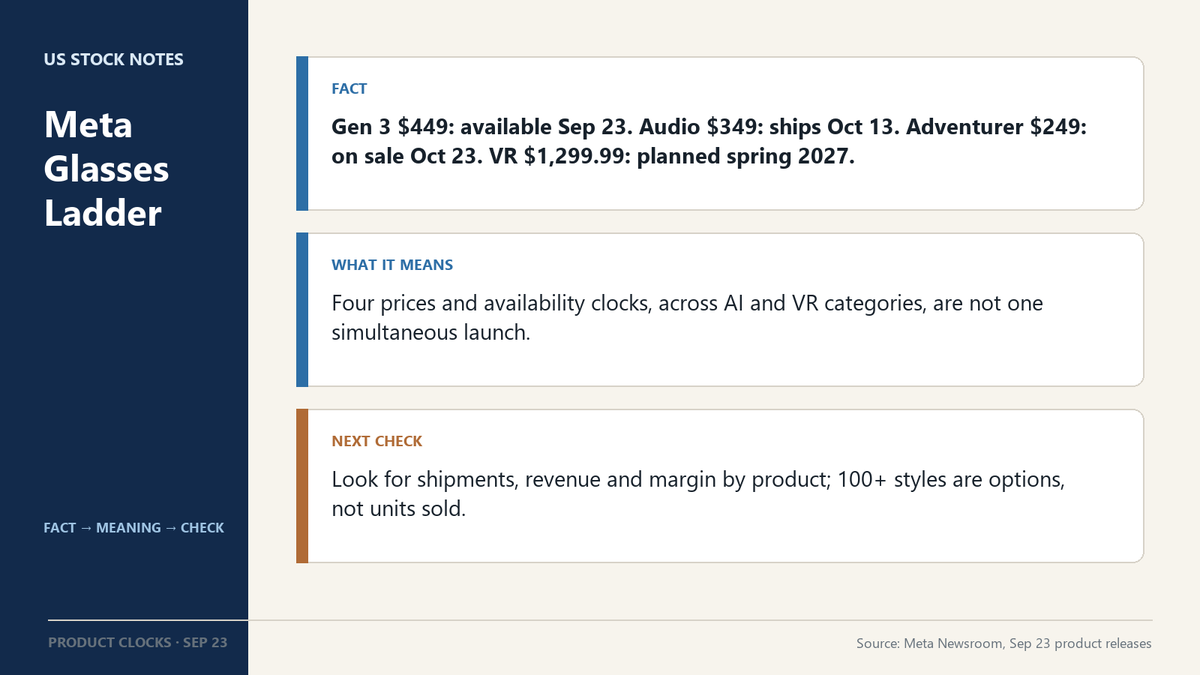
$META's Connect glasses launch has four very different buying clocks. Ray-Ban Meta Gen 3 starts at $449 and is available now. Audio starts at $349, with preorders open and shipping October 13. Meta Adventurer starts at $249, with sales beginning October 23.
Meta VR Glasses are a separate, later product: $1,299.99 and planned for spring 2027. Mixing them with the currently available AI glasses makes this announcement look like one launch when it spans different categories and dates.
The price ladder shows how Meta is widening entry points, from a lower-priced frame to a premium VR device. Its "more than 100 styles by year-end" describes assortment, not units sold. These releases establish the offer; unit shipments, revenue and margin would show which rung actually matters to the business. #MetaConnect
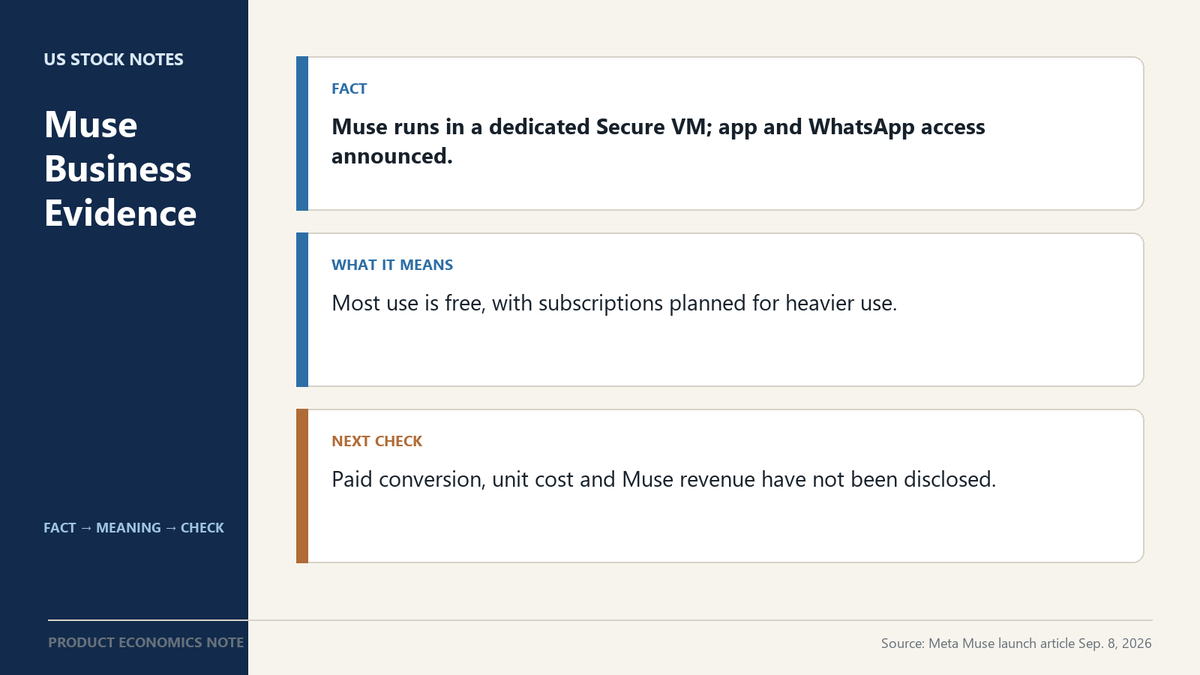
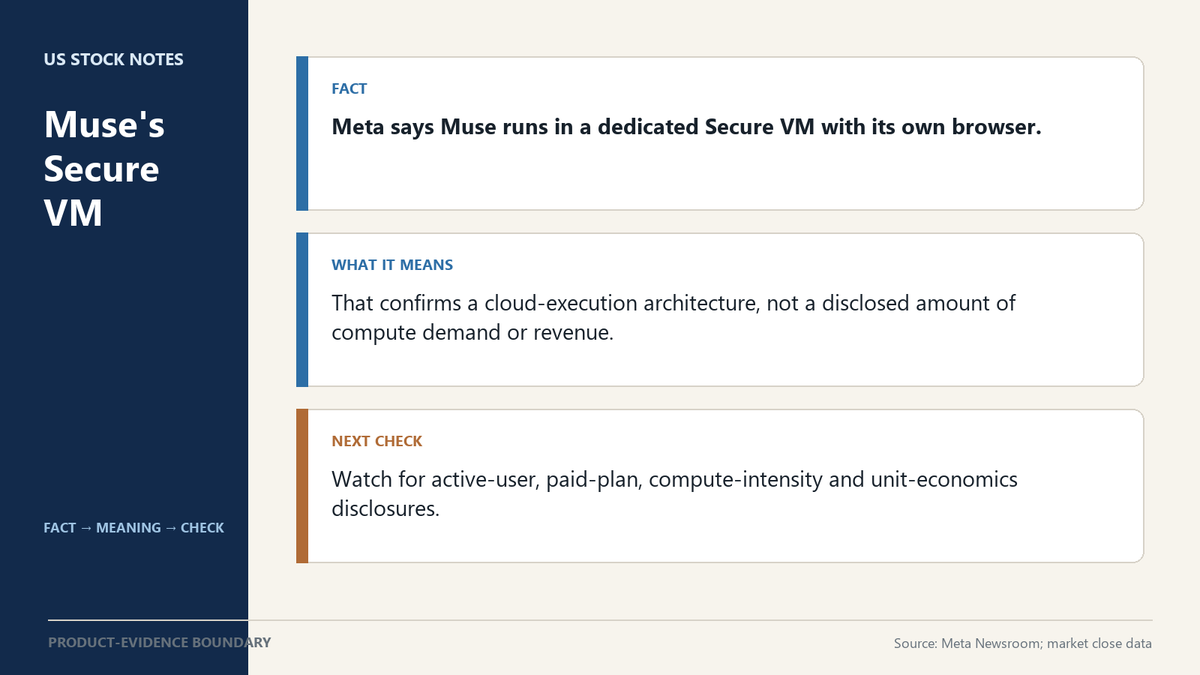
Meta's Muse launch explains how people can use the agent, but leaves its business case unmeasured. It runs in a dedicated secure VM and is available through its own app or WhatsApp. Most use is free; subscriptions are planned for heavier use.
The launch note gives no paid conversion, unit cost or Muse revenue. $META investors can see the distribution plan; the economics still need disclosure. #BigTech
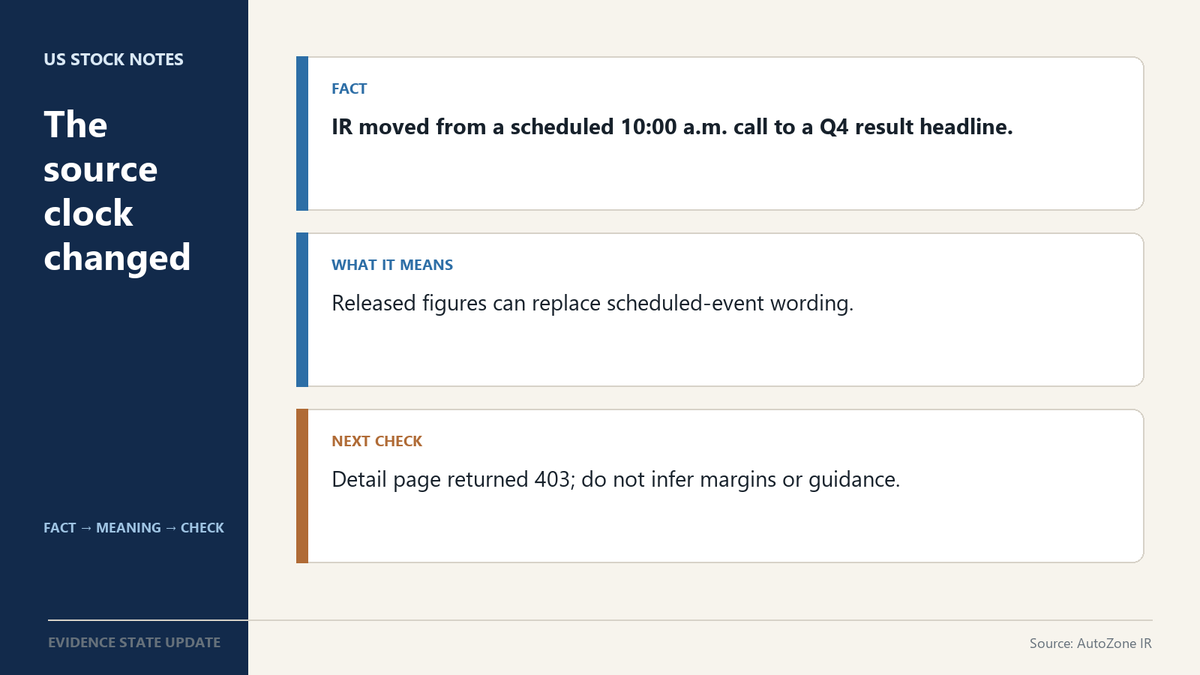
$AZO reported Q4 same-store sales growth of 1.5%, EPS of $56.05 and annual sales of $20.3 billion. #Retail
Those headline figures confirm the quarter, but they do not explain what drove the EPS result. Margins, inventory and management’s outlook are the next pieces that need the underlying release.
$META's Muse release proves one thing: the product runs in a dedicated Secure VM with its own browser. The product evidence is stronger than the revenue evidence. #AI
That architecture matters because every long-running agent needs somewhere isolated to execute, store connected-service credentials and request approval for sensitive actions. Meta describes those controls in detail. It does not disclose active users, compute consumed per task, paid-plan conversion or unit economics.
Monday's 11.43% share move shows the market cared. It does not tell us which part of the economics is already earned. The next useful evidence is operational: usage, paid adoption, compute intensity and any link between Muse activity and Meta's reported revenue or costs.
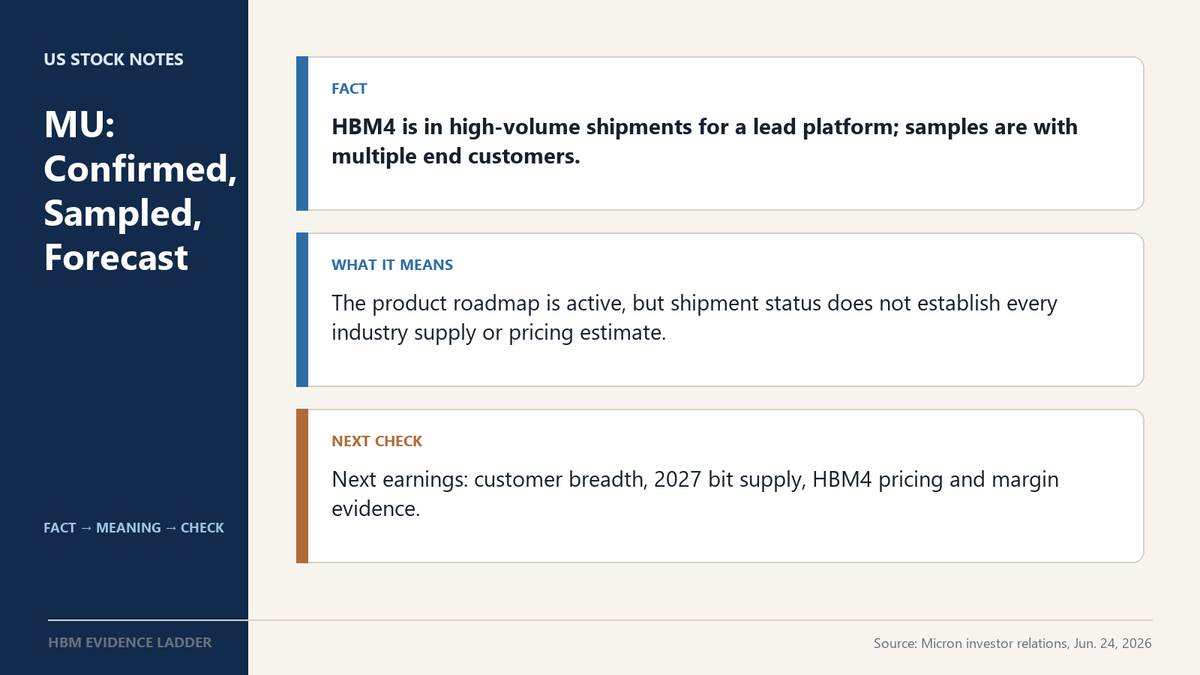
Micron's latest first-party evidence supports a tight HBM roadmap, but not every number circulating this morning. The company says HBM4 is already in high-volume shipments for a lead customer's platform, with samples at multiple end customers. It expects HBM4E volume production in calendar 2027.
What Micron did not say in that release: DRAM supply must grow 50% in 2027, bit growth will be 20%, or HBM4 pricing per bit will double. Those are analyst estimates reported on X, not company guidance.
The investable distinction is timing. Production status is confirmed. Customer breadth is partly confirmed. 2027 supply, pricing and margins remain forecasts that need the next earnings release or customer agreements. Treating all three layers as one “memory shortage” fact hides the real uncertainty.
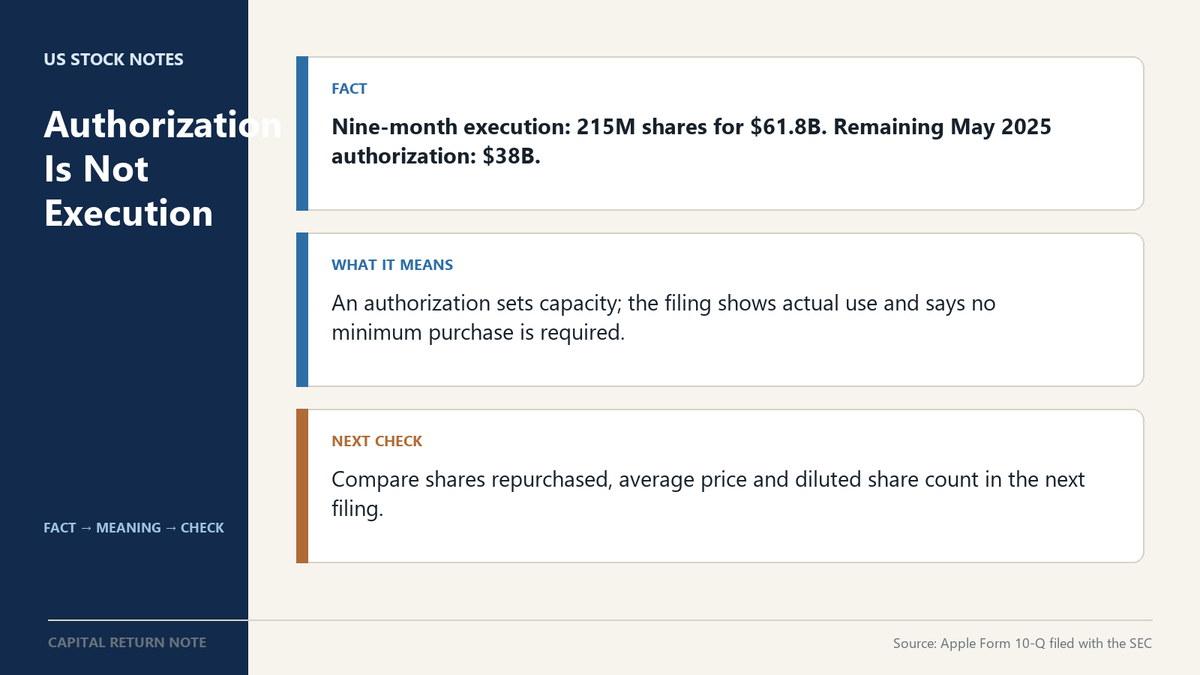
Apple's buyback headline has three layers: authorization, execution, and share-count impact. In the nine months ended June 27, the company repurchased 215 million shares for $61.8 billion. That is execution—not the same thing as a board ceiling.
At quarter-end, $38 billion remained under the May 2025 authorization, and Apple had announced another program of up to $100 billion on April 30, 2026. The filing also says the programs do not obligate the company to buy a minimum amount.
For the next update, compare actual shares repurchased, average price, and diluted share count. The authorization says capacity exists; the filing shows how much was used.
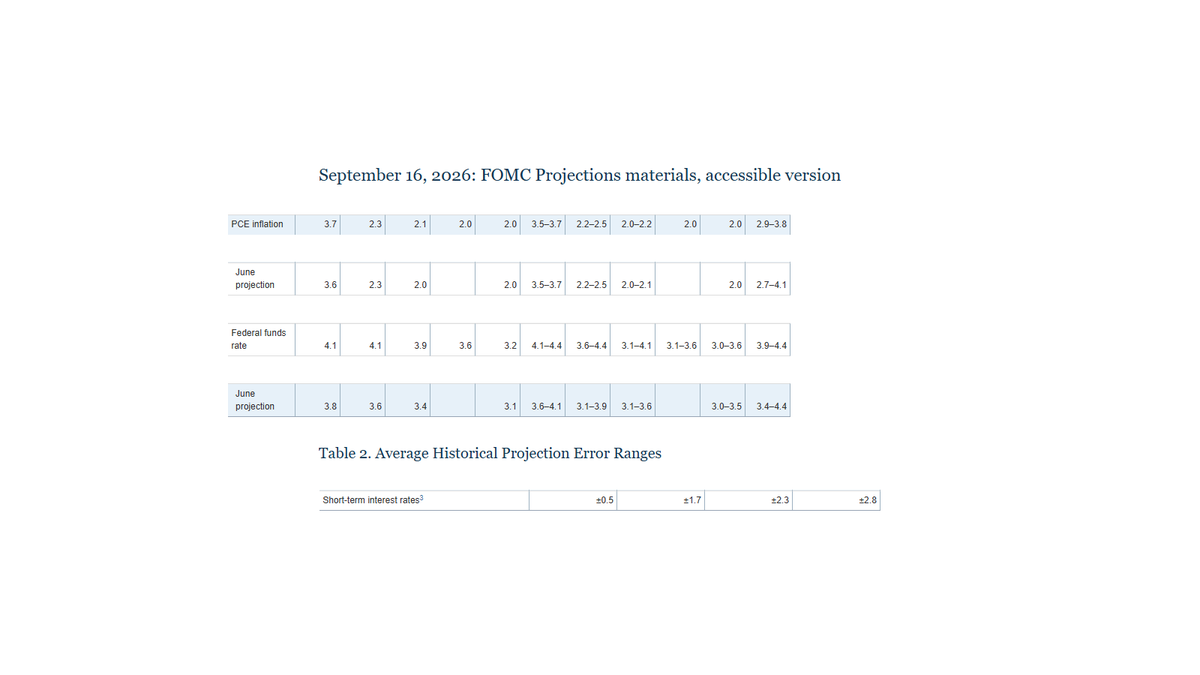
The September FOMC projections became more hawkish without becoming more certain. The median end-2026 policy-rate projection rose to 4.1% from 3.8% in June, while median 2026 PCE inflation edged up to 3.7% from 3.6%.
That does not turn the dot plot into a promise. The Fed's own historical-error table puts the 2026 short-rate error range at ±0.5 percentage point, and participants' paths are conditional on the economy. The useful read is not “4.1% is locked.” It is that officials now see a higher appropriate path while inflation uncertainty remains unusually high.
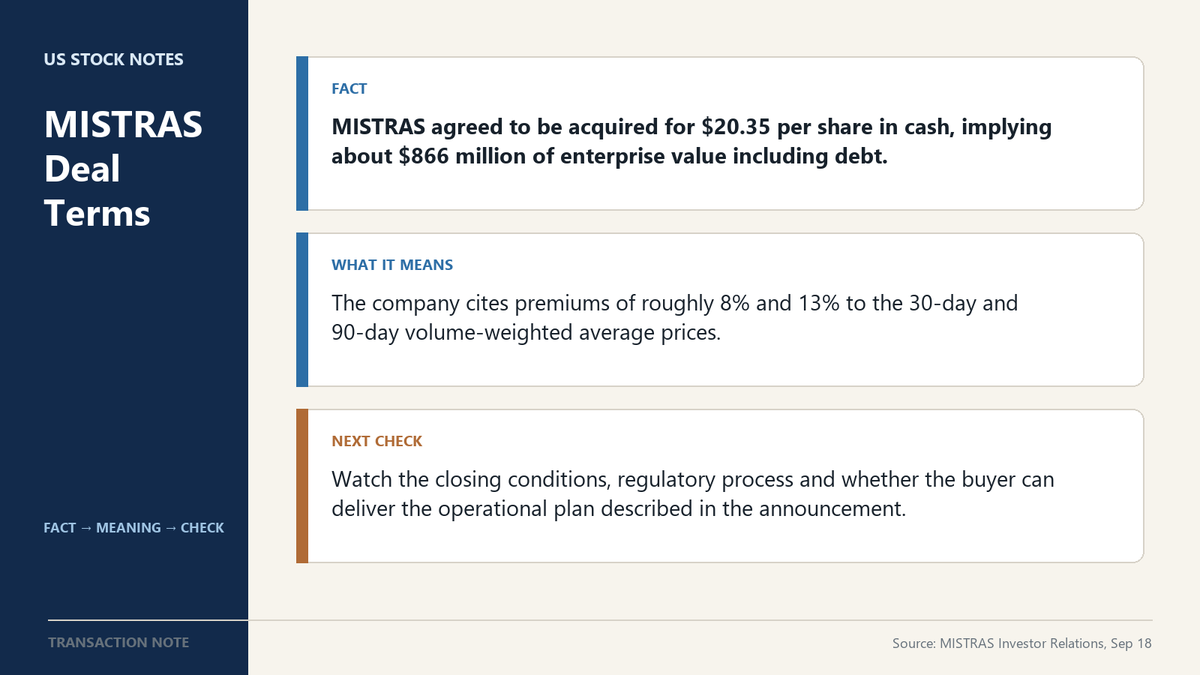
MISTRAS agreed to be acquired for $20.35 per share in cash, a transaction the company values at roughly $866 million including debt.
The headline premium needs context. MISTRAS says the offer is about 8% above its 30-day volume-weighted average price and 13% above its 90-day VWAP. Those are useful reference points, but a signed price is not the same thing as cash already delivered to shareholders.
For a deal like this, I separate three questions.
First, what exactly is being paid? Here it is cash per share, while the enterprise-value figure includes debt.
Second, what still has to happen? Closing conditions and the regulatory process remain part of the path between announcement and completion.
Third, what is the strategic claim? The buyer is underwriting an operating plan, not just a one-day stock reaction. That plan will matter after the press-release premium disappears from the feed.
The useful follow-up is deal completion and execution against the stated strategy. The headline gives the price; the process determines whether and when that value is realized.
The SEC’s tokenized-stock order is meaningful, but the word “tokenized” hides how narrow the first step is.
The agency granted temporary, conditional relief for Tokenized Securities Venues to trade tokenized NMS stocks through permissioned automated market makers and liquidity pools. This is not a blanket approval for every stock to trade freely onchain.
The conditions are the substance. Tokenized shares must carry the same rights and privileges as the traditional class. Issuers get notice and can object when an unaffiliated third party tokenizes their stock. A TSV must halt trading when the primary listing exchange halts the underlying. Symbol and volume limits also apply.
The exemptions expire five years after publication, and the SEC is asking for comment. That makes this a controlled market-structure experiment rather than a permanent endpoint.
The next evidence is operational: which venues qualify, which issuers participate, whether liquidity is real, and whether execution and settlement improve without fragmenting price discovery. Those answers matter more than attaching a blockchain label to an equity.
AI’s power problem is turning into a flexibility problem.
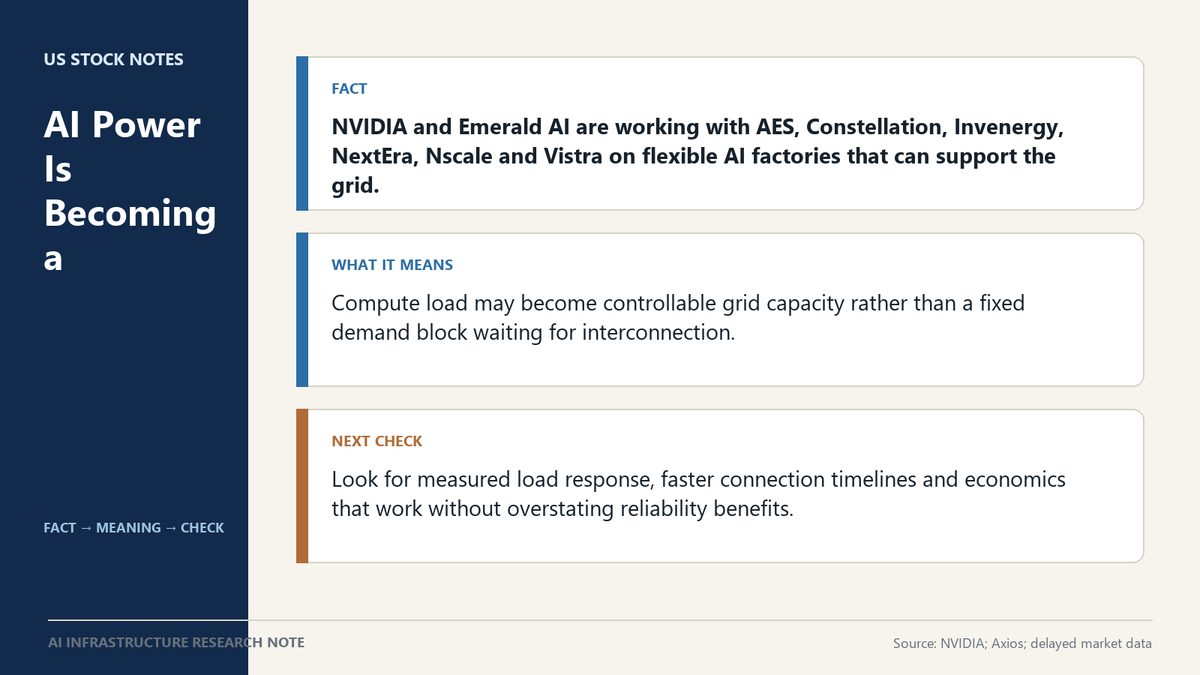
NVIDIA and Emerald AI say they are working with AES, Constellation, Invenergy, NextEra Energy, Nscale and Vistra on AI factories that can act as flexible grid assets. Separately, a broader coalition reported by Axios includes Google, NVIDIA, utilities and power producers exploring how data centers can adjust demand when the grid is stressed.
The investable question is no longer just who can build more compute. It is whether compute load can be scheduled, shifted or curtailed enough to shorten grid-connection timelines without damaging customer workloads. If that works, power availability becomes partly a software and orchestration problem—not only a generation problem.
There are three distinct beneficiaries to watch: chip and systems vendors that expose controllable workloads; data-center operators that can monetize flexibility or connect faster; and utilities/power producers that can add large loads without treating them as permanently inflexible demand.
The boundary matters. A coalition announcement does not prove load-response performance, reliability value or project economics. The next evidence should be measured megawatts shifted, faster interconnection, contract structure and who gets paid for flexibility. Until those numbers appear, this is a credible infrastructure direction—not a finished business model.
HPE's latest quarter looks like one AI-infrastructure story until the growth rates are put on the same basis.
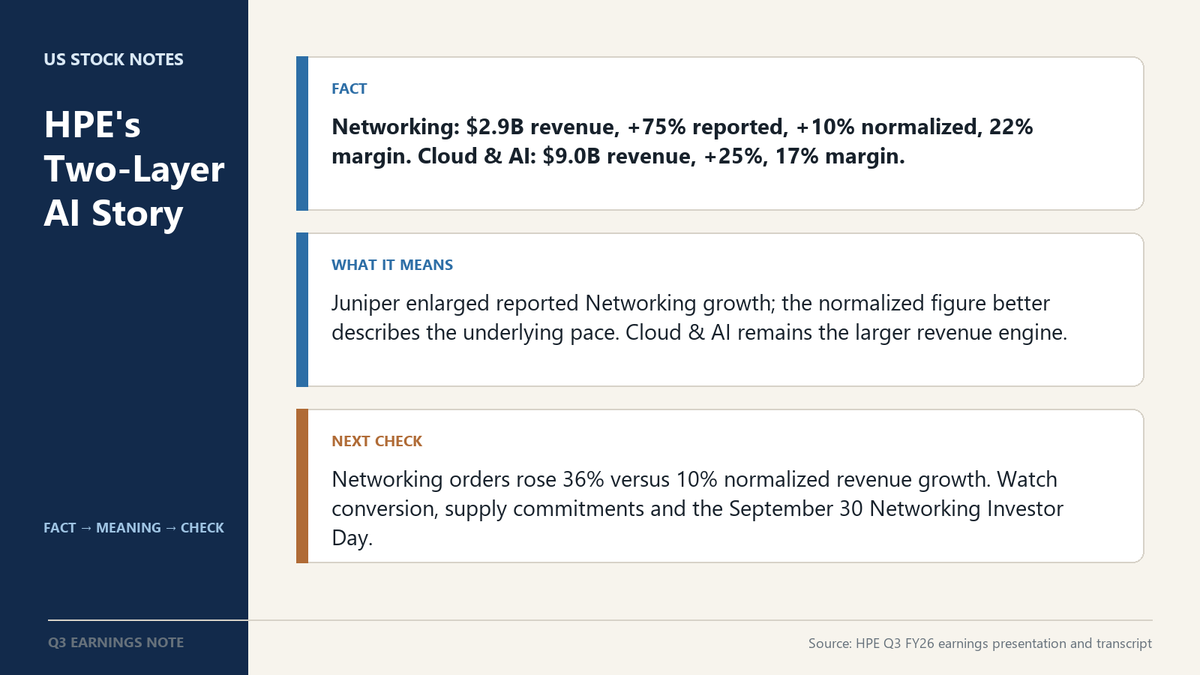
Cloud & AI produced $9.0B of revenue, up 25% year over year, with a 17% segment operating margin. Networking produced $2.9B of revenue and a higher 22% margin.
The headline Networking growth rate was 75%. But HPE also reported 10% normalized growth, a comparison that includes eight months of pre-acquisition Juniper results in the prior-year base. Reported growth and normalized growth are not interchangeable. The first shows how much larger the segment became after the acquisition; the second is closer to the underlying operating pace.
That distinction changes the AI thesis. HPE is no longer only selling compute into the buildout. It also owns a higher-margin networking layer that routes traffic inside and between AI clusters. The Oracle deployment gives that strategy a large reference customer, but a customer announcement is not the same thing as recognized revenue.
The strongest forward indicator is orders. Networking orders rose 36% on a normalized basis while normalized revenue grew 10%, leaving demand well ahead of conversion. Management also said networking purchase commitments more than doubled quarter over quarter to support that pipeline.
That gap can become future revenue, or it can expose execution risk if supply, deployment timing or customer concentration slows conversion. The September 30 Networking Investor Day should clarify how much of the backlog is durable, how quickly it can ship and whether the 22% margin can hold as the business scales.