John Zaborsky, along with fellow UW Botany alumni, have published a paper on the phylogenetics and biogeography of Sesamothamnus (Pedaliaceae). Time-calibrated splits were obtained for 73 plant groups coinciding with waves of aridification across Africa. https://t.co/5fifxndXA3
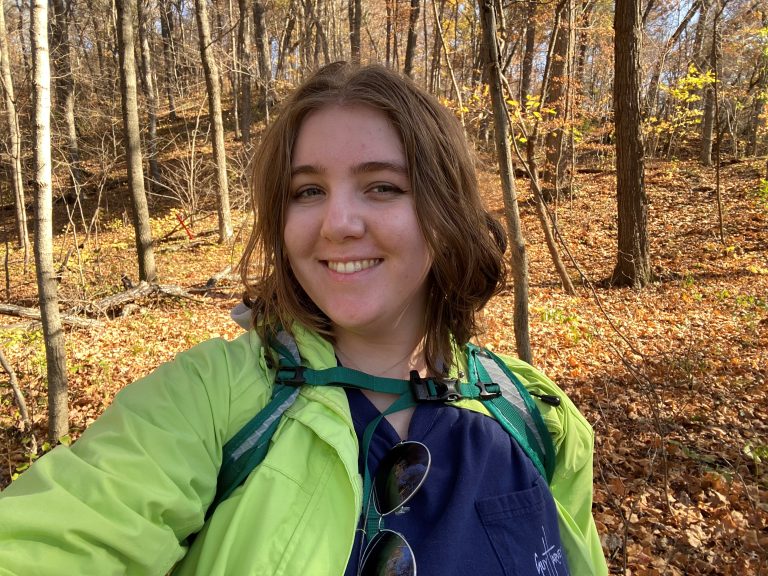
We are proud of Botany graduate student Zoe Ryan, who was selected to be a Lead Teaching Mentor for the L&S Teaching Mentors Program! And we are also proud of grad student Shaneya Miriyagalla, who is a Teaching Mentor in the program.
https://t.co/oNPEkCMI8V
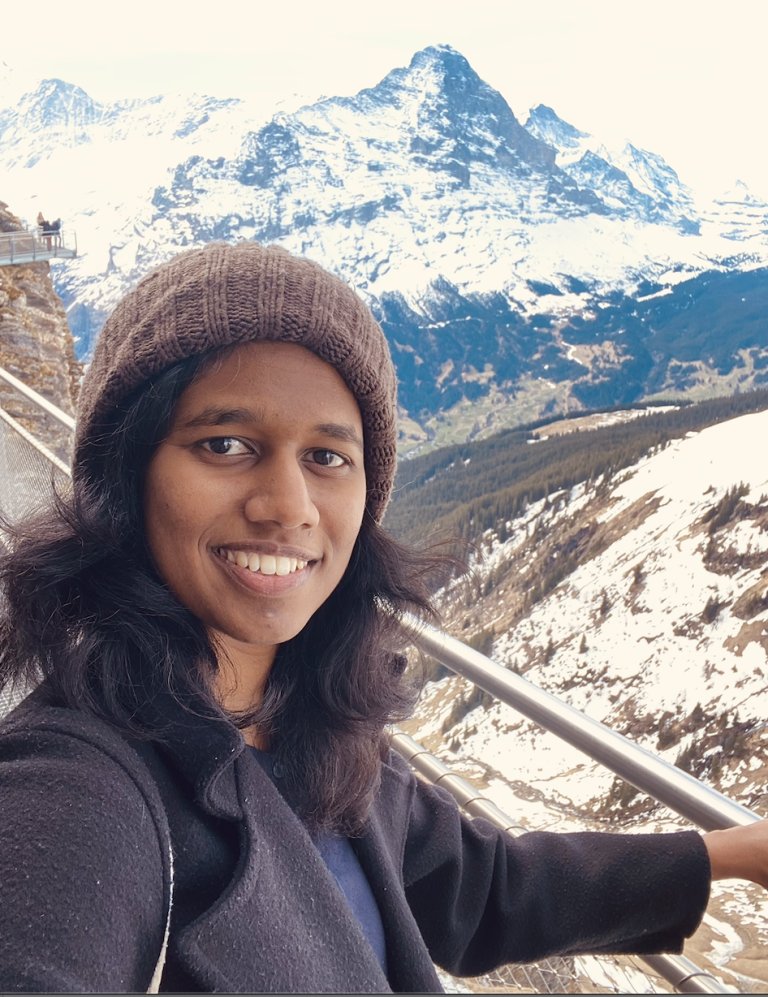
Congrats to UW-Madison Botany Professor Shan He, whose final postdoctoral project at Princeton was published in Nature Cell Biology last month! Her collaborative work uncovered the key to regulating the pyrenoid.
https://t.co/jQLTYf3JfX
Today in Nature Cell Biology, a collaborative effort across labs (Jonikas, Wingreen, Brangwynne) at Princeton discovers the key to regulating a biomolecular condensate. Congrats to first authors Shan He and Linnea Lemma! https://t.co/0MBOqKLMrr
A collaboration between the McCulloh Lab and Dr. Dave Rogers (UW-Parkside) combined plant traits and historical survey data of Wisconsin to show that changing forest composition is impacting how Wisconsin forests interact with disturbance and stress. https://t.co/0b7Yh8zzCD
From the Pringle Lab: Fly agaric mushrooms (Amanita muscaria) are invasive in South Africa, and an international collaboration reveals their rich chemistry may be a mechanism used by the fungi to spread. https://t.co/4PREEdKUx6
The Death Cap mushroom is spreading across North America, and evolving to create new chemicals along the way. Professor Anne Pringle and colleagues are investigating why these mushrooms are now producing previously unknown natural products. https://t.co/iaZ8ZjRBrQ
With Bated Breath
A trip to the ER where doctors were able to quickly resolve her son's breathing emergency got Botany alumna Stacey Smith thinking about the scientific advancement that made that recovery possible and the hidden value of basic research: https://t.co/gh2CcCrHv0
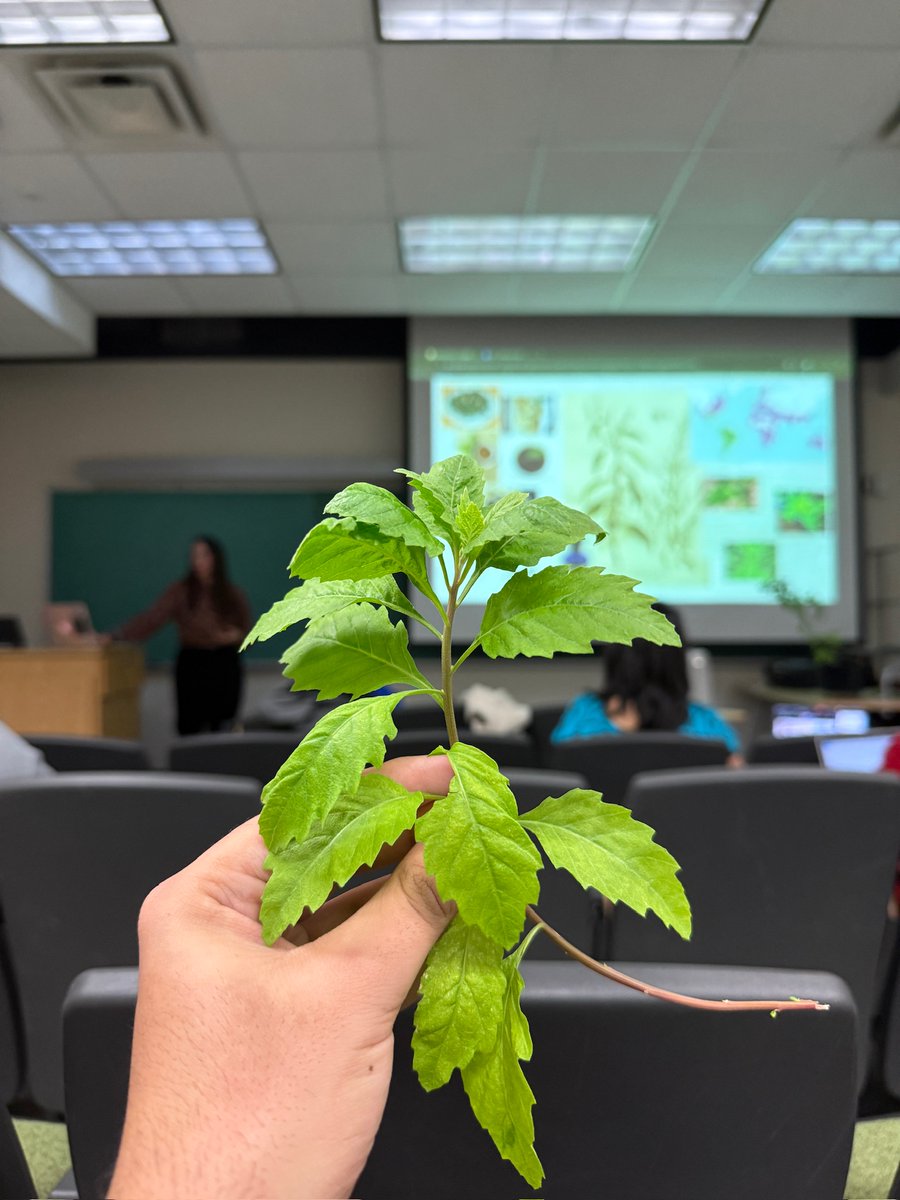
Congratulations to Tabitha Faber, who successfully defended her Ph.D. dissertation , "Exploring axes of variation in Dysphania ambrosioides (L.) Mosyakin & Clemants"! Botany Professor Ken Keefover-Ring and Dr. Claudia Claderon (Plant and Agroecosytem Sciences) were her advisors.
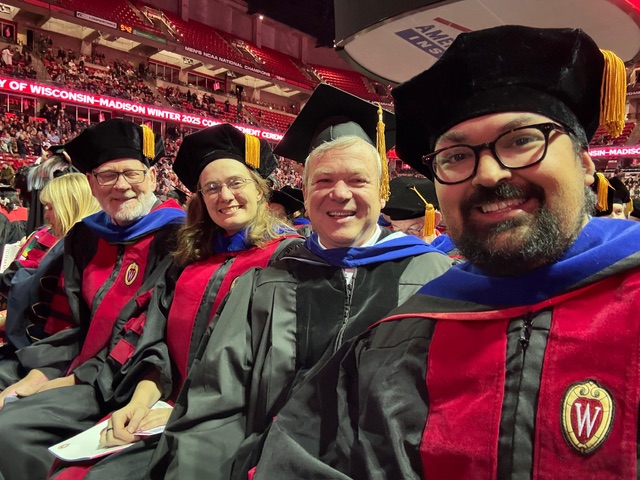
At Winter Commencement yesterday, Alexa DiNicola and Brandon Corder crossed the stage with their PhD advisors, Ken Sytsma and Ken Cameron. Congratulations, Alexa and Brandon!
Botany 300 Plant Anatomy students were given the option to create a video for a special assignment. The goal was to explain scientific concepts to the general public. One of the students, Mason Borchardt, went above and beyond! Check it out the video:
https://t.co/hmERxWDOWK
It's official! Botany and Integrative Biology will merge to become the Department of Biology. The new department will officially launch in Summer 2026.
https://t.co/9IDgO1nrsE
A study by Professor Emeritus Edgar Spalding and Scientist Takeshi Yoshihara published in PNAS has revealed a previously unknown pathway plants use to detect gravity and orient growth. https://t.co/6bjJndQ8NU
Professor Emeritus Edgar Spalding recently discovered a species of darner new to Dane County in a city stormwater pond. Edgar is a member of the Wisconsin Dragonfly Society and has been assisting the city with surveying the pond for dragonfly diversity. https://t.co/jam5vyw2ZW
Could soybeans be the answer to a natural alternative for synthetic red dye? Hiroshi Maeda and Soyoung Jung collaborated with the Wisconsin Crop Innovation Center to develop an economical way to create a natural dye: https://t.co/LAYUHUq8eS via @YouTube
Botany is proud to partner in bringing alumna and bestselling author Dr. Robin Wall Kimmerer, author of “Braiding Sweetgrass”, to the 10th Annual Native Nations Nursing, Helpers, and Healers Summit, happening November 7, 2025, in Madison, WI!
https://t.co/G2FV7za7UB
A new article by Tom Givnish (Henry Allan Gleason Professor Emeritus) in the AJB provides a potential explanation for the 30-80 million year lag in the diversification of flowering plants after their origin and the rise of their defining characteristics. https://t.co/QGRDzRvFLm
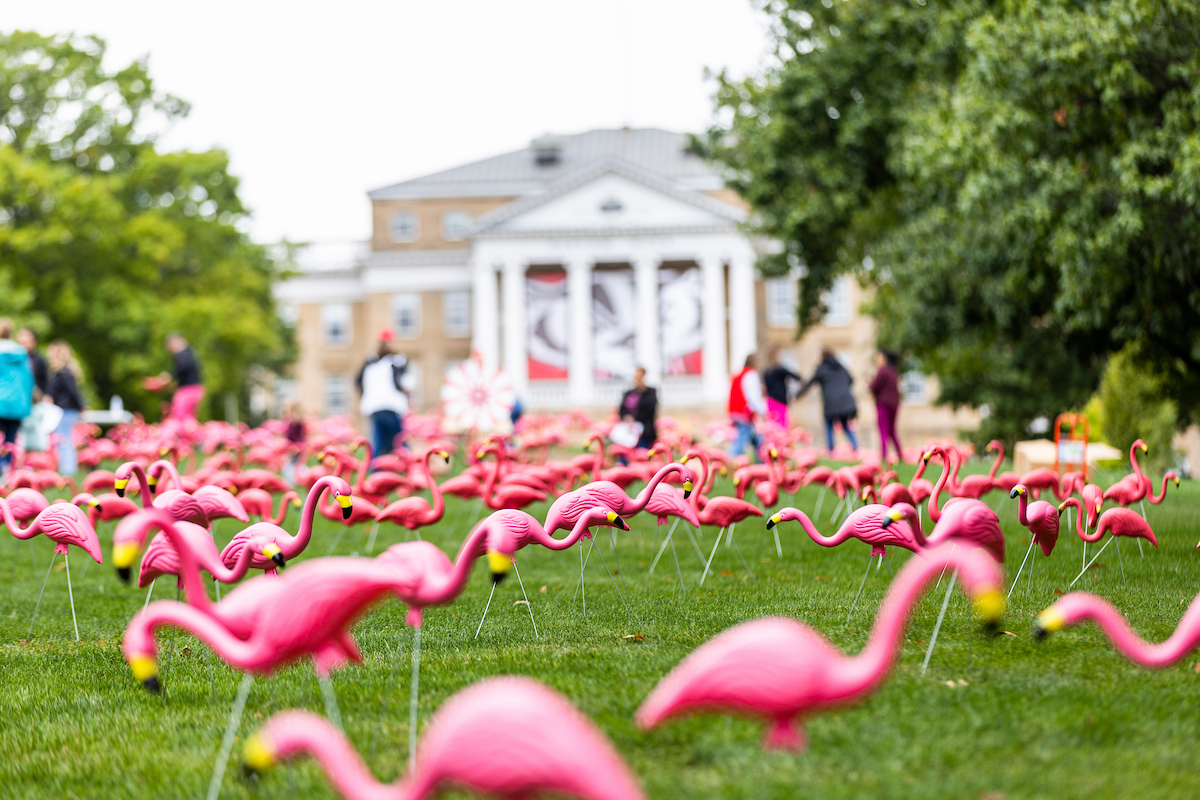
🦩It's Fill the Hill time!
Support Botany and participate in a fun Badger tradition all at the same time!
Give $350 or more and qualify to receive your own full-sized lawn flamingo & our new mini flamingo.
Give $100 or more to qualify for just the mini.
https://t.co/leeTf7o7JD
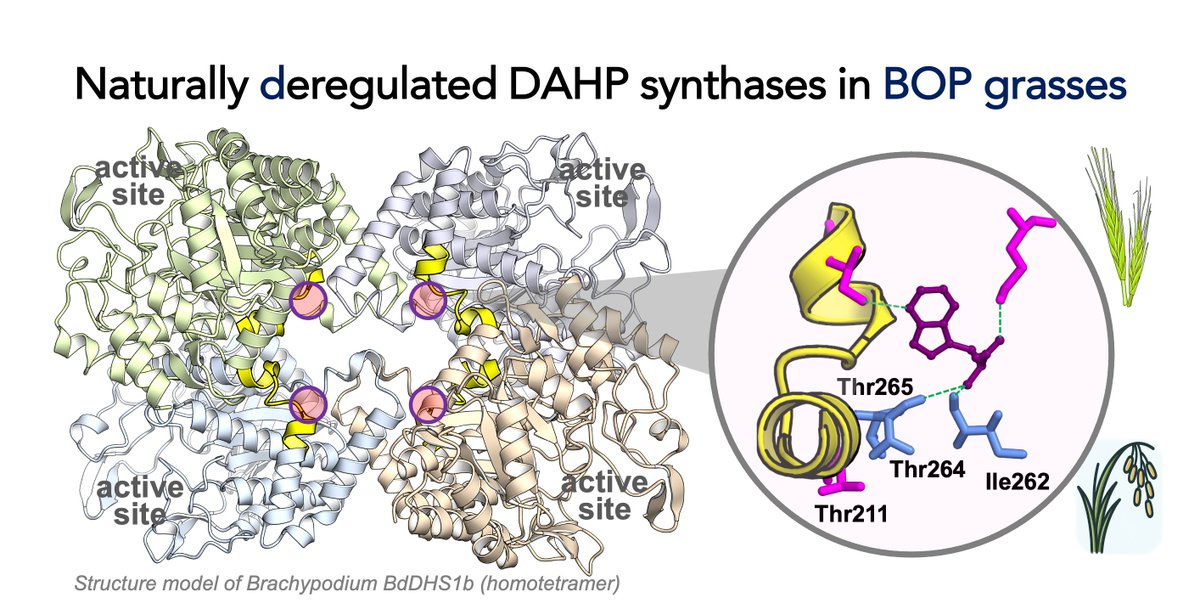
Our latest Plant Physiology paper identified four mutations in DAHP synthases that act synergistically to supercharge the shikimate pathway in BOP grasses, boosting aromatic chemical production. Read more at 🔗 https://t.co/NKxa6hyLVq
We thank support from @NSF PGRP and MCB!
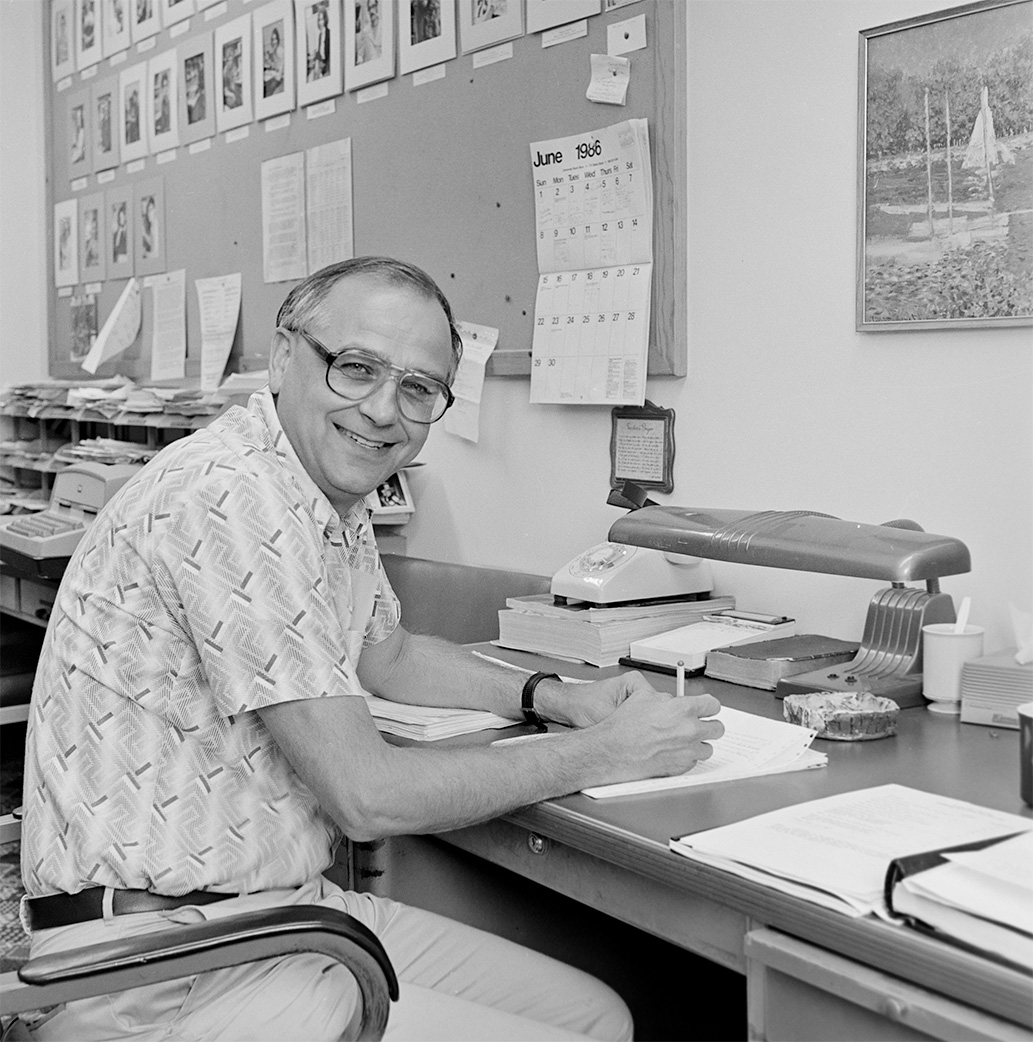
We are sad to share the news that Professor Emeritus Wayne Becker passed away on October 6.
He was a Botany Professor at UW-Madison for 33 years and was known for his work in building the BioCore Curriculum and for his textbook, The World of the Cell.
https://t.co/VIYU6uw3Ip