REPEATED ATTACKS ON OUR SUPPORTERS IN DELTA STATE: AN URGENT APPEAL FOR ACTION
I am profoundly troubled by the continuing attacks against our supporters throughout Nigeria, especially the latest tragic incident in Delta State, in which four people were killed during an attack on supporters of the Nigeria Democratic Congress (NDC). I unequivocally condemn this senseless act of violence.
It is no longer sufficient for those responsible to fund the dissemination of false claims against the opposition. They have now escalated to the appalling practice of murdering innocent Nigerians solely because of their political affiliations. This is completely unacceptable.
The deceased include:
1. Hon. Moses Anaughe, immediate past Federal Commissioner, Federal Character Commission.
2. Comrade Akima Efenena Umukoro, former President of the Urhobo Progress Union (UPU), Youth Wing.
3. Nyoren Okoro, an NDC chieftain.
4. An additional victim whose identity has not yet been established.
Fifteen other people sustained critical injuries and were hospitalised. Among them are Hon. Evance Ivwurie, Chairman of Senator Ovie Omo-Agege’s Campaign Organisation, and Comrade Chuks Erhire, Director-General of the same organisation.
I offer my deepest condolences to the families of those who died and pray for a swift recovery for the injured.
I urge the security agencies to conduct a comprehensive investigation, identify those responsible and their sponsors, and ensure they face justice. The authorities must also act swiftly to safeguard Nigerians engaged in political activities.
Every Nigerian has a constitutional right to support any political party or candidate without fear of intimidation or violence. Political differences must be resolved through persuasion and the ballot, never through the use of bullets.
No political ambition is worth the life of even one Nigerian. -PO
As Chairman of the South-East Governors’ Forum for several years, I also encouraged cooperation among governors and security agencies across the region. We understood that criminal networks did not respect state boundaries; therefore, the response could not be confined to individual states.
Bello specifically acknowledged the contribution of this regional cooperation to the effort to dislodge notorious armed-robbery gangs from the South-East.
A SECURITY MODEL BUILT ON PARTNERSHIP
Our experience taught us that security is not achieved by government acting alone. It requires the cooperation of the police, military, intelligence agencies, paramilitary organisations, community vigilantes, traditional institutions and ordinary citizens.
We therefore promoted a system in which the security agencies were adequately equipped, communities were encouraged to provide useful intelligence, and government remained actively involved in supporting operations.
We also understood that the welfare and morale of security personnel mattered. Officers who were sent on dangerous assignments needed vehicles, fuel, communications equipment, operational allowances and the necessary infrastructure to perform their duties.
Our approach was not to interfere with the professional responsibilities of the security agencies but to give them the support required to discharge those responsibilities effectively. Security was not simply about purchasing equipment; it also involved building trust between the police and the people, encouraging intelligence-sharing, strengthening community participation and ensuring that criminal activities had consequences.
A NEW NIGERIA IS POSSIBLE: CONFRONTING NIGERIA’S SECURITY CRISIS
Today, insecurity is arguably Nigeria’s greatest challenge. From terrorism and banditry to kidnapping, armed robbery and communal violence, Nigerians are increasingly unable to live, travel, farm and conduct their businesses in safety. Communities are attacked, farmers driven from their lands, travellers abducted and innocent citizens killed.
This situation demands more than speeches, promises and occasional military operations. It requires deliberate leadership, adequate investment, effective intelligence-gathering and sustained collaboration among all security agencies.
Our experience in Anambra demonstrated that security challenges can be confronted through proper planning, institutional support and responsible leadership. We equipped the security agencies, strengthened their infrastructure, improved their operational capacity, encouraged community participation and promoted cooperation across state boundaries.
Nigeria needs the same seriousness of purpose. Our security agencies must be properly equipped, motivated and held accountable. Intelligence-gathering must improve, criminal networks and their sponsors must be dismantled, and federal, state and local governments must work together. We must also address the underlying social and economic conditions that make criminal recruitment possible.
We did not claim that every security challenge disappeared during our administration. What we demonstrated was that determined leadership and sustained institutional support could substantially improve the security situation. The testimonies of the Commissioners of Police who served in Anambra, the public assessments of the Inspector-General of Police, together with the investments and interventions documented here, provide evidence that can be independently verified.
Protecting lives and property is not a favour government does for its citizens; it is one of its most fundamental obligations. Nigerians deserve to live without fear and to pursue their livelihoods in safety. Our country can achieve this if we make security a genuine national priority and match our commitments with action.
A New Nigeria is POssible.
In Series 7, we shall look at Poverty Alleviation. -PO
WASHINGTON, DC : PRESENTING NIGERIA’S DEVELOPMENT AND DEMOCRATIC FUTURE ON THE GLOBAL STAGE.
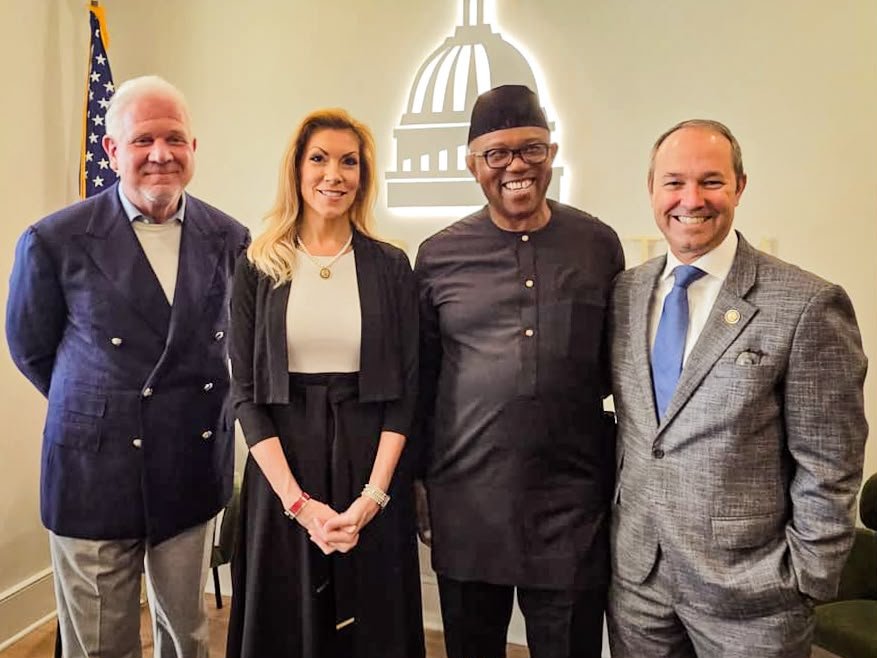
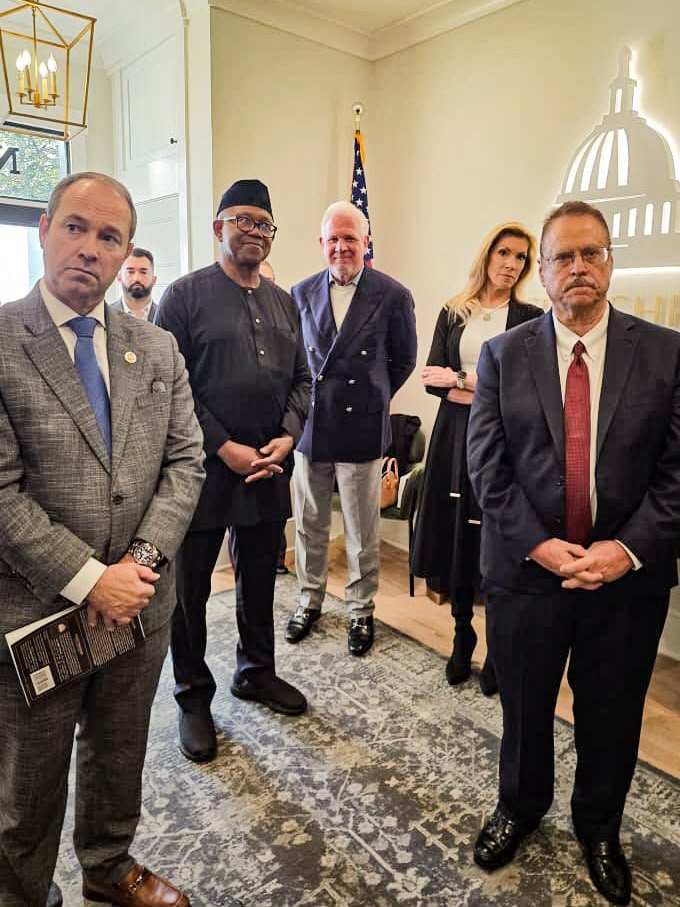
Yesterday, Monday, November 16, I arrived in Washington, DC, for a series of significant meetings and engagements with congressional leaders from both the U.S. House of Representatives and the Senate, as well as other influential American figures. These discussions focused on vital matters affecting Nigeria’s development, the well-being of our people, and the future of our democracy.
I began the day with a substantive interview with renowned American television commentator Glenn Beck. Our conversation addressed Nigeria’s challenges, the pressing need for accountable leadership, the responsible management of our vast human and natural resources, and the opportunities to establish Nigeria among the world’s leading nations.
I also met with prominent American leaders, including Congressman Marlin Stutzman, Congresswoman Beth Van Duyne, Congressman Todd Tiahrt, Suzanne Bock Grisham, retired U.S. Army Colonel Albert V. Short, and other esteemed stakeholders.
One of the day’s principal highlights was my address on Capitol Hill, during which I underscored the urgent importance of international cooperation and support for Nigeria’s advancement, particularly in the areas of national unity, security, economic prosperity, and the welfare of our citizens.
Our conversations also addressed the protection of Nigeria’s emerging democracy and the strengthening of democratic institutions to ensure elections are free, fair, transparent, and credible, accurately reflecting the will of the Nigerian people.
Nigeria has immense potential to emerge as a leading nation within the global community. What is urgently required is accountable leadership, responsible stewardship of our resources, resilient institutions, and an authentic commitment to the security, unity, and well-being of every Nigerian.
Throughout these engagements, my message remained unequivocal: Nigerians must determine Nigeria’s future. Every vote must be counted, the rights of every citizen must be safeguarded, and the people’s will must consistently prevail.
I remain encouraged by these engagements and firmly committed to working with Nigerians at home and in the diaspora, alongside our international partners, to build a peaceful, secure, united, and prosperous Nigeria.
Our journey continues. Our determination remains steadfast.
A New Nigeria is POssible! -PO
PLATEAU STATE: RECLAIMING OUR TOURISM POTENTIAL THROUGH NATIONAL UNITY, A SECURE ENVIRONMENT, AND INCLUSION
Today, Tuesday, 10th November 2026, I arrived in Jos, Plateau State, as part of our ongoing nationwide series of town hall meetings.
During our visit to Jos, we paid a courtesy call on the highly respected Gbong Gwom Jos, His Royal Majesty, Da (Dr.) Jacob Gyang Buba, CFR. We briefed him on our town hall meeting in Plateau State, which was convened to engage with our people and gain a deeper understanding of their most urgent concerns.
His Royal Majesty received us warmly, offered his prayers and wise counsel, and expressed his hopes for a successful programme. He reaffirmed that traditional rulers serve as fathers to everyone and called for peace, mutual respect, and harmonious coexistence as the next elections draw near.
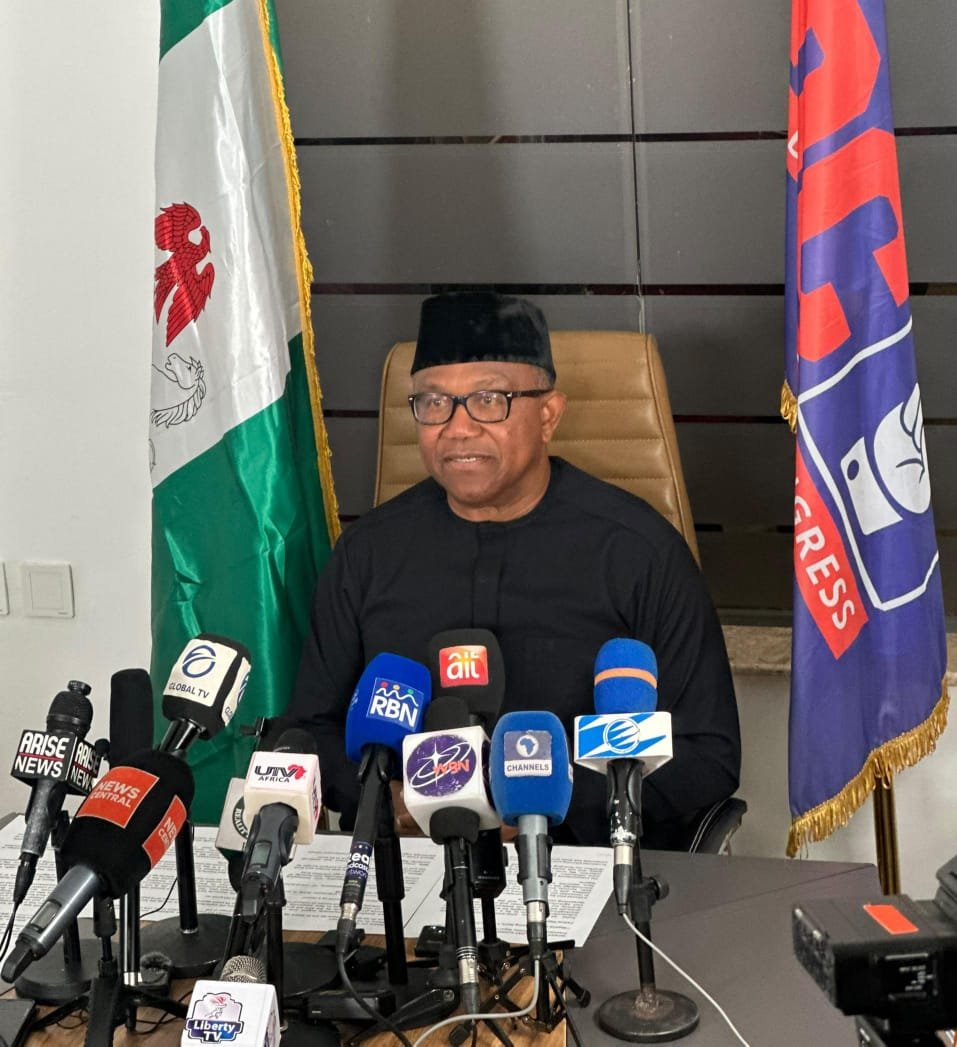
Following our visit to the palace, I proceeded to Rhythm 93.7 FM Jos, where I participated in an interview programme. We discussed the challenges confronting our beloved country, Nigeria, as well as the plans Senator Rabiu Musa Kwankwaso and I have developed to address these issues decisively when elected into office.
I also visited the section of Terminus Market that was destroyed by fire several months ago. There, I spoke with business owners, traders, sellers, and buyers to learn firsthand how they were coping and rebuilding amid the prevailing economic conditions. I assured them that, under our leadership, we would work to ease the devastating economic hardship that the current administration’s policies have inflicted on Nigerians.
At our town hall meeting, participants brought forward several pressing concerns, including the worsening security situation in Plateau State, safeguarding the integrity of the vote, youth unemployment, and access to financing for small businesses. One participant living with a disability also asked how our administration plans to support vulnerable groups and persons living with disabilities.
In response, I stressed that fulfilling our plans for Nigeria would first require us to secure the nation and unite our people behind a shared purpose. In particular, I assured the people of Plateau State that we would confront insecurity decisively and enable citizens displaced by violence who are currently residing in IDP camps to return safely to their communities.
To our brothers and sisters living with disabilities, I reaffirmed our commitment to their care, inclusion, and wellbeing. A nation’s true measure of compassion is found in the way it treats its most vulnerable citizens.
I also reiterated that Senator Rabiu Musa Kwankwaso and I are committed to making substantial investments in vital areas of development, especially healthcare and education, while lifting our people out of poverty.
In conclusion, I recalled the time when Jos and Plateau State more broadly ranked among the foremost tourism destinations for Nigerians and visitors from around the world. I reaffirmed our determination to revive the state’s tourism potential and restore it to its rightful place of prominence.
I extend my special appreciation to His Royal Majesty, the Gbong Gwom Jos, for his gracious hospitality, prayers, and valuable counsel. I also commend our dedicated party faithful in Plateau State for organising this program, as well as the people of Plateau State for their participation, warmth, and hospitality.
A New Nigeria is POssible, and Nigeria will be OK! -PO
CIVILITY IS NOT WEAKNESS. ENOUGH OF THE HARASSMENT OF MY SUPPORTERS. RELEASE RILWAN OLAWALE NOW.
The continued intimidation and harassment of my supporters across the country, the latest being the case of Rilwan Olawale, is disturbing and unacceptable.
President Bola Tinubu has remained a huge beneficiary of our democracy and should not brazenly be destroying it by encouraging and facilitating violence.
Our campaign is peaceful and issue-driven, focused on offering Nigerians a credible alternative built on competence, accountability, justice, and compassion.
We have chosen the path of peace, not violence; persuasion, not intimidation. However, nobody should mistake our civility for weakness, our restraint for fear, or our commitment to peace for an absence of resolve. We will not be intimidated into silence, nor will we abandon Nigerians who believe in a New Nigeria that is possible and will be OK.
I therefore demand transparency regarding Rilwan Olawale’s arrest, his release, respect for his rights, and an end to politically motivated harassment. No government or political party has the right to deny Nigerians the freedom to support a candidate of their choice.
We will remain peaceful but resolute. We will not resort to violence, but we will stand firmly and lawfully against every attempt to undermine our democratic rights.
A New Nigeria is POssible and will be OK. -PO
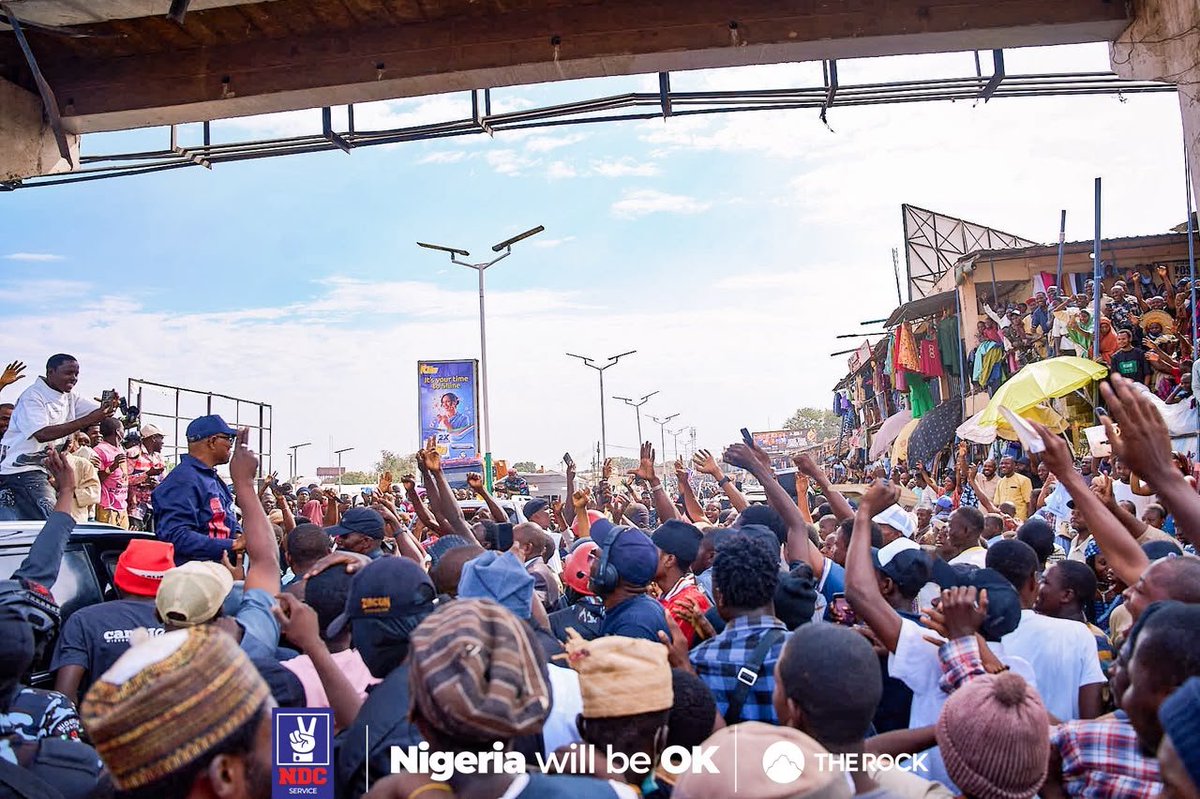
“It's every Nigerian's constitutional right to vote for whoever they want. You can't force anyone to vote for your candidate. It's a treasonable offence to rig Nigerians' votes against the will of the people. We are in Kano State to tell Nigerians to come out, vote and defend their votes. To the INEC chairman, we are telling you clearly, do not go against the will of the people in the 2027 election. It won't be the same as the 2023 election.”
— PUTCCM Group
The group called on all stakeholders to respect the will of the people and avoid actions that could provoke Nigerians ahead of the 2027 general elections.
They also responded to Mr Segun Showunmi's statement warning against announcing election results. The group further warned young Nigerians against participating in electoral malpractice and called on security operatives to carry out their duties professionally and ensure that voters' rights are protected.
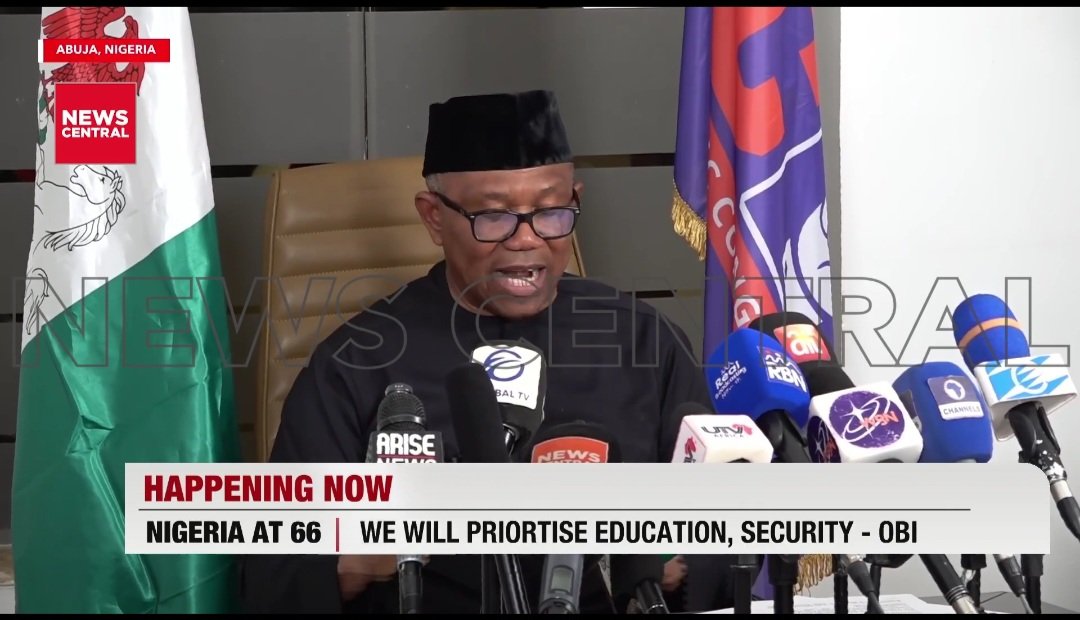
Nigeria at 66: Looking Back, Looking Forward
Fellow Nigerians,
Today we mark the sixty-sixth anniversary of our independence. It ought to be a day of celebration and thanksgiving to God Almighty for the gift of life and for the immense blessings He has bestowed on our nation—our diversity, our abundant human and natural resources, our vast agricultural potential, and the relative absence of devastating natural disasters.
It should also be a day of appreciation and patriotism: a day to remember our founding fathers and all those who made selfless, and in many cases supreme, sacrifices for the birth, survival and growth of our dear nation. We must acknowledge the efforts of past and present leaders who have laboured, however imperfectly, to build a better Nigeria.
Yet independence anniversaries must never be reduced to mere celebration. They are moments for honest national reflection. We must look back, examine where we stand today, and ask ourselves whether we are moving in the direction our founding fathers envisioned.
In national planning and strategy, every serious nation must continually ask three fundamental questions:
Where are we today?
Where do we want to be?
How do we get from where we are to where we want to be?
These questions are especially urgent now. Despite the enormous promises made by the APC-led government in 2023, our nation continues to face deepening challenges across virtually every critical sector of national life.
Today we stand before the world as a nation:
With an extraordinarily large population living in poverty and severe hardship; over 140M
With one of the largest populations of out-of-school children in the world; over 18M
Where insecurity, terrorism, banditry and kidnapping continue to threaten lives and livelihoods, just recently 37 young Nigerians in their productive age lost their lives
Where millions of Nigerians struggle with hunger and food insecurity; over 40M Nigerians will be in extreme hunger by the end of 2026.
With unacceptably high rates of infant and maternal mortality; Nigeria today is the worst place to be born.
Where youth unemployment and underemployment remain alarmingly high; over 35M
Where drug abuse and substance misuse increasingly threaten our young population; today 14% as against global average of 6%
Where life expectancy remains among the lowest globally, today 54 years against global average of 74 years
And the list goes on.
This reality demands serious, sober and honest reflection. Socrates taught that “the unexamined life is not worth living.” By the same principle, an unexamined nation cannot successfully chart its future. We must therefore ask ourselves: Are we cursed, or have we become the curse through the choices we have made and the failures we have tolerated?
The answer cannot be that Nigeria is cursed. We are a nation immensely endowed and blessed. Our greatest problem is not a lack of resources; it is the failure to convert our enormous resources into human development, productivity, security and shared prosperity.
Only yesterday, Senator Rabiu Kwankwaso and I returned from a two-day visit to Sokoto State. We held extensive consultations with people from different parts of the state on insecurity, out-of-school children, poverty, youth unemployment, drug abuse and other challenges confronting our people.
In concluding the visit, we went to the Internally Displaced Persons camp at Ramin Kura within Sokoto metropolis. What we saw was deeply troubling. Thousands of women and children live in deplorable conditions, displaced from their homes and deprived of the basic necessities of life. Many of the children have no access to education. Mothers and children have limited access to basic healthcare. These are Nigerians who should be living in their communities, going to school, farming their land, conducting their businesses and contributing to the economy. Instead, they live as displaced persons in their own country.