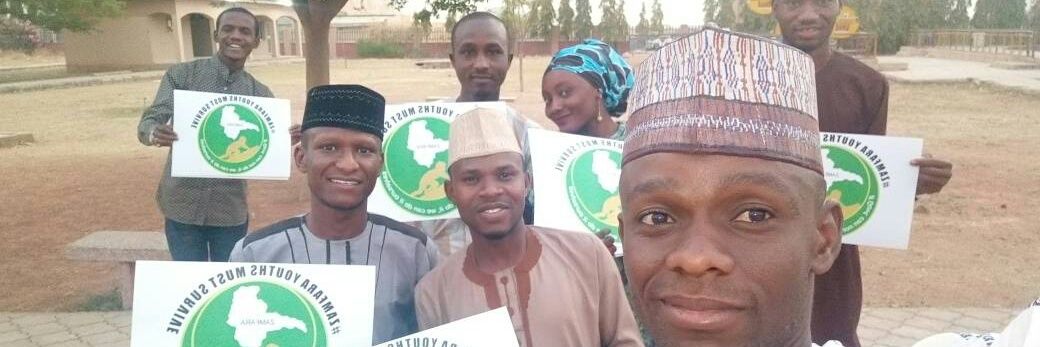
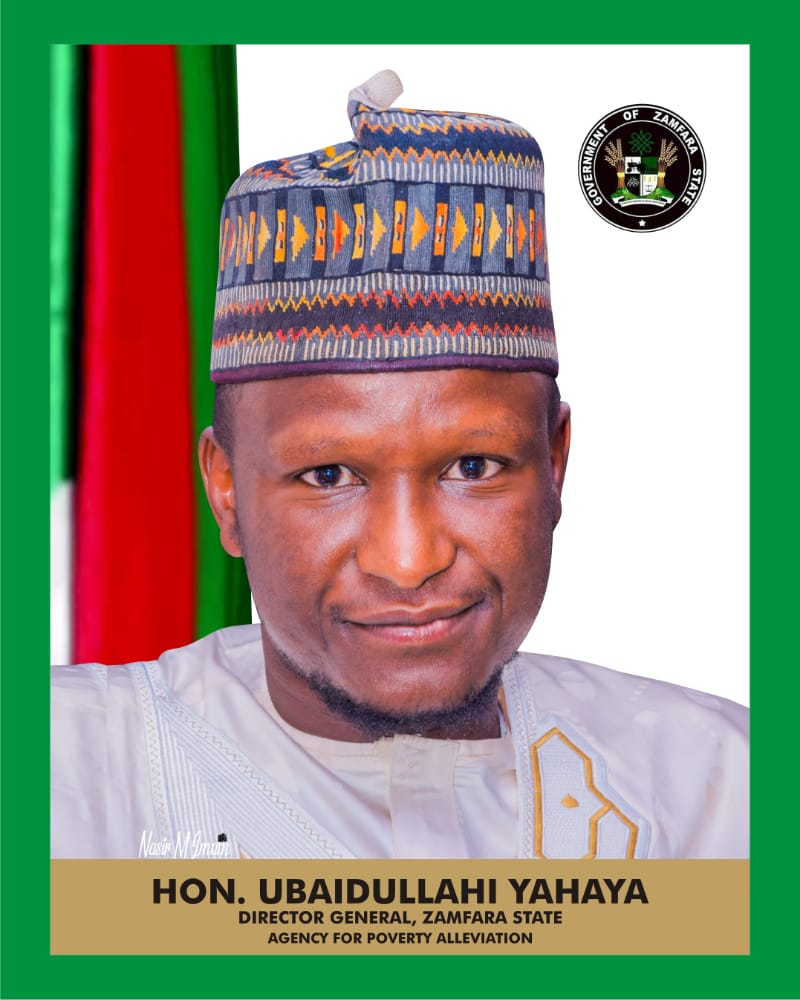
Muslim from Nigeria, Zamfara am Charming man, advocate, peace ambassador, online blogger activist,human right watch, politician, man of his word,Youth protector
So help us Allah
Fulfilling Gov @Bellomatawalle1 policies alleviating poverty and social protections in Zamfara.
improve the socio-economic conditions of the population at grassroots level by promoting prompt delivery of Service towards poverty in Zamfara state.
ZAPA
As President @officialABAT marks three years in office, the 40-hectare NASENI Solar Industrial Park in Gora, Nasarawa, stands as a major milestone in Nigeria’s industrialisation and energy transition drive. Under the leadership of Khalil Suleiman Halilu (@KSHalilu), @NASENIHQ is building local capacity for the production of solar panels, batteries, and other clean energy technologies.
The project will create jobs, attract investments, reduce dependence on imports, strengthen local content, and position Nigeria as a leading renewable energy manufacturing hub in Africa advancing the Renewed Hope Agenda through innovation, technology, and sustainable development.
Bauchi State, a state unique in its politics and known for the sophistication of its electorate, was experiencing teething problems. Some aspirants had openly declared their intentions to run, while others chose to play political games behind the scenes.
Ambassador @YusufTuggar , whom I would describe as one of the leading aspirants in the race, was among the first to publicly throw his hat into the ring. Bala Wunti, a former executive in NNPC’s upstream operations, also declared his interest. Others followed suit. Meanwhile, former Governor Mohammed Abubakar, who was voted out of office in 2019, quietly signalled his interest behind the scenes.
@OfficialAPCNg
https://t.co/9Y3mY26Xbu
To mark President @officialABAT’s third anniversary in office, the NASENI Solar Industrial Park in Gora, Nasarawa State, shines as a flagship initiative driving Nigeria’s industrial growth and clean energy vision under the leadership of @NASENIHQ EVC/CEO @KSHalilu.
Spanning 40 hectares, this facility is set to cut reliance on imported renewable energy products by supporting the local production and assembly of solar panels, batteries, and other clean energy technologies. It will bolster Nigeria’s renewable energy value chain, generate employment, attract investments, facilitate technology transfer, and enhance access to affordable electricity.
Upon completion, the park is expected to ramp up local manufacturing, save foreign exchange, and establish Nigeria as a leading renewable energy hub in Africa.
This project embodies President Tinubu’s Renewed Hope Agenda by fostering industrial expansion, energy security, job creation, and sustainable development through innovation and homegrown capacity building.
Why We Must Not Repeat the Zamfara Mistake in Bauchi State
Last month, the @OfficialAPCNg announced that it would conduct governorship primaries on May 21, 2026. While the exercise took place in several states, it was postponed in Bauchi by a few days. Why?
Bauchi State, a state unique in its politics and known for the sophistication of its electorate, was experiencing teething problems. Some aspirants had openly declared their intentions to run, while others chose to play political games behind the scenes.
Ambassador @YusufTuggar, whom I would describe as one of the leading aspirants in the race, was among the first to publicly throw his hat into the ring. Bala Wunti, a former executive in NNPC’s upstream operations, also declared his interest. Others followed suit. Meanwhile, former Governor Mohammed Abubakar, who was voted out of office in 2019, quietly signaled his interest behind the scenes.
Notably, the Minister of Health, @muhammadpate, whom many believed had an interest in the seat, did not resign his position to contest.’’ — Dahiru Bashir,
@officialABAT@nentawe1
https://t.co/AtpPh0HWtQ
As ISWAP’s Foreign Fighter Pipeline Collapses, Nigeria’s Security Strategy Shows Signs of a Turning Point
In a development that would have seemed improbable only a few years ago, the Islamic State West Africa Province (ISWAP), one of Africa’s deadliest extremist organizations, has publicly acknowledged that the routes used to bring foreign fighters into its ranks have effectively collapsed.
The admission, circulated through the group’s unofficial media channels, offers a rare glimpse into the mounting pressure facing insurgent networks across Nigeria’s northeast. ISWAP attributed the closure of its “hijrah” routes—pathways traditionally used to facilitate the migration of foreign recruits into terrorist-controlled territory—to what it described as relentless attacks by “the American dogs and the apostates of Nigeria.”
https://t.co/9XP0jsNY2K
As ISWAP’s Foreign Fighter Pipeline Collapses, Nigeria’s Security Strategy Shows Signs of a Turning Point
‘‘In one of the most significant strikes reported in recent months, Nigerian forces conducted a precision air operation around Kirta and Arina Ciki in Borno State, killing dozens of terrorists, including Khalifa Umar—also known as Mamman Khalifa or Muhammad Khalifa—a senior ISWAP judge and member of the group’s influential Shura Council.
Military sources said approximately 49 other fighters were eliminated in the operation, dealing a substantial blow to the organization’s leadership structure.
The strike followed a pattern increasingly evident across Nigeria’s counterterrorism campaign: operations guided by actionable intelligence and coordinated across multiple security agencies.
That same intelligence-driven approach recently led troops of the Nigerian Army’s 7 Division Provost Group to arrest a suspected Boko Haram logistics supplier and informant in Maiduguri. The suspect, Mohammed Bulama, 25, was apprehended during a surveillance operation after security operatives reportedly monitored his activities over an extended period.’’ — Danjuma Alheri
https://t.co/gUOKrzxQMp
As ISWAP’s Foreign Fighter Pipeline Collapses, Nigeria’s Security Strategy Shows Signs of a Turning Point
At the center of that effort is Nigeria’s Office of the National Security Adviser (ONSA), which has spent the past two years deepening coordination among military, intelligence, and law enforcement agencies while also expanding security cooperation with the United States and regional partners.
The closure of ISWAP’s foreign fighter routes appears to be the latest manifestation of that strategy.
https://t.co/9XP0jsNqdc
NASENI is a FOREMOST SCIENCE AND ENGINEERING INSTITUTION of Federal Government, driving the renewed Hope agenda
The Administration’s policy is being achieved by its agency @NASENIHQ
Still on the commemoration of President Bola Ahmed Tinubu's @officialABAT third year in office by NASENI, the 40-hectare NASENI Solar Industrial Park in Gora, Nasarawa State, stands out as one of the flagship projects driving the administration’s industrialization and energy transition agenda under the leadership of NASENI’s Executive Vice Chairman/CEO, Mr. Khalil Suleiman Halilu @KSHalilu
Conceived to reduce Nigeria’s dependence on imported renewable energy components, the Solar Industrial Park is designed to serve as a hub for the local manufacturing and assembly of solar panels, batteries, and other clean energy technologies. The project is expected to strengthen Nigeria’s renewable energy value chain, create thousands of direct and indirect jobs, attract investments, facilitate technology transfer, and expand access to affordable and reliable energy across the country.
Upon completion, the facility will significantly boost local production capacity, reduce pressure on foreign exchange spent on importing solar products, and position Nigeria as a leading renewable energy manufacturing hub in Africa.
The project aligns with President Tinubu’s Renewed Hope Agenda by promoting industrial growth, enhancing energy security, creating employment opportunities, supporting local content development, and accelerating sustainable economic transformation through innovation and technology.
GOOD NEWS FLASH:
As ISWAP’s Foreign Fighter Pipeline Collapses, Nigeria’s Security Strategy Shows Signs of a Turning Point
The admission, circulated through the group’s unofficial media channels, offers a rare glimpse into the mounting pressure facing insurgent networks across Nigeria’s northeast. ISWAP attributed the closure of its “hijrah” routes—pathways traditionally used to facilitate the migration of foreign recruits into terrorist-controlled territory—to what it described as relentless attacks by “the American dogs and the apostates of Nigeria.”
https://t.co/UOM6xDde1D
As ISWAP’s Foreign Fighter Pipeline Collapses, Nigeria’s Security Strategy Shows Signs of a Turning Point
The development comes amid a series of coordinated security successes that Nigerian authorities say reflect a broader shift in the country’s counterterrorism architecture—one increasingly driven by intelligence-led operations, inter-agency coordination, and strengthened partnerships with international allies, particularly the United States.
At the center of that effort is Nigeria’s Office of the National Security Adviser (ONSA), which has spent the past two years deepening coordination among military, intelligence, and law enforcement agencies while also expanding security cooperation with the United States and regional partners.
Read More 👇👇👇
https://t.co/6WdkHdwn13
@NASENIHQ continues to highlight key achievements under President @officialABAT’s three years in office, the 40-hectare NASENI Solar Industrial Park in Gora, Nasarawa State stands out as a major investment in Nigeria’s industrial and energy future.
Under the leadership of NASENI’s Executive Vice Chairman/CEO, Mr. Khalil Suleiman Halilu @KSHalilu, the project is designed to drive local manufacturing and assembly of solar panels, batteries, and other renewable energy technologies, reducing import dependence while creating jobs and attracting investment.
Beyond expanding access to affordable and reliable energy, the Solar Industrial Park is expected to strengthen technology transfer, boost local production capacity, and position Nigeria as a leading renewable energy hub in Africa. It reflects the Renewed Hope Agenda’s commitment to industrialization, energy security, and sustainable economic growth.
@NASENIHQ's 40-hectare Solar Industrial Park in Nasarawa State is a flagship project under President @officialABAT Ahmed Tinubu's administration, driving industrialization and energy transition It aims to reduce Nigeria's dependence on imported renewable energy components by manufacturing solar panels, batteries, and other clean energy technologies locally.
Upon completion, the project will boost local production capacity, create jobs, attract investments, and enhance energy security, aligning with President Tinubu's Renewed Hope Agenda. @KSHalilu
The DSS announced the arrest of five suspected arms couriers, including two foreign nationals, accused of supplying weapons to the gunmen responsible for the November 2025 mass abduction at St. Mary’s Catholic School in Papiri, Niger State.
The operation began with the interception of three suspects along the Zaria-Kaduna Highway. Subsequent raids led to the arrest of alleged international arms courier Goni Ibrahim from Niger Republic’s Diffa Region and his associate, Tukur Sani.
Read More 👇
https://t.co/3YRvuqWZWc
In a development that would have seemed improbable only a few years ago, the Islamic State West Africa Province (ISWAP), one of Africa’s deadliest extremist organizations, has publicly acknowledged that the routes used to bring foreign fighters into its ranks have effectively collapsed.
The admission, circulated through the group’s unofficial media channels, offers a rare glimpse into the mounting pressure facing insurgent networks across Nigeria’s northeast. ISWAP attributed the closure of its “hijrah” routes—pathways traditionally used to facilitate the migration of foreign recruits into terrorist-controlled territory—to what it described as relentless attacks by “the American dogs and the apostates of Nigeria.”
For security officials and analysts, the statement is viewed as an indication that years of investments in intelligence gathering, military modernization, border security, and international cooperation are beginning to constrict the group’s operational space.
Read More 👇
https://t.co/pgg3rtrnEK
As ISWAP’s Foreign Fighter Pipeline Collapses, Nigeria’s Security Strategy Shows Signs of a Turning Point.
At the center of that effort is Nigeria’s Office of the National Security Adviser (ONSA), which has spent the past two years deepening coordination among military, intelligence, and law enforcement agencies while also expanding security cooperation with the United States and regional partners.
The closure of ISWAP’s foreign fighter routes appears to be the latest manifestation of that strategy.
Security analysts note that terrorist organizations depend heavily on the movement of personnel, weapons, financing, and intelligence across porous borders. By disrupting those channels simultaneously, authorities have complicated ISWAP’s ability to replenish losses, recruit specialists, and sustain operations across the Lake Chad Basin.
https://t.co/fCkpPjqDJQ
As ISWAP’s Foreign Fighter Pipeline Collapses, Nigeria’s Security Strategy Shows Signs of a Turning Point.
In one of the most significant strikes reported in recent months, Nigerian forces conducted a precision air operation around Kirta and Arina Ciki in Borno State, killing dozens of terrorists, including Khalifa Umar—also known as Mamman Khalifa or Muhammad Khalifa—a senior ISWAP judge and member of the group’s influential Shura Council. Military sources said approximately 49 other fighters were eliminated in the operation, dealing a substantial blow to the organization’s leadership structure.
The strike followed a pattern increasingly evident across Nigeria’s counterterrorism campaign: operations guided by actionable intelligence and coordinated across multiple security agencies.
https://t.co/bkqpyuqMal
As @NASENIHQ continues to commemorate President @officialABAT’s third year in office, one project that reflects the administration’s vision for industrial growth and sustainable development is the 40-hectare @NASENIHQ Solar Industrial Park in Gora, Nasarawa State.
Driven by the leadership of NASENI’s Executive Vice Chairman/CEO, Mr. Khalil Suleiman Halilu (@KSHalilu), the project is being developed to strengthen Nigeria’s renewable energy sector through local manufacturing and assembly of solar panels, batteries, and other clean energy technologies. Beyond reducing dependence on imports, the Solar Industrial Park is expected to create jobs, attract investments, encourage technology transfer, and expand access to affordable and reliable energy for Nigerians.
When completed, the facility will not only boost local production capacity but also help position Nigeria as a major player in Africa’s renewable energy industry. It is a bold step towards industrialization, energy security, and sustainable economic growth in line with President Tinubu’s Renewed Hope Agenda.
As ISWAP’s Foreign Fighter Pipeline Collapses, Nigeria’s Security Strategy Shows Signs of a Turning Point
In a development that would have seemed improbable only a few years ago, the Islamic State West Africa Province (ISWAP), one of Africa’s deadliest extremist organizations, has publicly acknowledged that the routes used to bring foreign fighters into its ranks have effectively collapsed.
The admission, circulated through the group’s unofficial media channels, offers a rare glimpse into the mounting pressure facing insurgent networks across Nigeria’s northeast. ISWAP attributed the closure of its “hijrah” routes—pathways traditionally used to facilitate the migration of foreign recruits into terrorist-controlled territory—to what it described as relentless attacks by “the American dogs and the apostates of Nigeria.”
Read More 👇👇👇
https://t.co/6WdkHdwn13
As ISWAP’s Foreign Fighter Pipeline Collapses, Nigeria’s Security Strategy Shows Signs of a Turning Point
In a development that would have seemed improbable only a few years ago, the Islamic State West Africa Province (ISWAP), one of Africa’s deadliest extremist organizations, has publicly acknowledged that the routes used to bring foreign fighters into its ranks have effectively collapsed.
The admission, circulated through the group’s unofficial media channels, offers a rare glimpse into the mounting pressure facing insurgent networks across Nigeria’s northeast. ISWAP attributed the closure of its “hijrah” routes—pathways traditionally used to facilitate the migration of foreign recruits into terrorist-controlled territory—to what it described as relentless attacks by “the American dogs and the apostates of Nigeria.”
https://t.co/Um2MfnPZnE
In one of the most significant strikes reported in recent months, Nigerian forces conducted a precision air operation around Kirta and Arina Ciki in Borno State, killing dozens of terrorists, including Khalifa Umar—also known as Mamman Khalifa or Muhammad Khalifa—a senior ISWAP judge and member of the group’s influential Shura Council. Military sources said approximately 49 other fighters were eliminated in the operation, dealing a substantial blow to the organization’s leadership structure.
https://t.co/XgjMJkbW41