@Morris_Monye They're not necessarily fake. Consider the following
Where are these products originally made, are there tariffs on these products in the country where you buy them at, how much % tax and VAT is charged on the product. These are some of the reasons where buyin frm Naija is cheap
@FinestDoveTruth@Pr0ud_Princess I feel you bro, even I struggle to believe sometimes but it doesn't change the fact that God can still heal your patient.
Full list of Malami properties listed by EFCC’s interim forfeiture order marked FHCIABJ/CS/20/2026:
1. Luxury duplex at Amazon Street, Plot No. 3011, Cadastral Zone A06, Maitama, Abuja (purchased in December 2022 for N500 million; enhanced value: N5.95 billion).
2. Two-winged storey building at No. 3, Onitsha Crescent, Area 11, Garki, Abuja (formerly Harmonia Hotels Limited), purchased in December 2018 for N7 billion.
3. Plot 683, Jabi District, Cadastral Zone B04, Abuja, comprising a five-storey building now operating as Meethaq Hotels Ltd with 53 rooms and suites (purchased in September 2020 at carcass level for N850 million, with an additional N300 million paid to take possession; current value: N8.4 billion).
4. Property No. 3130, Cadastral Zone A04, Asokoro District, Abuja, comprising terraces, purchased in January 2021 for N360 million.
5. Meethaq Hotels Limited, No. 3 Rhine Street, Maitama, Abuja, with 15 rooms (purchased in February 2018 for N430 million; current value after rehabilitation: N12.95 billion).
6. Plot No. 1241B, Asokoro District (No. 11A Yakubu Gowon Crescent), Abuja, purchased in July 2021 for N325 million.
7. Shop No. C82, Citiscape-Shariff Plaza, Plot 739, Aminu Kano Crescent, Wuse II, Abuja, purchased in March 2024 for N120 million.
8. No. 4 Ahmadu Bello Way, Nasarawa GRA, Kano, purchased in December 2022 for N300 million.
9. Plot 157, Lamido Crescent, Nasarawa GRA, Kano, purchased in July 2019.
10. Plaza, commercial toilets, laundry, warehouses and tanks adjacent to Birnin Kebbi Market, valued at N100 million.
11. One hundred hectares of land along Birnin Kebbi-Jega Road, purchased in 2020 for N100 million.
12. Four-bedroom bungalow at Gesse Phase, Birnin Kebbi, purchased in 2023 for N101 million.
13. Shops A36 and B3, Vegas Mall, Wuse II, Abuja, purchased in July 2023 for N158 million.
14. No. 26, Babbi Drive, BUA Estate, Abuja, purchased in 2022 for N136 million.
15. No. 27, Efab Estate Avenue, 5th Avenue, 59th Crescent, Gwarinpa, Abuja, purchased in January 2016 for N120 million.
16. Four-bedroom bungalow with two-room boys’ quarters at No. 10B, Doka Crescent, Abakpa GRA, Kaduna, purchased in January 2018 for N40 million.
17. Plot No. 13, Ipent 7 Estate, Karsana District, Abuja, purchased in June 2018 for N85 million.
18. Duplex with boys’ quarters at No. 12 Yalinga Street, off Adetokunbo Ademola Crescent, Wuse II, Abuja, purchased in October 2018 for N150 million.
19. Warehouse shops B40 and B46, Wuse Market, Abuja, purchased in July 2020 for N50 million.
20. Twin houses at Zone E, Apo Legislative Quarters, Plot 14014, Gudu District, Abuja, purchased between February and May 2017 for N250 million.
Properties acquired by Khadimiyya for Justice & Development Initiative, Academic Garden City, Birnin Kebbi
21. Nine units of three-bedroom bungalows.
22. Three units of two-bedroom bungalows.
23. 5.4 hectares of land (acquired between February and September 2023 for N187 million).
Rayhaan University, Kebbi State
24. Permanent site – N56 billion.
25. Temporary site – N37.8 billion.
26. Third site – N2.45 billion.
27. Vice-Chancellor’s residence – N490 million.
Rayhaan Agro Allied Factory, Kebbi State
28. Factory buildings – N4.2 billion.
29. Factory machines and plant – N10.5 billion.
30. Factory mosque – N2.45 billion.
31. Staff quarters – N1.4875 billion.
32. Bustan building – N3.15 billion.
Azbir Arena, Kebbi State
33. Azbir Hotel – N10.325 billion.
34. Printing press – N1.05 billion.
35. Gallery – N581 million.
36. Gardens – N392 million.
37. Mosque – N252 million.
38. Azbir Clothing – N350 million.
39. Azbir Pharmacy and Supermarket – N175 million.
Other properties in Kebbi State
40. Al-Afiya Energy tanker garage opposite Rayhaan University Health Centre, Birnin Kebbi – N2.45 billion.
41. Rayhaan Model Academy – N11.2 billion.
42. Rayhaan Primary and Secondary School – N8.75 billion.
43. Rayhaan Security House, Birnin Kebbi – N245.7 million.
44. Rayhaan Radio, Birnin Kebbi – N78.75 million.
45. Uncompleted two-storey plaza opposite Central Motor Park (Eastern Park), Birnin Kebbi – N665 million.
46. Amasdul Oil and Gas Ltd filling station structure along Sani Abacha Bypass, Birnin Kebbi – N1.05 billion.
47. Malami Support Organisation building – N210 million.
48. ADC Kadi Malami Foundation building – N56 million.
49. Abubakar Malami (SAN)’s house, GRA, Birnin Kebbi – N350 million.
50. Abubakar Malami (SAN)’s house behind Mobil, Birnin Kebbi – N490 million.
51. Abdulaziz Malami’s house at Gesse Phase II, Birnin Kebbi – N1.659 billion.
52. Abiru-Rahman Abubakar Malami’s house at Gesse Phase II, Birnin Kebbi – N2.989 billion.
Properties in Kano State
53. Zeennoor Hotel, Kabuga Satellite Town, Kano, with 131 rooms – N11.2 billion.
54. Zeennoor Mosque, Kabuga Satellite Town, Kano – N84 million.
55. Zeennoor Old Hotel Building – N280 million.
56. Rayhaan Hotel, opposite Aminu Kano Teaching Hospital, Kano, comprising more than 50 rooms – N2.24 billion.
57. Rayhaan Gym, opposite Rayhaan Hotel, Kano – N1.225 billion
@BishopPOEvang So many House Officers have passed through this in NICU. Sometimes you'll find yourself bagging a baby for nearly seven hours straight, until your fingers literally go into spasm. The hardest part is coming back for your next shift only to find a different baby in that incubator.
More good news.
Don Anele Munachimso also won gold in Science.
He is the best in world science.
Remember, he is the best in IGCSE Chemistry in Nigeria.
The investment is worth it.
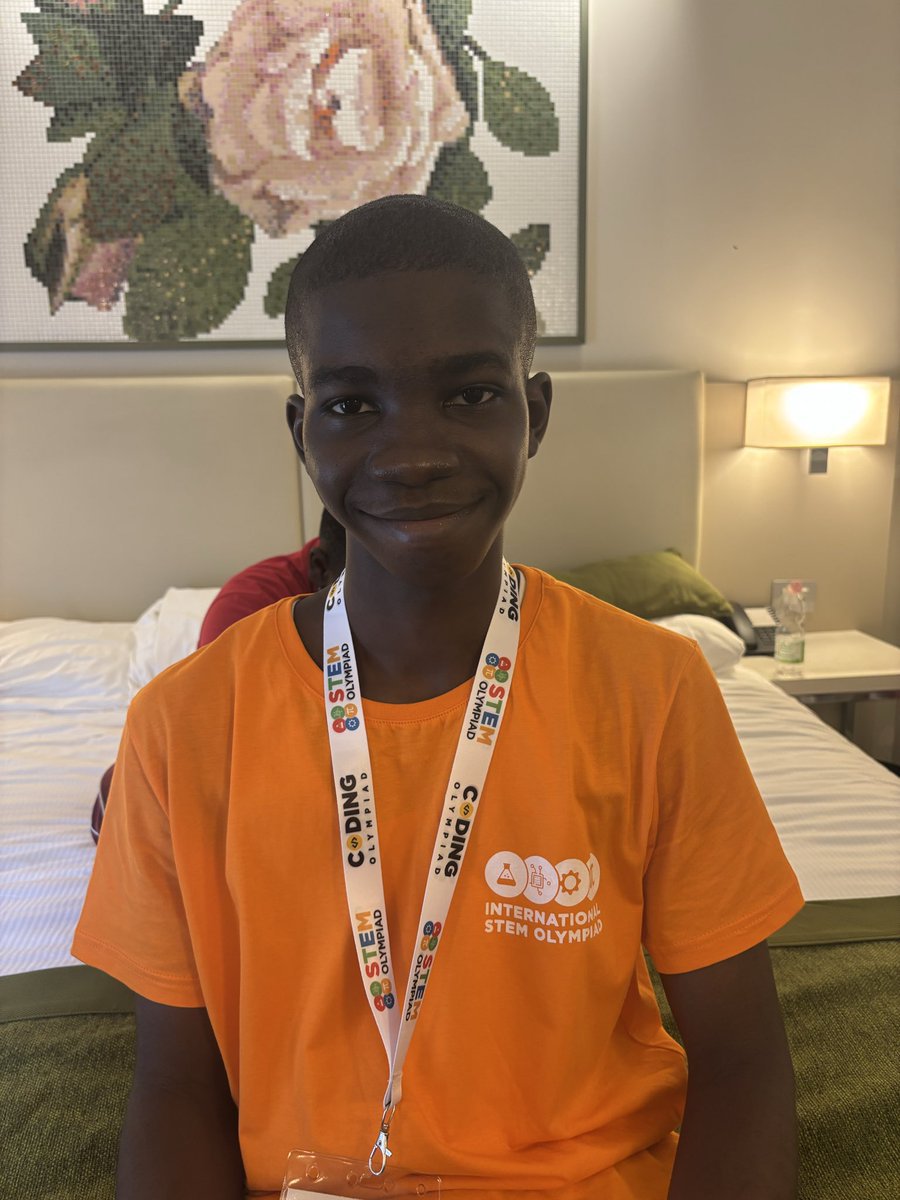
Massive congrats to Chimdiebube Onwubiko, for winning a Silver Medal in the Science Category (Grades 9-11) at the International STEM Olympiad in Rome, Italy!
Competing on the world stage and bringing home silver, we are incredibly proud!
An Open Letter to the Federal Government of Nigeria
Dear @NigeriaGov, @officialABAT, @FMEducation, @EduMinNG,
This is not written out of anger alone. It is written out of disappointment, concern, and hope.
Today, brilliant young Nigerians including Don Anele Munachimso Marvelous, Victor Onwubiko, and Egejurum Onyedikachi are representing our country at the International STEM Olympiad finals.
These students are carrying Nigeria's flag on a global stage.
Yet, many Nigerians have noticed little or no visible public encouragement from the institutions that should be celebrating them.
Whether they return with gold, silver, or bronze, they have already achieved something extraordinary simply by qualifying to compete among the world's brightest young minds.
It is worth acknowledging the role of Alex Onyia @winexviv , Founder and CEO of Educare, whose support and advocacy have helped make opportunities like this possible for these students. Citizens stepping up to support education deserves recognition but it should complement, not replace, institutional support.
When a nation celebrates excellence, more young people aspire to excellence.
When exceptional students are overlooked, we unintentionally send the message that academic achievement is less valued than it should be.
Nigeria has no shortage of talent.
What we often lack is a consistent national culture of recognizing and supporting that talent.
Imagine what it would mean if:
- The Presidency publicly wished these students success before they competed.
- The Federal Ministry of Education highlighted their journey.
- Government officials welcomed them home regardless of the outcome.
- STEM champions received scholarships, research opportunities, and long-term mentorship.
These gestures cost little compared with the impact they can have on inspiring millions of students.
Our future economy will depend on scientists, pharmacists, engineers, innovators, doctors, mathematicians, and researchers.
Supporting them should never feel optional.
This is not about politics.
It is about national priorities.
Let us build a Nigeria where young people know that if they excel academically, their country will stand behind them just as proudly as it does for achievements in other fields.
To Don Anele Munachimso Marvelous, Victor Onwubiko, Egejurum Onyedikachi, and every Nigerian representing us internationally:
The nation is proud of you.
We wish you success and safe journeys.
And to our leaders, may this be an opportunity to strengthen how Nigeria celebrates and supports its brightest young minds.
The future is watching.
@CyrusAdemola@FinPlanKaluAja1 Crude oil was benchmarked at $60/barrel, today it goes for over $90. Even if we are not producing up to the 1.8 million barrels a day that was projected, we should not be going to IMF at this time.
AN OPEN LETTER TO PETER OBI — A WORD FROM A SON OF NIGERIA
On Power, Courage, and the Unfinished Business of a Nation
Kio Amachree | President, Worldview International · Stockholm | April 2026
Dear Mr. Peter Obi,
I owe you a confession before I offer you counsel. In the last presidential election, I supported you. Not casually — I believed in you. I watched you speak in Atlanta, and what I saw was something Nigeria has rarely produced: a man who sounded like he had actually read the brief, who understood the gravity of the office he was seeking, and who spoke to Nigerians not as subjects to be managed but as citizens deserving of respect. I was moved. I was persuaded. And I trusted a process that, as I now understand more completely than ever, was never designed to be trusted.
I looked across at Bola Ahmed Tinubu — a man who, in the most charitable interpretation of his observable condition, appeared to be fighting a daily battle simply to remain upright and coherent — and I made the mistake of assuming that what was obvious to my eyes would be obvious to the outcome. I did not account sufficiently for the depth of the organised criminality arrayed against the Nigerian people. I did not account for the degree to which the machinery of power in that country has been engineered not to reflect the will of the citizenry but to override it. I switched off in disgust. I am ashamed to admit it, but I did. For a moment, I despaired.
What reactivated me was not optimism. It was fury — and the particular fury of a man who was raised to believe that silence in the face of injustice is its own form of complicity. My father, Chief Godfrey Kio Jaja Amachree QC — Nigeria’s first Solicitor-General, Under-Secretary-General of the United Nations, General Gowon’s personal envoy to Washington during the Civil War, one of the architects of Rivers State — was not a gentle man. He was rigorous. He was demanding. He was, at times, difficult to love. But he built into me something I could not switch off even when I wanted to: the sense that Nigeria is not merely a country one happens to have been born into. It is a responsibility. It is a debt owed to those who came before and those who will come after.
My grandfather, Chief Sekin Amachree, sat at the 1958 Constitutional Conference and the Willink Commission. These men shaped Nigeria before it was even Nigeria. I am their reflection — and as any man who has stood before a mirror knows, a reflection does not always like what it sees. But it cannot look away.
Now I come to you with what I hope you will receive in the spirit in which it is offered: not as flattery, not as political alignment, but as the hard, frank counsel of one educated man to another. I was educated at Eton College — not the softened, therapeutic Eton of today, but the Eton that broke you down and rebuilt you; the Eton that fed you deliberately terrible food so that you would learn to endure discomfort without complaint; the Eton that placed you among the sons of dukes and diplomats and expected you to hold your own. The school that in its long and morally complicated history produced twenty-four British Prime Ministers — including, most recently, Boris Johnson and David Cameron.
I mention those two men for a reason, Peter, and I need you to listen carefully because there is a lesson in them for you. Boris Johnson — the blond, blundering, self-consciously bumbling figure that the British public came to love and loathe in equal measure — is not what he appears. That persona is a construction, polished over years at Eton, refined at Oxford, deployed with extraordinary precision.
Johnson’s great-great-grandfather was a Turkish journalist named Ali Kemal, a man of dark complexion and Muslim faith who was so critical of the Atatürk revolution that he was killed by a mob and his body dragged through the streets of Istanbul. His family fled to England during the First World War — on the wrong side of the conflict, since the Ottomans had fought with the Axis against Britain — and his widow, terrified of persecution, changed the family name to Johnson. A safe, plain, English name. Over generations, the Turkish identity dissolved. The grandson of that terrified widow became the Foreign Secretary and then the Prime Minister of the United Kingdom.
I am not telling you this to diminish Johnson. I am telling you this because it is the greatest lesson Eton teaches, though it never states it plainly: the surface is a weapon. The carefully constructed persona — the apparent bumbling, the Latin quotations, the self-deprecating humour — was armour and ammunition simultaneously. While his opponents were laughing at him, he was outmanoeuvring them. David Cameron, by contrast, came from genuine money and genuine breeding. He had no need to construct anything. He was charming, handsome, instinctively confident, loved his Bob Marley, smoked his weed at school, was caught — and was not expelled, because Eton looked at him and saw a future Prime Minister, which is precisely what he became. Two very different men. Both utterly ruthless. Both winners.
The lesson I am drawing for you is this: you must stop campaigning like a man who is trying not to offend anyone, and start campaigning like a man who intends to win. Nigeria in 2027 is not a debating competition. It is a knife fight. And a knife fight is not won by the man who is most correct — it is won by the man who is most prepared to use what is in his hand.
Let me now speak plainly about Bola Ahmed Tinubu, because plainness is what this moment demands. In my considered assessment — and I do not use such language lightly — Tinubu represents the most comprehensively corrupt political figure to have occupied the highest office in Nigeria’s troubled history. That is not rhetoric. That is a conclusion drawn from evidence that is now, in significant part, part of the public international record.
There is the matter of the United States federal narcotics investigation — the case that cost him his forfeited funds in Chicago and that lies at the core of the FBI and DEA files that a United States federal court, under Judge Beryl Howell, has ordered released. Those files, due by June of this year, may well constitute the most consequential document release in the history of Nigerian political accountability. The man currently sitting in Aso Rock has a documented relationship with American federal law enforcement that has never been honestly reckoned with by the Nigerian political establishment or the Nigerian press.
And then there is Gilbert Chagoury. Let us be precise: Chagoury is a man convicted in Switzerland of money laundering and reported by American intelligence as having financed Hezbollah. He is also the man to whom Tinubu’s administration has directed billions of dollars in no-tender infrastructure contracts — including the controversial Lagos-Calabar Coastal Highway — without competitive bid, without transparency, without the basic procedural safeguards that any functioning government owes its people. The relationship between Tinubu and Chagoury is not incidental. It is structural. It is the architecture of how power and money move in this administration.
And then there is the son. Seyi Tinubu. A young man installed on corporate boards, positioned as a conduit for the family’s accumulation of influence, presented to the public through the cynical theatre of rice distributions to the poor while billions are being distributed to the connected. He is not a peripheral figure. He is the succession plan. He is also, for your purposes, the most humanly comprehensible point of attack — because nothing angers ordinary Nigerians more than watching a president’s son live like a king while they cannot afford to eat.
Peter, here is my direct counsel to you. Stop being careful. The time for careful has passed. These are not normal political adversaries operating within a normal political system. These are people who have weaponised the state, corrupted the judiciary, terrified the press, and enriched themselves beyond any defensible measure while the Nigerian naira has collapsed and ordinary families have been reduced to desperate improvisation simply to survive. You are not going to defeat them by being measured. You are going to defeat them by being relentless.
Make the Chagoury contracts the centrepiece of your campaign. Demand accountability for every naira. Make Nigerians understand not just that money has been stolen — they already know money has been stolen, they have always known — but where it has gone, into whose hands, and at whose instruction. Make the connection between the billions flowing to Chagoury’s companies and the intelligence reports linking Chagoury’s network to Hezbollah financing. Ask the question publicly and loudly: are Nigerian state funds being used to finance terrorism? Ask it until you get an answer.
I write this from Stockholm. I cannot vote. I cannot march. I am a Swedish citizen of Ijaw and Niger Delta royal lineage, a diaspora voice, a man who has slept in palaces and on floors and worked on Wall Street and in the City of London and in the Nigerian National Assembly and in the boiling heart of African civic struggle. I have no party. I have no financial interest. What I have is a name, a history, and a conscience that my father — for all his severity — programmed to be incapable of looking away.
I pray that the United States releases those FBI and DEA files on schedule. I pray that the Central Intelligence Agency, which has long maintained its own complex relationship with Tinubu, makes the calculation that he has become more liability than asset — particularly as the Chagoury-Hezbollah nexus moves from allegation toward documented fact in international law enforcement circles. These are not fantasies. These are live proceedings in active jurisdictions.
Nigeria does not need saving — that framing is too passive, and it places too much burden on a single individual. Nigeria needs someone willing to fight for it with the same ferocity that those who have looted it have fought to keep it. My grandfather helped write the terms of this nation’s existence. My father spent his life in its service. I have spent mine trying to honour them both while finding my own voice in a world that did not always make room for it easily.
I am offering you that voice. The counsel of an Old Etonian who was taught not how to be a gentleman — though that too — but how empires are built, how power actually functions, and why the most dangerous man in any room is often the one who appears least threatening. I am offering you the analytical framework of a man who has studied Nigerian politics from the inside and from the outside, who understands the diaspora, who understands the international legal architecture that can be brought to bear, and who believes, despite everything, that this fight is still winnable.
Go for the jugular, Peter. Do it with evidence. Do it with precision. Do it with the controlled fury of a man who has genuinely reckoned with what is at stake. Cast away the niceties — they have cost you enough already.
Nigeria is watching. The diaspora is watching. And the dead — among them the men whose names I carry — are watching too.
I wish you strength, clarity, and the wisdom to know that in this particular fight, mercy extended to the wrong people is simply cruelty extended to the right ones.
Go well. And go hard.
Kio Amachree
President, Worldview International
Stockholm, Kingdom of Sweden
Son of Chief Godfrey Kio Jaja Amachree QC, Nigeria’s First Solicitor-General
So this is how we are thinking of redesigning the Igbo apprenticeship program “Igba boy”.
For the pilot program, we will likely take in 200 persons to engage in the training on global quality carpentry, bricklaying, tilling, plumbing, HVAC, POP and electricals.
The trainees will engage in an intensive 1 year program which they will be housed and fed. No holidays during the program. An additional 3 months will be on business and commercialization.
Once they complete the cohort and they meet the standards set, they will be settled with a good amount of money to build on the business arm of their skills. Those who don’t meet up will be dropped off from the program.
We will be visiting training centers in Togo and Germany in the coming weeks to solidify our plans and training partnerships.
Let’s brainstorm… what do you think?
As a matter of urgency, the government needs to revive all state libraries in the South East.
A section of it has to be digitized and the other part equipped with recent books.
We need to revive the reading culture in our children.
Nothing else matters more than this!