The big gap: Rights and human dignity alone won’t carry 2027. The cost-of-living question will always be there. Linda Mwananchi needs a national economic plan that voters and businesses can weigh.
@YvonneOkwara#CitizenExplainer#TheExplainer
Sifuna seems to be saying, without mentioning him, that Matiang’i carries a poor human rights record and would be a weak candidate against Ruto wherever those questions were asked.
A very interesting line from @edwinsifuna: voters want more than the incumbent’s delivery of “shiny” public goods. Says people also judge how you treat them. Growing research backs this: voters reward leaders for how they treat people, not just what they deliver. And that message is likely to resonate, riding the memory of the human rights violations since the Gen Z protests. Opposition messaging is converging on rights and dignity. Smart, though it bets that memory outlasts the campaign. @YvonneOkwara@citizentvkenya #CitizenExplainer
On the debate over Sifuna’s village home: we treat mansions as evidence of seriousness, but a big house can also be a liability as time goes by (electricity, cooling, paintwork, a compound to maintain, forever). A friend and I reached an uncomfortable conclusion recently: the huts we were taught to despise were the most rational home Africans ever built: climate-smart, cheap to keep, easy to replace. They only ever needed modernizing, not abandoning. We’re about to embrace them again, just more fashionably.
Waiting to see how much this home lists for. It’s a three-bed, two-bath, going by what I saw when I checked it out. They build a lot of them like this in the US. Will come back with more photos as they progress.
Sossion has Kenyans debating men and hair dye. Nairobi barbers, especially the upmarket ones, usually go the extra mile and are never hesitant to offer dyes if they believe the pocket can afford it. They recently tried me, and I declined. Grey is not a defect.
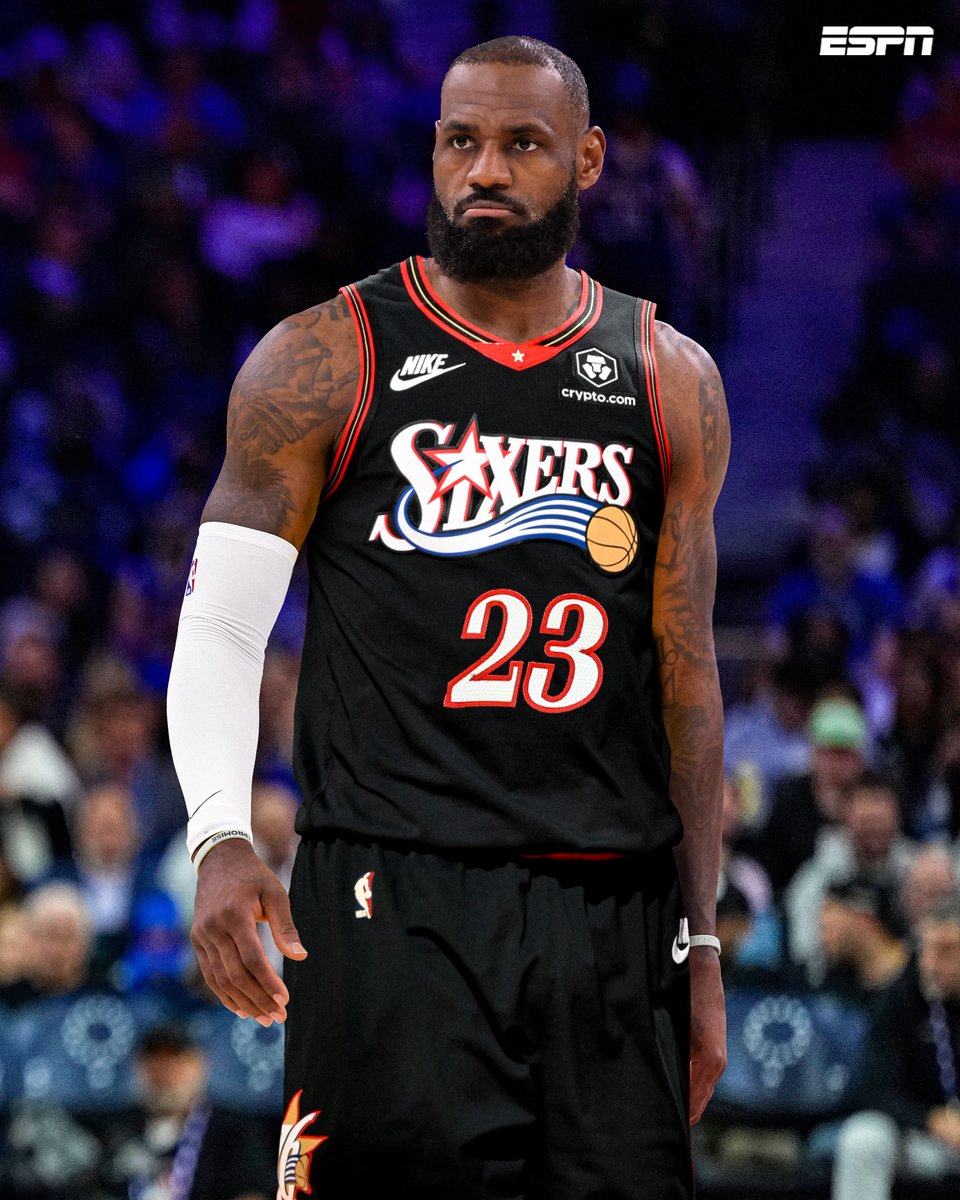
LeBron is a constant source of inspiration. He reminds me to keep trying and give it my best, even when things are tough. Congratulations @KingJames. Now you get to play against your son.
Breaking: LeBron James is signing with the Philadelphia 76ers on a two-year, $8 million deal with a player option, his agent Rich Paul told @ShamsCharania.
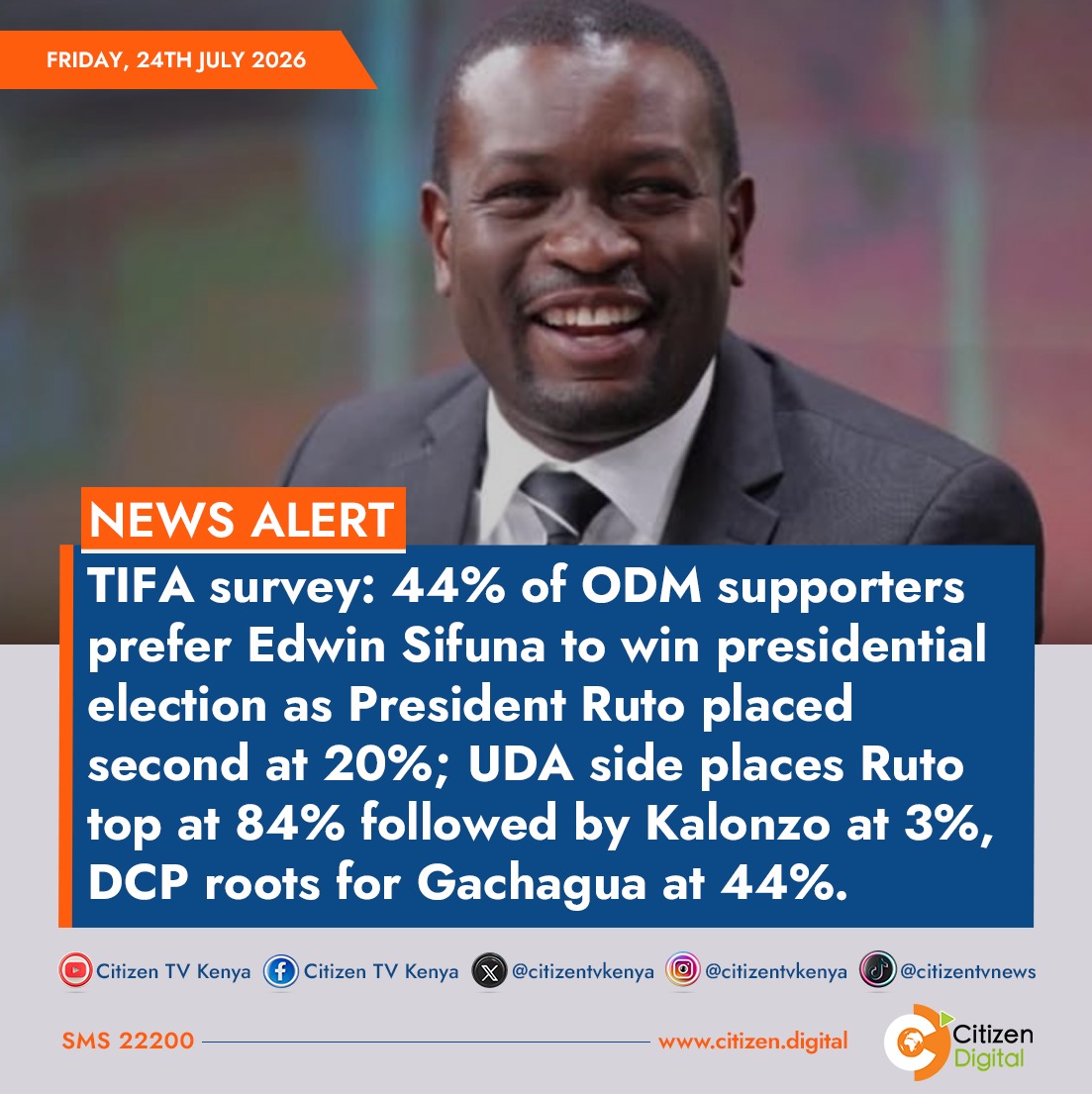
Sifuna’s rise is the most interesting story in Kenyan presidential politics right now: 0% in Nov 2025 to 15% in June 2026, coming second after Ruto (24%). These inside-ODM numbers are even more intriguing: twice as many ODM supporters prefer Sifuna over Ruto, and 74% back his Linda Mwananchi over Oburu’s Linda Ground (20%). The “secretary-general” is beating the party leader within his own party. Says quite a bit about how many Kenyans see their political future. And it looks like Kalonzo and Matiang’i are shedding their support, perhaps because they carry the burden of the recycled establishment.
TIFA survey: 44% of ODM supporters prefer Edwin Sifuna to win presidential election as President Ruto placed second at 20%; UDA side places Ruto top at 84% followed by Kalonzo at 3%, DCP roots for Gachagua at 44%
Political science has an answer for when vote buying works: only when parties can check how you actually voted. With a secret ballot and the whole country watching, they can’t. So people take the money and vote how they wanted to anyway.
Campaign cash can also signal future distributive capacity, a way of saying “we’ll deliver for you later.” But in Mt Kenya right now, that message loses to a stronger one: betrayal. Ol Kalou doesn’t prove that vote buying never works. It proves it fails when it runs into an angry, mobilized partisan electorate.
Politics is complex. That’s why we study it.
Political science has an answer for when vote buying works: only when parties can check how you actually voted. With a secret ballot and the whole country watching, they can’t. So people take the money and vote how they wanted to anyway.
Campaign cash can also signal future distributive capacity, a way of saying “we’ll deliver for you later.” But in Mt Kenya right now, that message loses to a stronger one: betrayal. Ol Kalou doesn’t prove that vote buying never works. It proves it fails when it runs into an angry, mobilized partisan electorate.
Politics is complex. That’s why we study it.
Jamila: At some point, it did not look like it was simply an election to replace the late MP of Ol Kalou. This whole thing was a competition between President William Ruto and Gachagua over who is politically strong in Central Kenya. All indications are that DCP may be getting its first MP through the candidate #CitizenNewsGang @JamilaMohamed
Those who call Kenya’s 47 counties too many economically unviable subnational units miss the point by a lot. Yes, the U.S. has 330 million people and only 50 states. But look at the sheer intensity of government there: 3,144 counties, some 19,500 incorporated municipalities, three-quarters of them with around 5,000 people. That’s one local government per ~14,600 people. Kenya’s 47 counties work out to one devolved unit per ~1.2 million people. The per-capita comparison suggests Kenya is under-governed at the local level, not over-governed. It gets even more interesting once you count townships, school districts, and special districts, bringing the total to roughly 90,000 local government units: one per ~3,700 people. The 50-states talking point should be retired so we can move to strong-state building.
The mechanics of building strong states in 21st century Africa, by @kopalo https://t.co/6kCMp1iUq9
Someone convinced Black South Africans that their economic problems are caused by low-skilled informal sector immigrants, and they believed it because the socioeconomic and political landscape made it possible for the narrative to work.
📹 Anti-immigrant marchers in central Johannesburg accompanied by police. Most shops closed and very little traffic on what would otherwise be streets bustling with commercial activity. Leaders of the marchers say they will hand over a petition to the government
Muhoozi’s statements, threats, and media actions are not suboptimal. They serve a purpose. Where regimes can’t close media houses, they delegitimize them (“fake news”), and journalists are disparaged and publicly humiliated when granted interviews. This primes a segment of the public to dismiss those sources, and the outlet’s accountability function is neutralized for that audience, regardless of the quality of its journalism. In other areas, outlets are manipulated through advertising revenue, and in some, politicians shape coverage through direct ownership.
It’s not just the loneliness; it’s the risks that culture exposes you to if you come from a highly social environment. Your authentic smiles and well-meaning compliments will likely be misread as ill-motivated. There’s generally less appreciation for what is simply normal in places like Kenya and the Philippines. America is a socially low-trust, high-individualism environment, where your warmth will likely trigger suspicion rather than reciprocity.
The UAE knows this demographic carries disposable income and spending habits calibrated to expensive cities. So, a great market expansion strategy. And a visa-on-arrival for this group requires less effort since these Kenyans are already vetted by 9 wealthier states. The UAE is cleverly free-riding on that vetting. Smart move.
The Kenya Consulate General in Dubai and Northern Emirates is pleased to inform all Kenyan nationals that the Government of the United Arab Emirates (UAE) has announced new visa-on-arrival provisions for Kenyan passport holders who possess valid residence permits from the United States, European Union countries, the United Kingdom, Singapore, Japan, South Korea, Australia, New Zealand, or Canada.
Yes. Many people miss the point because the baseline problem in nutritional claims is greatly underappreciated. When they say the carnivore diet is better, the key question for most people (especially Americans) should be “relative to what?” Someone goes carnivore and feels amazing, but they were eating ultra-processed foods, seed oils, refined sugar, and almost no protein before. Of course, they will feel better after this change. The counterfactual isn’t “carnivore vs. optimal omnivore diet”; it’s “carnivore vs. ultra-processed food three times a day.” The intervention and the baseline are inseparable, yet testimonials treat the outcome as evidence for the diet rather than as evidence against the prior diet. I hope more people can start to see it this way; otherwise, misinformation will continue and cause further harm.
I'm not surprised that the popularity of the carnivore diet is losing steam. It never was a durable solution for most people.
Ultimately, part of what people were experiencing were the benefits of an elimination diet. But that doesn’t mean a zero-plant diet is optimal long term.
We’re already seeing that play out. Many of the loudest carnivore advocates are starting to add back fruit, vegetables, and other whole foods.
@StandardKenya reveals in this statement that the government of Kenya owes them KES 1.2 Bn, I believe, for MyGov advertising. So, the exchange between GMoi and @WilliamsRuto is more about pending bills than citizens’ advocacy.
I attended a birthday party last weekend. It was a 70th birthday celebration. The banner was very insightful, especially regarding “What things cost?” Then I started digging, focusing just on the 1970s. In 1970, the average annual cost of tuition and fees in the United States was $394 at public colleges and $1,706 at private colleges. In 2023, in-state tuition at public colleges was $ 11,310, and $41,740 at private colleges. Things got more interesting when I checked a decade back: in the 1960s, it was possible to attend a four-year college debt-free, but impossible to buy a flat-screen TV. Now, the situation is almost the opposite. There are good policy explanations for these outcomes.
At one of the parks I frequent, I watched and later learned that goslings and ducklings swim in a single file behind their mother to conserve energy. By riding the waves the mothers create, they reduce water resistance by over 100%, turning drag into a forward thrust. So the mother absorbs the full cost of leading; position determines advantage: the duckling closest behind her sits in the optimal zone. Those further back get less! Efficiency is a property of the formation, not of any individual. The formation looks harmonious from above, but it contains a quietly unequal distribution of costs and benefits.
That’s how nature is. I have to think about this deeply.