Grown adults in the 21st century who still believe in kings and queens, princes and princesses, nobles and commoners? The monarchy is both the apex and the essence of the British state, the symbol of a national childishness, a national backwardness. https://t.co/s5k9cJUsPW
Every day I walk past these LBC news digital billboards and almost every day they are filled with news that is just totally irrelevant to Scotland. Usually it'll be devolved issues, this time people are told there is a thunderstorm warning. Er, no there isn't.
The two Scottish Labour leadership candidates are "thoughtful, eloquent and seem capable."
Who said this? Paul Hutcheon? Jackie Baillie? Andy Burnham?
No ... BBC reporter David Wallace Lockhart. But of course.
Hundreds of 999 calls alerting the emergency services to wildfires in the English west midlands were diverted to London Fire Brigade, some 100 miles away.
https://t.co/swVQf2gqTg
In October 2024 Michael Shanks promised that the initial set up phase of the Aberdeen HQ of GB Energy would employ "employees in the hundreds based in the headquarters". Almost two years later it has only 53 full time employees and 31 part time.
I first came here when it was just an empty field, and now it’s a state of the art centre for Gaelic music and education.
Cnoc Soillier in South Uist is such an asset for the community, and I’m so pleased that it was completed on time and within budget with @scotgov funding.
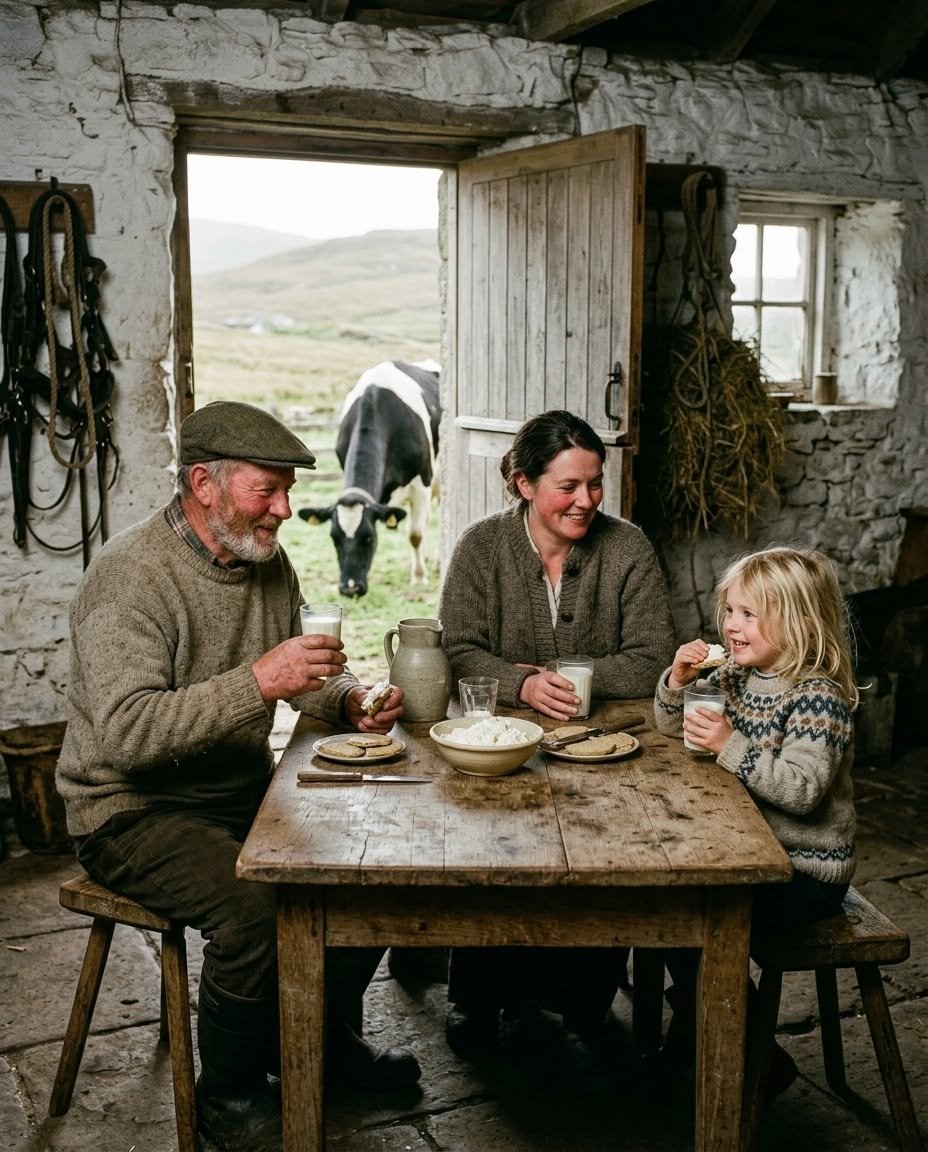
Here is something quietly remarkable about your Scottish ancestors, written not in any book but in your own body. The simple fact that you can drink a glass of milk as an adult is an inheritance thousands of years in the making.
Most mammals, and most humans across history, lose the ability to digest milk after childhood. But in northern Europe, among the farming peoples who became the ancestors of the Scots, a genetic change spread that kept that ability switched on for life. It is called lactase persistence, and it took hold precisely because it was so useful. For a people living on the edge of a cold, thin-soiled land, a cow or a few goats meant a year-round supply of nourishment that did not depend on the harvest. Milk, butter, crowdie and cheese could carry a family through a hungry winter when little else would.
And so, over long centuries, the families who could make the most of their animals tended to survive and thrive, and passed that gift down. It became woven into the whole way of life. The Highland township with its shared grazing, the shieling where the young folk took the cattle to the summer hills, the churn by the cottage door, all of it rested on this deep and ancient partnership between people and their beasts.
When you pour milk into your tea without a second thought, you are enacting something your ancestors earned across a hundred generations of hard northern farming. It is a small everyday echo of a very old way of staying alive.
The land shaped the people, right down to the blood. And that shaping is still in you🏴👑👊✊🫶🩸🧬
"The government have actively avoided looking for evidence Russia interfered."
This is arguably the greatest scandal of modern British politics. The Intelligence & Security Committee's Stewart Hosie said the government didn't investigate alleged Russian interference in the Brexit vote, and no one wanted to touch this "with a ten-foot pole".
Successive British governments including Starmer's have covered up the extent of Russian interference in the most important vote in modern British history.
Please repost to demand that Andy Burnham shows the courage to put an end to this cover-up and allows an inquiry to expose the truth about Russian interference in the Brexit referendum.
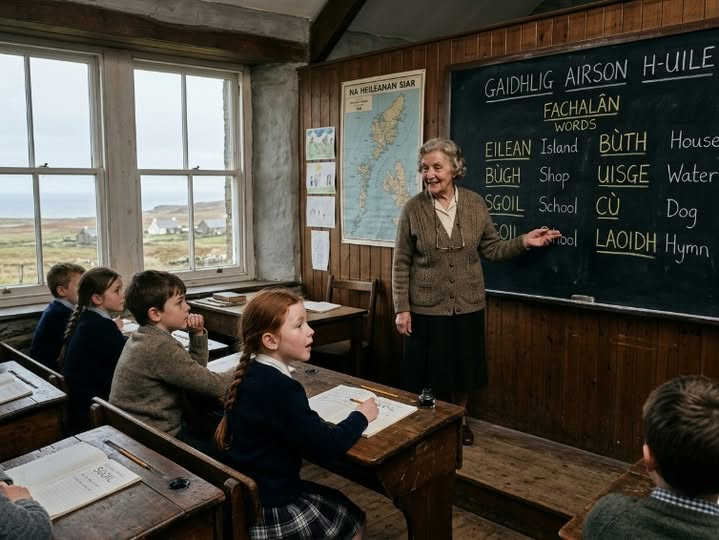
There was a real point in the 20th century when speaking Gaelic in school could get a child physically punished for it.
Gaelic suffered decades of active suppression in Scottish education, with some children punished for speaking their first language in the classroom under policies that treated Gaelic as an obstacle to English literacy rather than a language worth preserving in its own right. That history left deep scars, entire generations who grew up fluent at home but were taught, explicitly or implicitly, to feel shame about it in public. The slow rebuilding of Gaelic-medium education from the late 20th century onward, classrooms like the one shown here representing an important turning point, has been as much about repairing that inherited shame as it has been about grammar and vocabulary.
Today Gaelic remains a minority language even within Scotland, spoken fluently by a relatively small percentage of the population, concentrated heavily in the Outer Hebrides, but its cultural weight extends far beyond that number, showing up in music, place names, and a growing sense that the language is genuinely worth the effort of reviving rather than letting quietly disappear.
Did your own family lose a language along the way, whether Gaelic, Scots, or something else entirely?
#ScottishGaelic #ScottishLanguage #ScottishHistory #ScottishHeritage #Gaelic 🏴🔥
One of Scotland's greatest astronomers began his life lying on his back on a cold Aberdeenshire hillside, watching the stars while he minded his father's sheep. His name was James Ferguson, and he was born into a poor farming family in 1710.
He had almost no schooling, but he was hungry to understand the heavens. As a shepherd boy he made a simple frame strung with beads on threads, and lying in the dark he used it to measure the positions of the stars, mapping the sky with nothing but string and wonder. That homemade instrument was the beginning of a remarkable life. 🌌
Ferguson taught himself so well that he went on to build beautiful orreries, working models of the solar system, and to lecture on astronomy to fashionable audiences across Britain. He became a Fellow of the Royal Society, admired by the finest minds of the age, all from a start that would have crushed most people. He is living proof that genius does not care where you are born.
Does his story inspire you as much as it does us? Let us know in the comments, and follow Clan and Crown to celebrate the great Scottish minds. 🏴
#ScottishInventors #JamesFerguson #Astronomy #ScottishEnlightenment #Scotland 🏴👑⚔️🧬🩸💙🌠✨💫🍮
Asked about Andy Burnham at the Labour party conference last September, Michael Marra said he should "shut up". Wonder whether Marra stands by his words?
So that's why the BBC had no money for the Glasgow Commonwealth Games. They'd used it to pay ex-England international rugby player Joe Marler to become a 'celebrity gladiator'. Good to know the TV licence isn't being wasted.
https://t.co/zTzolOVE3l
Before there was coal delivered to the door or oil in a tank, a Highland family's warmth for the whole winter had to be cut, by hand, out of the living ground. 🔥
It was called winning the peat, and across the Highlands and Islands it shaped the rhythm of the year. When the spring drying weather came, families went out to their peat bank on the moor, a stretch of dark ground each croft was entitled to work. With a special long bladed spade called a tairsgear, they sliced the soft black peat into neat wet blocks and threw them up onto the heather to begin drying.
That was only the start. The blocks had to be turned, then stood on end and stacked into little open lattices called rickles so the wind could pass through them. Weeks later, when they had hardened, they were carried home and built into a great peat stack against the gable of the house, a wall of fuel that meant the family would be warm no matter how hard the winter came.
It was heavy, back aching work, and it was almost never done alone. Neighbours helped neighbours, children stacked alongside parents, and the whole community moved out onto the moor together. A flask of tea, a bannock, a bit of banter, and the long day passed. The work bound people to the land and to each other in a way that is hard to imagine now.
And then there was the reward. A peat fire has a scent unlike anything else, earthy and sweet, and for countless people of Scottish descent it is the very smell of home and grandparents and childhood. It is why an exile can catch that smoke on the wind years later and be undone by it. 🏴👑👌👍💪👊🥰
Did your family cut peats on a croft or island in Scotland, and can you still remember the smell of a peat fire?
SCOTLAND AT THE FOREFRONT OF CANCER BREAKTHROUGHS
Incredible news out of Glasgow today! Groundbreaking research conducted by team members at the Cancer Research UK Scotland Institute and the University of Glasgow has uncovered a potential new way to suppress the growth of bowel and liver cancers.
Led by Professor Owen Sansom, the team discovered that targeting and blocking a specific protein—nucleophosmin (NPM1)—can effectively stop cancer cells from multiplying. Because NPM1 isn't required for normal adult tissue, blocking it could offer a much safer, highly targeted treatment without harming healthy cells!
Bowel and liver cancers remain among the hardest to treat, making this discovery a massive milestone for oncology and a beacon of hope for thousands of families across Scotland and worldwide.
Scotland continues to lead the world in medical research and scientific discovery. Drop a in the comments to show your appreciation for our brilliant scientists working tirelessly to save lives!
#ScotlandNews #CancerResearch #ScottishInnovation #GlasgowUniversity #CRUK #MedicalBreakthrough #ProudlyScottish #ScienceNews #BowelCancerAwareness #LiverCancerSupport— at Glasgow, Scotland.🏴👑⚔️🧬
This is far more serious than folk realise. Scots pay for the BBC. It's meant to be our national broadcaster. But there's growing evidence the BBC tried to implicitly sabotage the Glasgow Commonwealth Games by ensuring no free live coverage and a negative pre-Games narrative.
This goes beyond political bias. It hits at the heart of the role of the BBC in Scotland and the justification for the TV licence. The Glasgow Games, like any similar national event, reflected Scottish national pride in itself and how we engage with the international community. The vast majority of Scots, many children from low income households, were denied a lifetime memory experience.
The BBC found money to broadcast the Bundesliga live. It's found money to pay for the Birmingham European Athletics Championship. Yet its bid for the Glasgow Games was so low it's been described as derisory and one Games' organisers could not seriously entertain.
This was a slap in the face for all Scots. Not just those who support independence.
The BBC has never been Scottish. It's a London controlled broadcaster. However, it's also never been considered anti-Scottish. That changed with the 2026 Glasgow Games.
‘The core Sovereign Grant funding for the British Monarchy is set to nearly double from £51.8 million to £99.9 million a year starting in 2027–28’
Freeloading parasites!!!!
Andrew Neil tells it straight. When you compare Scotland to Norway, or to any other independent European country, the Union has been an economic disaster. Especially as Norway and Scotland are the two most oil rich countries in Western Europe.