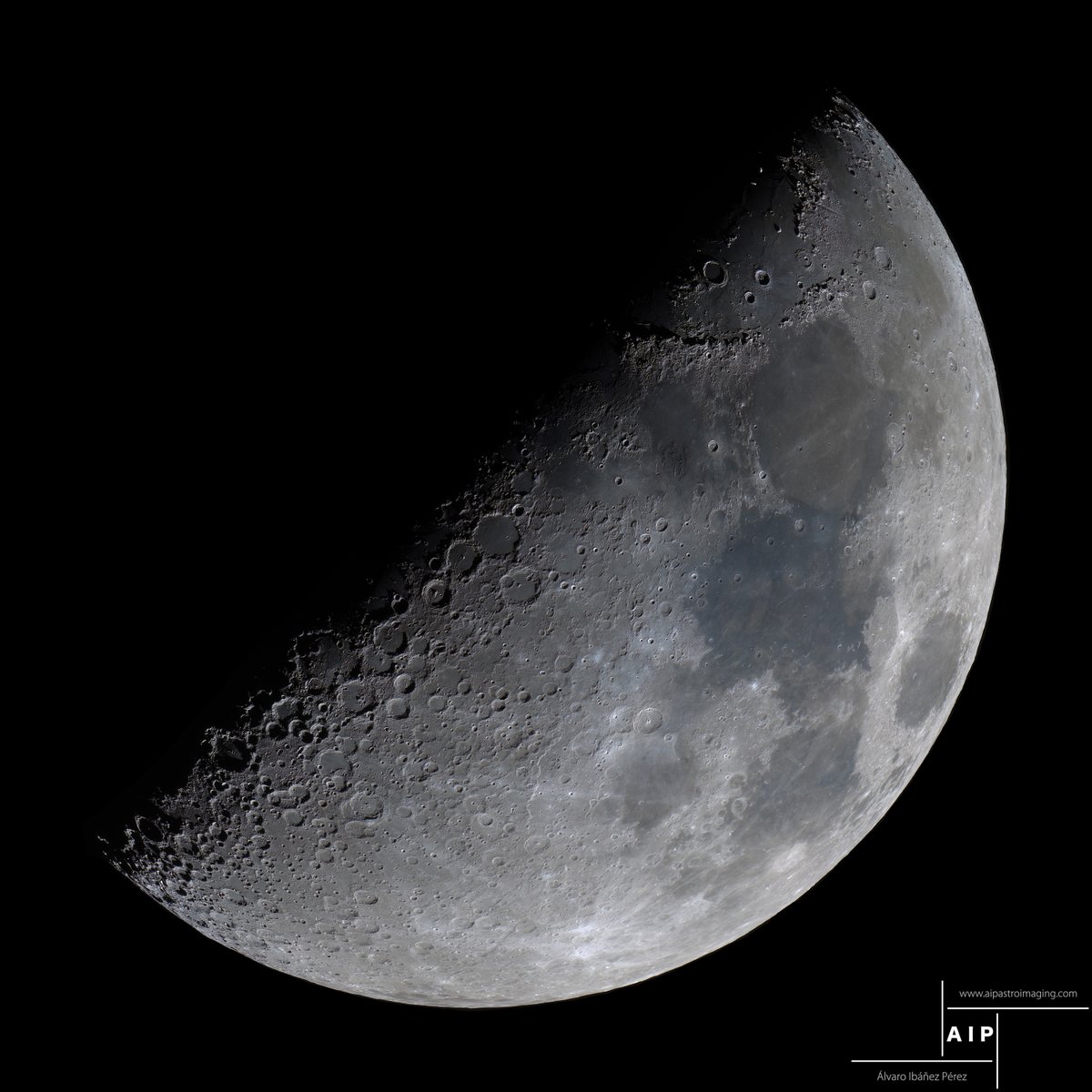
Mosaico de la luna en su fase de cuarto creciente (justo iluminada el 50%)
Lo he saturado un pelín para que se vean los tímidos colores de los mares.
Para verla a tope de resolución (muy recomendado!!) pinchad aquí, que podéis daros un buen paseo:
https://t.co/b5iSLZwDEZ
The famous star cluster known as the "Pleiades" or the "Seven Sisters" passing through the dust in Taurus, brightly illuminating the region. This was captured Saturday night from dark-ish skies. #astrophotography#space#opteam
I spent a few hours the other night with my telescope locked onto the heart of the Orion Nebula. This is the image that came from that session. A vibrant scene of forming stars- so bright you can see it with your naked eye. #astrophotography#space#opteam
This is an artist’s impression of the bright #quasar 3C 279, the active nucleus of a #galaxy situated 5.000 million lightyears far!
This quasar contains a #BlackHole with a mass of one billion times that of the Sun:
https://t.co/Git9dHiToq
Credit: ESO/M. Kornmesser
Amazing Universe! See the details of M42 Orion Nebula. This splendorous image done by the @AstroSabadell member Josep M Drudis and Don Goldman is the @apod of today. Congrats !!
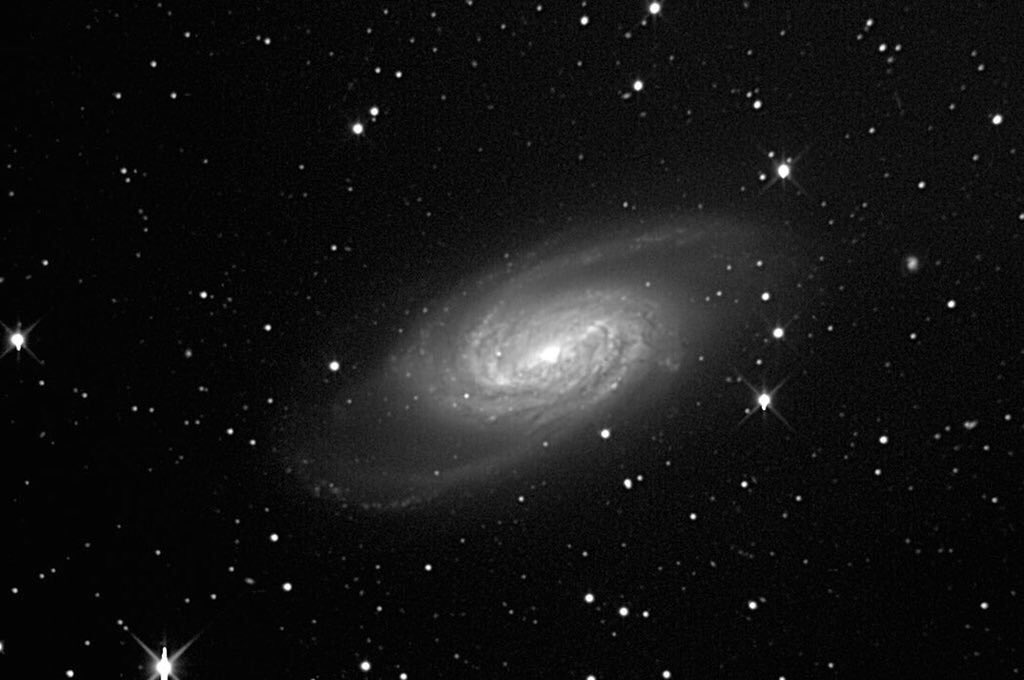
This is a barred spiral #galaxy 30 million lightyears distant with an active rate of #star births in the nucleus. Its name, NGC 2903. Image: #Anysllum#Observatory@AstroSabadell. See the details in the spiral structure !!
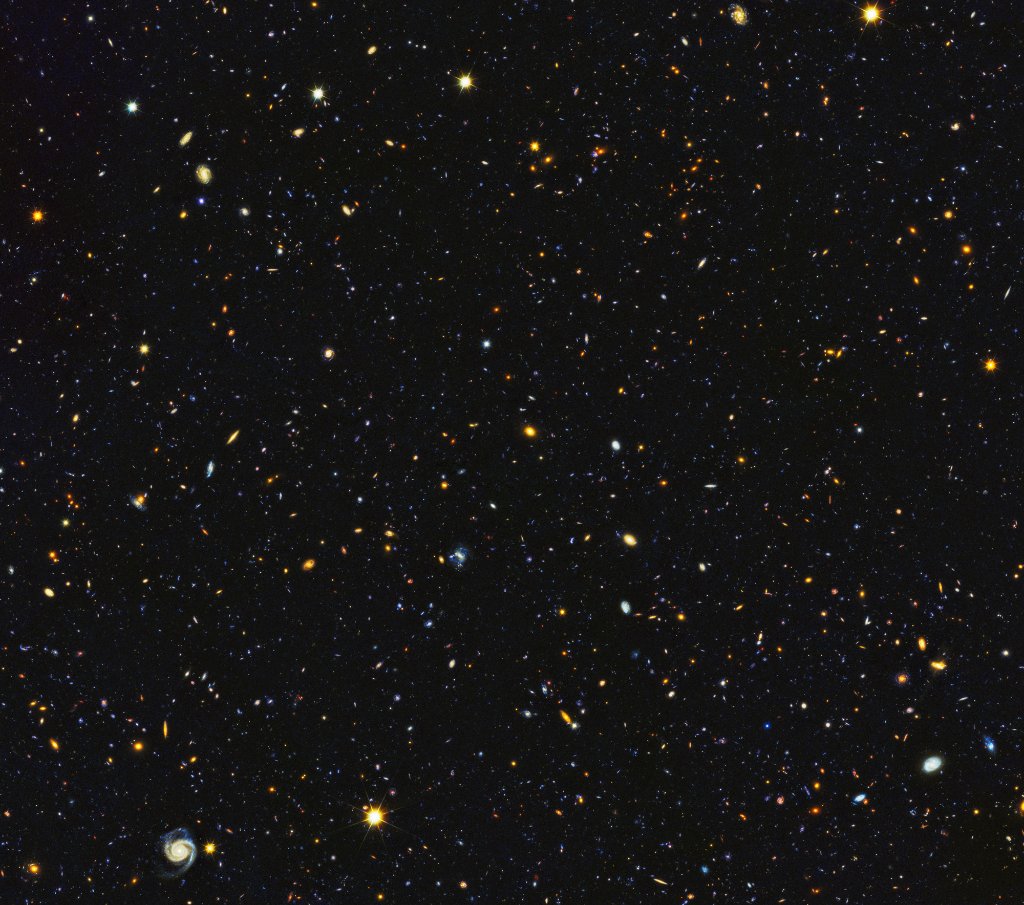
Astronomers using the ultraviolet vision of Hubble have captured one of the largest panoramic views of the fire and fury of star birth in the distant universe. The field features approximately 15,000 galaxies, about 12,000 of which are forming stars: https://t.co/148HBC09nu
You can see this video all the day, hundred of rotations... and will be amazing each one: Full rotation of the Moon as seen by NASA's Lunar Reconnaissance Orbiter.
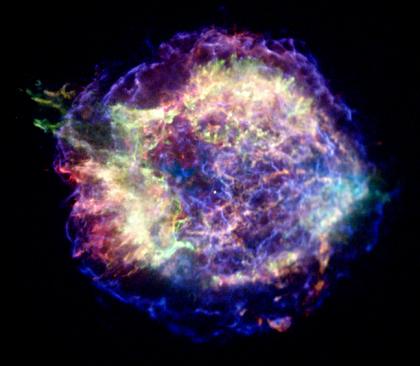
Reported a type II #supernova explosion with a progenitor metallicity of only ≤10% and with a mass of 17–25 suns. The light curve was a normal plateau one. The first example of a low-metallicity high-mass progenitor for a type II SN: https://t.co/COdHgcYPn9. Image: Cas A CHANDRA