This report by The Hindu highlights the real hardships faced by people in Kangpokpi due to the current blockade. However, it selectively focuses on one community's suffering while downplaying how Kuki groups have repeatedly imposed economic blockades on National Highways (NH-2, NH-37, etc.) since 2023, causing shortages and price spikes for Meitei, Naga, and other communities as well.
While this tit-for-tat approach only deepens the cycle of mutual suffering, the new state government is yet to effectively secure and open these vital highways, leaving common people across Manipur to bear the brunt with stranded vehicles, inflated essentials and disrupted lives.
The government should urgently expedite the peace process, initiate meaningful dialogue with all stakeholders, and take firm steps to lift all blockades. This ongoing conflict is disproportionately burdening ordinary citizens. It is time to prioritise restoring normalcy and free movement for everyone in Manipur.
The Media should also highlight the full picture of reciprocal disruptions instead of one-sided narratives. Peace requires ending all blockades and restoring free movement for everyone.
https://t.co/kpqiMzBTY6
@PMOIndia@narendramodi@HMOIndia@AmitShah@NBirenSingh@DrSJaishankar@sambitswaraj@the_hindu
Ananya Negi, speaking for the Ministry of Youth Affairs in the Parliament of India, paid tribute to B.R. Ambedkar and his journey from discrimination to shaping the nation.
“We, the people of India.”
The Rupee crashes past 95. 🚨
For the first time in history, the INR has crossed the psychological 95-mark against the USD, ending FY26 as one of Asia’s worst-performing currencies. From oil volatility to geopolitical shifts, the pressure on the Rupee is at a 14-year high.
🚨 BREAKING: Iran Issues Evacuation Warning for U.S. Tech & Defense Giants 🚨
Starting April 1, Iran’s IRGC has announced it will target specific U.S. technology and defense companies operating in the region.
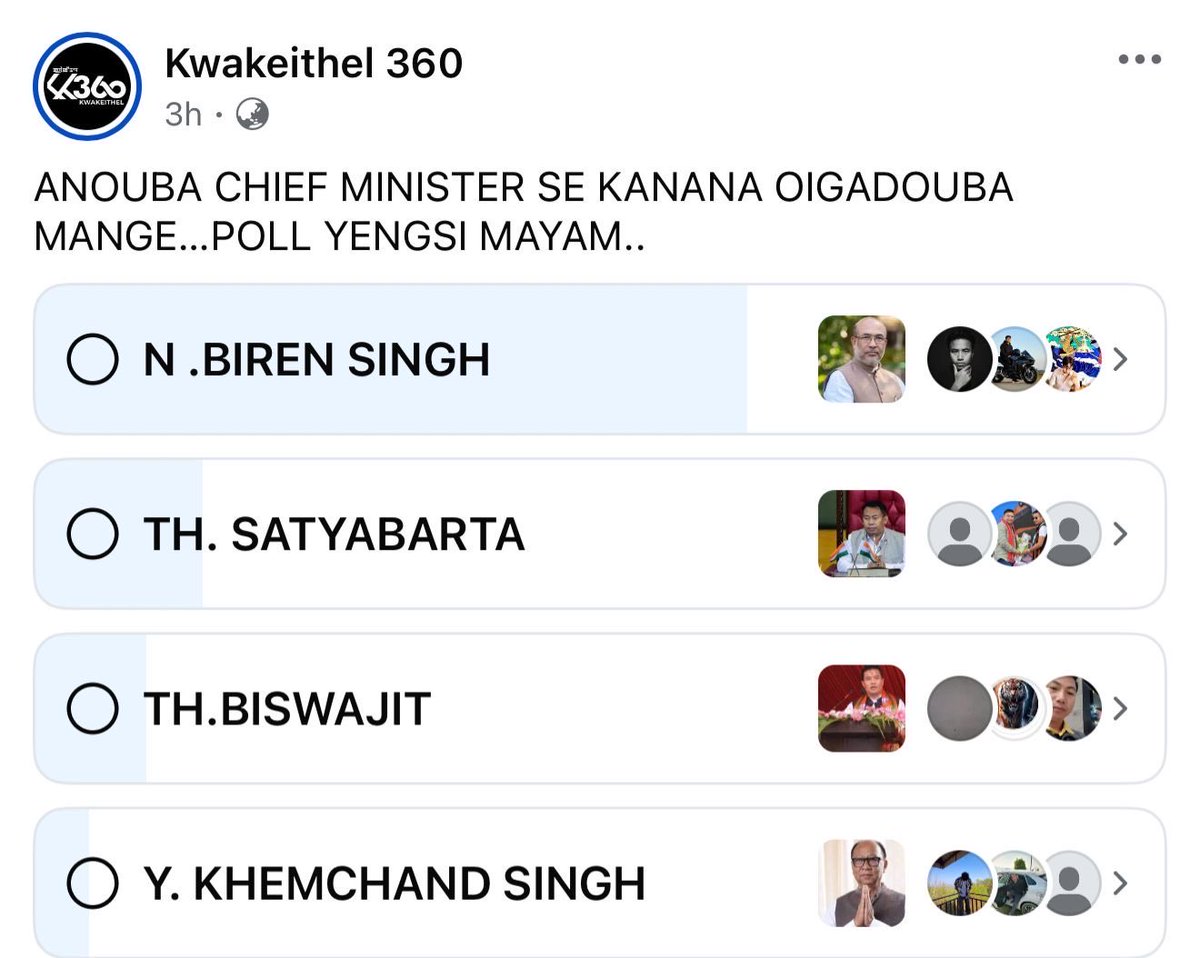
Poll results highlight strong public support in Manipur, with @NBirenSingh emerging as the leading choice in the latest social media survey. The debate over the state’s next leadership continues.
#Manipur#PublicOpinion@PMOIndia@HMOIndia
Poll after poll indicates that many people in Manipur continue to support @NBirenSingh , reflecting confidence in his leadership, development vision, and commitment to public welfare. The message from supporters remains clear — Manipur stands with him.
#CMManipur@narendramodi
🚨 Clearly explained by Rajat Sethi.
❗ The risks of illegal immigration and the potential impact on the indigenous communities of Manipur.
❗ Lessons from past experiences in Tripura and Assam.
The ongoing discussions about Manipur often raise the highly contentious proposal of dividing the state along communal lines as a solution to the current crisis. Such an idea is deeply problematic, as it fundamentally undermines the essence of Manipur; its rich history, shared culture, and collective identity.
Manipur has long stood as a symbol of unity, mutual harmony, and peaceful coexistence among its diverse indigenous communities, who have shared the land for generations. The valley region, in particular, is home to various indigenous groups living side by side, and it cannot be portrayed as inhabited solely by Meiteis.
In this context, Shri Noni Arambam is absolutely justified in highlighting the silence from certain panellists or representatives of the Kuki-Zo community regarding the recent abduction and brutal killing of an innocent Meitei civilian. Such acts of violence cannot be overlooked or excused.
The state must not be held hostage to the political ambitions of any particular group. Above all, we must preserve our civility and humanity, safeguard our democratic values, and uphold our moral duty to respect the rights and dignity of every individual, regardless of community.
@PMOIndia@narendramodi@HMOIndia@AmitShah@sambitswaraj@NBirenSingh@DrSJaishankar@ArambamN82115
#Manipur #ManipurViolence #kuki #peace
Grateful to Hon’ble Prime Minister Shri @narendramodi Ji for his warm wishes on Manipur Statehood Day. Manipur’s resilient people, rich culture, and sporting spirit will continue to inspire the nation as the state moves forward on the path of progress.
Violence and division were choices. Dialogue and coexistence were ignored. The resulting chaos and displacement were entirely avoidable.
@PMOIndia@HMOIndia
Demographic Dividend: The Game Changer for Tribes in Hill Areas of Manipur
Manipur’s unresolved ethnic crisis reveals a hard political truth: power does not shift through sentiment or stalled peace talks alone—it shifts through leverage. For decades, Naga and Zo (Chin-Kuki-Mizo) political aspirations have faced consistent resistance from a valley-dominated system controlling the state’s administration, legislature, and judiciary. The events of 3 May 2023 merely exposed this imbalance in its starkest form.
Since then, reconciliation has been absent. Displaced Zo communities remain excluded from Imphal, while political energies focus on forming governments rather than restoring coexistence. Peace negotiations offer diminishing hope. Unlike Mizoram, where pragmatic leadership accepted a constitutional settlement, Naga talks remain trapped in demands for shared sovereignty, a separate constitution, and a flag—claims rendered increasingly untenable after the abrogation of Article 370 in 2019.
Yet, a quieter transformation is underway. Chronic neglect of hill areas—caused by systematic diversion of resources to the valley—has kept hill areas underdeveloped. This backwardness has produced higher fertility rates, steadily narrowing the population gap between hill tribes and the dominant community, as reflected in every census. Had delimitation occurred after the 2001 Census, hill areas would already have gained more Assembly seats, but it was politically blocked.
The 2027 Census, followed by delimitation, and such succeeding exercises that will follow in specified regularity, could significantly alter Manipur’s political map. Increased hill representation may weaken valley dominance, create new power brokers, and force a reassessment of long-denied political arrangements. This looming demographic shift could break the resistance to empowerment or territorial reorganisation.
For the tribes of Manipur’s hill areas, the long game may not lie in fatigued negotiations or symbolic demands, but in unity, patience, and democratic arithmetic. Demographic dividend—slow, silent, and constitutional—may succeed where decades of confrontation and dialogue have failed.
@AmitShah@PMOIndia@MHAIndia@BhallaAjay26@LokBhavManipur@WorldMeeteiConv@meiteiheritage@stdcm_org@NBirenSingh@BiswajitThongam@KonthoujamG@YKhemchandSingh@Th_Radheshyam@thbasantasingh@rsapam@HDingoSingh1@LSusindro@AwangbowNewmai@KhashimVashum@ErKeishing@RamMuivah
@d_gangmei
@Ahempanmei2@OlishSs@Letpao_Haokip@KipgenNemcha@KimneoHangshing@haokholet_k@NgursanglurS@VungzaginValte@mang_henglep@LMKhaute@paolienlal@chinlunthang@Neiphiu_Rio@SangmaConrad@PemaKhanduBJP@himantabiswa@Lal_Duhoma@PTI_News@the_hindu@thewire_in@ANI@IndiaToday@IndiaTodayNE@BJP4Manipur@ManipurTimes@Eastern_Mirror@EastMojo
Courtesy:@morungexpress05
Demographic Dividend: The Game Changer for Tribes in Hill Areas of Manipur | MorungExpress | https://t.co/J9eetlhQn7 https://t.co/XJRpolyLNr
Let us step into the New Year with optimism, compassion, and unity. May the year ahead bring peace, success, and happiness, and may it open doors to new opportunities for all.
I wish everyone a New Year filled with good health, positivity, and fulfillment.
#HappyNewYear2026
The claim that the fight against drugs in Manipur is merely cosmetic propaganda is a misleading oversimplification. While the drug economy is deeply entrenched and cannot be dismantled overnight, dismissing the campaign as a “mirage” trivialises both the gravity of the threat and the suffering of affected communities.
These are questions the Congress party must first answer to the people of Manipur.
Why did successive Congress governments fail to enforce the Manipur Hill Areas District Councils Act of 1967 even as states like Mizoram abolished hereditary chieftainship?
Why did the Congress regime amend the Act in 2008 by expanding hill area definitions and further restricting non-tribal land ownership without addressing legitimate valley concerns, thereby deepening structural imbalance?
Why did the Congress government create seven new districts in late 2016 in what appeared to be a vote bank exercise, carving out predominantly hill districts such as Kangpokpi, Pherzawl, Noney, Kamjong, and Tengnoupal, triggering blockades and worsening inter-community mistrust?
Why did the party re-include the vague category of “Any Kuki Tribes” in the Scheduled Tribes list in 2003 despite objections from communities like the Thadou, leading to identity confusion and resource conflicts?
Equally concerning is the Congress party’s silence in Parliament. The people of Manipur have never heard their party’s MPs raise the issue of large-scale poppy cultivation and the growing drug menace in the state, nor have they witnessed any serious parliamentary intervention on the grave challenge of illegal immigrants and refugees entering Manipur.
The people deserve clear answers, accountability for past decisions, and a national conversation grounded in facts rather than deflection.