Breaking down Bitcoin—one friendly post at a time. If you’re curious, confused, or new here, you’re in the right spot.
Follow for simple ₿itcoin education!
Welcome to Unblocking BTC!
I’m here to break down Bitcoin—one post at a time—for anyone curious, confused, or just getting started.
Follow for simple, *jargon-free Bitcoin education and join me as we explore the world’s most exciting technology together!
#BitcoinEd#UnblockingBTC
The Bigger Picture:
This is why Bitcoin's decentralization is so vital. It’s not just about transacting during an outage. It's about ensuring a public, permanent record of ownership survives, no matter what happens to our global communication systems.
#Decentralized#Bitcoin
A massive solar flare wipes out the internet. No phones, no email, no X(Twitter?)! What happens to your Bitcoin?
The network is designed to be tough. Even without the internet, it can still function. This isn't just a fun thought experiment—it's a example of #BTC's antifragility
A Local Solution:
Another way to transact offline? Through mesh networks! Apps like Jack Dorsey’s Bitchat can pass transactions from phone to phone using Bluetooth until one of them connects to the network. Pretty slick.
#Bitchat#Decentralization#CensorshipResistant
Under the hood:
Proof-of-Work is the mechanism that enforces the immutability or cementation of the network's txs. And with each block, the ledger becomes ever harder to manipulate. To rewrite, an attacker must redo that work and catch up—economically brutal
#Bitcoin#Immutable
Heard about Bitcoin's immutable characteristic?
Once blocks stack on top of your txs, changing it becomes basically impossible. Think wet cement hardening with each confirmation. That’s why on-chain receipts stick.
#BTC#Immutability#BitcoinEducation
Limits:
• Immutability isn’t instant
• New blocks can reorganize; deep history is rock-solid
• Sending to wrong address is irreversible
• Fees or 51% attacks are risks to understand
Tip: send small txs to test an address's validity before sending your entire stack #limits
2018: Harvard says Bitcoin is more likely to hit $100 than $100K.
2025: Harvard buys $116M Bitcoin at $116K.
Everyone gets Bitcoin at the price they deserve.
Use cases (Sats make Bitcoin practical):
- Microtips: send ~500 sats, not tiny BTC fractions.
- Merchants: price cheap items without messy decimals.
- Fees: wallets show sats/vByte (fee rate that miners use to prioritize txs).
- Saving: think in sats to avoid sticker shock.
Wonder what people mean by 'sats'?
Sats = Satoshis, Bitcoin’s smallest unit. 1 BTC = 100,000,000 sats. Think of BTC like a dollar and sats like cents — they let you send microtips, pay tiny fees, and price things as BTC rises.
#Bitcoin#Sats#BitcoinEducation
Mining Workflow:
- First: Miners grab transactions, build a block.
- Middle: Hash it like crazy to meet difficulty.
- End: Valid block’s added to blockchain, miners get BTC reward.
Great resource to learn more: https://t.co/0YiUF63k7V
#BitcoinMining#BTC#BitcoinRewards
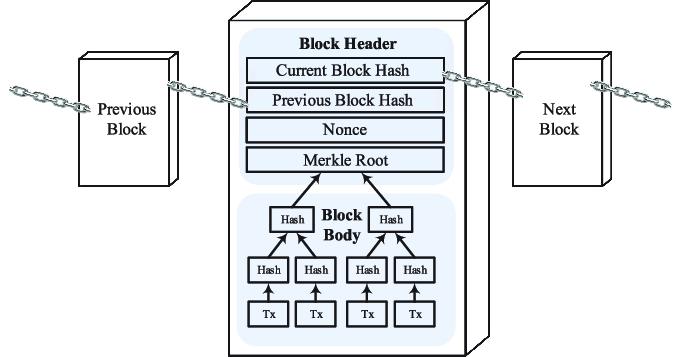
What's in a Block?
Blocks store BTC transactions in the blockchain, like pages in a Bitcoin history book that is treated as truth and is immutable/unchanging.
Blocks simply contain:
- A Header
- Body: Contains transactions (*Coinbase first).
More explained below👇
#BitcoinBlock
*Coinbase is the reward miners get for mining, is part of the block, and has a few other characteristics:
- It's the 1st transaction in a newly created block
- Has no inputs, just the output (the reward)
- Introduces new coins to the network
Not to be confused with the exchange!