…alhamdulillah! I seriously can’t believe we already bagged four years. And counting! Wow🤩. Throughout these years, I know only good about you, dearest wife💞. This is a huge blessing from God Almighty that not everyone is blessed with✨.
Again, I thank you for choosing me and I thank God for choosing you for me💐. You’ve been a perfect fit for poor me🕺. If given a chance, I’ll choose you again and again🧚♂️. Ki ci gaba da hakuri da ni yan mata, ladan ki na Aljanna InshaAllah❣️
And special appreciation to everyone who assisted me in locating and finally owning this beautifully amazing creature. I don’t really have anything to reward you with but I’ll pray for you to be blessed with better partners InshaAllah🙏.
الحمد لله و له الحمد في الأولى والآخرة🪴
Happy anniversary to us💫. So far so good in ji kanawa!🌺 #anasma #AnasmaAt4 #MariyatulJannah🐣
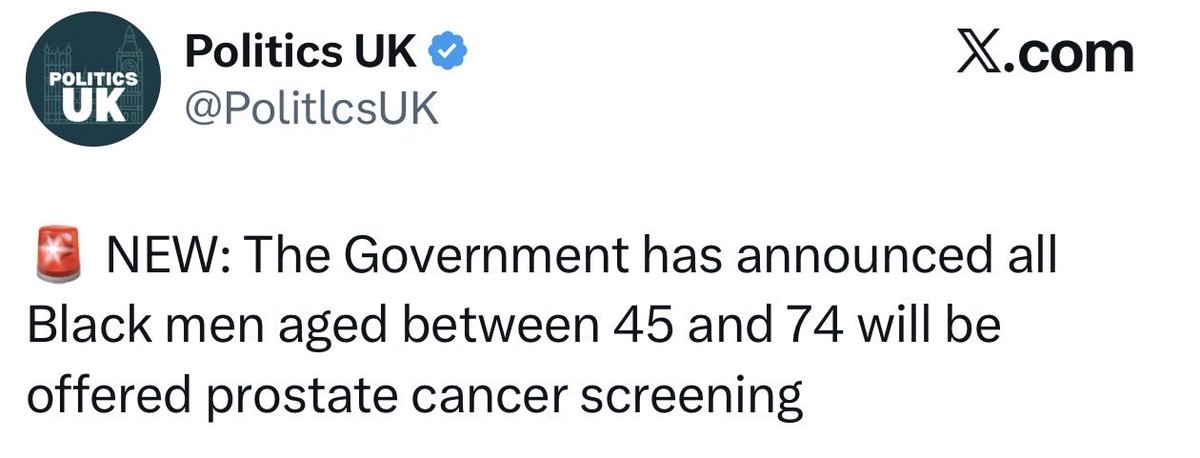
On the day the whole political establishment claims we do not live in a two tier country, they announce this.
Note, the NHS makes NO drugs available exclusively to white people.
@ZiaYusufUK How can someone as thick as you aspire to hold any form of public office? Please go and ask your father how medical screening works, it's time you were educated.
@ZiaYusufUK What is wrong with you?
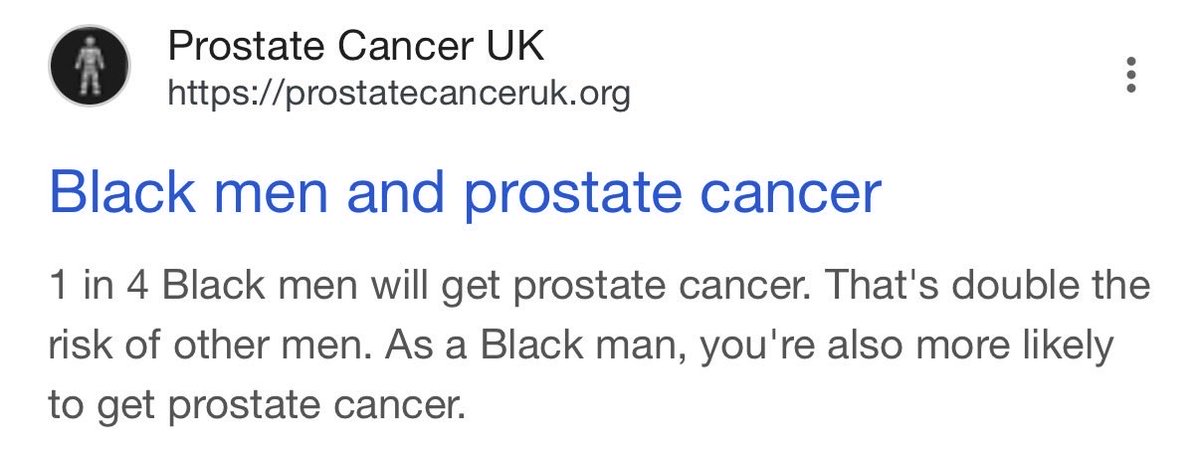
Black men are at significantly higher risk of prostate cancer. This isn’t “two-tier Britain”. It’s basic medicine.
The programme will save lives and the NHS money. That’s great news.
Stop rage-farming and log off for a day. It might do you some good. 👍
This is what this scumbag said when Sarah Everard was kidnapped, raped and murdered by a WHITE police officer.
Today, for the killing of Henry Novak by a Brown Sikh man, he calls the British public to "rage".
The UK government has barred Hasan Piker and Cenk Uygur from entering the country over their criticism of Israel.
Meanwhile, war criminal Isaac Herzog, whose statements were cited in the ICJ genocide case against Israel, was welcomed at Downing Street with open arms.
I’ve written to Shabana Mahmood demanding these bans be reversed immediately:
@RobertJenrick His father asked for his son’s death not be used to spread division, hatred and tension. Respect the mans wishes. Politicising murder is disgraceful
Can't believe i missed this little nugget.
But a small reminder
Zia Yussuf is actually Muhammad Ziauddin Yusuf - he had to "demonstrably" change his identity to “fit in”.
And
Reform are now demonstrably the biggest proponents of racism in Britain.
Why I, Born into an Ordinary Korean Christian Family, Converted to Islam — Part 1
The Problems I Found in Christian Doctrine While Reading the Bible
I was born in the Republic of Korea into an ordinary Christian family. From childhood, church and the Bible were not unfamiliar to me. I was not someone who accepted Islam while knowing nothing about Christianity. Rather, I grew up in a Christian environment, was exposed to the Bible, and learned the basic doctrines of Christianity.
However, as time passed, I discovered one important problem.
There was a major difference between what I understood by reading the Bible directly and the core doctrines taught in churches today.
Of course, Christian theologians present many different interpretations. But from my perspective, many of those explanations seemed less like the simple and direct meaning of the Bible, and more like complicated explanations created later in order to defend Christian doctrine.
I am not writing this because I hate Christians. I myself was born and raised in a Christian family. What I want to say is simple.
As I read the Bible, I came to feel that the Islamic belief in pure monotheism was clearer, more consistent, and closer to sincere faith in God than the doctrines of Christianity today.
1. The Bible says God is One, but Christianity teaches the Trinity
The clearest and most repeated teaching in the Bible is that God is One.
Deuteronomy 6:4 says that God is One. Jesus also acknowledged this statement as the foundation of the greatest commandment in Mark 12:29. In John 17:3, Jesus calls the Father “the only true God.”
However, Christianity today says that God is One while also teaching that the Father is God, the Son is God, and the Holy Spirit is God. This is the doctrine of the Trinity.
But the word “Trinity” does not appear anywhere in the Bible. Jesus never taught people, “I am the second person of the Trinity.”
To me, there was a large gap between the simple monotheism of the Bible and the later Christian doctrine of the Trinity.
2. Jesus prayed to God, but Christianity says Jesus is God
In the Bible, Jesus prays to God.
In Matthew 26:39, Jesus falls on his face and prays to God. In Luke 6:12, it also says that Jesus spent the whole night praying to God.
Prayer is something a created being offers to the Creator. It is the servant turning to the Master, the human being turning to God, and the weak turning to the Almighty.
But Christianity says that Jesus is God. This raised a serious question for me.
Does it make sense for God to pray to God?
Does it make sense for the Almighty God to seek help, seek guidance, and bow down in prayer to another?
The Jesus of the Bible appeared to me not as God Himself, but as a servant and messenger of God who prayed to God and obeyed God.
3. Jesus said he did not know everything
God knows everything. There can be no ignorance in God.
But in Mark 13:32, Jesus speaks about the final hour and says that no one knows that day or hour, not even the Son, but only the Father.
If Jesus were the all-knowing and all-powerful God, then there should be nothing he does not know. Yet Jesus clearly said that there was something he did not know.
Christianity explains this by referring to the human nature of Jesus. But from my perspective, that explanation seemed more like a defense of later theology than the direct meaning of the biblical text.
If we look only at the text itself, Jesus appears not as the all-knowing God, but as a messenger who received knowledge from God.
4. Jesus said he followed God’s will, not his own will
In John 5:30, Jesus says that he can do nothing by himself and that he does not seek his own will, but the will of the One who sent him.
In Matthew 26:39, Jesus also prays to God, saying, “Not as I will, but as You will.”
This is a very important point.
God is not someone who submits to the will of another. Rather, all beings submit to the will of God.
But the Jesus of the Bible distinguishes between his own will and God’s will, and he wants God’s will to be done, not his own. I believe this shows that Jesus was not God Himself, but someone who submitted to God.
5. Jesus said, “The Father is greater than I”
In John 14:28, Jesus says that the Father is greater than him.
Christianity teaches that the Father and the Son are equal in essence. However, Jesus himself said that the Father is greater than him.
When I read this verse, I had a serious question.
If Jesus and the Father are completely equal as God, why did Jesus say that the Father is greater than him?
Christian theology explains this in various ways. But if we read the Bible simply, Jesus appears not as someone equal to God, but as someone under God who submits to God.
6. Jesus called God “my God”
In John 20:17, Jesus uses the expression, “my God and your God.” In Revelation 3:12, Jesus repeatedly uses the expression “my God.”
This was a very decisive issue for me.
Can God have a God?
If someone says “my God,” then he is not God, but someone who worships God.
If Jesus called God “my God,” then it is much more natural to understand Jesus as someone who worships God, not as God Himself.
In this sense, the Jesus of the Bible matched more closely with the Islamic understanding of Jesus: a noble messenger sent by God.
7. Jesus was tempted, but the Bible says God cannot be tempted
In Matthew 4, Jesus is tempted by Satan.
However, James 1:13 says that God cannot be tempted by evil.
Here again, I felt a major contradiction.
God is not someone who is tempted by Satan. Satan is a created being, while God is the Creator of all created beings. It is difficult to understand how Satan, a created being, could tempt God, the Creator.
But if Jesus is understood as a servant and messenger of God, then the fact that he was tested and remained patient becomes much easier to understand.
8. Jesus said he was sent to the people of Israel
In Matthew 15:24, Jesus says that he was sent to the lost sheep of the house of Israel.
Also, in Matthew 10:5–6, Jesus tells his disciples not to go among the Gentiles, but to go to the lost sheep of the house of Israel.
However, Christianity today explains that Jesus came from the beginning to establish a new religion for all nations of the world.
Of course, Christians speak of universal mission through other passages. But when we look at the actual ministry of Jesus, his central audience was the people of Israel.
This was important to me. The Jesus of the Bible appeared less like the founder of a new religion and more like a messenger of God sent to call the Israelites back to God.
9. Jesus said he did not come to abolish the Law, but Christianity teaches as if the Law was abolished
In Matthew 5:17–19, Jesus says that he did not come to abolish the Law, but to fulfill it. He also says that until heaven and earth pass away, not even the smallest part of the Law will disappear.
However, most Christians today do not observe the Old Testament food laws, circumcision, the Sabbath, purity laws, and many other commandments. In particular, the letters of Paul strongly emphasize freedom from the Law.
Here, I felt that there was a difference between the teachings of Jesus and the later direction of Christianity after Paul.
Jesus said that he did not come to abolish the Law, so why does Christianity today live as if the Law has in practice been abolished?
This question was one of the important reasons that made me reconsider Christianity.
10. The Bible says each person bears responsibility for his own sin, but Christianity teaches original sin
Ezekiel 18:20 says that the son shall not bear the guilt of the father, and the father shall not bear the guilt of the son. Deuteronomy 24:16 also says that each person is responsible for his own sin.
However, Christianity teaches that Adam’s sin was inherited by all human beings, and that every human being is born sinful.
I felt that this did not agree with the justice of God.
Why should a newborn baby be sinful because of Adam’s sin?
Why should all humanity inherit the sin of one person?
Several passages in the Bible say that each person is responsible for his own sin. In this sense, the doctrine of original sin seemed to conflict with the biblical concept of justice.
11. Christianity teaches the atonement of Jesus, but punishing an innocent person in place of the guilty is not justice
One of the core doctrines of Christianity is that Jesus bore the sins of humanity and died on the cross in their place.
But I found this doctrine difficult to accept.
The one who commits sin should repent, and the one who commits sin should seek forgiveness from God. But the idea that the sinless Jesus had to be punished because of the sins of others did not seem consistent with the justice of God.
God is Almighty. God does not need to cause an innocent person to die in order to forgive human beings. If God wills, He can directly forgive those who repent.
The teaching of Islam was much clearer to me on this point. A person is responsible for his own sin, and if he sincerely repents, God forgives him.
12. God forbade human sacrifice, but Christianity views the death of Jesus as an atoning sacrifice
In the Old Testament, offering a human being as a sacrifice is strongly forbidden. In Jeremiah 7:31, God says that He did not command such a thing, nor did it even enter His mind.
However, Christianity says that the blood and death of Jesus cleanses the sins of humanity as an atoning sacrifice.
Of course, Christianity explains that Jesus sacrificed himself willingly. But for me, the problem still remained.
If God does not want human sacrifice, why should human blood and death become the central condition for cleansing sins?
I believed that God does not need human blood. God is Almighty and Merciful, and He can directly forgive a servant who repents.
13. The genealogy of Jesus differs between Matthew and Luke
Matthew 1 and Luke 3 both present the genealogy of Jesus. However, after David, the two genealogies are significantly different.
Christian theologians explain this in various ways. Some say that one genealogy belongs to Joseph and the other to Mary. But if we look at the text itself, it is not so simple.
Also, if Jesus was born of a virgin, then it is questionable why Joseph’s bloodline is presented as if it were genealogical evidence for Jesus.
This issue made me question the claim that the Bible has been preserved without any error.
14. The records of Judas’ death are also different
In Matthew 27:5, Judas is described as hanging himself.
However, in Acts 1:18, Judas is described as falling headlong, his body bursting open, and his intestines spilling out.
Of course, there are interpretations that try to harmonize the two accounts. But from the perspective of an ordinary reader, the two accounts appear to be different traditions.
Seeing these differences made me feel that there are historical and narrative differences within the Bible.
15. The details of the resurrection event also differ among the Gospels
The resurrection of Jesus is central to Christianity. However, when we compare the Gospels, we find differences in the details.
Who went to the tomb, how many angels were there, what happened at the tomb, and when and where Jesus was seen — Matthew, Mark, Luke, and John explain these details in different ways.
Christians may explain this as complementary testimony. But to me, it appeared more like different traditions being recorded, rather than one perfectly preserved revelation from God.
This was one of the reasons that made me reconsider the preservation and inerrancy of the Bible.
16. The expression “Son of God” does not mean that Jesus is God
Christianity argues that Jesus is divine because he is called the Son of God.
However, in the Bible, the expression “Son of God” is not used only for Jesus. In Exodus 4:22, Israel is called God’s son. In Psalm 2:7, a king is also addressed with the language of sonship.
In other words, in biblical language, “Son of God” does not necessarily mean someone who shares the same essence as God. It can also mean a chosen person, a beloved servant, or someone given a special mission.
Therefore, the argument that Jesus must be God simply because he is called the Son of God was not convincing to me.
17. The Bible says God is not a man, but Christianity says God became a man
Numbers 23:19 says that God is not a man. Hosea 11:9 also says that God is not a man.
However, Christianity teaches that God came into the world as the human being Jesus. This is the doctrine of incarnation.
I felt that this doctrine conflicted with the pure monotheism of the Bible.
God knows human beings without becoming a human being. God can forgive His creation without becoming His creation. God does not need to come into the world in a human body in order to become merciful.
Rather, God is the Creator, and human beings are created beings. The distinction between the Creator and the creation must remain clear.
18. The Jesus of the Bible is closer to a messenger of God than to God Himself
When we look at the Bible as a whole, Jesus prays to God. He obeys God. He calls God “my God.” He conveys the will of God. He says that he was sent by God.
This image is closer to a messenger sent by God than to God Himself.
For this reason, I felt that the Islamic explanation of Jesus was closer to the Jesus found in the Bible.
Islam does not deny Jesus. Rather, Islam believes in Jesus as a very noble messenger of God. Islam affirms the miracles and honor of Jesus. It simply does not worship Jesus as God.
For me, this was a very important difference.
Islam does not insult Jesus. Rather, it returns Jesus to his proper place. Jesus is not God. He is a great messenger sent by God.
Conclusion: By reading the Bible, I became closer to Islamic monotheism
As I read the Bible, I did not become convinced that Jesus was God. Rather, the more I read the Bible, the stronger my view became that Jesus prayed to God, obeyed God, and was a messenger sent by God.
And this was very close to the teaching of Islam.
Islam teaches that God is absolutely One. God does not beget, nor is He begotten. There is nothing like God. God does not become a human being, and He does not transform into the form of His creation. God directly forgives the servant who repents.
I felt that this was a much purer and clearer belief in the One God.
The reason I left Christianity was not emotional hostility. I saw the difference between the Bible and Christian doctrine, and after long reflection, I became convinced that Islam is the clearer and more consistent truth.
I do not hate Christians. Rather, I hope that they will also sincerely think about the questions that I struggled with while reading the Bible.
God is One.
Jesus is not God, but a noble messenger sent by God.
And the path back to God is not accepting complicated doctrines of Trinity and atonement, but worshiping only the One God and sincerely submitting to Him.
This is the first reason why I, although born and raised in a Christian family, eventually accepted Islam.
To the Islamophobia Patients Who Attack Me Because I Converted from Christianity to Islam
There is something I want to say to them.
I was born in Korea in 1986, and in 2009, I left Christianity and entered Islam.
Even after converting, I studied Islam for more than ten years while traveling through several Middle Eastern countries. I studied for my own sake, because I could not allow myself to believe in a false religion.
So please be assured: Islam is indeed the religion of truth.
I believe Islamophobia is not merely ignorance, but a kind of illness.
I, too, had many strange prejudices about Islam when I was a Christian. But after breaking free from those prejudices, my health improved and my life changed.
A life without Islam is not truly living. Even if I were offered hundreds of billions, I would never abandon Islam. I cannot even imagine a life without Islam.