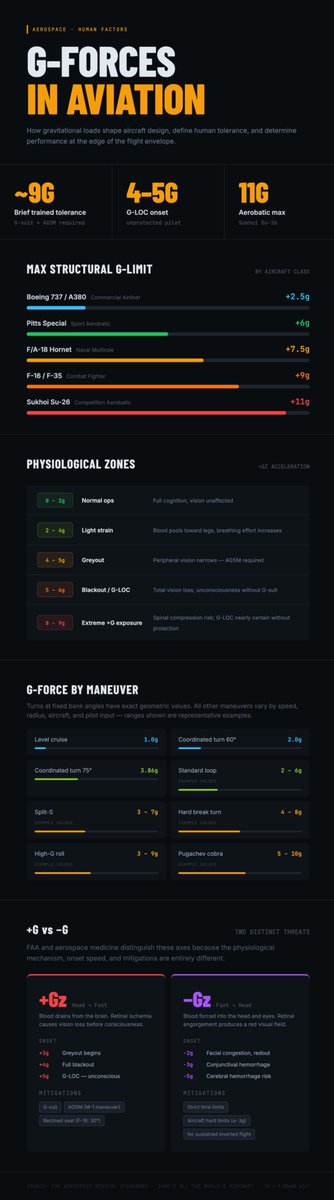
A fighter jet can survive 9G. Can the pilot?
At high +Gz, the aircraft is fighting structural load while the pilot is fighting physiology.
Blood is pulled toward the legs, vision can begin to narrow, and without the right protection and training, consciousness itself becomes the limiting factor.
This is what happens as both the machine and the pilot are pushed toward the edge of the flight envelope.
@SkapeGote@XCosmosOfficial In my mind, there would be no space for change to take place without time. When would it change? You could have the how, the why, but what about the when?
The wild part isn’t just detecting a single phonon, it’s keeping the resonator coherent long enough to watch that quantum of vibration disappear in real time.
At this scale, the challenge is fighting noise and decoherence long enough for the physics to become observable. Even a 2-millisecond lifetime can reveal a lot when the system is operating that close to its limits!
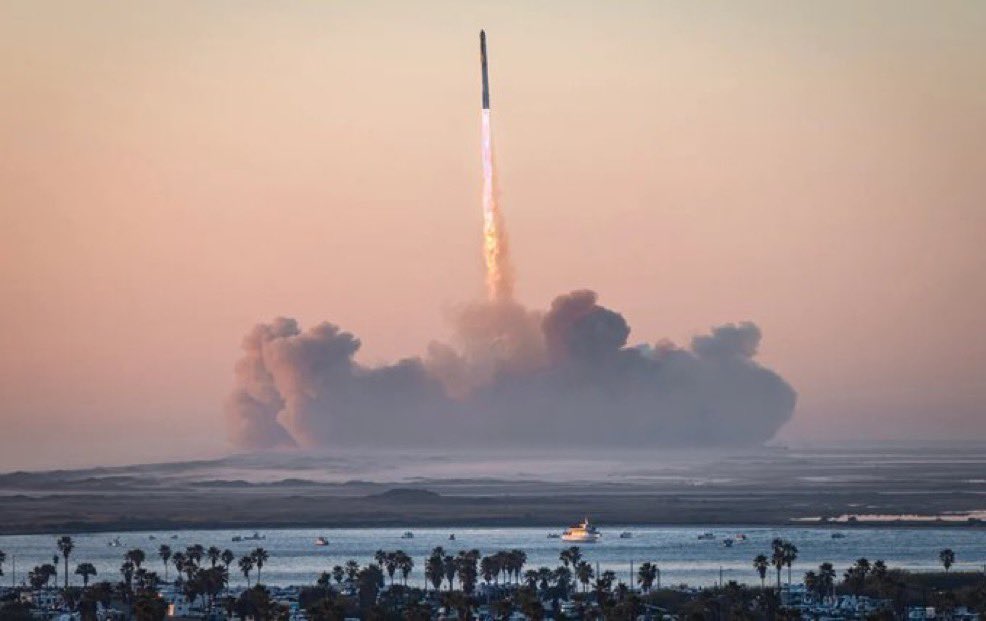
The hard part isn’t just docking two Starships — it’s moving cryogenic propellant reliably in microgravity while managing pressure, boil-off, slosh, and thermal control.
If SpaceX can make orbital refueling routine, it changes the scale of missions we can realistically attempt beyond Earth. 🔥
I’m hoping for the best with this test.
The interesting part isn’t just the object recognition.. it’s coordinating perception, planning, balance, and whole-body control at the same time.
Household tasks look simple to us, but for a humanoid robot they’re a constant exercise in managing uncertainty, contact forces, and motion while the entire system is under load.
Gamma-ray bursts are some of the most violent events in the universe, but catching the first moments is the hard part.
If StarBurst can detect those signals quickly enough, it could give astronomers a much clearer look at what happens when neutron stars merge — right when the physics gets most extreme.
What happens when a spacecraft coming home from the Moon suddenly meets the atmosphere?
That orange glow isn’t the capsule burning.
At reentry speeds, the air in front of Orion is compressed so violently that it heats to extreme temperatures and begins to ionize, creating the glowing plasma surrounding the spacecraft.
The heat shield has to manage that enormous thermal load while Orion sheds the energy it built up traveling through space.
Reentry isn’t just about slowing down.
It’s about turning an incredible amount of speed into heat — without letting that heat destroy the spacecraft.
This is Orion, UNDER LOAD.
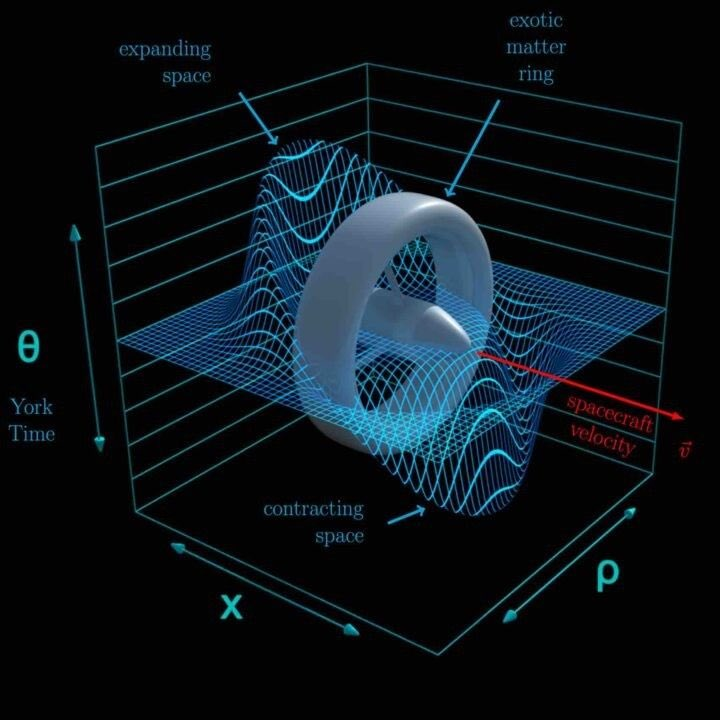
Warp-drive concepts can exist within general relativity, but the real obstacle is creating and controlling the required spacetime geometry without needing impossible amounts of energy or exotic matter.
That gap between “allowed by physics” and “engineerable” is what makes this so fascinating.
The word “reliable” is doing a lot of work here.
Quantum computers can already do impressive things in controlled settings, but fault-tolerant operation at useful scale is the real threshold. If this pushes error correction and logical-qubit performance forward, that’s where quantum starts becoming a serious scientific tool instead of just a lab experiment.
Such a wild piece of engineering because it doesn’t just hover, the aircraft has to completely redistribute thrust to make it happen. The lift fan, vectoring rear nozzle, and control system all have to work together to keep the jet balanced. Watching that much machinery coordinate in a few seconds never gets old 🔥
The AI race is becoming an infrastructure race.
The limiting factor isn’t always the chip.
It’s whether a data center can deliver enough electricity, move enough data, and remove enough heat to keep thousands of accelerators operating at full performance.
Large AI systems depend on an entire physical stack:
• high-density power delivery
• transformers and switchgear
• high-bandwidth networking
• enormous memory throughput
• increasingly aggressive liquid cooling
• utility and grid capacity capable of feeding it all
A GPU that has to throttle because of heat — or sits idle waiting on data — is just extremely expensive silicon that isn’t doing useful work.
That means the next major leap in AI won’t come from algorithms alone.
It will also come from better cooling, power electronics, chip packaging, networking, and the infrastructure surrounding the compute.
AI may look like software.
At scale, it becomes a physical system under load.
This is exactly the kind of competition that makes rocket propulsion so exciting. Two engines can look similar from the outside, but the real story is in combustion stability, cooling, turbomachinery, manufacturing, and reusability.
Really curious to see how Tianhuo-21 stacks up once more real test data comes out.
@LMSpace Mach 5+ is where speed stops being the only challenge... Heat, materials, propulsion, and control all start fighting you at once.
Sustaining that kind of performance is what makes hypersonics so fascinating. Can’t wait to see how far this technology gets pushed.
@AlexHollings52 That tour is going to be incredible. The F-35 gets all the attention, but seeing the manufacturing system behind it might be even more impressive! Holding those kinds of tolerances at production scale is absurd. I’m definitely a little jealous of this one.
This is genuinely mind-blowing to think about. The idea of bypassing damaged parts of the visual system and sending visual information directly to the brain feels straight out of science fiction. Even low-resolution vision would be life-changing for someone who can’t see today. If the technology keeps improving from there, the possibilities are incredible!
Nearly 100,000 RPM from something this small is wild, and the fact that it’s still using the same basic Brayton-cycle principles as much larger jet engines is even better! I’d love to see how far compact turbines like this can push VTOL and high-speed drone designs over the next few years