There was a man in my village whose family had sold white wool for generations. It was more than a business; it was a legacy. Their name had become synonymous with quality, honesty, and trust. Because of the reputation built by his forefathers, the business flourished, customers remained loyal, and the family prospered without needing to depend on others.
One day, a merchant who sold red oil arrived in the village looking to expand his trade. He needed someone respected and experienced in business to help him gain acceptance among the people. After making inquiries, he discovered the white wool merchant. The man's reputation was already established, saving him the difficult task of building trust from scratch.
The oil merchant approached him with an attractive offer. Blinded by the promise of immediate gain, the white wool merchant accepted without considering the consequences. He failed to think about his reputation, his legacy, the generations before him, and those who would come after him.
For a while, the arrangement seemed profitable. The oil merchant made his money and eventually moved on, leaving the village behind.
But the damage remained.
The people no longer viewed the white wool merchant the same way. Doubt had entered their minds. They began to believe that the white wool had been stained or adulterated by the red oil. Trust, once lost, proved difficult to regain. Sales declined, and the family's generations of goodwill began to erode.
In pursuit of temporary profit, the man had jeopardized a generational inheritance. He traded a lasting legacy for a fleeting reward and, in doing so, put the future of those who would come after him at risk.
Not every profitable opportunity is worth accepting. Some associations cost more than they pay. A reputation built over generations can be destroyed in a single moment of poor judgment.
A man must know who he is, what he represents, and what he cannot afford to compromise.
We are supporting @PremierLeague's Together Against Suicide campaign, encouraging people to talk and know where to turn when they need help.
Starting today, fans can check-in at our space at Old Trafford where they can have a chat or get more info about receiving support.
🚨 Yan Diomande: “The internet allows you to say anything you want from behind the screen to people you would never have had the courage to say anything to face-to-face.
But don't forget that words have consequences, and the virtual world does not protect you from responsibilities.
This December, many people will realise that everything doesn't unpunished and that everyone will have to take responsibility for their actions.
The masks will fall.”
Leadership Beyond Identity: The Courage to Serve and Defend Humanity.
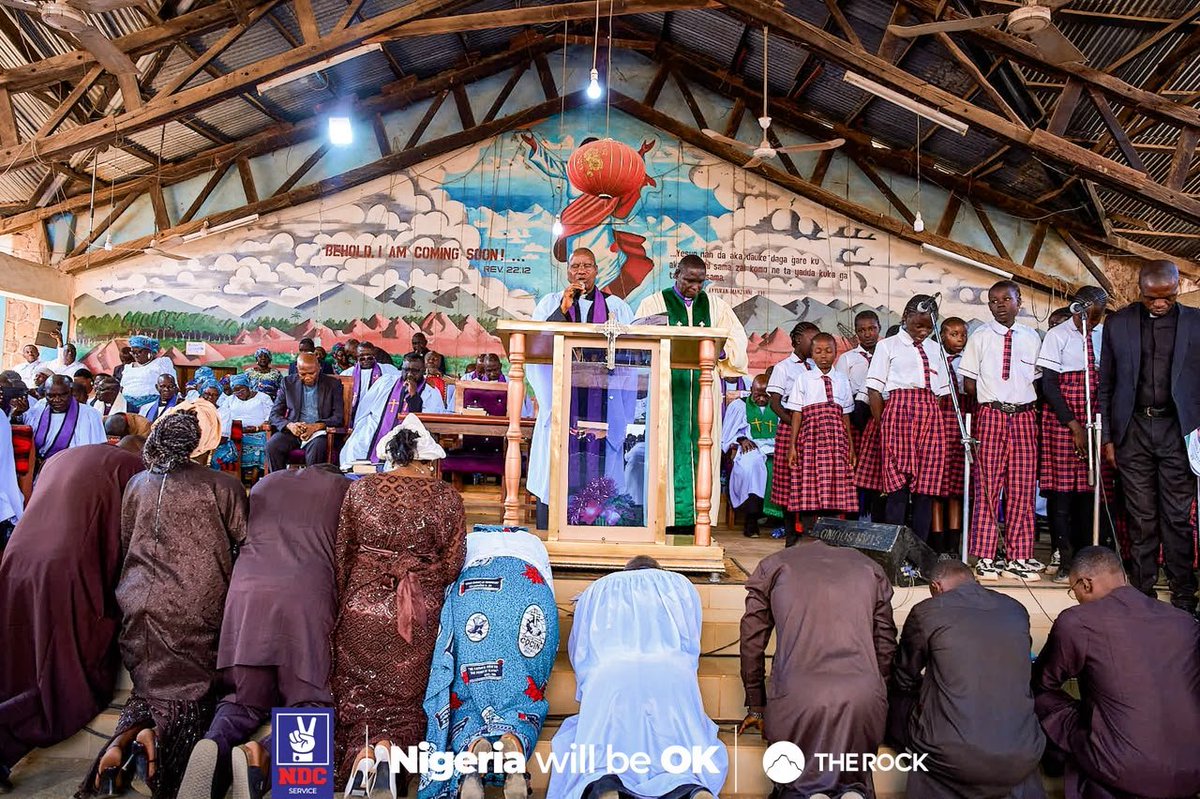
Yesterday, I was honoured to attend the retirement service of Reverend Ezekiel Dachomo in Plateau State. Although it was my first opportunity to meet him personally, I have long admired his courageous advocacy, his compassion for victims of violence, and his steadfast dedication to truth, justice, and the sanctity of human life.
Rev. Dachomo’s example reminds us that faith is expressed not only through what we profess in places of worship, but also through the courage to protect the vulnerable, challenge those in power with the truth, and uphold what is right, even when doing so is difficult or unpopular. The conclusion of formal service should not mark the end of one’s commitment to truth, justice, and humanity.
I also used the occasion to consider the leadership and choices Nigeria requires. Those who support me should not do so because I come from a particular tribe, belong to a particular religion, or benefit from personal sentiment. Their support should be based on my record, character, competence, and the principles I have consistently demonstrated in public service. Nigeria must move beyond identity-based politics and assess leadership according to the ability to deliver results, the integrity to account for public resources, and the compassion to serve those who depend most on government.
Our faith, ethnic identities, and political affiliations must never be used to divide us. Instead, they should reinforce our common humanity and our shared duty to create a nation in which every Nigerian, regardless of background, can live with peace, dignity, and opportunity.
I remain firmly convinced that Nigeria does not lack resources or potential. What we require is leadership that recognises public office as a responsibility rather than a privilege, and as a call to serve rather than an avenue for personal enrichment.
May God continue to strengthen Reverend Ezekiel Dachomo and all who, in their respective callings, remain steadfast in upholding truth, justice, and the dignity of every human being. May He also grant us the wisdom and courage to build the Nigeria we all deserve.
A New Nigeria is POssible. -PO
We are fully prepared to pursue legal action over the allegations made by this foreign tourist concerning the Emir of Daura.
We will not take lightly any claims that are false, defamatory or intended to damage the reputation of the Emir, our cultural heritage and the traditions of Northern Nigeria.
We believe in truth, accountability and due process. If the allegations are proven to be fabricated, those responsible should be held accountable through the appropriate legal channels.
Our culture deserves respect, and justice must prevail.
Another Tinubu supporter leaves Nigerians stunned on live TV! 🙄
“Nigerians are fighting the president who is fighting for them. Nigeria is the cheapest country in the world.” — Seid Ademu, APC supporter.
I have heard many astonishing statements this year, but this particular one stands out.
Another disgrace hits Tinubu's lieutenant 😞
“What has Bola Tinubu’s government achieved? Which of his promises has he actually fulfilled?”— Seun
And his guest struggled to give a convincing answer. He stuttered, stumbled and couldn’t clearly point to any tangible achievement.
Meanwhile, Tinubu himself is granting pre-recorded interviews to foreign media from the comfort of Aso Rock, while his surrogates face the tough questions at home.
NIGERIANS, GO AND VERIFY (7)
LIFTING THE VULNERABLE : ANAMBRA’S BLUEPRINT FOR POVERTY ALLEVIATION AND SUSTAINABLE EMPOWERMENT (2006–2014)
Economic growth that does not translate into improved living conditions for ordinary citizens is incomplete. This is one of our fundamental concerns with President Bola Ahmed Tinubu's government. Development must ultimately be measured by its impact on human lives, particularly those of the poor and vulnerable. This was underpinned by the Anambra Integrated Development Strategy (ANIDS). We believed that infrastructure, education, healthcare, agriculture, and social protection must reinforce one another. Poverty was not merely a shortage of money; it was also a lack of access to opportunities, productive resources, and the basic conditions necessary for a decent life.
Our poverty alleviation strategy, therefore, went beyond temporary handouts. It focused on restoring dignity, creating economic opportunities, and equipping vulnerable citizens with the means to become self-reliant.
Our approach attracted recognition beyond Anambra. In May 2010, Magnus Kpakol, then National Coordinator of the National Poverty Eradication Programme (NAPEP), commended our commitment to poverty reduction, declaring: “We are prepared to support you in the excellent work you are doing in Anambra State.”
1. POVERTY MAPPING: KNOWING WHERE POVERTY LIVES
We recognised that poverty could not be effectively addressed without knowing where it was concentrated and what caused it. We, therefore, undertook a poverty-mapping exercise to identify the most deprived local government areas and communities.
The exercise revealed that some of our poorest communities were also important food-producing areas. Their challenges included poor access to markets, agricultural inputs, electricity, water, and other economic opportunities.
Areas including Anambra West, Orumba South, Awka North, and Ogbaru required particular attention. The findings informed our development priorities, enabling us to direct roads, agricultural support, and social interventions toward neglected communities.
2. EMPOWERING WOMEN, WIDOWS, AND COOPERATIVES
We recognised that rural women, widows, and indigent households bore a disproportionate burden of poverty. Across the 21 local government areas, we provided financial assistance and productive support to thousands of beneficiaries.
Our administration provided financial assistance to support the establishment and expansion of small businesses and farming activities. We also introduced revolving loan schemes to promote enterprise development, economic self-reliance, and improved livelihoods.
We distributed productive equipment, including sewing machines, generators, ovens, cookers, hair dryers, shoe-making machines, and welding equipment. The objective was to help beneficiaries establish sustainable livelihoods rather than remain dependent on government assistance.
We also promoted access to microcredit and cooperative financing to enable small entrepreneurs to expand their businesses, improve their incomes, and create employment.
Our philosophy was simple: rather than merely giving people money to survive today, the government should help them acquire the means to earn a living tomorrow.
3. AGRICULTURE AND FADAMA: MAKING RURAL COMMUNITIES PRODUCTIVE
Agriculture was central to our poverty-reduction strategy because many rural households depended on farming.
Through partnerships with the Federal Government, the World Bank, and other development partners, particularly under the FADAMA programme, we supported farmers with finance and productive assets.
In November 2009, our administration disbursed millions to FADAMA Community Associations across the state. By October 2010, the National FADAMA office was commending Anambra’s commitment. Its National Project Coordinator, Buka Tijjani, represented by Charles Ugwuona, described Anambra as the leading state in the programme.
NIGERIANS, GO AND VERIFY (5)
CONNECTING COMMUNITIES, UNLOCKING PROSPERITY: OUR ROAD INFRASTRUCTURE RECORD
Peter Obi
Another critical foundation of development is infrastructure, particularly road construction and maintenance.
Infrastructure is not just about constructing roads, bridges, and buildings. It is about connecting people, opening up economic opportunities, reducing poverty, and enhancing the well-being of ordinary citizens. A road that connects a farmer to a market, a patient to a hospital, a child to a school, or a manufacturer to a distribution centre is an investment in economic and human development.
This thinking informed our approach under the Anambra Integrated Development Strategy (ANIDS). We set out to connect all 177 communities in the State with motorable roads, paying particular attention to rural communities that had suffered years of neglect. Our objective was to build an interconnected road network that served the entire State, rather than concentrate projects in major cities or politically important locations.
I. The Road Revolution: Over 900 Kilometres of Road Projects
Between March 2006 and March 2014, during my two-term tenure in office, my administration asphalted over 900 kilometers of roads. These projects were deliberately distributed across the three senatorial zones of Anambra State to connect communities, facilitate commerce, and enhance transportation.
I acknowledge that Dr. Chris Ngige started the road revolution in Anambra State, and I commend the efforts his administration made in initiating several road projects. When we assumed office in 2006, we recognised the importance of continuing worthwhile projects rather than abandoning them simply because they had been initiated by a previous administration.
Among the roads we inherited from Ngige and completed were the Owerri–Ezukala–Umunze–Umuchu–Amesi–Uga–Igboukwu Road, where his administration stopped around Umuchu and we continued through Amesi, Uga, and onward to Igboukwu; the Iseke–Orsumoghu–Ukpor–Utu–Nnewi–Awka-Etiti Road, where his administration stopped at Ukpor and we continued towards Awka-Etiti; and the Ideani-Otuocha where work stopped around Awkuzu before our administration continued the project from Nteje to Otuocha.
There were also roads, such as Mmili John and Nkwelle Ezunaka bypass, which had been awarded before we took over, but on which no payment had been made by the time we assumed office. We took over these projects, assessed their status, and proceeded with the work. This was our approach to continuity in governance: acknowledging what had been started, distinguishing between projects merely awarded and those on which work and payment had actually commenced, and ensuring that important infrastructure projects were carried forward.
Some of the major roads and corridors included Amansea–Ebenebe Road; Aguleri–Umueze Anam–Mmiata Road; Nnewi–Ozubulu–Okija Road; and the Old Onitsha–Awka Road.
Other important projects included:
Awka and its Environs: Zik’s Avenue, Awka; Adazi-Nnukwu–Obeledu–Neni Road; 33 Junction–Nwafor Orizu College of Education Road; roads within the Awka Government Reserved Area (GRA); and the Old Nkpor–Amawbia Road.
Nnewi and Surrounding Communities: Nnobi–Nnewi Road; roads within Nnewi town; Akwaeze–Oraeri–Igboukwu Road; and Ekwulobia–Nkpologwu–Akpo–Achina–Umuchu Road.
Onitsha and its Environs: Bridge Head–Umunya Road; over 30 roads in other parts of Onitsha; more than 25 roads within the Onitsha GRA; over 20 stone-based roads within Harbour Industrial Estate, Onitsha; and the Nkwele Ezunaka Bypass.
Other Communities and Strategic Corridors: Awgbu–Amaokpala Road, with the Odor Bridge; Aguluezechukwu–Ogboji–Ajalli Road; Awkuzu–Igbariam Road, passing through the university; Owerri–Ezukala–Umuchukwu Road; Ugwuoba–Obosi Road; and Lilu Road.
NIGERIANS, GO AND VERIFY (4)
Building a Healthy Nation: Our Health Sector Record in Anambra
Peter Obi
In the previous instalment of this series, I discussed our investments in education and explained why we considered human capital development central to the progress of Anambra State. Another sector that received considerable attention under our administration was healthcare. We understood that education gives people the tools to build their future, while good healthcare enables them to live healthy and productive lives.
When we assumed office in 2006, the healthcare system in Anambra faced serious challenges. Our health institutions required rehabilitation, medical equipment was inadequate, many communities lacked accessible primary healthcare facilities, and several medical training institutions had not secured accreditation. We therefore decided to approach healthcare as a comprehensive development priority, rather than concentrate resources on a few prominent hospitals.
Under our Anambra Integrated Development Strategy (ANIDS), we invested simultaneously in primary, secondary, and tertiary healthcare, medical training, maternal and child health, medical equipment, and partnerships with religious and private institutions.
Our approach was simple: healthcare should be accessible to people wherever they live, and the quality of treatment they receive should not depend on their status or whether they live in a city or a rural community.
Building a Teaching Hospital and College of Medicine
One of our most significant achievements was the establishment of the Chukwuemeka Odumegwu Ojukwu University Teaching Hospital at Awka.
We initiated, constructed, equipped, and secured accreditation for the institution, building it virtually from scratch. When I discovered that the state university was admitting medical students without having a teaching hospital through which they could complete their training, possibly with the intention of assigning them elsewhere, I considered the situation unacceptable. We therefore embarked on the construction of a modern teaching hospital to address this deficiency.
We constructed more than 25 buildings and provided facilities for the College of Medicine, laboratories, pathology, accident and emergency services, pediatrics, male and female wards, special wards, consultant clinics, and other essential departments.
We also provided vehicles, including ambulances and staff buses, to support the hospital and the College of Medicine as part of the accreditation requirements.
The objective was not merely to build another hospital but to establish an institution capable of providing specialist healthcare while training the next generation of Nigerian medical doctors.
Rehabilitating General Hospitals
We also recognized that a teaching hospital alone could not meet the healthcare needs of the population. General hospitals had to function effectively because they provide the essential link between primary healthcare and specialist treatment.
We rehabilitated and resuscitated 15 general hospitals across the three senatorial zones of Anambra State. We undertook substantial improvements in their buildings, wards, equipment, and general facilities.
In 2013, we provided ₦400 million for the ongoing renovation of 11 selected general hospitals, alongside other healthcare interventions.
Our intention was to ensure that people did not have to travel unnecessarily long distances to obtain basic secondary medical care.
Taking Primary Healthcare to the Communities
We believed that the best healthcare system is one that prevents illnesses and treats people early, rather than one that waits until minor health problems become emergencies.
That informed our extensive investment in primary healthcare. We built over 120 primary healthcare centers across communities in the 177 autonomous communities of Anambra State and rehabilitated existing facilities.
I unequivocally deny the claim that Nigeria’s government nor anyone else in Nigeria paid me $4.5 million. I went to Nigeria to interview President Tinubu @officialABAT for parts of a documentary and see Nigeria for myself. This SMEAR CAMPAIGN can make noise, but can’t change the facts or stop me from speaking the truth.
NIGERIANS, GO AND VERIFY (3)
Building the Future Through Education
Peter Obi
In the first two instalments of this series, I explained how we approached the task of building strong institutions and laying a solid foundation for the development of Anambra State. One of the most important institutions we invested in was education.
For me, education was not a political game or a convenient political promise. Even before I ventured into politics, I had always regarded it as the foundation of meaningful development and the most enduring investment any government can make in its people. I believe that the future of any society depends largely on the quality of its educational institutions, teachers, learning environment, and opportunities available to its young people.
This conviction informed our decision to invest across the entire educational spectrum, from primary schools to universities, technical institutions, and adult education.
Basic and Secondary Education
One of our first major decisions was to return mission and privately owned primary and secondary schools to their original proprietors while retaining government support. We also provided billions of naira to assist in rehabilitating the returned schools, restoring the partnership between government and religious institutions that had historically contributed to educational excellence.
This policy attracted international attention. Professor Paul Collier, the Oxford economist and World Bank consultant, led a World Bank-commissioned study of Anambra’s educational transformation. His team examined our decision to return schools to their original missionary owners while retaining government responsibility for funding teachers’ salaries and supporting infrastructure. The team described the partnership model as a revolution in public service delivery and recommended it as a model that could be replicated by other Nigerian states and developing countries. We believed then, as we do now, that government does not necessarily have to own every institution to discharge its responsibility effectively. What matters is ensuring that every child has access to quality education.
For those who claim that we built no schools, I invite them to verify our records. We constructed five-classroom blocks in virtually all of the 177 communities in Anambra State, one of the most extensive community-based school infrastructure programmes undertaken by any state government. The town union chairmen and community leaders of that period can attest to this.
We also renovated hundreds of dilapidated schools, including some where trees had literally grown through abandoned buildings. Comprehensive Secondary School, Onitsha, and Oraukwu Grammar School are examples.
Beyond infrastructure, we distributed approximately 40,000 computers to schools, including more than 22,500 HP laptops. We equipped secondary schools with Microsoft Academies and connected schools across the state to the internet. We supplied generators, established and stocked libraries, revived school sporting activities, and installed boreholes in over 300 schools, including all girls’ schools. We also provided funding to support sporting activities in all our secondary schools.
These technology investments attracted remarkable international recognition. Mr Fabrice Campoy, Managing Director of the Personal Systems Group at HP Inc., described our procurement and distribution of over 22,500 HP laptops as the biggest project of its kind in the Middle East and Africa. Similarly, Mr Ken Spann, then Country Manager and Head of Microsoft Nigeria, described the establishment of Microsoft Academies in more than 500 Anambra secondary schools as the most extensive deployment of its kind in Africa at the time.