Middle East: UNESCO Deploys First Emergency Measures Amid Escalating Violence
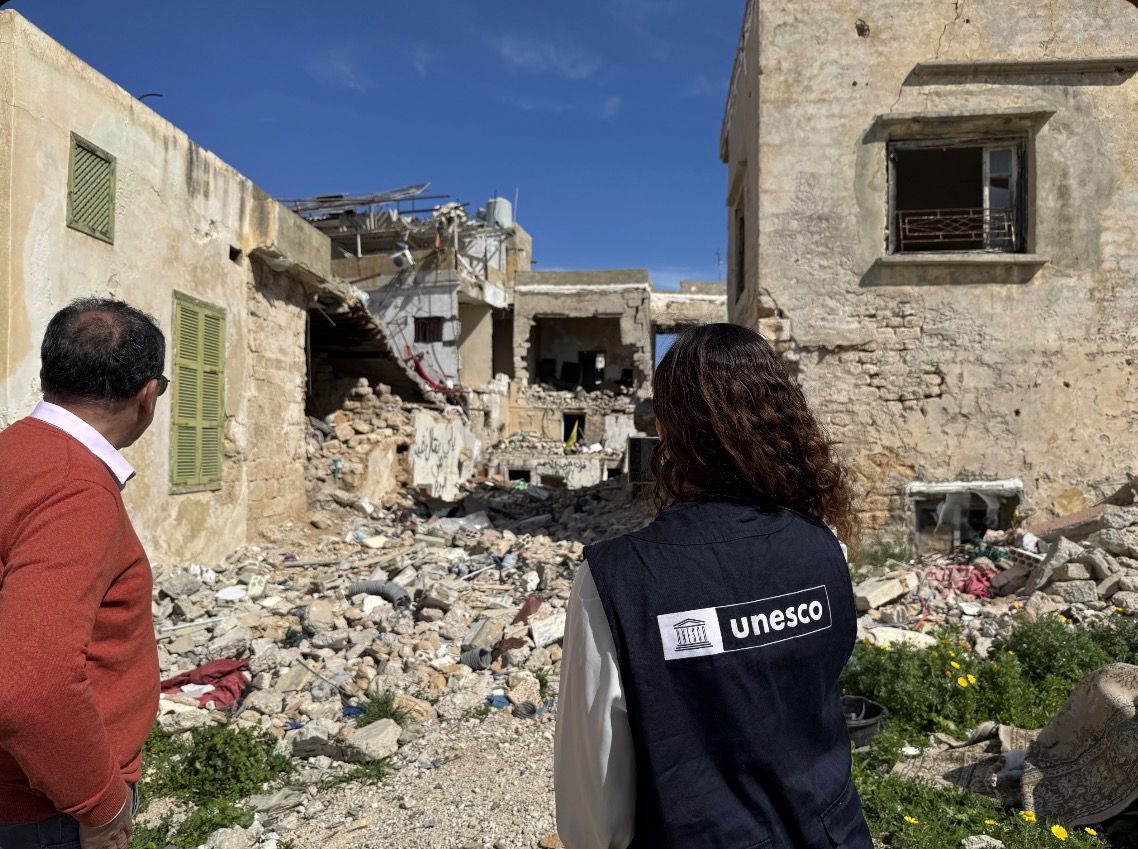
In the face of escalating violence across the Middle East, @UNESCO is providing emergency support to protect education personnel and institutions, safeguard culture professionals and at-risk heritage, and reinforce the safety of journalists.
While discussions with Member States continue to expand and tailor interventions, concrete activities are already underway.
Read more: https://t.co/SJz4u5Wqts
More students are entering higher education than ever before.
Yet completion rates are rising much more slowly. The global gross graduation ratio increased from 22% in 2013 to just 27% in 2024.
UNESCO’s Higher Education Global Trends Report highlights why access alone is not enough.
👉 https://t.co/uSgsEPfeWv
Access to drinking water is a basic need, but responsibility for securing it is not shared equally.
The 2026 UN #WorldWaterReport, coordinated by UNESCO on behalf of @UN_Water, explores the link between water and gender equality.
🔎 https://t.co/xXR9F0rA5O
The right skills can unlock a world of opportunities.
Through its global UNEVOC Network of 250+ TVET institutions across 150 countries, @UNEVOC supports skills development for learners and workers worldwide.
With Germany as host country and major donor, this impact continues to grow.
https://t.co/zlhJGOvPdP @GermanAmbUNESCO@germanydiplo
In Syria, protecting heritage is part of rebuilding.
At the National Museum of Damascus, @UNESCO is preserving evacuated objects, restoring and digitizing documentary heritage, and training Syrian experts, with support from Germany and other partners.
Working hand in hand with Syrian institutions, these efforts - part of a broader Action Plan for Syria - strengthen recovery and resilience through culture and knowledge.
Learn more: https://t.co/SfAyRqXPC9 @GermanAmbUNESCO
🏛️ Museums help connect people with history, culture and shared memory.
On the occasion of @MuseumWeek 2026 (1–7 June), @UNESCO is hosting a series of webinars showcasing practical resources, guidelines and initiatives supporting museums in a rapidly evolving digital landscape.
🔗 Full programme: https://t.co/i8xtEGWK2y #MuseumWeek
How does heritage live and evolve along the Silk Roads today? 📸
UNESCO invites young people aged 14–25 to capture “Living Heritage Along the Silk Roads” through the 2026 Youth Eyes on the Silk Roads Photo Contest.
Submit by 30 June 2026: https://t.co/CwBURs7BB6
Globally, 43% of young people aged 18–24 are enrolled in higher education. In sub-Saharan Africa, that figure drops to just 9%.
Completion rates reveal similar disparities.
UNESCO’s Higher Education Global Trends Report highlights the urgent need to expand equitable access to higher education worldwide.
👉 https://t.co/uSgsEPfeWv
Quantum innovation is accelerating. But without investment in skills and education, access to the opportunities it creates may remain out of reach for many.
Explore the full analysis in UNESCO’s Global Report of the International Year of #QuantumScience and Technology: https://t.co/zLBlrdDYEg
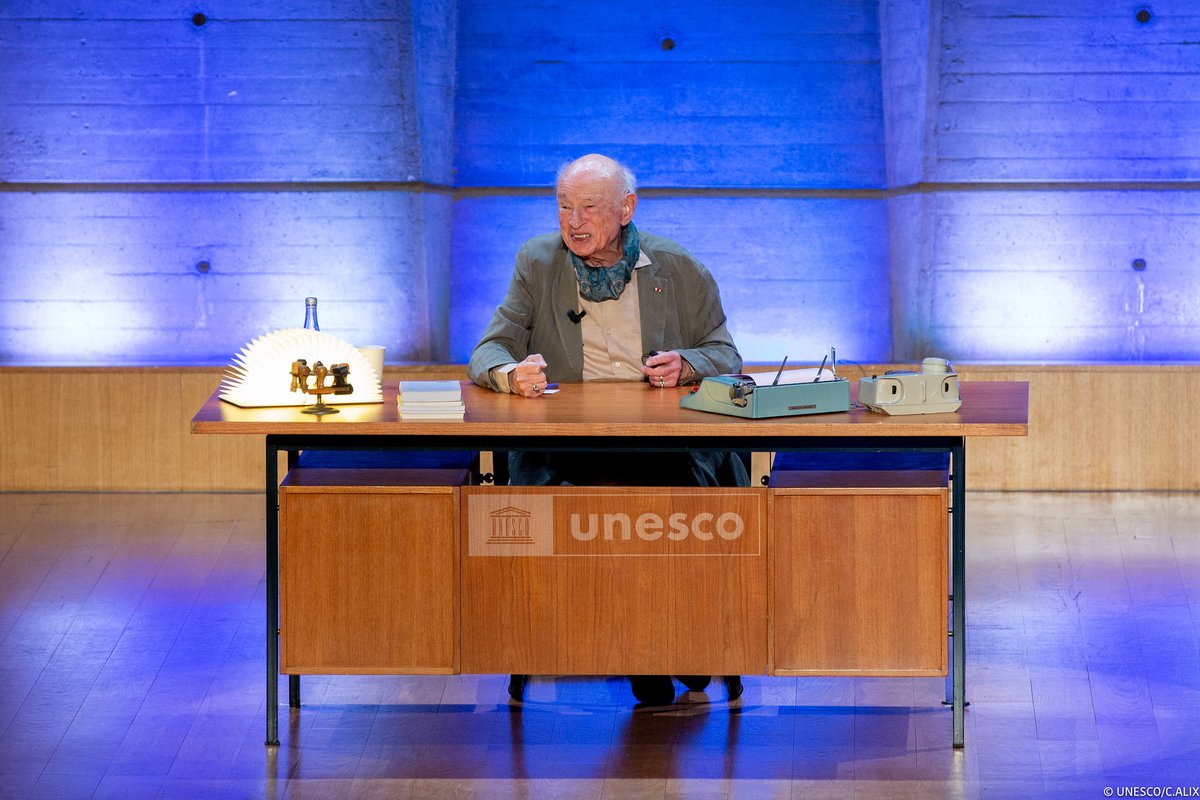
➡️ Watch Edgar Morin’s keynote lecture delivered at UNESCO on the occasion of his 100th birthday:
https://t.co/ZU2RtoptJf
➡️ Explore Edgar Morin’s articles and reflections in the @UNESCOCourier:
https://t.co/kxT5j2X1Wu
➡️ Rediscover his landmark work on the future of education, published with UNESCO in 1999 and more relevant than ever today:
https://t.co/CFMCkHhABh
UNESCO pays tribute to the memory and immense philosophical legacy of Edgar Morin, a towering figure of thought and a close friend of @UNESCO.
Through his articles, books, and lectures —always marked by immense generosity— Edgar Morin gave voice to nuance, complexity, and the essential dialogue between disciplines, standing against the dangers of extreme specialization.
He offered us the exceptional gift of delivering UNESCO’s centenary keynote lecture, spanning a century of reflection and engagement—perhaps the best introduction for those discovering his work today.
Edgar Morin’s intellectual journey is a method for the future: an art of patience and a true initiation into the art of human creativity and reflection, at a time shaped by machines and artificial intelligence.
What does it mean to learn through culture and the arts?
During the first @UNESCO Culture and Arts Education Week, students from the Princeton High School Orchestra reflected on creativity, collaboration and the power of the arts to connect people across cultures.
In the context of the recent aggravation of hostilities in Lebanon, @UNESCO is deeply alarmed by the verified damages affecting Chama’ Citadel as well as the reported strikes in the immediate vicinity of Beaufort Castle, both properties provisionally inscribed on the List of enhanced protection of the 1954 Convention for the Protection of Cultural Property in the Event of Armed Conflict.
#UNESCO is also concerned about the state of conservation of Tyre, a UNESCO World Heritage Site and a site under enhanced protection, in the light of recent alarming developments that may expose the site to further damage and potential looting.
UNESCO strongly condemns unlawful attacks against cultural property. Sites under “enhanced protection” benefit from the highest level of legal protection against attack and use for military purposes. Damage to such institutions deprives communities of access to culture and shared spaces that are essential for recovery and social cohesion.
UNESCO and its Regional Office in Beirut will continue to work with the Lebanese authorities in assessing damage to cultural institutions and in reinforcing urgent safeguarding measures within its mandate.
https://t.co/fTXCua8gAz
In a room filled with analogue tapes, Somalia’s memory lives on.
For decades, the Radio Mogadishu archive has preserved voices, music, poetry and stories that shaped the country’s history. But memory can fade. Time, climate and fragile formats put these recordings at risk.
By safeguarding and digitising one of East Africa’s most significant audio archives, #UNESCO is helping ensure that Somalia’s voices continue to speak across generations.
Through the Memory of the World Programme-JFIT initiative, funded by the @JapanGov, this work is helping protect documentary heritage and keep cultural memory alive.
https://t.co/6yLgiLdwMc
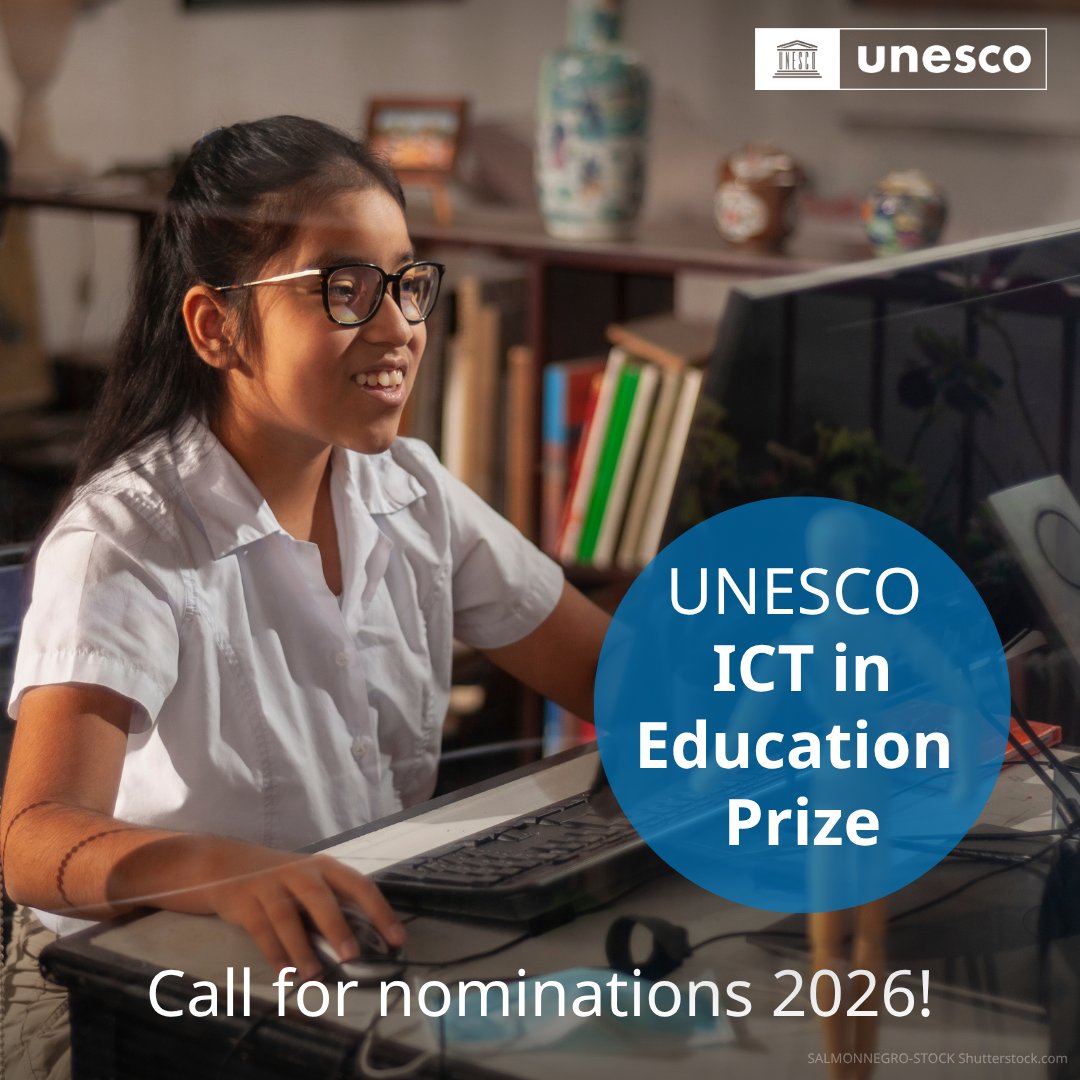
As AI transforms education, strengthening critical thinking, creativity and human agency has never been more important.
UNESCO’s 2026 #ICTPrize will recognise innovative initiatives using AI to support meaningful learning experiences.
📣 Apply before 29 May: https://t.co/2AirMgWtso
In 2000, around 100 million students were enrolled in higher education worldwide. By 2024, that number had reached 269 million.
A historic expansion. Yet important inequalities remain.
👉 Discover more in UNESCO’s Higher Education Global Trends Report: https://t.co/CF5nlFcMnL
.@UNESCO and the #TUICareFoundation have launched a new global partnership on sustainable tourism in and around UNESCO #WorldHeritage destinations, supporting local communities, safeguarding cultural heritage and promoting more inclusive and responsible tourism development.
Read more: https://t.co/bUoSjDkaqj
@TUISustainable
South Africa takes on leadership of the SDG 4 High-Level Steering Committee at a pivotal moment for global #education. H.E. President @CyrilRamaphosa will serve as Co‑Chair for 2026–2027, alongside @UNESCO_DG Khaled El‑Enany.
Together, they will accelerate global action for inclusive and equitable quality education. Because learning is at the heart of sustainable development, peace, equality and resilience.
The journey begins on 10 July with the Transforming Education Summit+4, a key milestone on the road to 2030 and beyond.
👉South Africa's Leadership: https://t.co/O0jYfAs69K
👉Education Summit + 4: https://t.co/KLmTCKfhog
#ForThePeople #TransformingEducation #LeadingSDG4 @Education2030UN