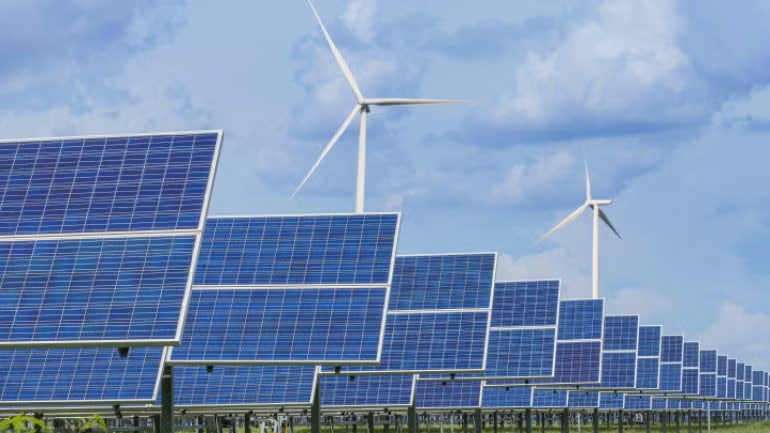
We are a next-generation international energy platform, creating clean, reliable, and profitable energy by combining solar, wind, and hydrogen technologies.
Google is betting on renewable energy in its latest data center projects
Google has announced the establishment of the Mitner Energy Center, which includes a new data center to be built in Gray and Roberts counties in Texas, USA, in a move aimed at enhancing digital infrastructure and supporting the company's growing services.
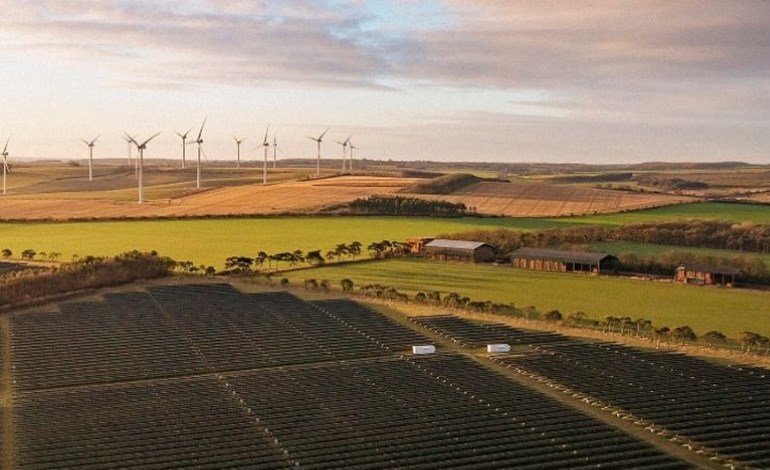
Google clarified that the project includes an integrated data center with wind and solar energy systems and battery storage, with a capacity exceeding one gigawatt, making it one of the projects that combines technology and renewable energy in one location.
This project reflects Google's orientation towards expanding its operational capabilities while relying more on clean energy sources.
Trump’s actions facilitate renewable energy
In the U.S., renewable energy is already cheaper and easier to deploy for new sources of electricity. No new fossil fuel plants are planned in 2026, so 100% of new capacity will be renewable.
Globally, most countries will be motivated not only by the lower cost of renewables, but also for increased energy security. Imported fossil fuels are subject to the uncertainty of global politics and whims of dictators. In contrast, solar, wind and hydropower are the domestic fuels of renewable energy. This fact should accelerate not only new electricity capacity, but also the retirement of existing fossil fuel plants.
China, with their investment in renewable energy technology, is already profiting economically and politically, by helping other countries with this transition.
US renewables generation jumps 11%
Renewable energy sources increased US electrical generation by more than 11% in the first quarter of 2026.
Utility-scale solar generation rose by 23.9% during the period, while hydropower increased by 21.9%, small-scale solar by 11.9% and wind by 2.1%.
Utility-scale battery energy storage capacity increased by 8.5% while coal generation fell by 11.4%.
Wind and solar, including small-scale solar, provided 20.3% of domestic electrical production in the first quarter.
The combination of wind and solar out-produced nuclear power by 14.3% and coal by 31.1%.
The US Energy Information Administration projects utility-scale renewable energy capacity will increase by 57,080.6MW between April 2026 and March 2027.
Utility-scale solar is forecast to add 42,626.1MW during the period while wind capacity is expected to grow by 14,157.4MW, including 4,155MW of offshore wind.
Dear Union Green Power Investors,
We have completed a key stage in scaling our energy ecosystem. The company is moving to a new level of technological architecture by activating Data-Layer Integration. The platform has now transitioned from a planned yield mode to a mode of direct synchronization with market data.
Infrastructure technological upgrade: We have integrated a High-Frequency Data Layer. The platform’s financial engine is now directly synchronized with IoT sensors at our production facilities through low-level APIs.
Spot-to-Wallet technology and its advantages: Thanks to the activation of the Automated Liquidity Routing protocol, the profit accrual process has become fully automated:
Direct Market Feed: The system records spot market transactions in real time. When energy is sold at market price, the transaction layer instantly фиксирует profit.
Dynamic Yield Attribution: The algorithm automatically distributes margin profit from each successful transaction among investor pools. Accruals are direct Settlements initiated by the very fact of energy transfer into the grid.
Layer-2 Execution Speed: An isolated data processing layer minimizes system response time when updating market quotes and conversion rates.
Dynamic Asset Sync: The protocol optimizes yield updates, ensuring instant data synchronization in your personal account.
Access infrastructure: To ensure uninterrupted operation under high-load conditions, we have transitioned to an institutional standard of domain flow separation:
https://t.co/KHQ0oDFdT9: The primary infrastructure base. This is where the integration of upgraded data processing protocols with increased throughput capacity is being finalized.
https://t.co/BvE2tbgwGm: A fully operational High-Availability Data Layer. This is an identical access point where the Dynamic Asset Sync stack has already been activated.
Important clarification: the use of the .net domain is not a temporary measure, but the use of a parallel data layer to ensure absolute technological stability. All your balances, contracts, and analytical modules are synchronized in real time. You may use the .net domain as your primary workspace while final debugging of the “heavy” functionality is being completed on the main domain.
Flow separation is a standard for high-level platforms, allowing us to carry out deep infrastructure modernization without restricting your access to capital management for even a second.
We are building a system where physical energy generation (PPA, ancillary services, and spot arbitrage) and your digital capital are united through a single technological protocol. Thank you for your trust in technologies that are transforming the energy industry.
Sincerely,
The Union Green Power Team
EU wind funding drives sevenfold returns
Each €1 of public funding for wind delivers €7 annually to Europe’s economy by 2040, according to a study by Trinomics.
The study said targeted EU support for wind innovation and industrial scale-up would generate major economic and energy security benefits.
It added that a proposed €11.6bn Wind Fund would support the full value chain, with around €9bn allocated to manufacturing capacity.
The analysis found the funding could add €33bn per year in gross value to the EU economy and support 180,000 additional jobs.
It also projected a €12.6bn annual increase in EU wind equipment exports and retention of up to 89% of value within Europe.
It found that Chinese turbine manufacturers have received between two and five times more public support, enabling faster scaling and stronger global competition.
The report argued that earmarking funding in the next EU budget would strengthen supply chains, boost competitiveness and reduce dependence on imported fuels.
Wind leads Ireland electricity mix in April
Wind was the largest contributor to Ireland’s electricity mix in April, accounting for 38% of total generation.
Renewable sources delivered 48% of electricity during the month, including 6% from grid-scale solar.
This marks the third consecutive month where renewables met around half of electricity demand.
Total generation from wind reached 1,078GWh, while grid-scale solar contributed 163GWh in April.
This compares with 761GWh of wind and 119GWh of solar in April 2025.
Gas accounted for 35% of electricity generation, while 16% was imported via interconnection.
Overall electricity demand stood at 2,865GWh in April, down from 3,142GWh in March.
April also saw a new record for solar generation, exceeding 1GW for the first time and reaching a peak of 1,133MW.
Global wind installations surge as OEMs pass 100GW
Global wind turbine installations rose sharply in 2025, with five manufacturers surpassing 100GW of cumulative installed capacity, according to the Global Wind Energy Council.
A record 178GW of wind capacity was mechanically installed and 28,395 turbines were deployed worldwide, marking increases of 40% and 23% respectively year-on-year.
Five Chinese manufacturers led global installations by capacity in 2025, reflecting strong domestic demand.
China accounted for 67% of global turbine installations in 2025, with more than 130GW of new wind capacity mechanically installed in the country.
Official Release: UGP Smart Terminal - a new level of transparency and shared control
Union Green Power has established a new standard of interaction with investors. We present the already active Smart Terminal - a full-fledged mobile office integrated into the highly secure Telegram environment.
This innovative solution for operational management works in full synchronization with the main platform. Now absolutely all features available on the website are integrated directly into the messenger interface. We have removed unnecessary barriers: forget about constant browser authorizations. Smart Terminal uses an encrypted architecture to provide the fastest and safest channel for communication with data. This is the ideal tool for those who value instant response and openness of all processes anywhere in the world.
Functional advantages:
- Full functionality: The entire personal account, management tools and settings are now available in a single mobile interface.
- Live monitoring: Current balance, asset distribution and the history of all operations are synchronized in real time.
- Structure analytics: Total turnover, partner network and current ranks - every figure is accounted for down to the smallest details.
- Privacy & Speed: Working through protected protocols guarantees complete confidentiality and protection of data from external threats.
We have moved into the "Always On" format. Now control over capital and management of the joint result are available through the most reliable and fastest interface on the market.
Access UGP Smart Terminal: https://t.co/V3k22vi5Ny
Growth of Renewable Energy in US Defies Trump Administration’s Attacks
Despite the Trump administration’s relentless efforts to increase production of planet-warming fossil fuels, renewable energy continued to rise across the US, reaching 26% of generated electricity in 2025.
Around 26% of power in the country came from renewables, enough to power 108 million homes for an entire year. By the end of 2025, renewables accounted for 33.2% of utility-scale capacity – energy projects designed to generate electricity for the power grid rather than individual consumers.
A February forecast from the US Energy Information Administration (EIA) show that generating capacity will reach record highs this year, with 93% of new capacity additions coming from solar, wind and batteries. This builds on a decades-long shift in the US energy mix, which has seen coal production in steady decline, falling by 53% between 2000 and 2024.
The energy crisis fueled by the Iran war has made the economic logic of renewables impossible to ignore, according to UN Climate Change. Latest developments are supercharging the global renewables boom.
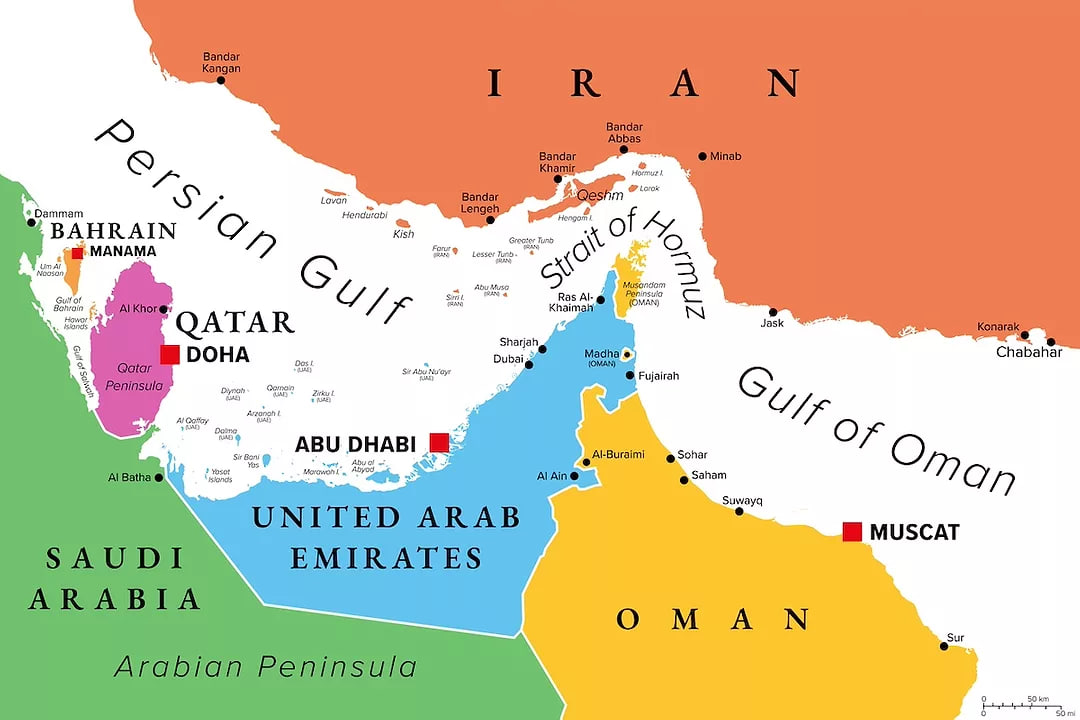
The war between the US and Israel against Iran caused disruptions in the production and transportation of crude oil and liquefied natural gas (LNG) in the Middle East, so their prices surged. The conflict has led to the closure of the Strait of Hormuz, the corridor for 20% of the world’s crude oil and 20% of liquefied natural gas (LNG).
At the same time, sales of renewable energy equipment and electric vehicles have increased.
Renewables offer safer, cheaper, cleaner energy that can’t be held captive by narrow shipping straits or global conflicts.
That’s why so many governments are pushing renewables plans into overdrive: to restore national security, economic stability, competitiveness, policy autonomy and basic sovereignty.
France is doubling funding for electrification, while China, India, Indonesia, South Korea, Germany, the UK, and more have been clear that pushing forward with the renewables transition is a cornerstone of energy security.
US renewable capacity set for 80GW rise
Utility-scale solar, wind and battery storage are projected to add more than 80GW of new generating capacity in the US by February 2027.
Renewable energy’s share of total utility-scale capacity is expected to rise from 33.4% to 36.6% over the period, the US Energy Information Administration ('EIA') said.
Solar will add 42,628.6MW while wind will grow by 14,507.4MW including 4,155.0MW of offshore capacity, the agency added.
The combined capacity growth of renewables of 57,452.7MW is almost 75% higher than the 32,988.9MW added in the previous 12 months.
By contrast, no new nuclear capacity is forecast while fossil fuel capacity is projected to decline by 4,903.2MW.
Utility-scale battery storage is expected to increase by 51.4% from 44,630.7MW to 67,549.6MW.
Including estimated solar additions, renewables’ share of installed capacity could reach 39.7% while natural gas falls from 40.0% to 38.3%.
Electricity generation from renewables rose by 10.8% in January and February 2026, accounting for 26.0% of total output compared with 23.6% a year earlier.
China's renewable energy capacity reaches 2.4 bln kW by end-March
China's renewable energy sector continued its rapid expansion in the first quarter of 2026, with new installations accounting for the vast majority of overall power capacity growth, according to a press briefing on Monday by the National Energy Administration.
Renewable energy capacity continued its steady growth, further optimizing China's energy structure. By the end of March, total installed renewable energy capacity reached approximately 2.4 billion kilowatts, accounting for more than 60% of the national total. Combined wind and solar capacity stood at around 1.9 billion kilowatts, approaching half of the country's overall installed capacity, said Pan Huimin, deputy head of the NEA's new and renewable energy department.
Electricity generation from renewable sources increased steadily, providing strong support for overall power supply. In the first quarter, nationwide renewable generation reached 882.9 billion kilowatt-hours, accounting for 37.1% of total electricity output.
Output from solar farms rose by a third while electricity from fossil fuels fell, research from thinktank reveals
All of last year’s growth in global electricity demand was met from renewable sources, while fossil fuel power generation remained flat, research has found, marking what many hope could become a turning point in the drive to phase out planet-heating fossil fuels.
Solar power generation rose by nearly a third in 2025, marking a new record and faster growth. In the decade from 2015, solar output grew tenfold, roughly doubling every three years, according to the thinktank Ember.
More than half of the increase came from China, which has surged ahead in renewable energy and is also the world’s biggest exporter of clean energy components.
Solar power met three-quarters of the increase in electricity demand in 2025, with the remainder mostly met by wind power. Electricity generation from fossil fuels fell by 0.2%.
Renewable energy gets an Iran war boost
Early signs are emerging that the energy shock could aid the global spread of renewable power, batteries, electric cars and other climate-friendly tech.
Why it matters:
The throttling of oil and gas transit - together with higher prices - has short- and long-term consequences for use and economics of different fuels.
Driving the news:
Very early data disputes the conventional wisdom that coal - the most carbon dioxide-emitting fuel - is a winner, per the Centre for Research on Energy and Clean Air, a research group.
Instead, global power generation from fossil fuels was down in the first month of the war.
Solar and wind power was up, as renewables offset more of the decline in gas-fired power than coal did.
State of play:
Only Japan and South Korea saw "significant increases" in coal-fired generation.
India and South Africa were among the nations to register big drops.
The EU, Japan, UK, India, Germany and others saw year-over-year jumps in wind or solar in March.
Renewable energy sets new US record, beating gas on the grid for the first time in month of March
It’s the first time renewables have bested the fossil fuel in the US across an entire month.
Meanwhile, emissions-free sources, a category that includes both renewables and nuclear, produced more than half of the nation’s electricity. It’s just the third time that’s happened across an entire month, the first instance being last March.
Sure, renewables only beat gas across a short time frame. And, yes, March is the start of the spring shoulder season, when electricity demand falls a bit from its winter highs and renewables tend to outperform.
Just five years ago, the gap between gas and even the best months for renewables was yawning. Since then, that gap has narrowed, thanks in large part to the rapid expansion of solar and the steady growth of wind power.
South Korea plans to raise renewable energy’s share of electricity generation to at least 20% by 2030 as it seeks to reduce dependence on imported energy and meet increasing power demand from advanced industries.
The country’s Minister of Climate, Energy and Environment, Kim Sung-hwan, presented the plan to the Cabinet.
The minister set a target of expanding renewable energy capacity to 100GW by 2030, with solar and wind power expected to drive the increase.
Renewable sources made up 11.4% of the country’s electricity generation last year.
The government also plans to close 60 coal-fired power plants by 2040 as part of a wider shift in the energy mix.
Alongside changes in power generation, the strategy includes support for technologies such as solar modules, battery energy storage systems and wind turbines. The plan also covers reductions in industrial emissions.
Nearly Half the World’s Power Capacity Is Now Renewable - What That Really Means
The numbers landing from the new International Renewable Energy Agency report, “Renewable Capacity Statistics 2026,” show significant and encouraging progress. A record 692 GW of renewable energy capacity was added globally in 2025, pushing total worldwide renewable power capacity to 5.14 terawatts - 49% of global installed power capacity.
That 49% measures the size of renewable infrastructure - the panels, turbines, and dams that exist and could, in theory, run at full power simultaneously.
Solar energy accounted for 511 GW of the 692 GW added - roughly 75% of all new renewable capacity and a record for a single calendar year, surpassing 2024’s previous high of 585 GW by 18,3%.
Wind contributed 159 GW. Between them, solar and wind made up nearly all new renewable capacity added last year - and the reason is straightforward: they are now the cheapest options available.
Britain sets new wind generation record
Great Britain has set a new wind generation record, producing 23GW of electricity on 25 March.
The National Energy System Operator said the peak between 13:30 and 14:00 surpassed the previous record of 23.825GW set in December.
The operator added that combined wind and solar generation reached 34GW earlier in the day, reducing gas-fired output to 1358MW.
Gas accounted for just 2.3% of the power mix at the time, marking its lowest level since April 2024.
Wind power alone supplied 53.5% of electricity generation during the record period.
Low-carbon sources now generate around 60% of Britain’s electricity, up from 3% in 2000.
This is a world-leading record, showing that our national electricity system can run safely and securely on large quantities of renewables generated right here in Britain.
We’ve come on leaps and bounds in wind generation in recent years. It really shows what is possible, and I look forward to seeing if we can hit another clean energy milestone in the months ahead: running Britain’s electricity grid entirely zero carbon.
Energy fallout from Iran war signals a global wake-up call for renewable energy
The war in Iran is exposing the world’s reliance on fragile fossil fuel routes, lending urgency to calls for hastening the shift to renewable energy.
Fighting has all but halted oil exports through the Strait of Hormuz, the narrow waterway that carries about a fifth of the world’s oil and liquefied natural gas, or LNG. The disruption has jolted energy markets, pushing up prices and straining import-dependent economies.
Asia, where most of the oil was headed, has been hit hardest, but the disruptions also are a strain for Europe, where policymakers are looking for ways to cut energy demand, and for Africa, which is bracing for rising fuel costs and inflation.
Unlike during previous oil shocks, renewable power is now competitive with fossil fuels in many places. More than 90% of new renewable power projects worldwide in 2024 were cheaper than fossil-fuel alternatives.
47% of EU’s electricity came from renewables in 2025
In 2025, 47.3% of the electricity generated in the EU came from renewable energy sources. Wind was the primary source of renewable electricity in the EU, accounting for 37.5% of the total. Solar power came in second with 27.5%, followed by hydro with 25.9%. The remaining renewable electricity came from combustible renewable fuels (8.5%) and geothermal and other energy sources (0.5%).
Compared with 2024, solar power was the fastest-growing source, with a 24.6% increase in 2025. In contrast, electricity generation from hydro power decreased by 11.8%.
Among EU countries, the highest shares of electricity from renewable sources were generated in Denmark (92.4%, mostly wind), Austria (83.1%, mostly hydro) and Portugal (82.9%, mostly hydro and wind).
In contrast, the lowest shares were recorded in Malta (16.2%), Czechia (16.6%) and Slovakia (17.8%).