What does a true Web3 decentralized platform look like?
🔑 A community made up of non-custodial hardware wallet users, ensuring complete privacy and self-custody of assets.
🔒 Fully decentralized with no intermediaries—users hold the power.
💎 Each user is their own bank, deciding their own future.
Join us and experience true decentralized financial freedom!
#Web3 #Decentralization #Privacy #SelfCustody #Blockchain #Crypto #UnionKey
Crypto was built to remove the middleman.
Yet somehow, we ended up with:
A platform to hold our assets.
Another to trade them.
Another to earn yield.
And three more just to move things around.
We decentralized the money.
Then centralized the entire experience.
Something needs to change.
A genuine hardware wallet isn’t necessarily an untouched one.
Recent discussions around physical hardware implants have brought an important security question back into focus:
What happens if someone tampers with your wallet before it ever reaches you?
At UnionKey, we believe hardware security should go beyond protecting the private key. It should also protect the integrity of the device itself.
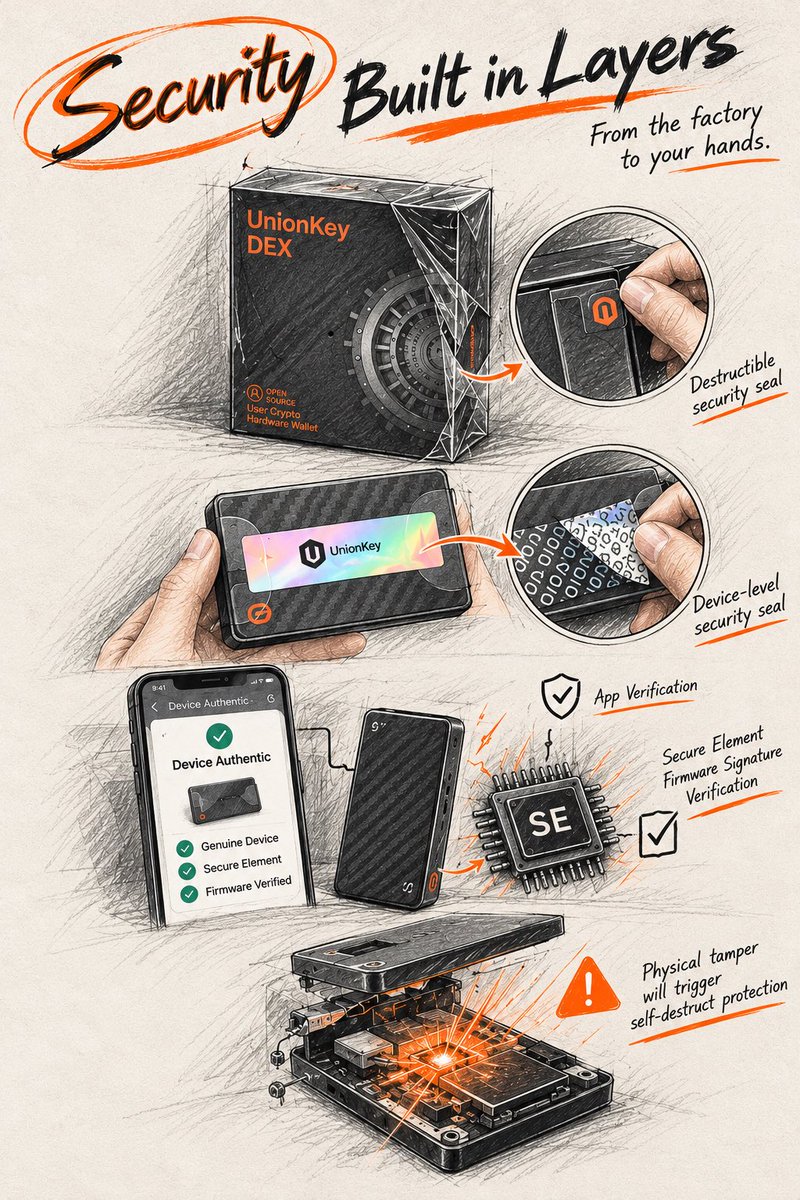
That’s why we’ve built multiple layers of protection into UnionKey:
1. Tamper-Evident Packaging
The box is protected by clear shrink wrap and a destructible security seal, making signs of unauthorized opening easier to identify.
2. Device-Level Security Seal
A holographic tamper-evident seal on the device reveals a visible “VOID” pattern when removed, providing another way to inspect for interference.
3. Device Authenticity & Firmware Verification
Official app-based device authentication and Secure Element firmware signature verification help establish that the device and its software are genuine.
4. Anti-Tamper Self-Destruct Protection
UnionKey incorporates a hardware-level self-destruct mechanism designed to respond to physical disassembly attempts.
This adds a defensive layer beyond packaging and software authentication, addressing physical intrusion at the device level.
No single security measure can eliminate every possible threat.
That’s why we believe hardware wallet security must be built in layers — from the moment a device is manufactured to the moment it’s in your hands.
Security isn’t just about protecting what’s inside. It’s about protecting the integrity of everything around it.
No publicly known quantum computer can break Bitcoin's signatures today.
But security isn't just about surviving today's attacks.
It's about preparing for the ones that haven't become practical yet.
The real question isn't whether Bitcoin dies because of quantum computing.
It's whether crypto can upgrade before the threat becomes real.
What's your take?
What if the biggest threat to your Bitcoin isn't a hacker stealing your seed phrase?
It's a computer powerful enough to work backward from your public key.
Quantum computing is back in the spotlight.
Here's what's actually at risk — and what's being exaggerated. 🧵
The good news?
This isn't an unsolved problem.
Post-quantum cryptographic standards already exist. Researchers are working on migration strategies.
The difficult part is upgrading a decentralized financial system without breaking compatibility or leaving users behind.
That's an engineering challenge. And a coordination challenge.
In crypto, one wrong click can cost more than a bad trade.
Wrong network.
Wrong address.
Wrong approval.
The market isn't the only thing you need to survive.
The most annoying part of crypto trading isn't always the market.
It's everything you have to do before the trade.
Switch networks. Move funds. Check fees. Connect another app.
Sometimes the trade takes seconds. Getting there takes longer.
What's the most frustrating part of trading crypto for you?👇👇
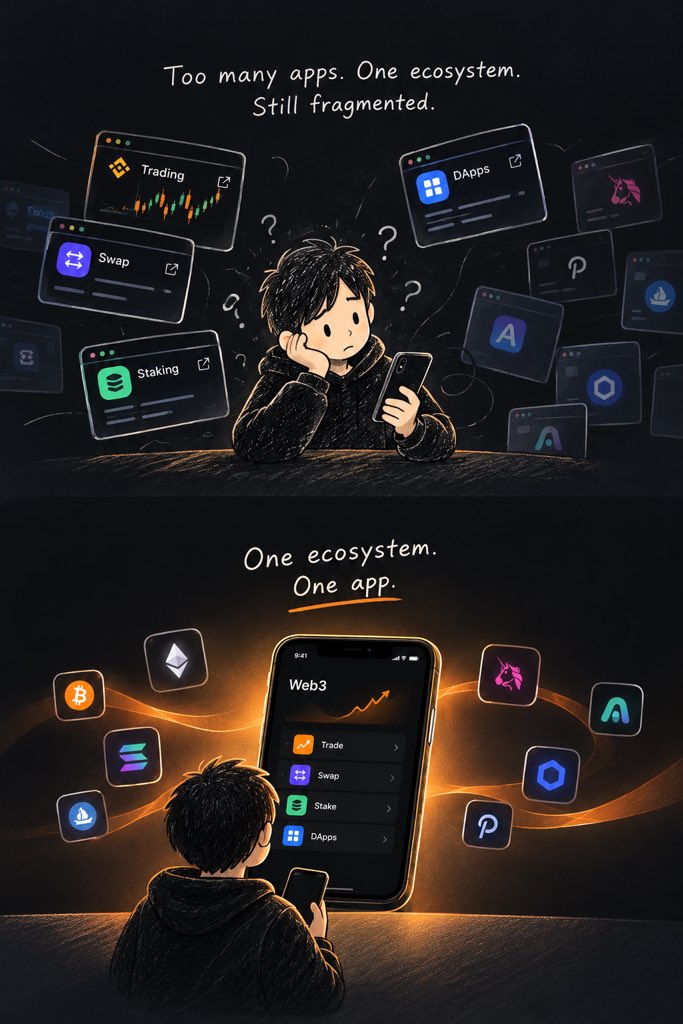
Web3 has no shortage of possibilities.
The problem?
There are too many places to access them.
One app for trading.
Another for swapping.
Another for staking.
Another for DApps.
The technology is decentralized.
The experience is fragmented.
Maybe the next step for Web3 isn’t adding more apps.
It’s making the ecosystem feel like one.
#Web3 #Crypto #DeFi
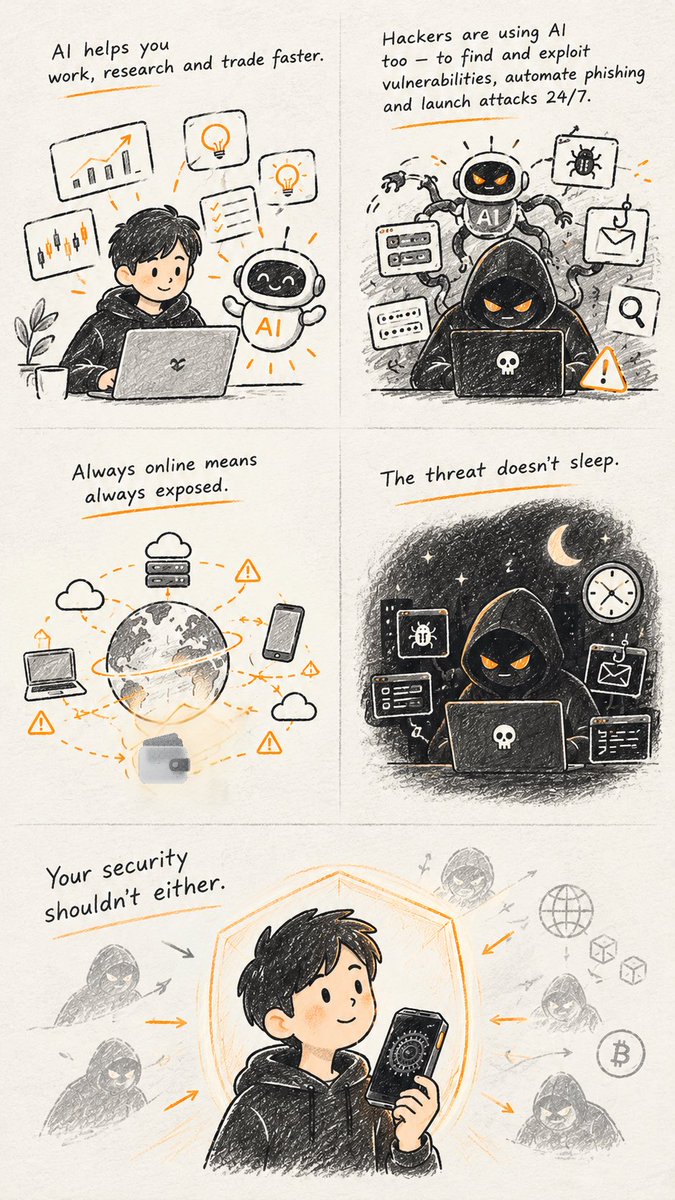
AI is becoming a powerful tool in your hands. Hackers are turning it into a weapon.
AI can help you research faster, trade smarter, and get more done.
At the same time, attackers are using AI to continuously scan for vulnerabilities, probe attack surfaces, automate phishing, and launch attacks around the clock.
And when your assets live in an always-online environment, there’s always something exposed to that threat.
The threat doesn’t sleep.
Your security shouldn’t either.
#AI #Web3 #CyberSecurity
Web3 doesn’t need more complexity.
It needs better experiences.
Users shouldn’t need to understand bridges, networks, gas, approvals, and multiple platforms just to make one trade.
The technology is getting more powerful.
The experience needs to catch up.
#Web3#Crypto
For years, crypto platforms competed to become the place where users trade.
The next generation may compete for something very different:
Who gives users the best way to trade on their own terms?
Less platform dependency.
More user control.
More choice.
The market is moving from platform-centric to user-centric.
#Crypto #Web3 #UnionKey
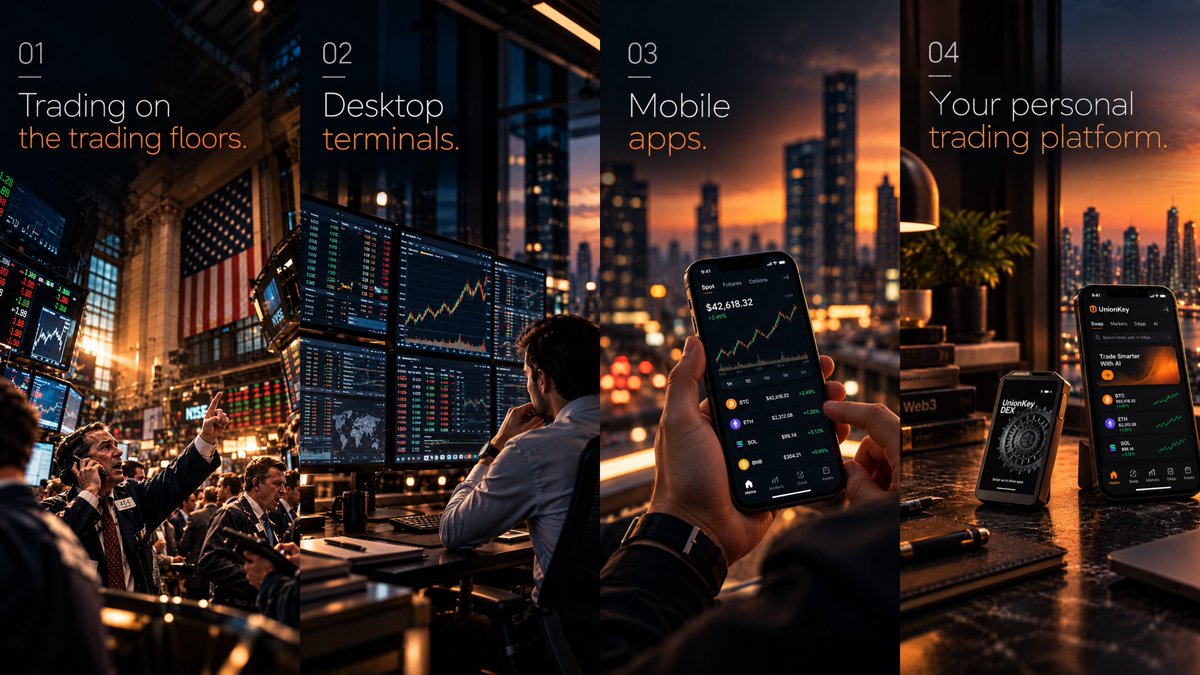
Trading is becoming more personal.
We went from trading floors → desktop terminals → mobile apps.
The next shift is already taking shape:
A trading environment built around the individual — not the platform.
We call it the Personal Trading Platform era.
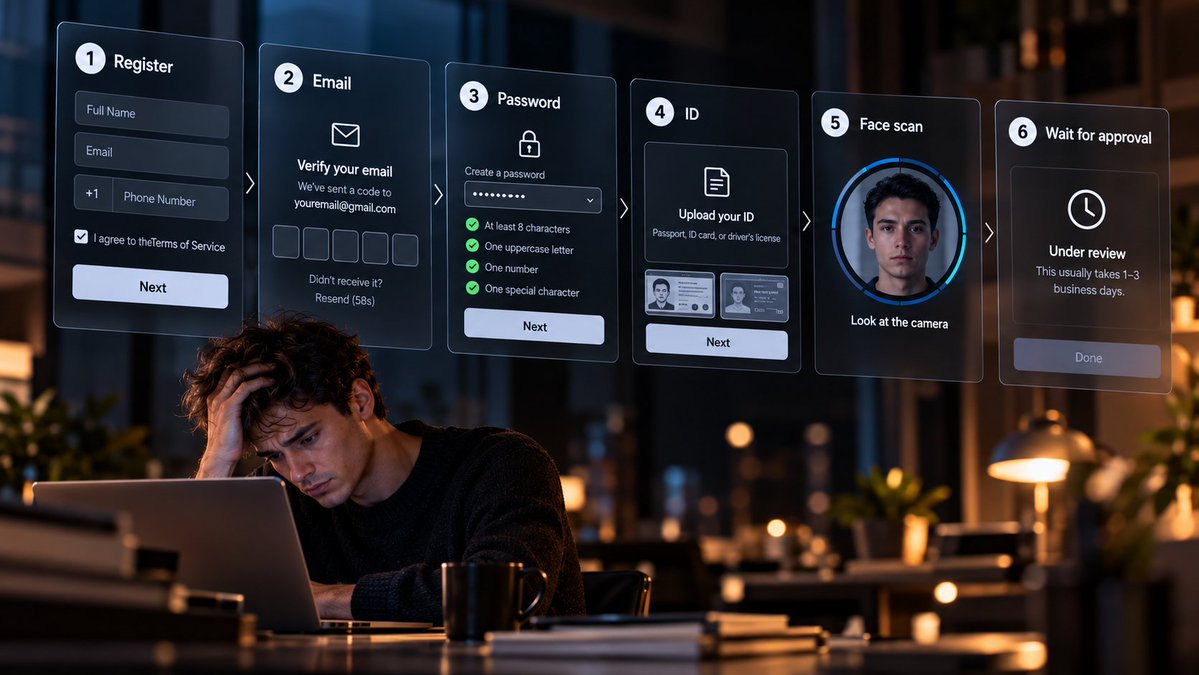
Register.
Email.
Password.
ID.
Face scan.
Wait for approval.
We’ve gotten so used to this that it feels normal.
Web3 was supposed to feel different.
Your wallet is your access.
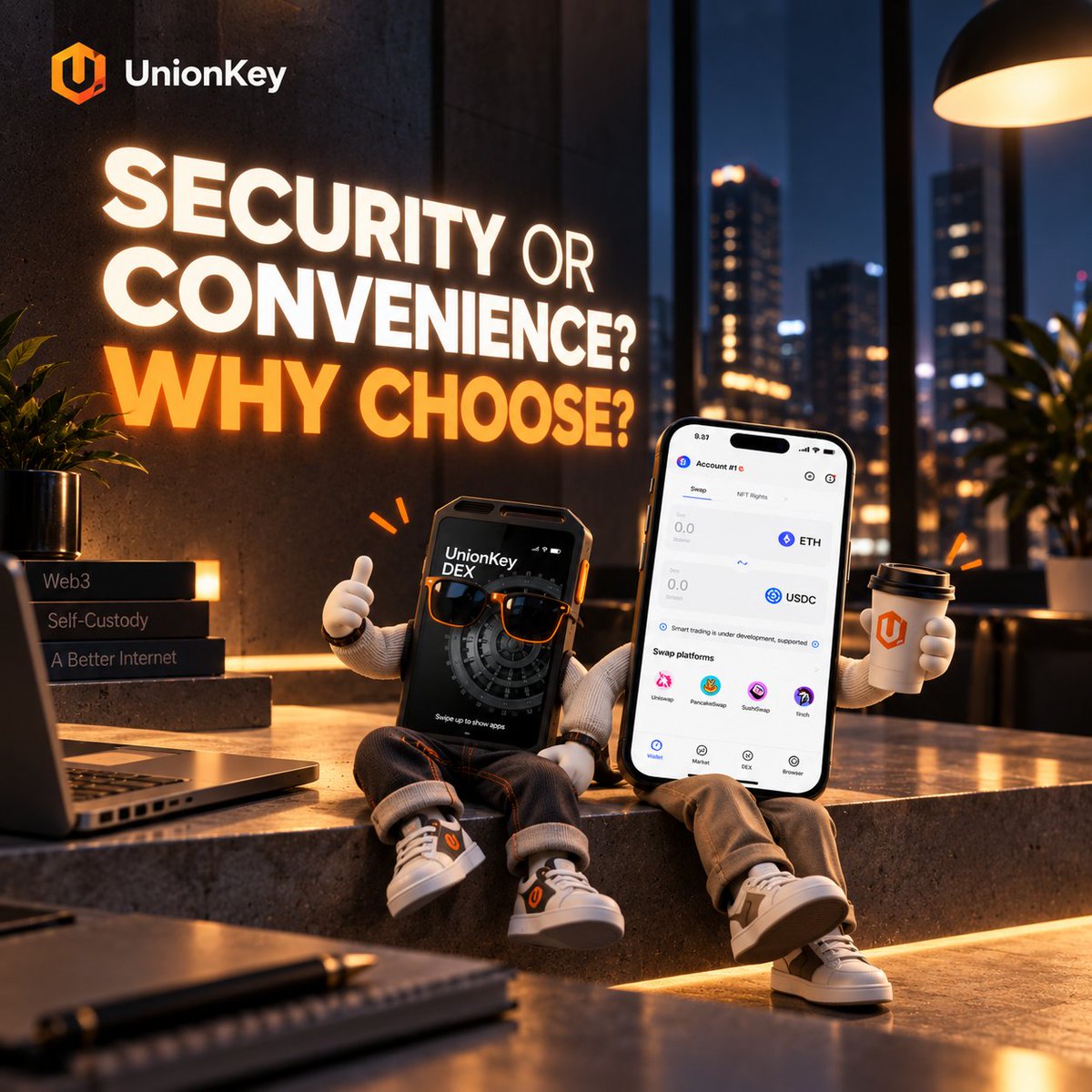
Security or convenience? Why should crypto users have to choose?
Keep control of your assets.
Keep the trading experience simple.
Self-custody shouldn’t mean sacrificing convenience.
Security and experience can work together.