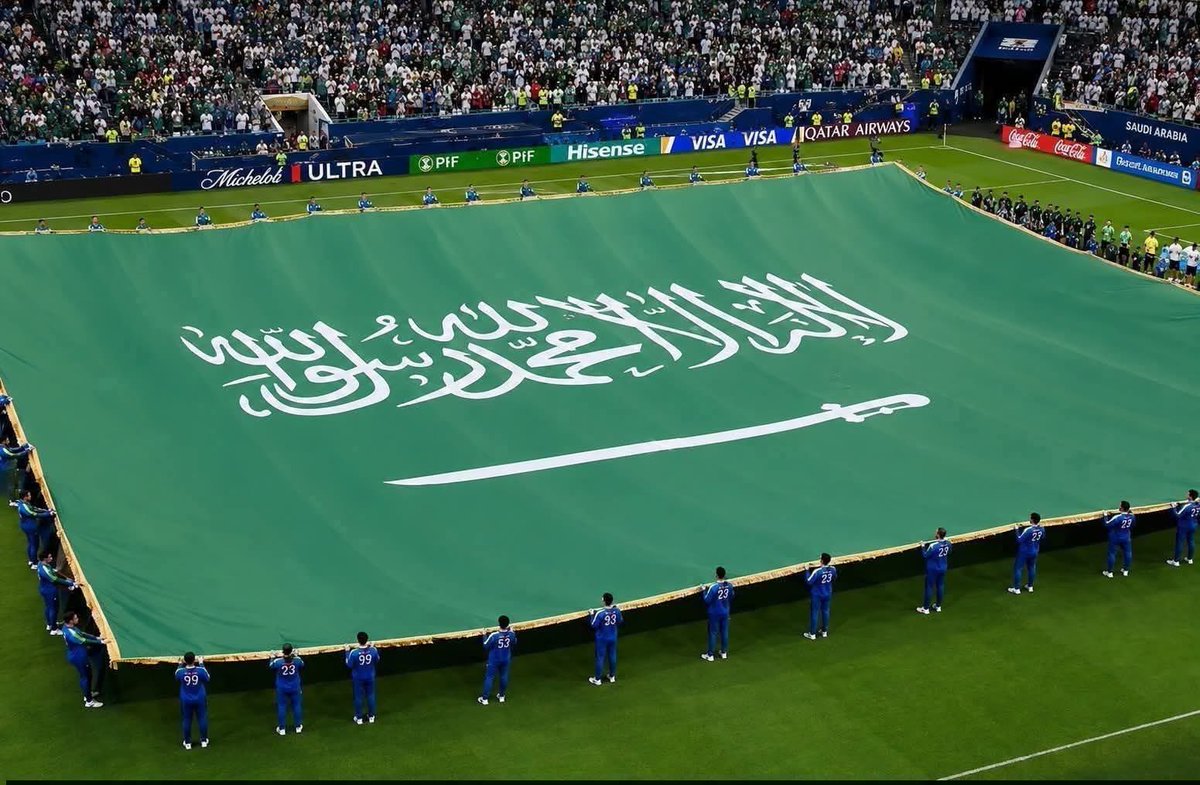
لا تلوموني في حب #السعودية 🇸🇦
رايةٌ كُتب عليها #التوحيد، فبقيت مرفوعة بالعز والهيبة عبر التاريخ
أعز الله من أعز دينه
العلم الذي لا يسقط ولا ينكس ولا يفرش على الأرض
راية التوحيد ليست علماً لبلاد الحرمين وحسب، بل رسالة إيمان وعزة للمسلمين وراية أمة الإسلام جمعاء
دامت شامخة 🇸🇦💪🏼
“The person whose cheek you saw being torn away [from the mouth to the ear] was a liar who used to tell lies…”
Shaykh Rabee ibn Haadi al-Madkhali
And from the recompense given to a liar is that which has been reported from the noble Prophet — the person of the highest moral character — who said:
“I saw, in a dream, two men who came to me.”
Then the Prophet said:
“They said: The person whose cheek you saw being torn away [from the mouth to the ear] was a liar who used to tell lies, and those lies would be reported on his authority until they spread throughout the world. So he will be punished in that manner until the Day of Resurrection.”
[Bukhārī: 6096]
Source: Al-‘Awāṣim Mimmā Fī Kutub Sayyid Quṭb Minal-Qawāṣim, p. 5
There are several early Islamic inscriptions which mention some of the Prophet's Companions. Let's take a look at some of the inscriptions which can be dated to the 1st century AH. 🧵
It reads -
“Allah is the ally of ʿUmar ibn al-Khaṭṭāb in this world and the next”
The Saudi Heritage Commission announces the discovery of rock inscriptions bearing the name of the second of the Rightly Guided Caliphs
🔴 The Saudi Heritage Commission announces the discovery of a rare rock inscription in the Mahd Governorate in the Medina Region.
🔴 The inscription contains the phrase: “Allah is the ally of ʿUmar ibn al-Khaṭṭāb in this world and the next.”
🔴 The Heritage Commission [states that] the discovery is among the significant testimonies to early Islamic history.
🔴 The Commission added that the inscription was written in the Ḥijāzī script, one of the oldest Arabic Islamic scripts.
🔴 Researchers hold that the discovery strengthens the documentation of ʿUmar ibn al-Khaṭṭāb’s religious and historical significance.
Remarkable inscriptions, carved some 1,400 years ago:
“I am ʿUthmān ibn Nāʾil; I ask Allāh for Paradise.”
“I am Tammām ibn Dīnār; I ask Allāh to grant me success in all that He loves and is pleased with.”
“I am ʿAbd al-Raḥmān ibn ʿAqīl al-Anṣārī.”
“I am Suwayd ibn Nuṣayk; I love Allāh and His Messenger, and I strive to enjoin what is good and forbid what is wrong.”
“I am Abū Nawfal Hārūn ibn Ibrāhīm ibn Muḥammad ibn Ṭalḥa al-Taymī; I ask Allāh, by His mercy, to grant me Paradise.”
Fourteen centuries on, their names, their faith, and their supplications endure etched in stone, still reaching us across the ages.
خير الختام بأنْ تموت وأنت في
حال العبادة في رحابِ المسجدِ
لاسيما بعد الشهادة قائـلاً
لا ربَّ غير الخالـق المتفرّدِ
—-
ختم حياته وهو يؤذن بعد مداء : أشهد أن لا إله إلاّ الله ، أشهد أنّ محمدا رسول الله
@AllahYl3nAlyhod Shameless people, they just completed Hajj, and they are using such a foul language. It is of no use that you come to the blessed land for pilgrimage and act like a hooligan.
From the most beneficial of supplications is the supplication in which the servant seeks Allāh's help to remember and worship Him, in order to attain His pleasure.
May Allah reward the Saudi authorities for doing all of these improvements and renovations freely and in the sake of Allah, where nowadays, millions are able to perform Hajj safely AND comfortably. May Allah accept from all pilgrims and may Allah grant us an accepted Hajj, aameen
Abdullah ibn Mas’ud was a man with little wealth.
His wife - Zaynab al-Thaqafiyyah, who is also referred to in some narrations as Rā’iṭah was a skilled woman who worked with her hands, made and sold goods, and spent from her earnings on her husband and children.
She tells us;
“I was in the mosque when I saw the Prophet ﷺ, and he said:
‘Give charity, even if it is from your jewelry.’
And Zaynab al-Thaqafiyyah used to spend on Abdullah ibn Mas’ud and on orphans under her care.
She said to Abdullah: ‘Ask the Messenger of Allah ﷺ whether it is sufficient for me to spend on you and on the orphans in my care from my charity.’
He replied: ‘You ask the Messenger of Allah ﷺ yourself.’
So I went to the Prophet ﷺ and found a woman from the Ansar at the door whose need was the same as mine. Then Bilal ibn Rabah passed by us, and we said:
‘Ask the Prophet ﷺ whether it counts for me if I spend on my husband and on orphans in my care.’ And we told him: ‘Do not tell him who we are.’
Bilal entered and asked him. The Prophet ﷺ said:
‘Who are they?’
He replied: ‘Zaynab.’
The Prophet ﷺ asked: ‘Which Zaynab?’
He said: ‘The wife of Abdullah.’
He ﷺ said:
‘Yes. She will have two rewards: the reward of kinship and the reward of charity.’”
- Collected in: Sahih al-Bukhari







![salafidawahmcr's tweet photo. “The person whose cheek you saw being torn away [from the mouth to the ear] was a liar who used to tell lies…”
Shaykh Rabee ibn Haadi al-Madkhali
And from the recompense given to a liar is that which has been reported from the noble Prophet — the person of the highest moral character — who said:
“I saw, in a dream, two men who came to me.”
Then the Prophet said:
“They said: The person whose cheek you saw being torn away [from the mouth to the ear] was a liar who used to tell lies, and those lies would be reported on his authority until they spread throughout the world. So he will be punished in that manner until the Day of Resurrection.”
[Bukhārī: 6096]
Source: Al-‘Awāṣim Mimmā Fī Kutub Sayyid Quṭb Minal-Qawāṣim, p. 5](https://pbs.twimg.com/media/HKxDf5QWkAA3m1B.jpg)


