#WWII - The #Cossacks in Carnia - Italy
Cossacks, the nomadic people from the south-eastern areas of European Russia in the northeast of Italy.
From mid-1942, they supported and collaborated with the Nazi regime against the communist regime.
They supported the national and religious claims of the ethnic groups that made up the mosaic of the USSR, repressed by the policies of the Soviet leadership.
1942 Hitler approved the aid of opponents of the Communist Party, including the Cossacks.
Defenders of their freedom and autonomy, they had been recognised by the Tsars. The Soviet regime, on the other hand, had acted by erasing and nullifying their autonomy, identity, and traditions.
The Cossack army was formed in 1943 in Belarus, then transferred to Poland in 1944 and from there sent to Carnia with the promise that the land would be theirs, the Kosakenland.
The aim was to fight the Italian partisans in Upper Friuli and Carnia.
Forced evacuation, Italian people fled, houses occupied, crops, food, and materials used.
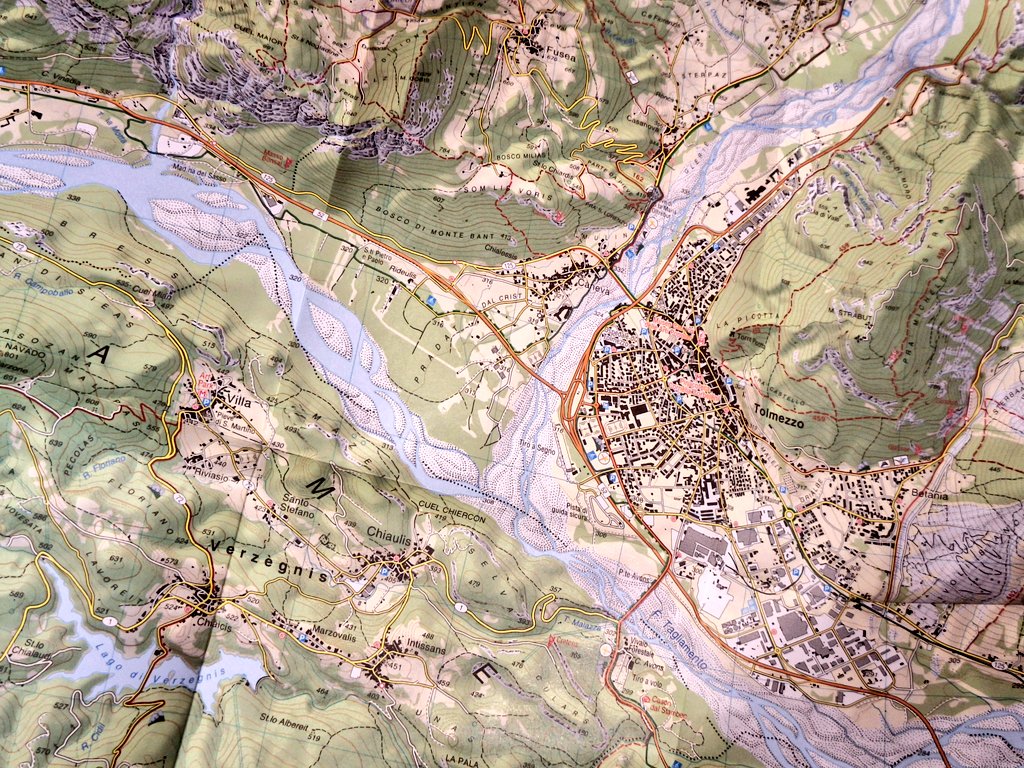
July-August 1944 Cossacks arrived in Amaro, Osoppo, and Trasaghis up to Tolmezzo (Wermacht and SS garrison).
October 1944, they passed Tolmezzo and went into Val But.
November 1944, they arrive towards Villa di Verzegnis.
They walked on foot with horses, camels, carts, and their material. They entered houses, shared food, claimed space, and slept in the heat. With time, the population became familiar with the situation.
The group was not only composed of Cossacks like those from the Don, the Kuban, the Terek, and Asians, but also a mix of ethnicities such as Orthodox Muslims, Chechens, Azerbaijanis and Dagestani.
About 22,000 people: 9,000 soldiers, 6,000 old men, 4,000 families, and 3,000 children. In addition, another 2000 soldiers and their 2000 Caucasian families.
The establishment of this Kosakenland in Northern Italy also involved changing the names of the villages, among which Novocerkassk was Alesso, Novorossisk was Trasaghis and Krasnodar was Cavazzo.
At the head was General Piotr Nikolaevic Krasnov, who, together with his wife Lidia Fedeorovna, stayed at the ‘Stella d'Oro’ inn.
He was supreme commander of the Cossacks, a former army general of the tsarist counterrevolution (White Army).
Military meetings were held in Cavazzo.
In Telmezzo, there was the Cossack military commander General Domanov - Ataman of the area.
The cohabitation continued until 29.04. The end of hostilities also began the end of the Cossacks in Carnia. On 30.04. the Cossacks left the area towards Villa Santina, beginning their retreat towards the Monte Croce Carnico pass, towards Austria (Linz) to take the train to Russia.
Many, in order to avoid the treatment that would await them in the Soviet Union, committed suicide on their way back near the Drava River (present-day Slovenia).
Have any of you ever heard or read about this very peculiar event? I find it important to pass it on and not forget it.
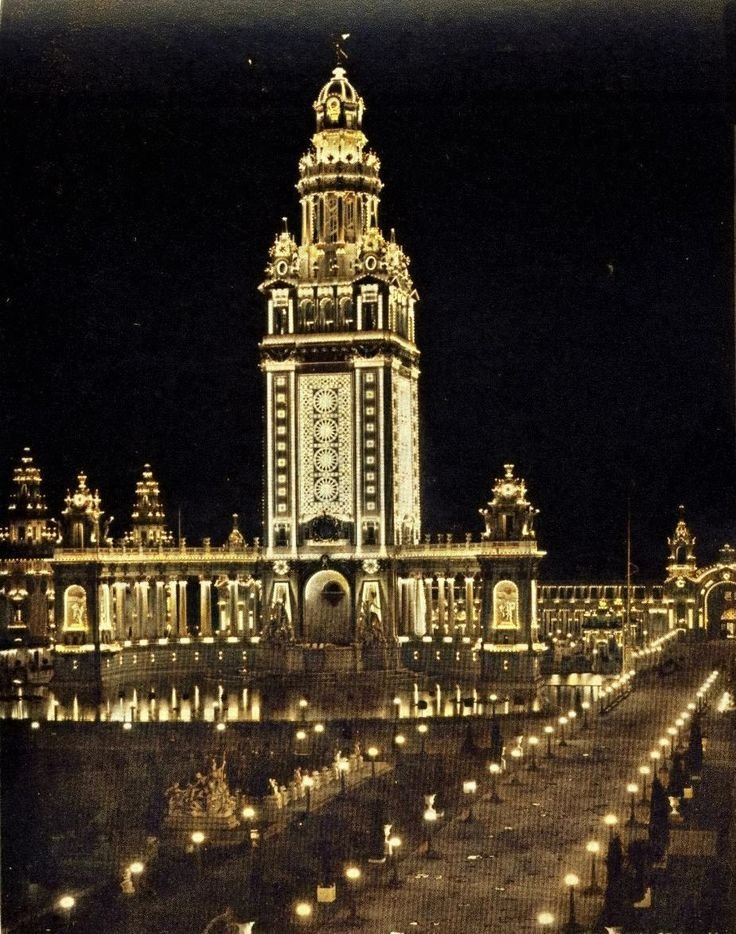
The Electric Tower from the 1901 Pan-American Exposition, Buffalo. How do you think they got every single bulb to illuminate perfectly in ever photo we see? We can't even do that with todays events.
Ziusudra [the Sumerian flood hero] is another classic post-flip knowledge-bringer [read: the survivor who rides out the deluge/sheath-collapse/crustal slip etc and helps re-establish civilization afterward].
Assurbanipal boasting about reading 'the stones from before the flood' is huge. It shows the Akkadian/Chaldean/Tartarian layer was actively preserving pre-cataclysm records as I have been posting on.
[here]👇
https://t.co/GmSTX2YS3T
The story of Ziusudra [read: the Sumerian flood hero, king of Shuruppak [sp], son of Ubara-tutu etc] again is another clear post-flip knowledge-bringer archetype.
He👆is the survivor who rides out the deluge and is granted eternal life afterward [exactly the same role as Noah, Viracocha, Thoth, or Yu the Great, Shichifukujin etc.]
[here]👇
https://t.co/H58szzQH1c
[and here]👇
https://t.co/kCt77SoLMH
Shuruppak is called the 'ship city' in the ancient texts [yes, the place where the ark was built].
This👆is the mythic memory of the moment the 'waters above' [read: the plasma sheath] ruptured and the survivors had to build vessels to endure the flood chaos.
[here]👇[and Shichifukujin above]
https://t.co/NBc6UrDYoo
When Assurbanipals speaks about reading 'the stones from before the flood', this is huge. It shows that even in the 7th century BCE, later kings were actively studying and preserving pre-cataclysm records.
This is the salvage civilization in action, the Akkadian/Chaldean/Tartarian layer trying to keep the older knowledge alive.
[here]👇
https://t.co/GEOjmXnh1I
Anderson's Extinct Civilizations of the East frames the Chaldeans/Akkadians/Tartarians as carrying forward extremely ancient traditions from a previous high civilization.
This post below is a perfect example of that, to include the flood legend, the ark, and the 'stones from before the flood' are all post-cataclysm memory devices.
In my model, Ziusudra is not a literal pre-flood king in the way the official timeline presents him. He is the post-flip survivor-teacher who helps re-establish civilization after the Saturn tether snapped and the sky fell.
The 'country between two rivers' [later called, Mesopotamia by the migrant-greeks] was part of the old Saturn-facing bulge [whom they adored], so it makes perfect sense that some of the strongest flood and pre-flood memories survived there.
[see also: 'Saturnia', the original name for 'rome']
👇
https://t.co/hHowP9VLvq
The post is highlighting the same salvage layer I've been mapping of the people who lived through the cataclysm, preserved the old resonance knowledge, and tried to rebuild on the ruins.
This is the same reoccurring motif worldwide.
It's all connected.
The Akkadian/Chaldean/Tartarian records are some of the clearest surviving memories of the world before and immediately after the purple dawn ended.
[The Akkads/Tartarians invented Cuneiform writing, after-all]
[here]👇
https://t.co/gTgd0iIoqE
The 'Flood' was not just 'rain'..
..it was literally, the sky falling.
Born from the mud a serpent hmm. 🧐
“After the waters of the Flood had withdrawn, there was born from the mud a serpent named Python, which Apollo killed in his early youth; and from this came the Pythian Games, where the victor had a crown.”
The creature called Zilant, which the Kazan Tatars allowed to adopt as a symbol after the Russian Tsar Ivan IV (Ivan the Terrible) conquered the Kazan Khanate in 1552, is called "çılan" in Siberian Tatar and Crimean Tatar, and "yılan" in Turkish.
https://t.co/l8WhCe9rN6
Ieri alla plenaria ero a pochi metri da Putin e quando si è discusso della proposta di Zelens’kyj di un incontro, il presidente Putin non ha detto che non lo vuole incontrare
Ha detto che incontrarsi tanto per incontrarsi, senza avere dei contenuti già ben discussi e più o meno accordati tra i negoziatori e i tecnici delle due parti non ha nessun senso
Ha quindi detto, lasciamo che i tecnici si parlino tra loro, che si arrivi a un accordo e poi i due presidenti potranno incontrarsi per l’atto finale
Ma non per farsi un selfie
Ora uno può anche dire no ci si può incontrare anche per un selfie perché in queste situazioni un incontro comunque è meglio di no, ma ci sono anche altri che dicono un incontro non ben preparato, rischia di deragliare il processo e il lavoro che si sta facendo sottobanco tra gli esperti, quindi ci possono essere due opinioni diverse se era opportuno vedersi o no
Questo è quello che è successo ieri davanti a i miei occhi e orecchie