Heading to #NEALS2026 in Clearwater? Come find us at Poster #212.
We’ll be presenting “AI-Generated Digital Twins and Plasma NfL for Trial Planning and Statistical Efficiency in ALS,” including how pre-specified digital twin adjustment (PROCOVA) would take a study designed at 50% power to 67% on ALSFRS-R and 72% on SVC.
📍 Poster #212
🗓️ October 29, 4:50–6:30 PM ET
Stop by, or reach out to find time to connect while we’re there.
#ALS #DigitalTwins #ClinicalTrials
#UnlearnerSpotlight 🚀 “I love the freedom to propose new ideas and actually see them through, and I get to work alongside incredibly talented people who I learn from every day. Most of all, I like knowing my work helps speed up clinical trials and get treatments to patients faster.”
💉 Obesity drugs now deliver more weight loss than is even desired in most cases, shifting the question from how well a drug works to how easily it can be tolerated.
In Part 2 of his obesity in clinical trials series, our co-founder and Chief Scientific Officer Jon Walsh looks at what that means for the future of obesity trials. As more treatments reach the market, dropout and drop-in (placebo patients starting marketed drugs mid-trial) will change, the apparent treatment effect will shrink, and comparing therapies will get harder.
Read the full post: https://t.co/kPNAerah6t
#Obesity #ClinicalTrials #DigitalTwins #ClinicalDevelopment
🎉 We’re excited to welcome Ian Fleming as Unlearn’s new VP of Product.
Ian brings 25 years of experience in the life sciences industry. He started with hands-on statistical work on clinical programs, then moved into building the technology that clinical and biometrics teams rely on, most recently building a team that delivered foundational components of a major clinical data platform and its AI infrastructure.
Welcome to the team, Ian!
Sponsors are no longer asking whether digital twins work. They’re asking who builds the infrastructure, what data it runs on, and whether it will hold up when regulators ask about it years from now.
Many internal builds stall on the same three things: single-study models that can’t follow a program as it evolves, the cross-functional alignment needed to get twins into a protocol, and harmonized data that everything else depends on.
In our latest post, we share what we’ve learned from working with leading sponsors, including why the right unit for a model is the disease, not the study.
If your team is building this now, or has tried and stalled, we’d like to compare notes.
https://t.co/334t2qGw0n
#DigitalTwins #ClinicalDevelopment #AIinClinicalTrials
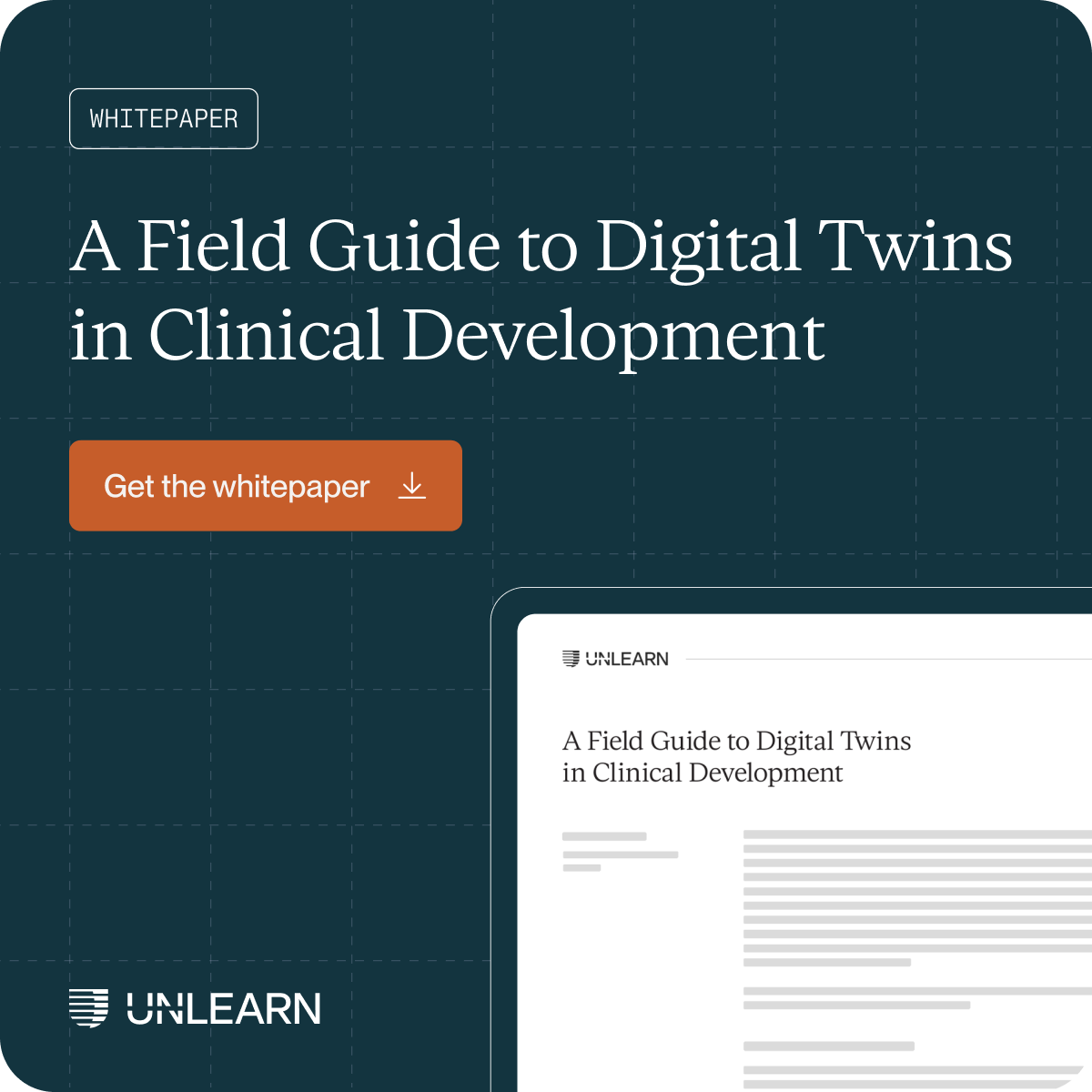
📄 Our latest whitepaper, A Field Guide to Digital Twins in Clinical Development, walks through each decision point in a study, from eligibility criteria and sample size in design, to stopping rules at interim, to interpreting the result after readout, and shows how digital twins fit at every step.
It also covers the methods behind each use and the deployment principles we follow, drawn from the @FDA's draft guidance on AI in drug development.
Download the field guide: https://t.co/nnYTjwspPQ
#ClinicalTrials #DigitalTwins #DrugDevelopment #Biostatistics #AI
One of the biggest problems in #obesity#clinicaltrials today is that placebo patients can figure out their assignment quickly and take action into their own hands if they’re not losing weight. They can leave the study, or start treatment on their own…all while their results still count toward the placebo arm.
Our co-founder and Chief Scientific Officer, Jon Walsh, wrote about what that does to the data and why the fix belongs in #trialdesign.
Read the post: https://t.co/2rABHajef4
🇵🇱 Heading to #EHDN2026 in Kraków, October 22–24? Catch our presentation, "AI-Powered Digital Twins: Applications and Opportunities in Clinical Trials."
Huntington's disease progresses differently in every patient, which makes treatment effects hard to detect. A #digitaltwin for each participant helps: more power, a smaller control arm, and more participants on the investigational treatment. In planning one HD registrational study, digital twins reduced the required sample size by up to 29%.
Connect with us in Kraków.
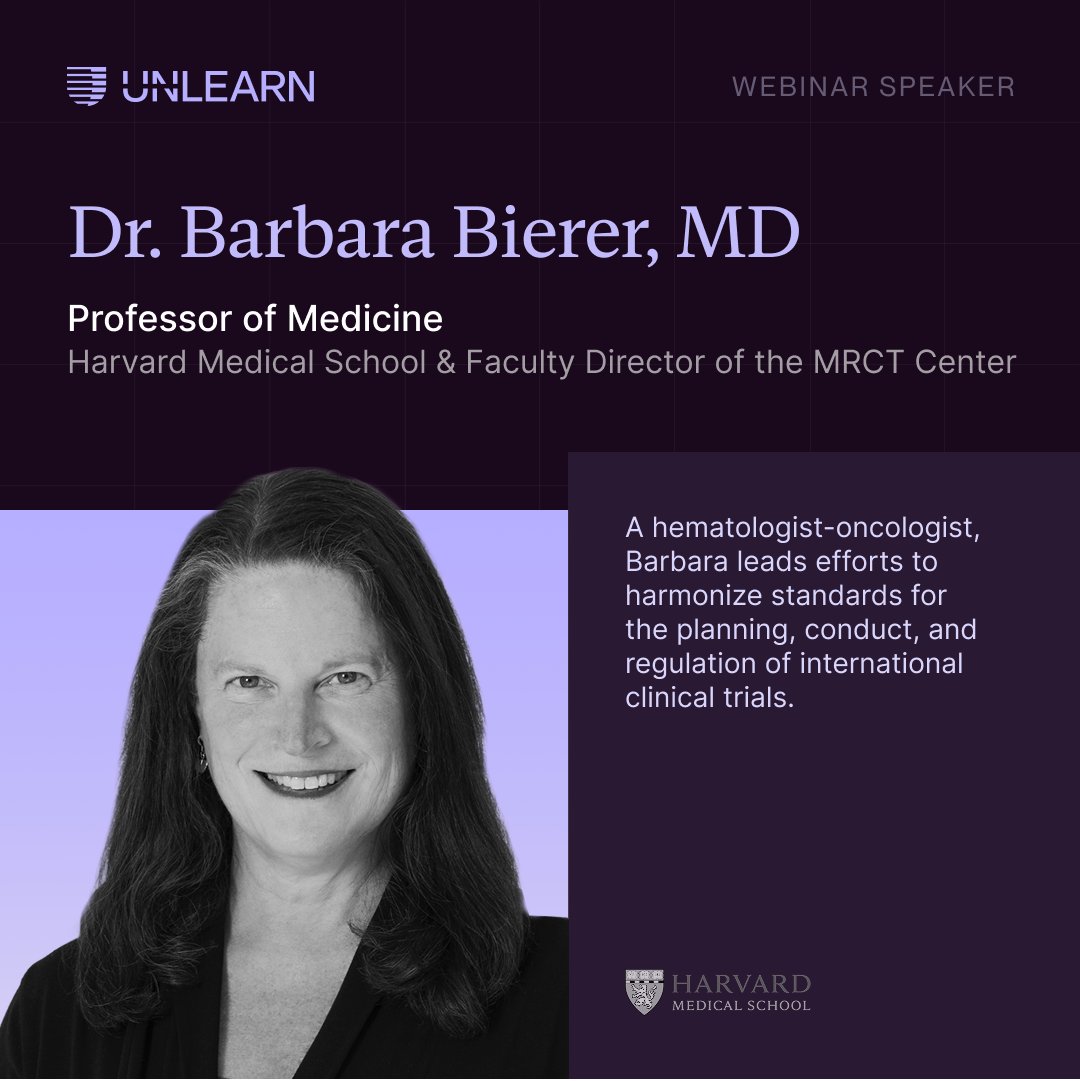
More drug candidates than the trial system can absorb. Then what? The takeaways from our panel with Tala Fakhouri (Parexel, formerly FDA), Barbara Bierer (Harvard Medical School, MRCT Center), and Unlearn’s Co-founder and CSO, Jon Walsh, plus the recording: https://t.co/ThxIDTwNGK
💊 Every clinical trial is a chain of decisions, and you don't have to wait for the next protocol to start making them with better evidence.
In a new post, our Co-founder and Chief Scientific Officer Jon Walsh lays out the three points in a trial where sponsors can come in.
He also names a mistake he often sees teams make when building AI for drug development. The principles behind machine learning were never written down, so he wrote down three of them, along with why they matter when the data is private and the stakes are a go/no-go decision.
This post also opens a new chapter in how Unlearn works with sponsors: data, digital twins, and AI working together at all three points.
Read Jon's post: https://t.co/KwGuZw0yqY
#ClinicalTrials #DigitalTwins #DrugDevelopment #AI #MachineLearning
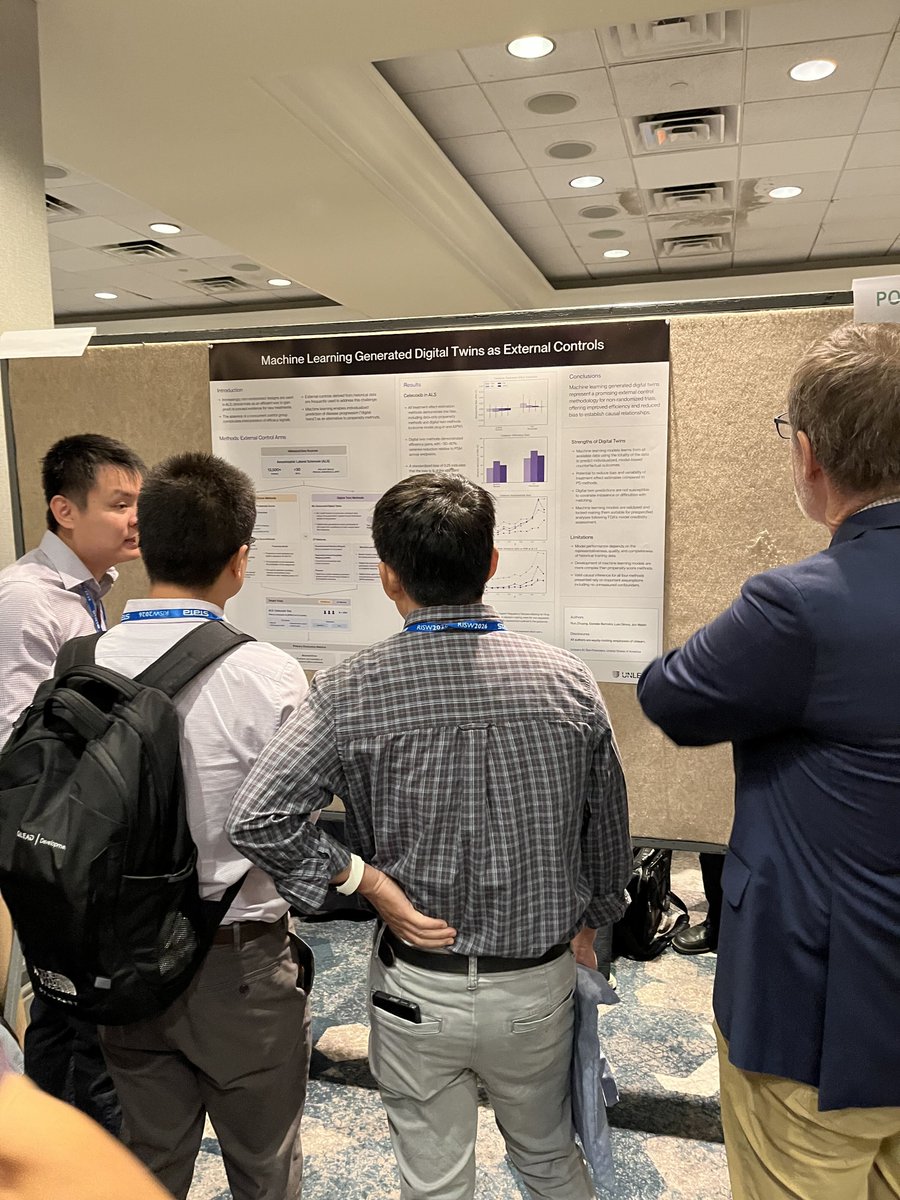
🚀 Big shout-out to our Principal Biostatistician, Run Zhuang, for presenting "Machine Learning Generated Digital Twins as External Controls” at the ASA Biopharmaceutical Section Regulatory-Industry Statistics Workshop. Run showed how AI-generated #digitaltwins serve as external controls in non-randomized #trials to improve efficiency and reduce bias to establish causal effects. Thank you to everyone who stopped by!
#RISW2026
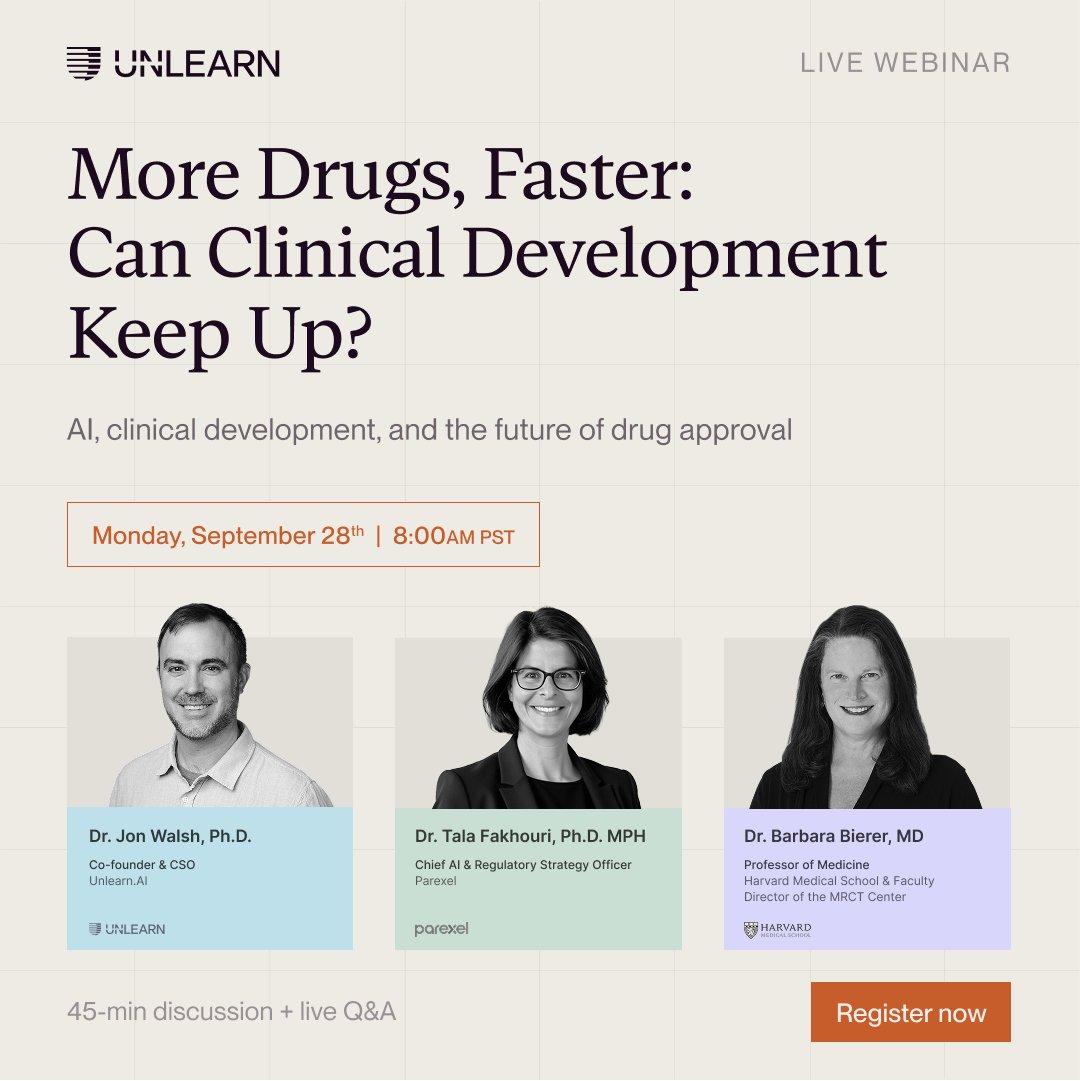
4️⃣ days out from our webinar: More Drugs, Faster: Can Clinical Development Keep Up? Dr. Jon Walsh (Unlearn), Dr. Tala Fakhouri (Parexel, formerly FDA/CDER), and Dr. Barbara Bierer (Harvard, MRCT Center) on what faster discovery demands of sponsors, regulators, and the people running trials.
📅 Monday, September 28, 11 AM PT / 2 PM ET. Can't attend live? Register and we'll send the recording.
➡️ Register: https://t.co/IBCwrSlQDn
#UnlearnerSpotlight 🚀 “My favorite part about working at Unlearn is the ‘lightbulb moment’ when customers see how our offerings can improve their day-to-day work.”
🕚 Time change: our Sept 28 webinar with Dr. Jon Walsh, Dr. Tala Fakhouri, and Dr. Barbara Bierer now runs 11 AM PT / 2 PM ET. Same day, same panel. Registered? Update your calendar. Not yet? https://t.co/7TsrO56Kae
💭 Everyone says @FDA review needs to modernize for the #AI era. What does that actually require over the next three to five years?
Dr. Tala Fakhouri led development of FDA's first draft AI guidance from inside CDER. Dr. Barbara Bierer leads the MRCT Center's work on standards for international #trials. Dr. Jon Walsh took AI-generated #digitaltwins through EMA qualification.
📅 Monday, September 28, 8 AM PT. Live Q&A included.
🔗 Register: https://t.co/BjIGR998mu
💊 A #clinicaltrial is a long chain of decisions, and each one shapes the next.
In his latest reflection, our CEO Steve Herne looks back on a busy few months at Unlearn:
➡️ Three new papers from our science team
➡️ New collaborations with Acumen and VectorY
➡️ FRESH, our oncology modeling approach, starting to prove useful beyond oncology
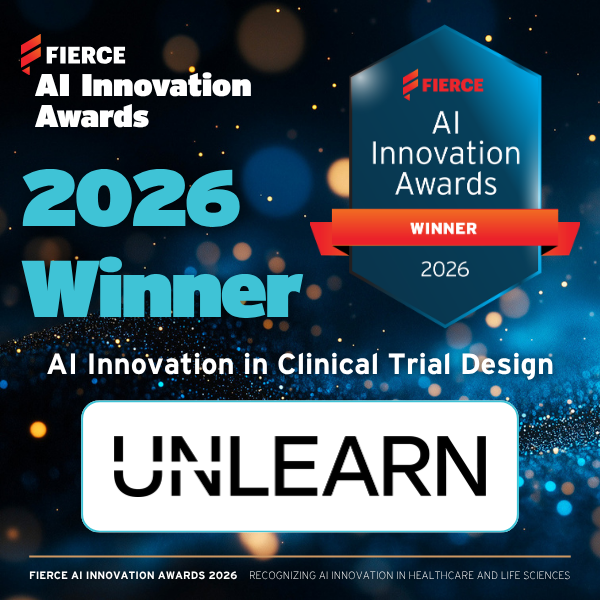
➡️ Being named the 2026 Fierce AI Innovation Award for Clinical Trial Design
All of it driving our work heading into Q4.
Read his full reflection here: https://t.co/9bCOtGVtE9
Dario Amodei argues #AI will generate more #drugcandidates than the system built to test and approve them can handle. If he's right, the bottleneck moves downstream, to how quickly and how credibly #trials can be run and reviewed.
📅 On September 28, Dr. Tala Fakhouri (Parexel; authored FDA's first AI guidance at CDER), Dr. Barbara Bierer (Harvard Medical School, MRCT Center), and Dr. Jon Walsh (Unlearn) get into which uses of AI in trials are defensible today and what #regulatory review needs to become.
45 minutes of discussion, then your questions live. 🚀
Register: https://t.co/Jri8FKBw77
🎉 Unlearn has been named a winner in the first-ever Fierce AI Innovation Awards, in the Clinical Trial Design category!
Every #clinicaltrial is a chain of high-stakes decisions made across fragmented data, tools, and institutional memory. We built Unlearn to be the scientific intelligence layer for #clinicaldevelopment: integrating the evidence, modeling, and reasoning behind those decisions so trial teams can commit with confidence.
Thank you to @LifeSciEvents and the judges, and congratulations to the other honorees. Most of all, thank you to the sponsors who have trusted us as a partner in getting treatments to patients faster. #FierceAIInnovationAwards
🎉 Please join us in congratulating Andrew Stelzer, who has been promoted to Chief Commercial Officer at Unlearn.
Since joining as Head of Business Development five years ago, Andrew has been instrumental in building the partnerships that bring digital twins of patients into clinical development. He leads with both strategic vision and genuine care for the people around him, and that combination has meaningfully shaped our momentum as a company.
Congratulations, Andrew. We are excited for what comes next. 🚀