Former bee rancher. ASVAB waiver holder. Volcel. Noble Eagle Veteran. I am like sunshine and kittens. Third Amendment absolutist. Sometimes known as Dave.
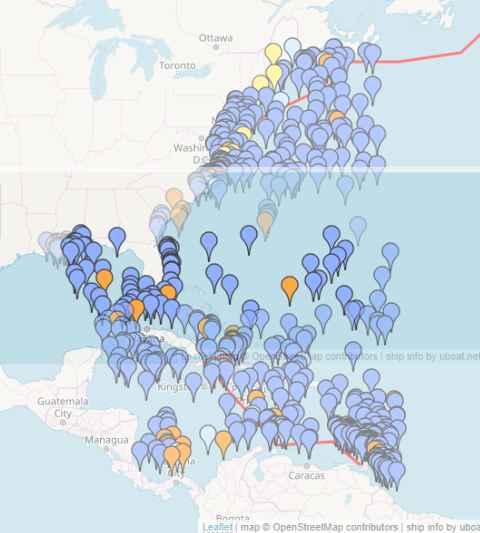
One of the least understood campaigns of the Second World War was Japanese, German, and Italian submarine assault on America (the whole continent).
In December 1941, nine Japanese I-Boats arrived on station off the West Coast of the United States, and nearly two dozen others off Hawaii. The west coast boats attacked eight ships and sank two ships and damaged two others. The result was the creation of a inter-locking convoy system between West Coast ports and the use of elements of the Pacific Fleet to escort convoys to Hawaii and prevent its isolation by a program of unrestricted submarine warfare by the Japanese. However, the latter never happened.
In the meantime, the Germans dispatched the vanguard of a fleet of U-boats to the east coast of North and South American. Five Type IXC submarines initiated Operation Drumbeat in January 1942. All told, German submarines completed 184 patrols until August 1942, ranging from the St. Lawrence River to the Gulf of Mexico, Panama Canal and Caribbean Sea.
The German and Italian submarines sank 609 ships for 3.1 million tons. These represent one-quarter of all the ships sunk by German U-boats during the war. All of this for the loss of 22 U-boats and in exchange they sank 143 tankers. In the meantime, the Allies focused their limited escort fleet on maintaining the Lend-Lease convoys across the Atlantic and transporting the first elements of the U.S. Army and Air Forces to Europe.
In the Pacific, the US had to commit seven cruisers and fifteen destroyers to convoy operations, while Japanese I-Boats took aim at the U.S. fleet and damaged the carrier Saratoga and sank the oiler Neches in January.
The Battle for America's oceanic supply lines in 1942 are a story that is not widely known but absolutely essential to understand how the Allies eventually achieved mastery of the seas.
The Soviets could only dream of having a technology such as this. Words censored straight from your lips before they can touch the sensitive ears of your fellow citizens.
There is a sort of person that would lament the indoor toilet and reminisce about the sound and smells of chamber pots being emptied into the street. Managing waste of all kinds is foundational to a functioning society. This is ~1,000 times more important than free car storage.
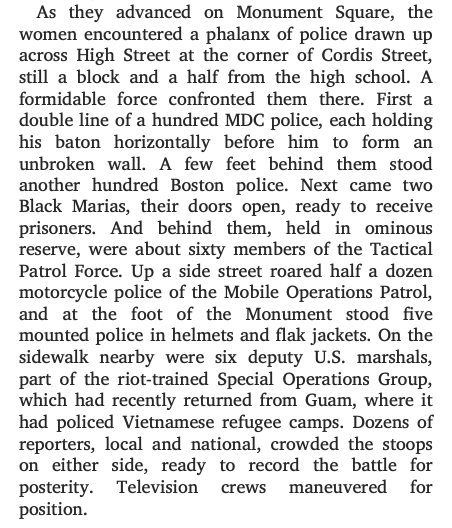
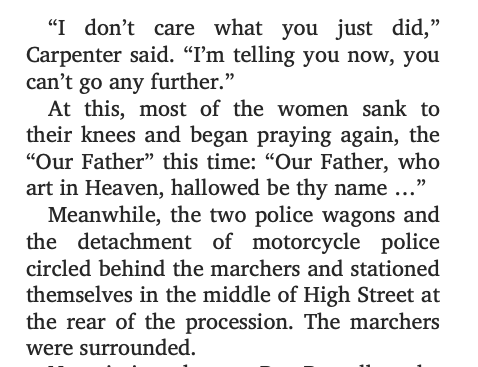
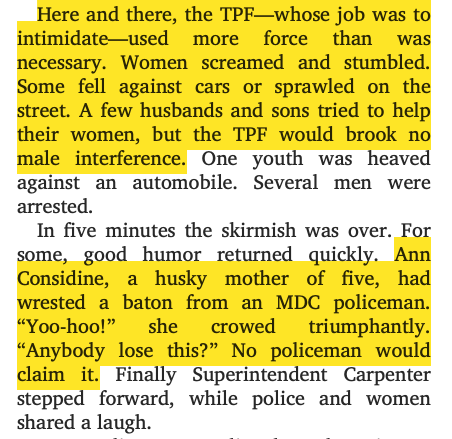
Was thinking about the 1975 anti-busing "Hail Mary" protest in Boston. White working-class mothers - not really understanding the nature of the regime - attempted a "Civil Rights"-style "non-violent demonstration." Needless to say they were met with overwhelming force and beaten.
"You know, a couple works of hard sci-fi actually perfectly predicted what AI would really be like."
"Huh? What were they?"
"Star Wars and Hitchhiker's Guide."
"You're not wrong but fuck you."
If snakes aren't worrisome enough, watch this.
Reedsnakes have found a way to move super-fast, rolling while keeping their head pointed forward. You'd need to sprint to outrun one.
Luckily, they're not venomous, but I hope they don't teach the other snakes ...
full video: https://t.co/WgqKMxbXjE
Frenchmen’s priorities, according to a remarkable story by a Swede visiting 1,200 French POWs at Knowle, near Bristol, in the unusually cold January of 1760:
‘The cold was now severe, the window-holes all open, and their clothes in the poorest condition. When I lamented this in conversation with an Englishman standing there at the place, he said that they are truly to be pitied, "but not so much as you think; for besides the Crown providing each man 6 pence a day for food, collections have been made by private people for clothes for them. The greater part of the clothes they have both received and sold for ready money, without using any of it for food or drink, since they do not consume more than their 6 pence a day, and sometimes not that."
"Do they then rather save up money during their captivity," I said, "than free themselves by proper clothes from the hardships which the present cold doubtless brings to them more than to others?"
"By no means," he answered; "but if they did not sell their shirts in the present circumstances, how could they then get now and then a visit from girls, without whom they say they cannot live?"
I continued my walk a little further, then turned back and fell in with some milkmaids, who were more finely dressed than usual. I asked them where they were going so late with milk. "To the french gentlemen," they answered quite officiously.
I asked them whether the French could speak with them. "Yes, yes," they all answered with one voice, adding that they had taught them most of their English. From this, as well as several of their answers, I understood that the Englishman had told the truth, and that these nymphs were just the ones who had stripped the poor Frenchmen and now exposed them almost naked to the cold, unusual in this place.’