Hey Twitter, we’re Unscammed AI.
We help scam victims file reports with the relevant banks, authorities, and fraud reporting agencies based on their location and the type of scam.
The most dangerous scams aren’t always the ones that look suspicious.
They’re the ones that look like a life-changing opportunity.
If a job requires upfront payments, crypto transfers, gift cards, or unusual personal information, treat it as a red flag.
#JobScams #FraudPrevention #Scam #ScamAwareness
Lured by the promise of well-paying jobs, hundreds of thousands of people are getting caught up in one of the world’s most sophisticated fraud networks. https://t.co/rN7slBkkli
Not every scam looks like a scam.
Some arrive as fake invoices. Others create panic with urgent threats claiming to be from government agencies, banks, or law enforcement. And increasingly, scammers are targeting employees to gain access to company systems, payments, and sensitive information.
The common theme? Pressure. Urgency. And a request to act before you verify.
Always take a moment to slow down, confirm the source, and double-check any unexpected request involving money, credentials, or personal information.
If you’ve been targeted by a scam, make sure you report it.
Visit https://t.co/xHy0zkBjp4 to learn more and report a scam to the relevant banks and authorities.
The crackdown on scam compounds in Cambodia is leading some gangs to relocate to beach resorts and office buildings in Sri Lanka, in what may be the next phase of one of the world’s fastest-growing criminal industries. Read more: https://t.co/adcz5wVlvN
📷️: Ishara S. Kodikara/AFP/Getty Images
Most people know not to click a suspicious link.
But what would you do if a brand-new phone showed up at your door for free?
Scammers are getting creative because curiosity is often easier to exploit than fear.
If something like this happens, DO NOT activate the device, scan any QR codes, or share personal information.
Contact the sender and local authorities to verify where it came from.
And if you've already been targeted by a scam, make sure you report it.
We can help you report it to the relevant authorities, banks, and agencies.
Visit https://t.co/xHy0zkBjp4 to report a scam for free.
News Source: https://t.co/XlpQzZ9zSw
A reminder that scammers will impersonate almost anyone, including government officials.
Always verify before sending money, gold, gift cards, or personal information.
If you've been scammed, report it. Every report helps investigators connect the dots.
Visit https://t.co/xHy0zkBjp4 if you need help reporting a scam.
🇮🇳🇺🇸 Ligneshkumar H. Patel from Illinois posed as a government official to scam elderly Americans.
He stole $2.23 million in cash and gold.
Patel was arrested and sentenced to 90 months in prison.
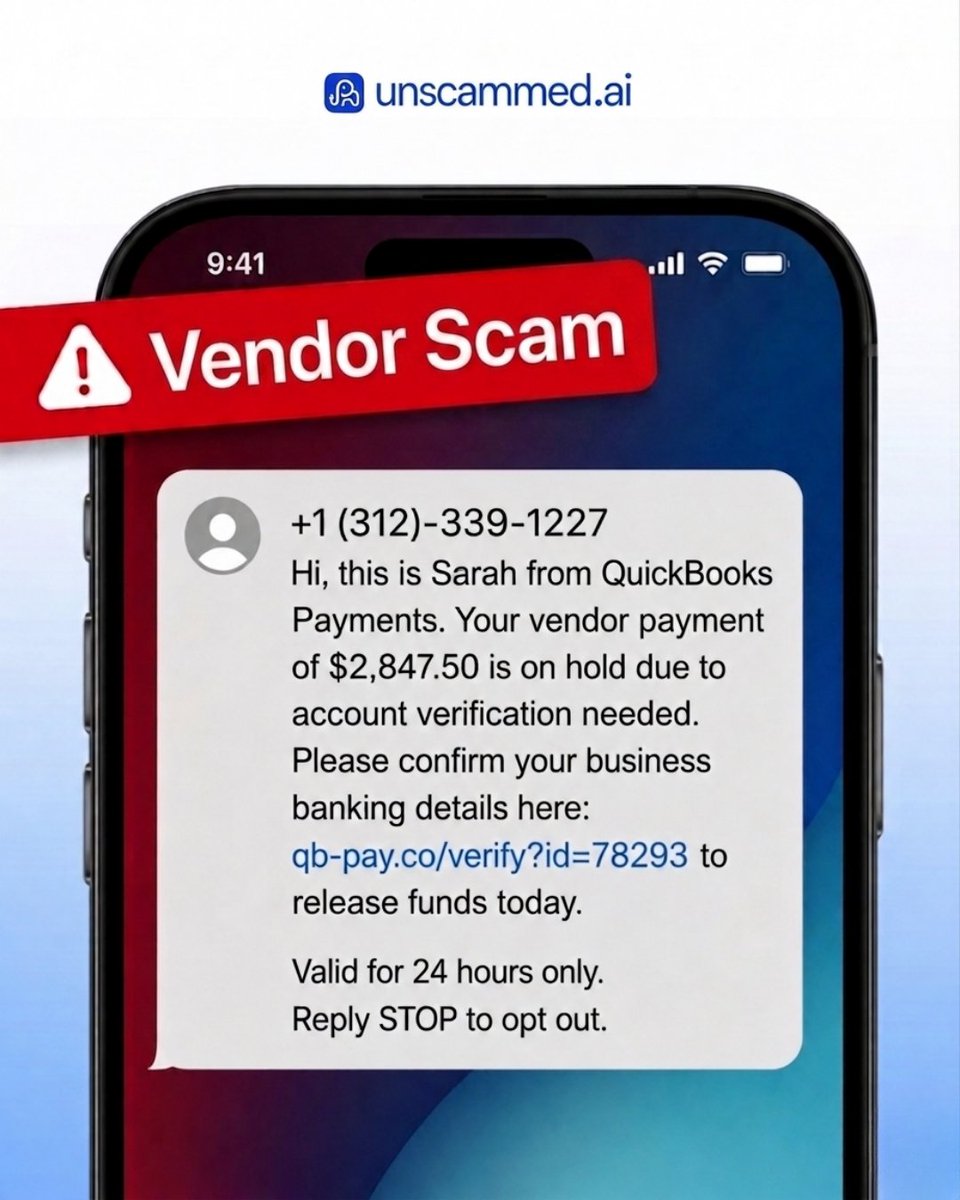
Scam messages are becoming more targeted, more believable, and harder to dismiss at first glance.
Vendor payment requests, travel offers, lottery notifications, and job opportunities are all being used to push people toward fraudulent links.
The message may look routine. The sender may appear familiar. The offer may seem time-sensitive. That is exactly why these scams work.
Before clicking any link, verify the source through an official channel.
Check the sender, review the URL carefully, and avoid sharing payment details, passwords, verification codes, or personal information through unexpected messages.
If you have been scammed, make sure it is reported to the relevant authorities and your bank.
If you need help with the reporting process, visit https://t.co/xHy0zkBjp4
AI scam calls are becoming harder to spot, which makes reporting even more important.
If you receive a suspicious call pretending to be from a bank, Medicare, GP, or even a family member, pause before acting and make sure you report it.
If you need help reporting a scam in Australia, we can assist: https://t.co/ponudPwFiq
Your identity is at risk.
Our Australian government still uses voice print biometrics to identify you for all tax, ATO, government services.
Voice clone threats at major levels in Australia. All it takes is a spoofed number and a copy of your voice print.
"In Australia, my voice identifies me".
Stories like this show why reporting matters.
Scams can cross borders fast, and the sooner victims come forward, the easier it becomes for authorities to investigate.
If you’ve been scammed or suspect fraud, don’t stay silent. Report it as soon as possible.
And if you need help, we can assist you as well.
Unscammed is now live in Australia: https://t.co/ponudPwFiq
Scammers are using more platforms than most people realize.
We wrote a quick guide on where to report identity theft, crypto scams, and payment scams, so victims know what to do after something happens.
If you or someone you know has been targeted, this is a good place to start.
And if you have been scammed, we can help you report it at https://t.co/xHy0zkALzw!
Always be careful with donation links, even when the story feels urgent or emotional.
And if you’ve been a victim, make sure you report it to the authorities. It helps create a record, protects you, and may help stop the same scam from reaching other people.
If you need help figuring out where to report, we can help.
Visit https://t.co/xHy0zkBjp4 to report a scam.
Scammers do not care how old you are.
They only care if they can catch you off guard.
Young adults are often targeted through fake jobs, investment offers, and online shopping scams.
Parents may get caught through fake websites, payment scams, and family-related impersonation tactics.
Older adults are often hit with bank, tech support, and government impersonation scams.
The tactics may change depending on the person, but the goal is usually the same: create pressure, build trust, and get someone to act before they have time to verify.
So if something feels rushed, emotional, secretive, or too good to be true, take a step back before sharing information or sending money.
And if it already happened, https://t.co/NwOm1GWkzA helps scam victims report what happened to the relevant banks, authorities, and fraud reporting agencies.
You can learn more or start a report on our website: https://t.co/xHy0zkBjp4
This is not just happening in India.
Online shopping scams are rising everywhere, and scammers are no longer only targeting older people. Students, young professionals, parents, and everyday buyers are getting caught too.
Fake discounts, flash sales, cloned websites, and “limited-time” offers are all part of the playbook.
If a deal looks too good, slow down before you pay.
𝐂𝐨𝐧𝐬𝐮𝐦𝐞𝐫𝐬' 𝐝𝐞𝐞𝐩𝐞𝐧𝐢𝐧𝐠 𝐭𝐫𝐮𝐬𝐭 𝐟𝐨𝐝𝐝𝐞𝐫 𝐟𝐨𝐫 𝐨𝐧𝐥𝐢𝐧𝐞 𝐟𝐫𝐚𝐮𝐝𝐬? 𝐆𝐨𝐯𝐭 𝐢𝐬𝐬𝐮𝐞𝐬 𝐬𝐚𝐟𝐞𝐭𝐲 𝐝𝐢𝐫𝐞𝐜𝐭𝐢𝐯𝐞𝐬
The government has issued a nationwide alert warning consumers about rising online smartphone shopping scams, where cybercriminals are exploiting fake discounts, flash sales, and deceptive offers to target buyers across India.
Read more: https://t.co/cEjg2TrKbk
#OnlineShopping #Fraud | @aajtakjitendra
If this already happened, save everything before you delete or block them.
Screenshots. Phone numbers. Emails. Payment details. Remote access app names. Any messages they sent.
Then report it to your bank and the relevant authorities.
Need help figuring out where to report it?
Visit https://t.co/xHy0zkBjp4
Tech support scams have changed.
It is not always someone saying your “computer has a virus” anymore.
Scammers now pretend to be from your bank, internet provider, antivirus company, online store, utility provider, printer support team, or crypto exchange.
Same trick but better disguise.
It usually starts with something designed to make you panic:
• A pop-up warning
• A random support call
• A text about account security
• A fake customer service website
• An ad with a “help” number
The message is always the same:
Something is wrong, and you need to act now.
The biggest red flag: They ask for access or payment.
That can mean remote access software, passwords, verification codes, gift cards, wire transfers, crypto, or a “service fee” to fix the issue.
Real support will not pressure you into giving control of your device.