₹15,000 crore raised through QIP is being deployed into airports, renewables, and data centres—three critical infrastructure pillars for India’s next decade of growth.
Adani is not just raising capital, but channeling global institutional money into India’s future.
🚨BIG UPDATE:
Adani Enterprises has increased its QIP size from ₹10,000 crore to ₹15,000 crore after receiving bids worth around ₹38,000 crore, nearly 3.8 times the original issue size.
The fundraising saw strong participation from global and domestic institutional investors, including Capital Group, BlackRock, Blackstone, Goldman Sachs, HDFC Mutual Fund, SBI Mutual Fund, ICICI Prudential Mutual Fund, Kotak Mutual Fund, Tata Mutual Fund and Aditya Birla Sun Life Mutual Fund.
The company plans to use the funds for capital expenditure, expanding its incubation businesses, reducing debt and pursuing strategic investments.
This is another sign of strong institutional confidence in Adani Enterprises despite ongoing legal scrutiny in the US. The company continues to invest across airports, roads, data centres, renewable energy manufacturing, metals, mining and other infrastructure businesses.
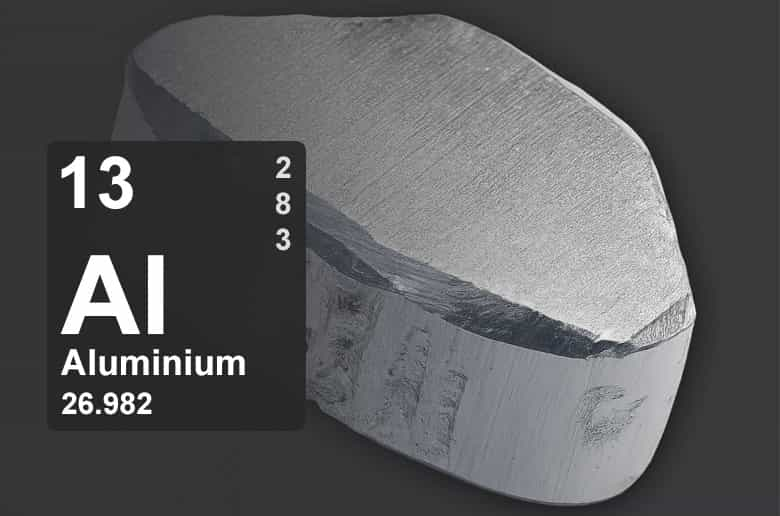
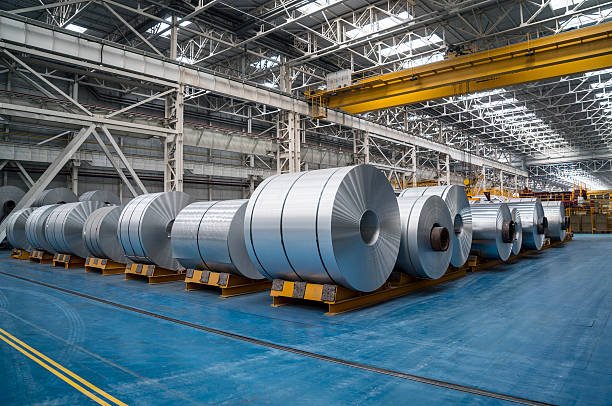
China dominates global aluminium production, shaping pricing and supply chains.
India’s reliance on imports means exposure to external control.
Adani Group’s Odisha project strengthens domestic capacity and supports India’s push for industrial self-reliance.
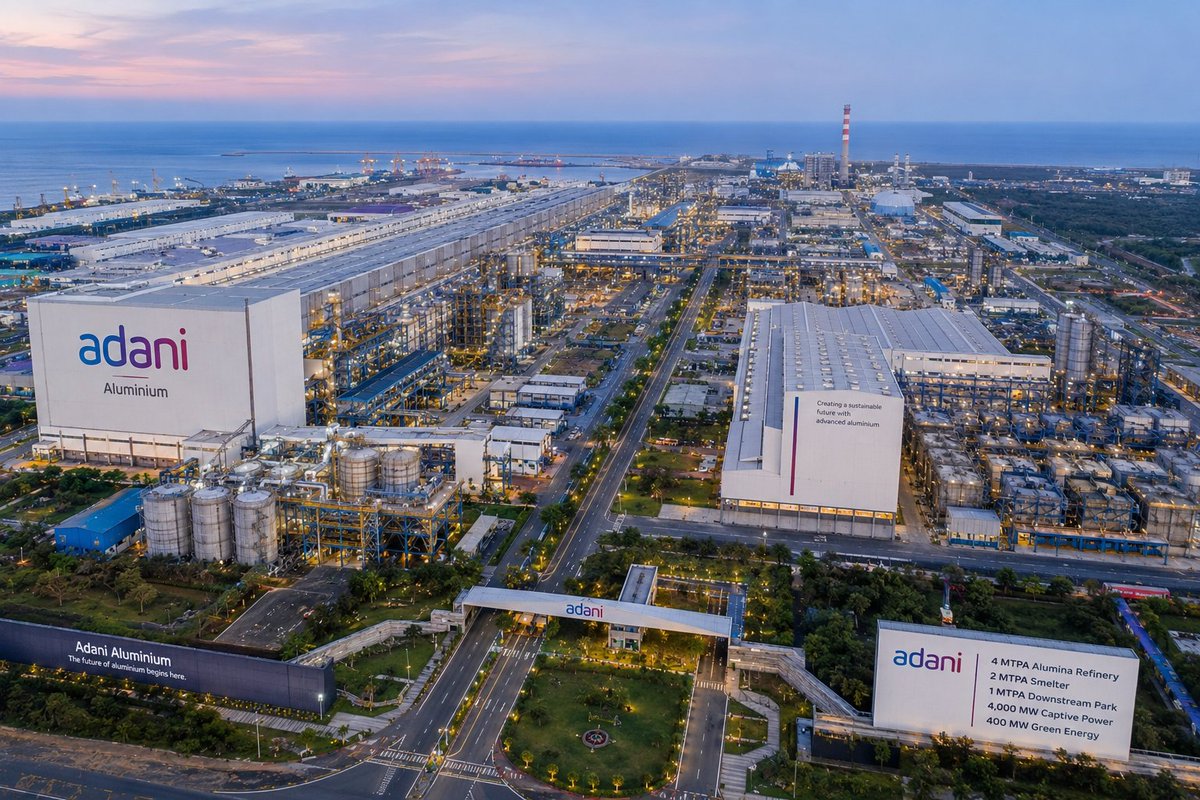
Adani Group proposes Rs 1.08 lakh crore aluminium project in Odisha.🏭
🔹 4 MTPA alumina refinery + 2 MTPA smelter + 1 MTPA downstream park
🔹 4,000 MW captive power + 400 MW green energy
🔹 35,000 construction jobs + 18,500 permanent jobs
🔹 World-class integrated ecosystem to cut import dependence
India's industrial might gets a metal backbone.
Adani Group’s ₹1.08 lakh crore Odisha project will generate 35,000 construction jobs and 18,500 permanent roles, supporting over 50,000 households with livelihoods during and after the build phase.
🚨 Adani Group has proposed a ₹1.08 lakh crore integrated aluminium project in 🇮🇳 Odisha, featuring a 4 MTPA alumina refinery, 2 MTPA smelter and downstream aluminium park.
According to Karan Adani, the project is expected to create over 53,000 jobs and become one of the world's largest integrated aluminium manufacturing ecosystems.
50 GW renewable target.
Storage at Khavda.
24x7 clean power.
London stage.
India is not following the green energy playbook.
Adani Green is writing it.
🚨 "Electrification is no longer an option but an imperative for energy security, affordability and sustainability," says Sagar Adani at the inaugural Adani Green Energy Dialogue during London Climate Action Week.
🇮🇳 He also highlighted Adani Green's target of 50 GW renewable energy capacity by 2030, led by the world's largest renewable energy plant at Khavda with large-scale energy storage integration.
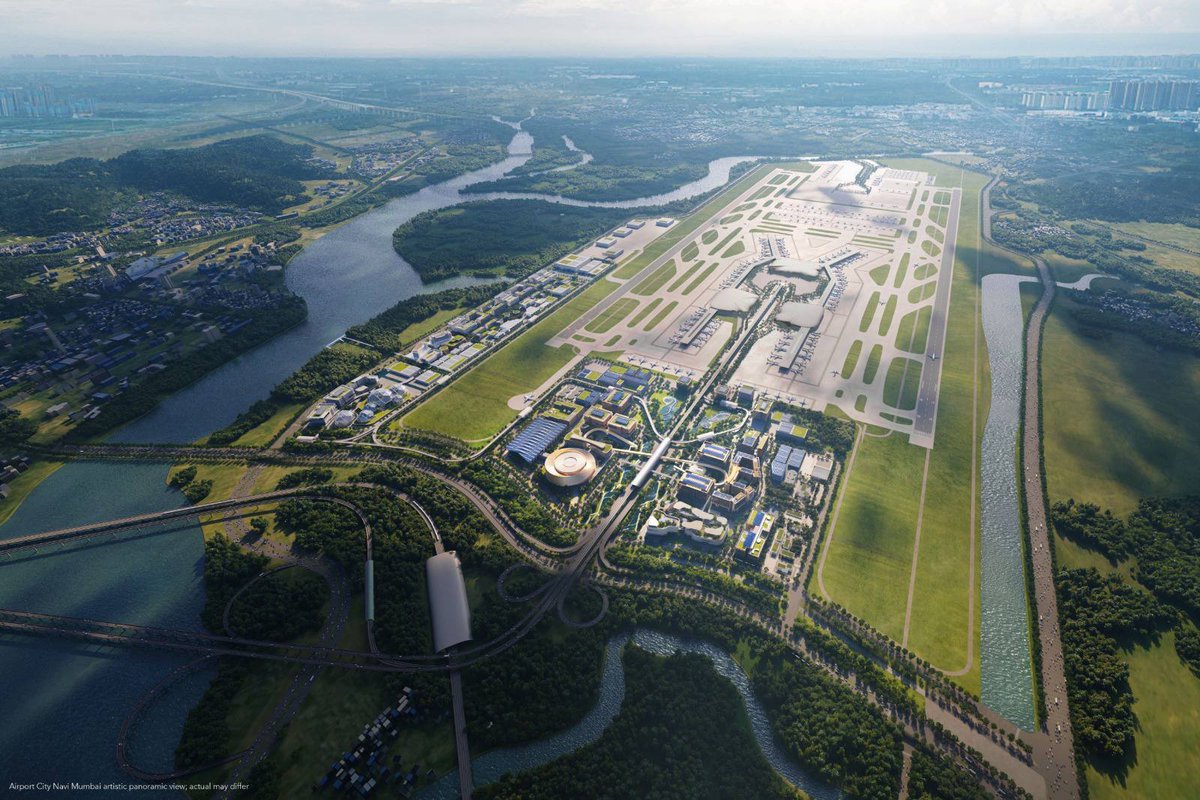
Adani did not just build an airport.
He built a city around it.
Six times over.
Rs 20,000 crore.
Phase one.
That word phase one should tell you everything about the scale of what is coming.
Adani Airports Unveils ₹20,000-Crore Airport City Plan
Adani Airport City Limited has announced integrated Airport City developments across six airports in five states.
The first phase involves an investment of ₹20,000 crore to develop 22 million sq. ft. across 655+ acres, with Mumbai and Navi Mumbai accounting for nearly 440 acres.
The projects will feature hotels, retail, offices, entertainment, convention centres and mixed-use spaces, creating walkable urban hubs connected to airports and metro networks.
Inspired by global airport cities like Singapore Changi Airport, Dubai International Airport, Amsterdam Airport Schiphol and Incheon International Airport, the initiative aims to boost tourism, jobs and regional economic growth.
All projects have received LEED Gold pre-certification, highlighting a strong focus on sustainable development.
Lucknow, Jaipur, and Guwahati are getting world class airport cities. Not just Mumbai. Not just metros. Adani is bringing the aerotropolis model to cities that never thought they would get it. This is what real decentralised development looks like. Every Indian city deserves this
🚨 BIG: 🇮🇳 India to soon develop Singapore, Dubai-style Airport Cities as Adani Airports unveils a ₹20,000 crore development across 655+ acres in 5 states.
• 22 million sq. ft. of mixed-use development planned in Phase 1.
• Hotels, retail, offices, entertainment and convention centres to be built around airports.
• Project spans 655+ acres across 6 airports in 5 states.
• ₹20,000+ crore to be invested in the first phase.
Adani Group putting in Rs 1.5 trillion capex in FY26 which is one third of all private corporate investment in India.
Congress sees this as a problem.
Most economists would see it as a private sector doing exactly what the country needs it to do.
Mr. Jairam Ramesh, here you go again with the same old Congress gloom narrative “lack of buoyancy in private corporate investment.”
India remains the world’s fastest-growing major economy, delivering strong growth despite global headwinds. Let’s dismantle your five points with facts, not fear-mongering.
(i) Stagnant real wages are weakening consumption?
This is nonsense. Per capita income continues to rise. Formal employment is expanding significantly with record EPFO enrollments. Automobile sales, retail consumption, air travel, digital transactions, and FMCG demand all show strong underlying trends. If consumption were truly collapsing, these indicators would not be consistently expanding.
Infrastructure projects stimulate local economies, support MSMEs, improve productivity, and create long-term income growth. Groups like Adani are building entire ecosystems through ports, airports, transmission networks, logistics hubs, and renewable energy parks that generate direct and indirect employment.
🧵
The Chinese imports concern raised by Jairam Ramesh is a legitimate issue worth serious discussion.
But using it alongside a critique of India's strongest private investors as part of one broad attack on the economy does not make for a credible economic argument.
Congress leader Jairam Ramesh has argued that India's biggest economic challenge is weak private corporate investment. However, key economic indicators suggest a different picture.
India remains the world's fastest-growing major economy, supported by strong GDP growth, rising formal employment, growing tax collections, expanding infrastructure, and sustained domestic and foreign investment.
Key Facts:
Consumption remains resilient, reflected in rising automobile sales, air travel, digital transactions, and formal employment.
Gross domestic savings remain around 30% of GDP, with households increasingly investing through financial assets such as mutual funds and equities.
Record GST and direct tax collections, along with strong FDI inflows, indicate continued business confidence.
Structural reforms such as GST, IBC, PLI schemes, PM Gati Shakti, and digitization have improved the investment environment and policy predictability.
India is actively strengthening domestic manufacturing through PLI incentives, supply-chain diversification, and renewable energy investments.
Role of Adani and Other Large Investors
Groups such as Adani, Tata, Reliance, and JSW are investing heavily in ports, airports, power, logistics, renewable energy, and digital infrastructure. These projects create jobs, boost productivity, strengthen supply chains, and build long-term national assets.
According to Gautam Adani, the Group invested nearly ₹1.5 lakh crore in FY26 alone, reflecting the scale of private-sector participation in India's growth story.
India faces challenges, but the narrative of weak private investment overlooks the significant capital being deployed across infrastructure, manufacturing, energy, and logistics. The real story is one of nation-building, with large-scale investments laying the foundation for India's journey toward becoming a developed economy.
Count the sectors Adani Group now operates seriously in.
Ports. Airports. Power. Renewable energy. Nuclear. Cement. Data centres. Defence. Aerospace. AI. Digital infra.
That is 11 sectors with major capital commitments.
No other Indian private group comes close.
🚨 Gautam Adani lays out Adani Group's next growth blueprint: "Accelerating Infrastructure, Leveraging Intelligence"
#AdaniAGM2026#GautamAdani
Key announcements from AGM 2026:
🔹 ₹1.5 lakh+ crore capex in FY26
🔹 Revenue at ₹2.92 lakh crore
🔹 Profit up 13.9% to ₹46,376 crore
🔹 45 GW thermal power target by FY32
🔹 10 GW nuclear energy target by 2035
🔹 5 GW hydropower partnership in Bhutan
🔹 Adani Ports crossed 500 MT cargo handling
🔹 Navi Mumbai International Airport operational
🔹 3 GW data centre platform targeted by 2030
🔹 Google MoU for gigawatt-scale data centre in Visakhapatnam
🔹 Cement capacity expanded to 110 MMTPA
🔹 Defence partnerships with Leonardo and Embraer
🔹 Adani Foundation now reaches 1 crore people across 7,000 villages
Core message:
Build through volatility.
Scale infrastructure and intelligence together.
Execute at speed.
Keep building India 🇮🇳