"Self-Supervised Representation Learning for Astronomical Images
Md Abul Hayat, George Stein, Peter Harrington, Zarija Lukić, Mustafa Mustafa
https://t.co/81q2KmcnEC
I am looking for a job in Microscopy
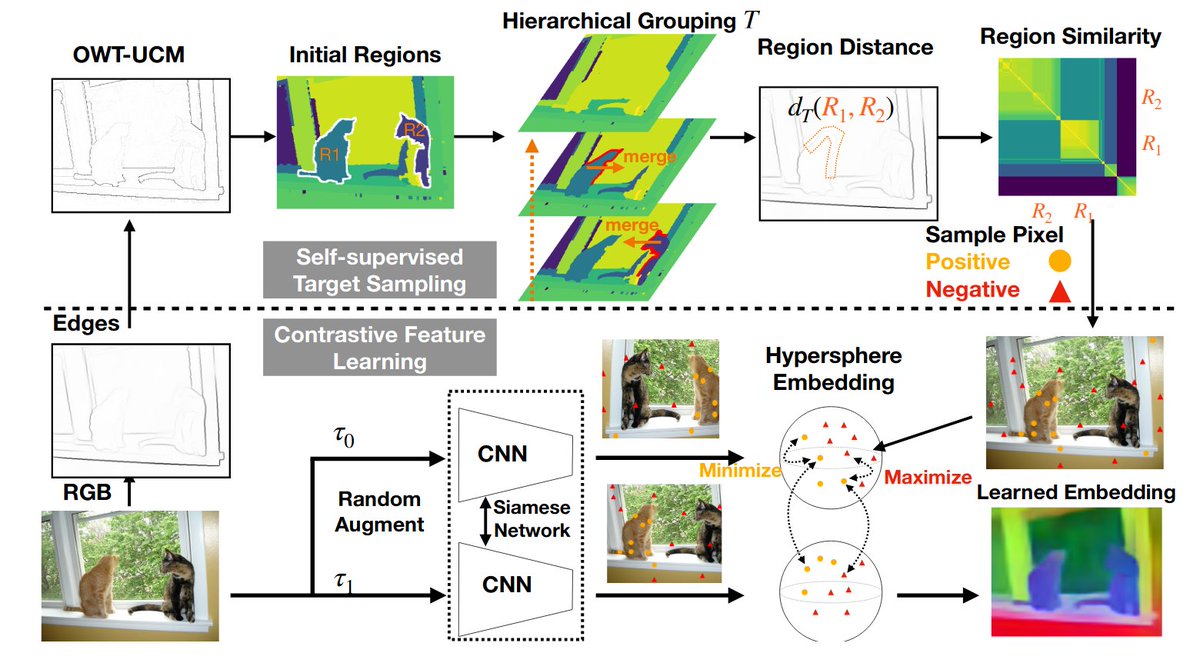
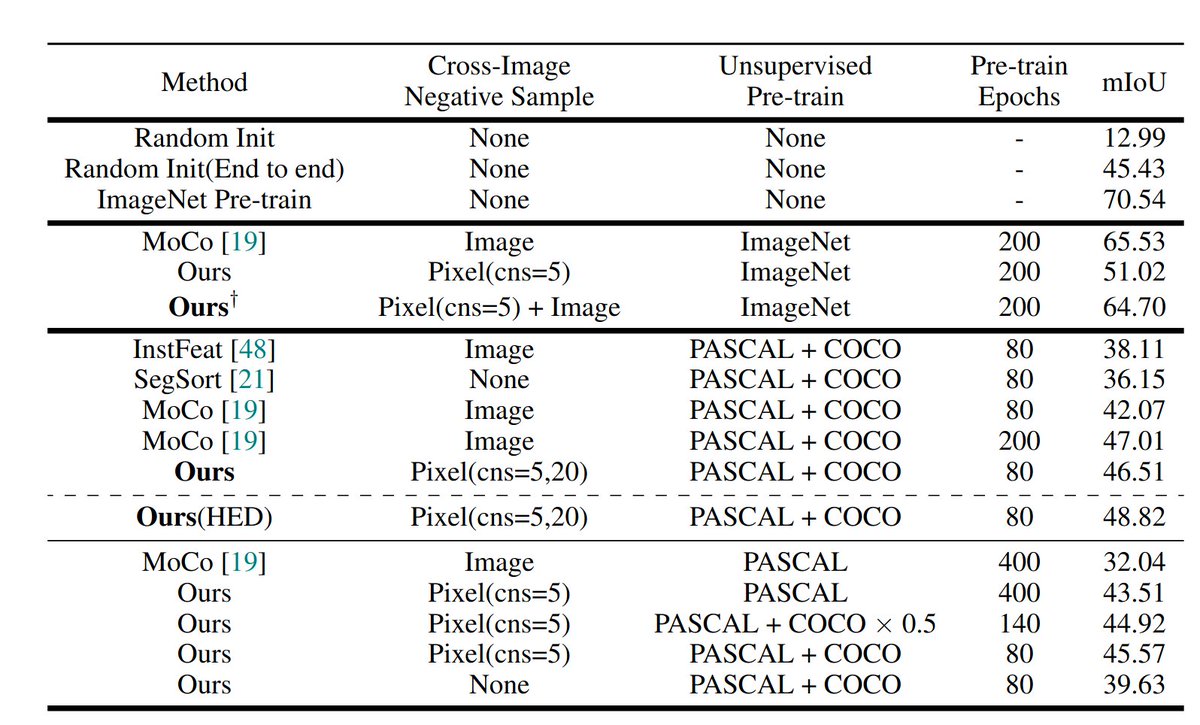
Self-supervised visual representation learning from hierarchical grouping
arxiv: https://t.co/YPyK7BKpNy
Use contours to partition image; group into hierarchies; loss is pairwise contrastive using positive/negatives from the grouping
Welcome, FERM from researchers @UCBerkeley, a framework that can train a robotic arm on 6 grasping tasks in less than 1 hour given only 10 demonstrations utilizing data augmentation, unsupervised and reinforcement learning for sample-efficient training.
https://t.co/IreF7V4XBc
1/6 Check our new paper on Flexible Few-Shot Learning! https://t.co/bMx7WqrcIs
We extend FSL to include flexible classification criterion in each episode. Unsupervised representation learning beats supervised approaches.
Short version @ #NeurIPS2020 metalearn workshop, 10am EST
Our new paper "𝐔𝐧𝐬𝐮𝐩𝐞𝐫𝐯𝐢𝐬𝐞𝐝 𝐩𝐚𝐫𝐭 𝐫𝐞𝐩𝐫𝐞𝐬𝐞𝐧𝐭𝐚𝐭𝐢𝐨𝐧 𝐛𝐲 𝐅𝐥𝐨𝐰 𝐂𝐚𝐩𝐬𝐮𝐥𝐞𝐬" is out https://t.co/0t4XH4FH8H
TL;DR: are newborns exposed to 14 million (i.e. ImageNet) labeled images? No! They learn by observing motion... in an unsupervised fashion
@hyonschu This is very interesting. Why do you think current unsupervised methods are not privy to natural categories? Why are they so elusive if they are natural?
This really resonates. AI/ML research is generally too focused on generating ‘novel’ methods, and re-branding tweaks on existing methods, rather than finding connections between existing methods, and solving real problems.