@alaa “All of the internet is now dual use”. The same AI systems are used to control migration, target people in Gaza and surveil dissidents in the Arab world, while the infrastructure itself is concentrated in the hands of Google, Amazon and other major players.
#BigTech#AI#Gaza
“We need to become much more hostile toward them”, he says of Big Tech. Alaa Abd el-Fattah argues the internet should be treated as a public utility, compares major platforms to Lockheed Martin.
“These monopolies need to cease to exist”
https://t.co/Fy7aqhPDF4
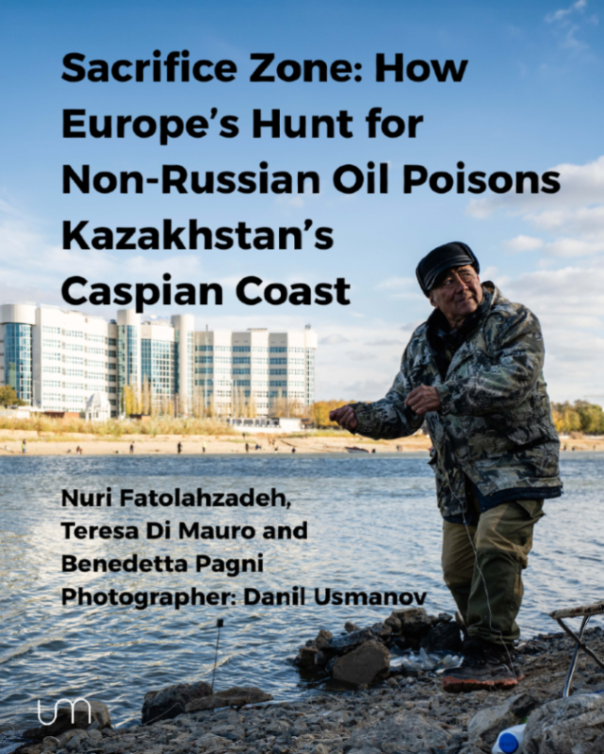
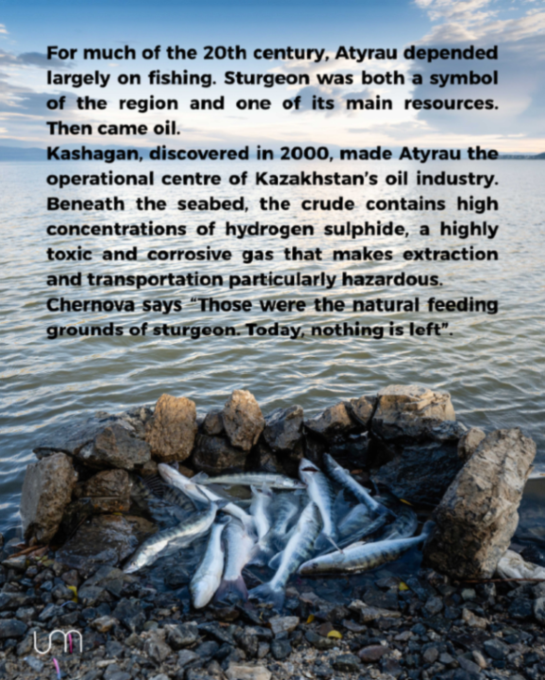
In 2025, 12% of Italy’s oil imports came from Kazakhstan. Much of that crude begins at Kashagan, passes through processing infrastructure near Atyrau.
https://t.co/iKWdFM0VQz
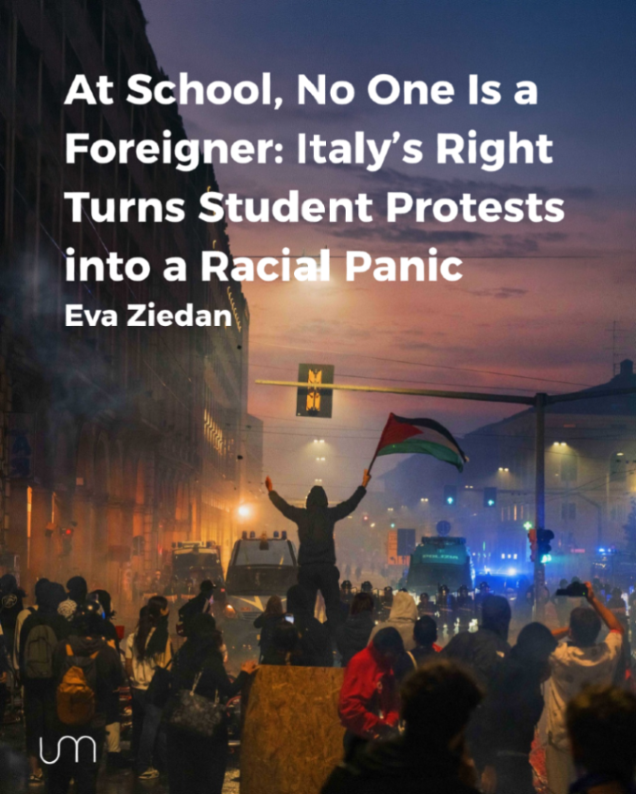
@asgi_it@APS_Lunaria@MicheleLapini The deeper question is how words make political classifications look natural. In colonial translations of Ibn Khaldun, jīl - generation, people - became “race”, turning fluid relations into fixed racial blocs.
Ep. 5 - “Trick or Treat?”
This Halloween, Calypse stands with the young people protesting across Europe and beyond against the bleak future imposed on them.
“Bismillah, c’est les ténèbres”.
Abu Calypse is an UntoldMag comic series created with artist Francesca Cogni.
War then made water a weapon. The Alouk station was repeatedly shut down, groundwater extraction spiralled. The lesson is stark: stability requires answering the ethnic and ecological questions together.
#Syria#NortheastSyria#Jazira#Kurds
In northeast Syria, the ethnic question and the agricultural question were never separate. In 1962, around 120,000 Kurds were stripped of citizenship overnight, barring them from owning property, voting or holding public jobs.
https://t.co/FdV0aPKoik
Then came the 2007 drought. Around 800,000 farmers and herders lost their livelihoods. Kurdish farmers were already carrying a “double fragility”: ecological exposure layered onto statelessness, unequal access to water, debt, and dispossession.
What can six young Bedouin women from Lebanon’s Bekaa Valley show us when they are the ones holding the camera?
In this research, Photovoice becomes a way to explore Bedouin Lebanese cultural identity through images, captions, and shared authorship.
https://t.co/pHD2SqN2qH
@EttijahatIndep Their stories move between dialect and stigma, marriage and tajyīr, education and work, illness and care, inherited customs and the desire to choose differently.
The images challenge simplified portrayals of Bedouin women as passive bearers of cultural legacy.
If you missed us - or didn’t get the chance to pick up a copy - you can still order our publications directly and join the community through UntoldMag membership.
https://t.co/nREUOc7xWt
Keep an eye on our socials - we’ll share the next chance to meet us in person soon.
@dianaabbany When these parties travelled back to the villages, music met tighter social limits. Today, amid erasure in South Lebanon, Diana Abbani returns to tapes, photographs and memories as a small archive of a scene that rarely entered official histories.
#Lebanon#JabalAmel#Beirut
Between Beirut and Jabal Amel, cassette tapes moved through radio stations, cars, private parties and village nights. For DJs Ali, Mohammad and Youssef, they were also the tools through which a new nightlife took shape in the 1980s and 1990s.
https://t.co/V2nFpuUBM4
@dianaabbany By the mid-1990s, Mohammad and Youssef had fitted a car with speakers and amplifiers and were playing parties across Beirut, the suburbs, the Bekaa and the South. House, Eurodance and hip-hop mixed with dabke and Arabic pop.