University of South Carolina's Prevention Research Center based in the @USCArnoldSchool helps communities improve their physical activity and healthy eating
Most people think about exercise and heart health. The gut rarely comes up. But regular movement supports a healthier, more diverse gut microbiome linked to immunity, metabolism, and chronic disease prevention.
Read more: https://t.co/r1va0eEWBe
PRC Director Dr. Sara Wilcox and Co-Investigator Dr. Andrew Kaczynski presented findings from the Faith, Activity, and Nutrition National Implementation Study at ISBNPA in Cádiz, Spain-103 churches, 23 states, evidence that faith communities are a powerful public health setting.
Your parents told you to go outside and play. Research suggests that advice still holds up. A review of 18 studies found that active outdoor play is linked to health benefits across all ages.
https://t.co/gUsHp2GKHC
Walking helps, but muscle strength may matter just as much. A JAMA Network Open study found stronger muscles were linked to lower mortality risk in older women even among those not meeting activity guidelines. Healthy aging starts with staying strong.
https://t.co/SdG1Hd37sM
You’ve heard it your whole life: An apple a day keeps the doctor away 🍎 Research links apples to lower risks of heart disease, diabetes, and some cancers. https://t.co/VhPcvHdoK4”
Did you know food preferences may predict longevity? A 2026 study of 177,000+ adults found that what people prefer to eat was significantly linked to mortality risk. Your relationship with food starts before the first bite.
https://t.co/pCyERbssfL
Skipping breakfast was linked in a 2025 review to higher odds of abdominal obesity, high blood pressure, high blood sugar, and high cholesterol. What you eat matters, but so does when.
https://t.co/uCcztLP0Z5
Community gardens do more than grow food. A 2025 study found a culturally tailored 8-week gardening program for Black women increased physical activity, fruit & veg intake, and mental health. https://t.co/3bG1JTXpXB
Seven percent. That is how many American adults actually meet the daily recommended fiber intake. Fruits, vegetables, whole grains, beans, seeds - the good stuff is right there. Most of us just are not getting enough of it. https://t.co/O3Nbnq8Hl2
That early morning walk or jog may be doing more than you think. Research linked morning exercise to lower risks of heart disease, high blood pressure, and high cholesterol. https://t.co/CkQCOA8zkB
Living near unhealthy food is not the same as living in a food desert. Research suggests food swamps may be linked to higher obesity rates and fewer healthy choices, especially in Black and Latinx communities. https://t.co/QAxzjwjJxi
BMI may not tell the full story. Research presented at the European Congress on Obesity found that more than one third of adults were misclassified by BMI compared to actual body fat measurements.
https://t.co/0PNmzRerGd
Racial gaps in food insecurity persist even at similar income levels. A JAMA Health Forum study found Black and Native American households faced higher food insecurity than white households over 23 years of data. SNAP helped, but gaps remained.
https://t.co/NOs7iTDNnx
What makes people stick with health programs?
It’s not just information it’s connection. Social support, practical guidance, and trusted community delivery drive engagement in underserved communities.
https://t.co/cW8po0hvy7
Exercise adaptations may start in the brain, not just the body. New research from UT Southwestern Medical Center suggests the brain helps drive endurance changes.
https://t.co/hstNlX6eS5
Physical activity may shape more than physical health. A new study in PLOS ONE links higher activity in youth to fewer emotional problems and stronger peer relationships. Movement matters for social development too. https://t.co/Bu7mgg8OCt
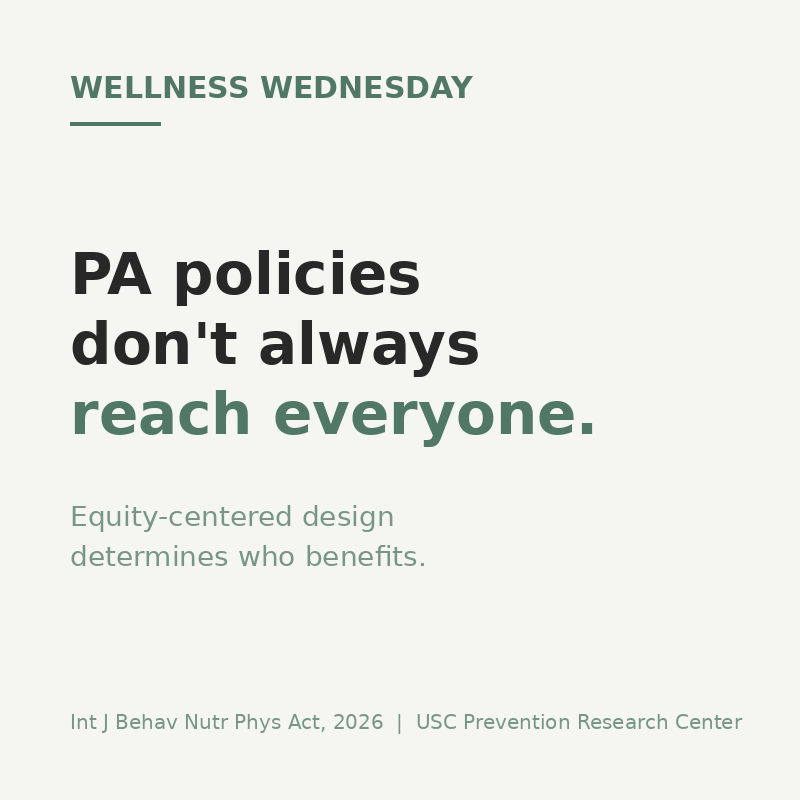
Many physical activity policies don’t reach those who need them most. A 2026 review found they often benefit higher-income groups more, widening gaps. Equity in design matters.
https://t.co/9R4CFJ4kbM
Turns out even small movements while sitting can support your health. A study in Experimental Physiology found light leg movement may improve circulation during long sitting so yes, even subtle movement counts.
https://t.co/ph832tFY2B
Classroom movement boosts engagement, but is hard to sustain. A BMC study shows the MAGIC program (training + support + resources) makes it practical in real schools. https://t.co/ed6vPKaPUk
Loneliness is more than a social experience it is increasingly recognized as a public health concern.
Research shows links to poorer health, physical limitations, and disrupted sleep even in healthy populations.
Social connection is part of health.
https://t.co/qrEV31IdFl