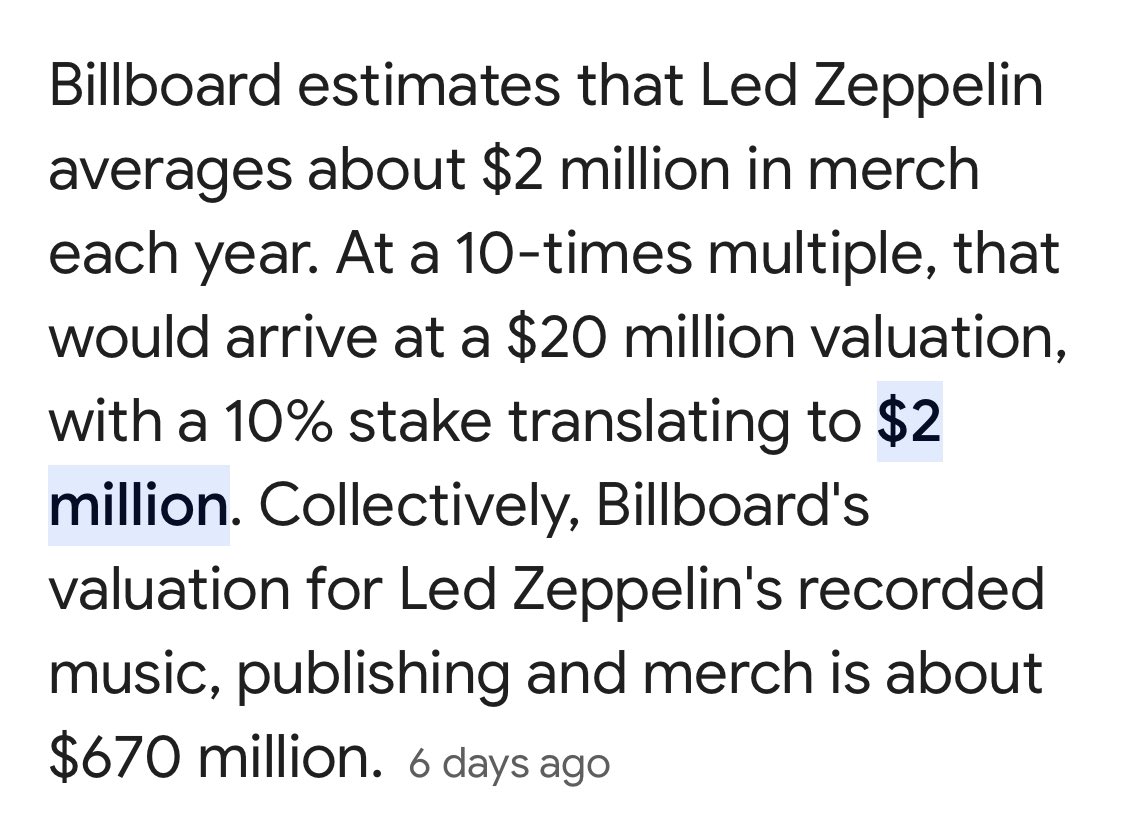
With @HipgnosisSongs leadership on shaky ground, they've been scrambling for ways to liquidate assets and court affluent investors, all without truly democratizing global access, ensuring fair compensation for original artists, or respecting intellectual property.
By opting for REG A, JKBX appears to be a cunning move by the Major Record Label system, aiming to extract liquidity from their existing assets, all while roping in a network of investors to inflate catalogue sales.
#musicrights#keepitreal
Attention, Retail Investors! @We_Are_JKBX (Jukebox) IS NOT your golden opportunity; intricately linked to the major record label system. But here's the kicker: the lion's share of the profits from royalty share purchases isn't going where you'd expect.
UMG vs TikTok has people questioning which artist will be affected so let me break it down quick.
The "Big Three" record labels, are:
- Universal Music Group (UMG):
- Sony Music Entertainment:
- Warner Music Group (WMG):
These three entities are the largest players in the global music industry
Fun fact I had to go to a gas station in Brooklyn NY to get air in this blow up suit & the suit blew up so big I couldn’t fit in the car so I had to walk back to set down the street in this outfit in BROOKLYN😳 dem ppl was riding pass like she must be high😩🤣😂
This is what happens when you chase the wrong things.
When artists are removed from context.
When it's all discovery & no retention.
When it's viral over everything.
We've been headed this way for a long time.
We need to start building from the ground up.
We need to change the incentives.
Elon Musk’s X files motion to dismiss music publishers’ $250m+ copyright lawsuit; NMPA says platform has ‘consistently failed’ to stop ‘rampant piracy’ on its platform - Music Business Worldwide https://t.co/O3O88j7cSl
In the 90s, Interscope Records was known for pushing the limits.
Here’s how the label used shock value to its advantage.
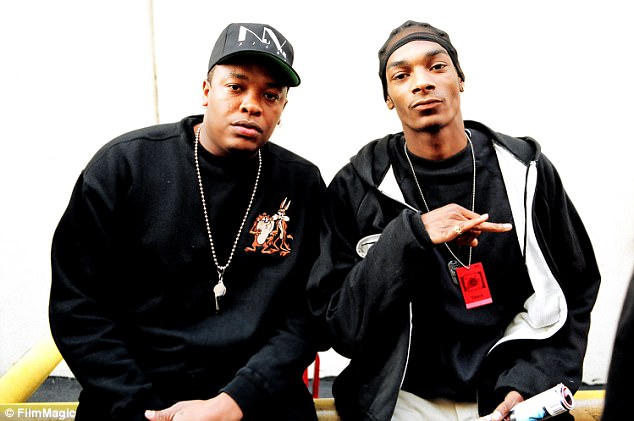
When Jimmy Iovine launched Interscope, he signed artists and groups that had an edge. From Dr. Dre and Suge Knight’s record label, to Nine Inch Nails, to Tupac Shakur to No Doubt.
The roster was stacked.
Controversy grew its awareness, but quality built its loyalty.
At the time “clutch your pearls” was a business model in culture and entertainment.
It was a formula to get noticed, get attention, and break through.
We even it in video games too.
To compete with the Super Nintendo, Sega Genesis leaned into more hardcore and adult games.
We saw it in TV, with MTV, and even shows like Jerry Springer.
The balance was to push boundaries without going too far, and they reaped the rewards.
Even when controversy reached a boiling point, Interscope prevailed.
After the infamous 1994 Crime Bill, the American spotlight was (unfairly) on gangsta rap as one of the problems.
Interscope stakeholder Time Warner faced mounting political pressure to disassociate from the label, and sold its $115 million, 50% stake back to Interscope in 1995.
The next year Interscope sold a 50% stake in the company to MCA for $200 million.
Interscope continued its edgy persona with successful artists like Eminem and 50 Cent in the 90s.
Followed by artists like Lady Gaga - who always made statements from her meat dress to the iconic "egg" entrance at the Grammys.
But today in the social media era, shock value has worn off.
Many artists have tried to succeed with "The Pump Plan" (a shock value-driven approach to break new artists), but few of those artists had longevity.
On social media, we can see it all.
Most shock value tactics today either fall flat, or go way too far and cause more problems for artists.
Interscope's '90s playbook was well-timed.
It wouldn’t work the same today but the label took advantage of the moment.
If you enjoyed this episode, we did a whole breakdown on the rise of Interscope:
https://t.co/AyZNXIfMKx
Which artists today do you think use this tactic (and actually do it well)?
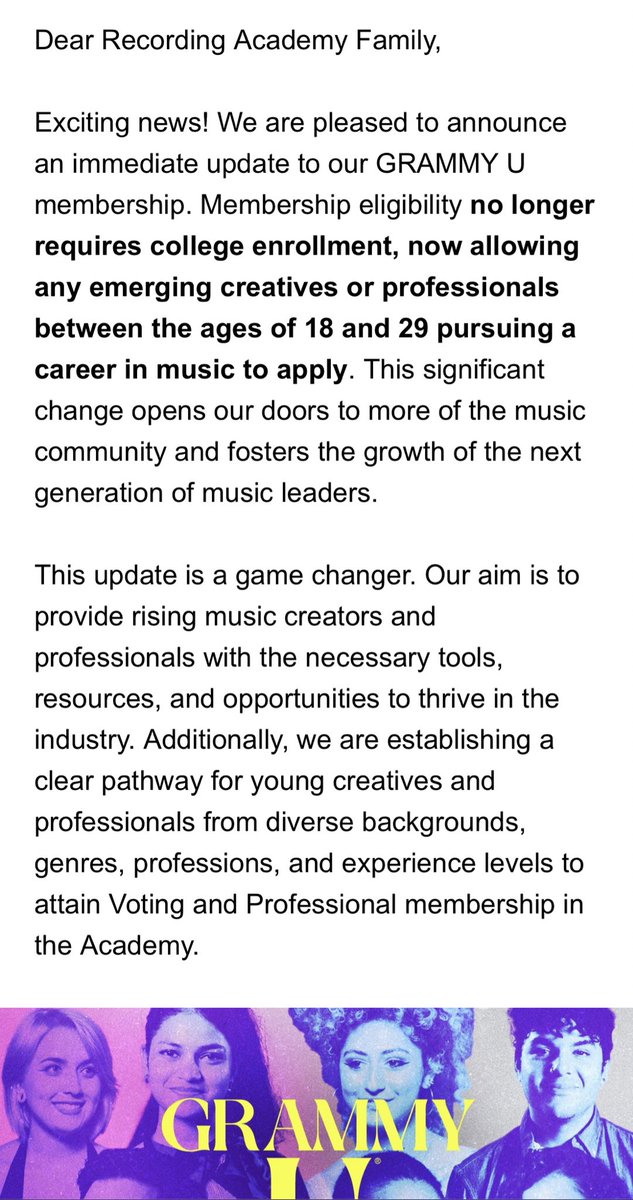
Every day, I get asked about mentorship so I’ve got some amazing news to share!
You can now join Grammy U for just $50 for 4 years. You get access to:
1. Networking opportunities
2. Mentoring from a music professional
3. Industry insights
4. Sharing your music to top professionals
I mentored an aspiring publicist last year. Who knows this year, it could me and you!
Full details from the @RecordingAcad: https://t.co/JhXNNKOSvp
Musicians, I’ve spoken to you a lot. Music professionals, let’s chat!
Do you get the ick when you see “A&R” in someone’s bio? The title is abused cos it’s misused.
“What do A&Rs actually do?”
Let’s break down some roles in music business ⬇️
1/11
A few reasons (note: I’m a Beyhive member)
- Beyoncé released 1 album since her 2018 tour. Taylor released 7 albums (4 new + 3 re-records) since 2018 tour
- T Swift broke Ticketmaster w/ this tour, gained tons of earned media from it
- Beyoncé staggered her tix release dates. Less strain on ticketing, so it didn’t create the same frenzy
- T Swift is big with Gen Z. Beyhive trends older
- T Swift has been a higher-selling commercial artist for most of the 2010s than Bey.
They’ve both performing in similar stadiums, but Taylor’s resale price in secondary markets is much higher.
Two passionate fanbases. Huge tours. T Swift likely reaches more casual fans.
I wanna meet more Latin music artists with revenue generating catalog. I want to invest in you and help you grow your art and maintain ownership with @UpfrontCapital