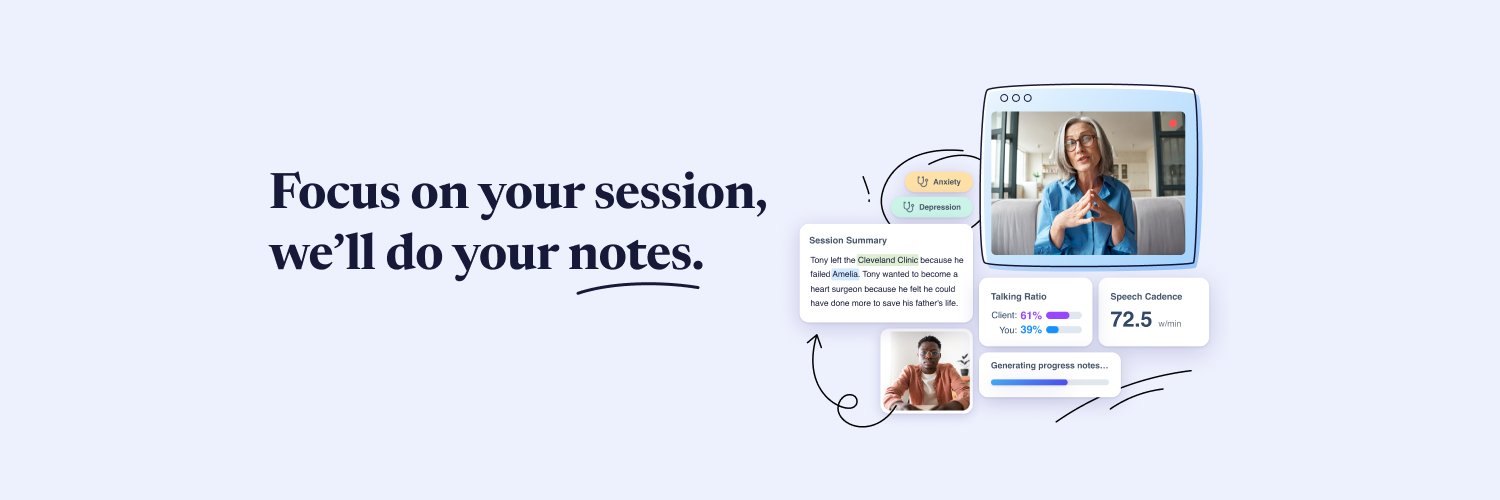
UphealOS, the Operating System for private-pay practices, is finally here!
Client payments. Superbills. Client onboarding. Scheduling. Telehealth. AI notes. Forms. Treatment plans. All in one connected system.
Start your 30-day free trial today.
https://t.co/E4AMN9VOk5
We’ve heard the questions from therapists:
“Payments?”
“Scheduling?”
“EHR?”
Well, we’re building something bigger.
Introducing UphealOS: the Operating System for Therapists.
A connected, intelligent system designed for private-pay practices.
Part 1 launching December: https://t.co/Wo8CpaDFwf
Clinical insights come from therapeutic relationship, not algorithms watching patients between sessions. Technology should support your presence, not replace it.
https://t.co/VDrUPGYO4P
#MentalHealthTech#TherapeuticAlliance
Streamlining charting shouldn't mean sacrificing personalization. AI handles the baseline work so you can focus energy on what only you can provide.
https://t.co/GfXmRZ42ug
#MentalHealthTech#ClinicalWorkflow
Silicon Valley Bank: AI's biggest healthcare opportunity is "solving business problems, not medical care problems."
Clinicians don't need AI to replace their work — they need it to clear away the admin burden.
https://t.co/pG5D75veHI
#HealthTech#ProviderBurnout
MIT Tech Review: AI companies let harmful conversations continue indefinitely to maximize engagement.
Ethical mental health practice requires boundaries, not endless availability.
https://t.co/JSUzBCMuN5
#MentalHealthAI#EthicalPractice
New AI claims to diagnose depression by analyzing facial movements. But mental health isn't a pattern to detect — it's a human experience to understand.
https://t.co/jvbuIsvG7c
#MentalHealthAI#PersonCentered
Georgia State researchers can detect depression in Reddit posts with 96% accuracy. But mental health care built on consent looks different than surveillance.
https://t.co/jJ340ktR7u
#MentalHealthAI#Privacy
Microsoft is embedding insurance workflows into clinical conversations. But therapy isn't medicine — the therapeutic space should stay sacred.
https://t.co/Qnene41o6e
#BehavioralHealth#TherapeuticAlliance
New research finds AI chatbots violate mental health ethics when they replace clinical judgment. Tools that support your work, not supplant it, are the path forward.
https://t.co/YzH20DeCJa
#MentalHealthAI#EthicalPractice
A study found that AI tools reduced provider burnout — but only when paired with strategies for controlling the root cause.
https://t.co/48IfwcXjMk
#ProviderBurnout
Only 8% of Americans trust AI mental health tools, yet half used them last year.
Distrust doesn't stop adoption. What does that say about access to care?
https://t.co/JrmX8mGsAY
#MentalHealthAI
AI optimizes for user satisfaction. Therapy often requires dissatisfaction. What happens when clients expect the former from every helping relationship?
https://t.co/iWlbZmAHM1
#TherapyAI
Half of U.S. adults used AI chatbots for mental health support last year — without clinical oversight. Why are we only now defining what the guardrails should look like?
https://t.co/KzpfSXZLex
#MentalHealthAI
AI assists with analysis, but the clinician remains accountable. That brings on asymmetric risk; clinicians own the liability, but not the process.
https://t.co/2CwiOTuv6v
#AIinPsychiatry
Standardized content works for education. Therapy isn't (always) education. The clinician’s ability to realize a script won't serve the client is irreplaceable.
https://t.co/LOZO2icV41
#TherapyAI