There’s an assumption that everyone using AI to help them code or build products is under pressure to come up with a brilliant startup idea.
I actually think if you sit around waiting for the “right” idea, you’ll miss out on a huge amount of learning about how to use these new tools.
For my own learning, I deliberately picked a space that’s very familiar to me rather than trying to invent something completely new or groundbreaking. I’ve been building a simple web-based wireframing tool called Shape, and I made it free to use for exactly those reasons.
Plenty of low-fidelity design tools already exist, and it's not exactly an up-and-coming area, but that familiarity actually helps. I already understand the workflows, the tradeoffs, the interactions, and the kinds of details that matter. That means I can spend more time learning **how to build with AI** rather than trying to validate some entirely new market or idea at the same time.
The first version I made, the one that's live right now, was built on TLDraw, which is a great little canvas tool. (I used an older version that allowed free public use as long as the watermark stayed visible.)
Now I’m rebuilding Shape from scratch, with my own native canvas tool. It’s painstaking work, even with AI, and I have no intention of reaching feature parity with TLDraw. I just want enough for what I personally need.
I know the tool is useful for at least one person -- because I use it myself almost every day for quick wireframes and diagrams!
But the real reason I built it was to learn how to code with AI. This hasn’t been a one-shot weekend experiment. I’ve been working on this project during free time in evenings and weekends, on and off, for at least a year now.
It feels more like a hobby or passion project, and I’ve learned not just about building with AI, but about building an end-to-end product in general. For example, working feature by feature, layer by layer, prioritising, understanding when to think about refactoring, using Git and verisioning, deploying to Cloudflare, dealing with architecture decisions, and so on.
A surprising amount of my effort goes into fine-tuning small details and interactions. That’s the UX/design background.
AI can help you move incredibly fast, but you still need to make hundreds of product decisions along the way.
Many years of working in UX and in the software/tech industry generally had already taught me a lot of the concepts I needed here. But shifting some of my energy from just designing products to actually building them has unlocked a huge amount for me. It’s given me an understanding that I can bring back into my day job, in an industry that’s changing very quickly.
Plus, it’s genuinely enjoyable :)
Things I *didn't* think, in 2011, would be available to everyone in 15 years:
- AI
Things I *did* think would be available to everyone in 11 years (based on how the media was talking about them):
- Lab-grown meat
- Stem cell treatment for many illnesses
- Personalised genetic drug treatment for many illnesses
- Fully self-driving cars as the norm
- Solar energy as the norm
I realise that some of these things might still happen / are "on the way" but we've been hearing that for a long time.
It started with a note asking you to leave your unused towels in place, because washing towels was "bad for the environment" and the tactics was broadened and applied to cleaning rooms.
Personally I don't use all the towels and don't need my room cleaned every day. But if you're going to make a saving, be honest, and offer me a discount. Or make room-cleaning and optional extra, like Ryanair would, but also lower the base price, like Ryanair would m
I remember a time when almost any TED Talk was worth watching.
Now there are many thousands of them.
I'm not sure if the average quality of the talks has fallen although it likely has. As others have pointed out, many TED/TEDx talks seem formulaic, as if they're following a script. In any case, the value of the TED brand as an indicator of thought-provoking videos seems to have been drastically diminished.
I wonder if AI-generated content, even software, is heading in the same direction.
The Cure returned to the stage tonight at Primavera Sound Barcelona for their first show since November 1, 2024, and their first since the release of Songs of a Lost World. @thecure
The set was packed with surprises, including the rare “2 Late” and seldom-played gems like “Wrong Number,” “Let’s Go to Bed,” and “Mint Car.”
One of the most touching moments came with the debut of Eden Gallup as a full member of the band, stepping into the void left by the absence of Perry Bamonte, who sadly passed away in December 2025 after a short illness.
After years working behind the scenes as a guitar tech, Simon Gallup’s son stepped into Perry’s role, and seeing father and son share the stage together was incredibly emotional.
An amazing start to The Cure’s 2026 summer tour. 🖤
#thecure #TheCure #PrimaveraSound #SongsOfALostWorld #RobertSmith #TheCureTour #EdenGallup #SimonGallup #Barcelona #GothRock #PostPunk #boysdontcry
I think there's another challenge too, aside from distribution.
For decades, the difficulty of building software acted as a barrier to entry. Lots of ideas never got built because the cost, skill, and time required were simply too high.
Now that barrier has largely collapsed.
As a result, ideas that might once have taken years to explore can now be explored by many "ordinary" people at once.
The obvious niches get filled very quickly. In a sense, this was always happening. Successful products eventually attracted competitors. AI has simply accelerated the process.
So perhaps the creative geniuses are not just the people who figure out distribution?
Maybe they're what Peter Thiel described as people who can go from zero to one, people who are good at spotting opportunities that aren't obvious yet.
Or people who have what Paul Graham calls good ideas that just look like bad ideas.
Another advantage of using both tools is that I can ask either one of them to review what we've built.
Like I said, I'm not an engineer, so I don't assume I'll spot technical issues myself.
I'll ask them to look for things such as technical debt, security concerns, edge cases, performance problems, etc..
rarely hear Claude Cowork mentioned in discussions about AI coding tools.
As a non-engineer building an app with AI, Cowork is the Claude product that feels most similar to Codex for me.
I suspect that's because I care more about the behaviour and UX of the product than the code itself. I don't need to inspect files or review diffs. I just want to describe the next thing I want built so that I can then test it and iterate, or move on.
I should add that I use both Codex AND Cowork.
Sometimes that's simply because I've hit a usage limit on one or the other. But I've also found value in moving between them.
If I'm unsure about a proposed approach, I'll ask the other tool to review it. Sometimes it agrees. Sometimes it points out an alternative (simpler/better) way forward.
It feels a bit like having two engineers in the room who don't always agree with each other!
Two things that shouldn't bother me but do (I can't help but silently correct them in my mind):
- When people say "phenomena" instead of "phenomenon"
- When people say "begs the question" instead of "raises the question"
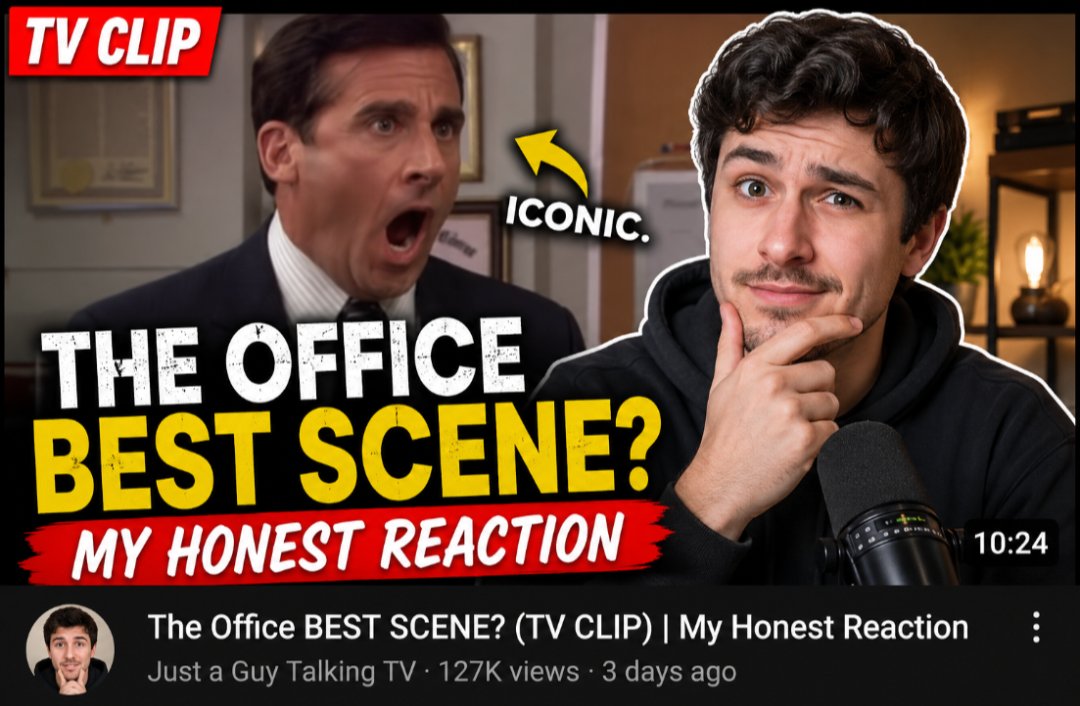
Is there anything more annoying than a YouTube video that you think is going to be a clip from a TV show or interview or something, but turns out to be some annoying guy pausing it every 30 seconds to give their opinion on what you just saw?
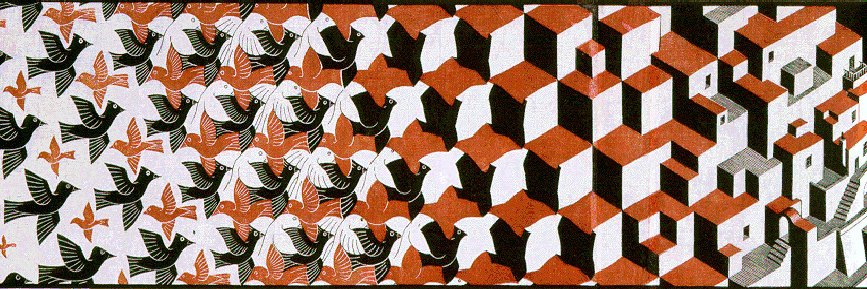
"Ahead of the 2008 financial crisis, every institution in the Irish economy could point to every other institution and say “we’re dependent on them, therefore we can’t change what we’re doing.” The banks couldn’t stop lending because the developers needed credit, and the developers couldn’t stop building because the banks needed loan growth. Similarly, the regulator couldn’t intervene because the tax revenue funded the government, and the government couldn’t slow things down because the employment figures depended on construction."
Reminds me of this picture.