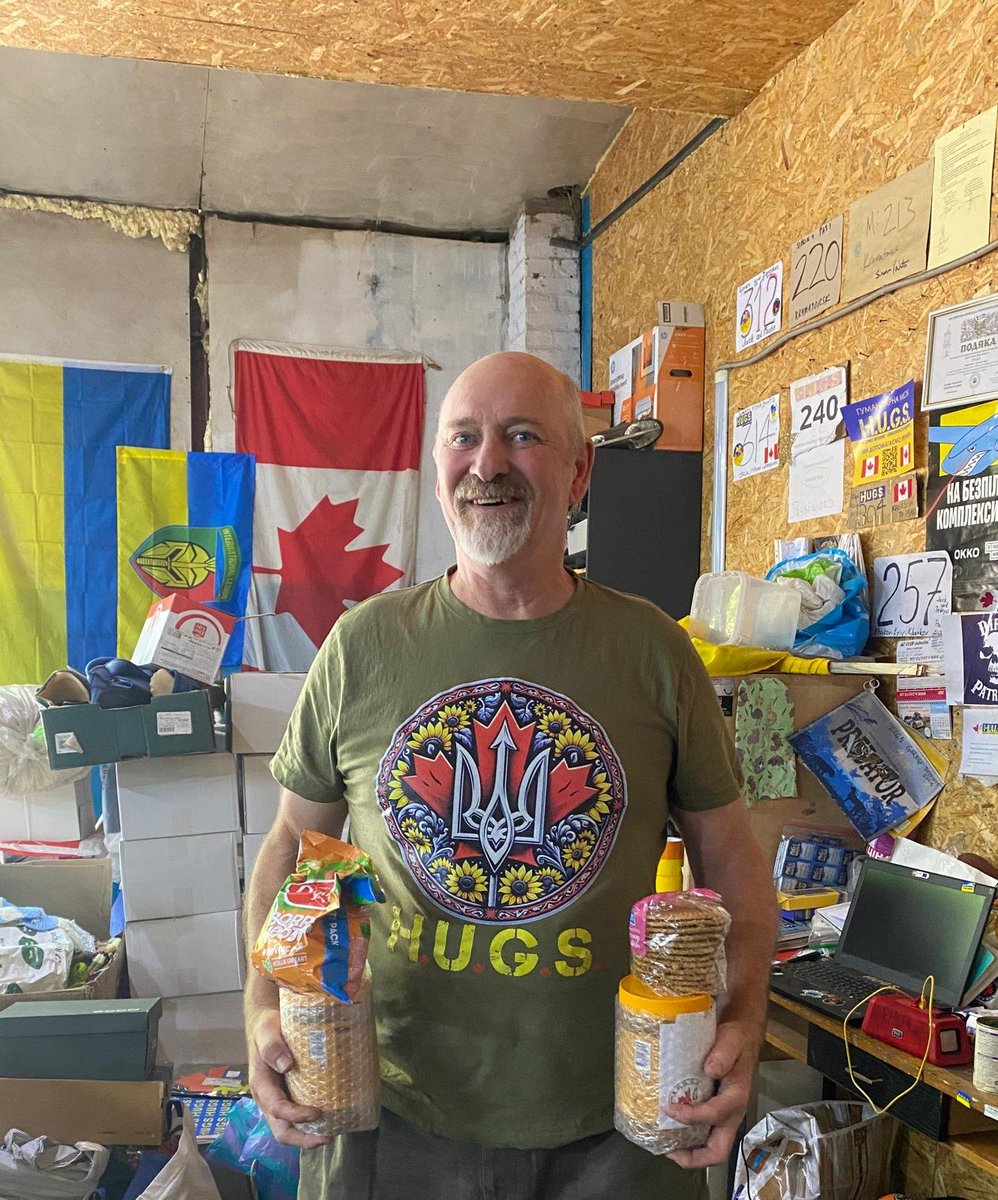
Snacks, Peanut butter and Stroopwafel have reached our good friend @PaulyHughes in #kharkiv Who wants to buy him a coffee? This fella can use some help these #hardkiv day's in Ukraine https://t.co/hCSvqUHhDa
De man die een overval pleegde op een tankstation in Hoogezand, staat goed op beeld. Herken je hem? Weet je wie dit is? Of heb je andere tips? Info en tippen: https://t.co/XDN9WnUNhu
Afgelopen week publiceerden we de foto's van vier verdachten van een mishandeling in een supermarkt in #Groningen op 21 januari. Inmiddels hebben we de foto's van twee verdachten (H en G) offline gehaald, omdat er voldoende informatie is om met het onderzoek verder te gaan.
@Pera19711@Miss_Royal73 Toen noodopvang van Swietenlaan dicht ging heeft de buurt nog afscheid genomen van de bewoners. Kan me weinig of geen incidenten herinneren. Eigenlijk gaat het vaak goed in Groningen gezien aantal locaties.
Berthold Beitz watched SS soldiers throw Jewish babies out of orphanage windows.
August 7, 1942. Boryslaw, Poland. The SS was clearing out the Jewish orphanage.
Beitz was 28 years old. A young German oil executive. He had been warned by the local police. He went to see what was happening.
The SS were dragging children out of beds. Throwing infants out of upstairs windows. Loading them into trucks for the death camps.
Beitz stood there and watched. He had a small daughter at home. About the same age.
He went home that night and told his wife. He said: we have to do something.
By the end of the war, Berthold and Else Beitz had saved 800 lives.
Here's how he got there.
Born September 26, 1913. Zemmin, Pomerania. A small German village. Son of a banker.
Bert grew up in a normal middle-class German family. Some of his relatives liked the Nazis. He joined the Hitler Youth as a boy. Most German boys did.
He trained as a banker. Then in 1939, at age 25, he joined Royal Dutch Shell. The big oil company. Worked in their Hamburg office.
When the war started, Bert was in a special category. Oil experts were essential. He didn't get sent to the front.
In 1941, the Germans needed someone to run the oil fields in occupied Poland. Boryslaw. A small town in eastern Galicia. Today it's in Ukraine.
The oil fields there were important. Hitler needed oil to fuel his tanks. The German army needed every drop.
Bert was sent to Boryslaw in April 1941. Made business manager of the Beskidian Oil Company. Later renamed Carpathian Oil.
He brought his wife Else. Their baby daughter. They moved into a nice house in town.
Then he saw what was happening to the Jews of Boryslaw.
Boryslaw had been home to thousands of Jews for centuries. Many of them worked in the oil industry. Engineers. Chemists. Lab assistants. Office workers.
When the Germans arrived, the killings started. SS units. Ukrainian collaborators. Death squads.
Jews were rounded up. Shot in mass graves outside town. Or sent to camps.
Belzec death camp was nearby. Auschwitz was a few hours away.
Bert watched it happen.
Years later he tried to explain why he did what he did. He said it wasn't politics. He said it wasn't anti-Fascism.
He said: "When you see a woman with her child in her arms being shot, and you yourself have a child, then your response is bound to be completely different."
He started small.
The Carpathian Oil Company employed Jewish workers. They wore badges with the letter "R" on them. Standing for Rüstungsarbeiter. Armaments worker. Essential to the war.
These workers were officially protected. The SS couldn't take them. They were too valuable.
Bert started expanding the definition.
A Jew came to him. Said his brother was being deported tomorrow. Said his brother was a tailor.
Bert wrote out a paper. Said the brother was a "petroleum technician." Essential to the oil fields. Couldn't be touched.
Then a hairdresser. A "petroleum technician."
Then a Talmudic scholar. A "petroleum technician."
Years later, Bert remembered it: "I chose tailors, hairdressers, and Talmudic scholars and gave them all cards as 'petroleum technicians.'"
He didn't know any of them. Didn't ask. Just signed.
Then he started doing something more dangerous.
When the SS organized deportations, trains would arrive at the Boryslaw station. Jews would be loaded into cattle cars. Sent east to the camps.
Bert started showing up at the trains.
He would push past the SS guards. Walk into the cars. Shout that this man, that woman, that child, was an essential worker for his oil fields.
He needed them back. The German war effort needed them back.
The SS didn't always argue. Bert was a German civilian executive. He had powerful friends in Berlin. The oil mattered.
He pulled people off the trains. Sometimes one at a time. Sometimes in groups.
In 1945 alone, he and his team pulled about 220 Jews off deportation trains.
Else was doing more.
His wife was 22 when they moved to Boryslaw. Pregnant with their second daughter.
She turned their family home into a hiding place. The cellar. The attic. The spare rooms.
When Jewish parents knew they were going to be killed, they brought their children to Else. She hid them. Fed them. Kept them quiet when the SS came to visit.
Sometimes there were dozens of children in the house. Jewish children. The Beitz daughters grew up playing with them.
The SS visited often. Bert and Else would entertain officers in the dining room while Jewish children sat silent in the cellar below.
If the SS had checked the cellar, the whole family would have been killed. The children. Bert. Else. Their daughters.
The penalty for hiding Jews in occupied Poland was death.
They did it anyway.
In early 1943, the Gestapo finally came for him.
Two Jewish girls had been caught on a train to Hungary. They had forged work permits. The forged permits had Bert's signature on them.
Bert was called in for questioning. Faced the Gestapo.
He didn't crack. He said the permits were forgeries. Said he had no idea who had signed his name.
He had a story prepared. He had powerful supporters. The oil company needed him.
The Gestapo let him go. They warned him to be more careful.
Word spread among the Jews of Boryslaw. They knew what had happened. They knew what was at stake.
In March 1944, the war turned worse for Germany. Bert's protected status ended. He was drafted into the army at age 30.
He fought on the Eastern Front for the last year of the war.
His protection of the Jews of Boryslaw ended.
Most of the Jews he hadn't been able to save were killed.
But the 800 he had saved were still alive.
When the war ended, the survivors found him.
Letters poured in from Israel. From America. From across Europe. Jews who had been pulled off the trains. Children who had hidden in his cellar. Workers whose forged papers had said "petroleum technician."
They came to thank him.
Many of them sent testimonies to Yad Vashem. Israel's Holocaust memorial. They wanted Bert and Else honored.
In 1973, Yad Vashem named them Righteous Among the Nations. Israel's highest honor for non-Jews who saved Jewish lives.
Bert was 60 years old. He had spent 30 years rebuilding his career. He hadn't talked about Boryslaw much. He didn't think it deserved special attention.
He went to Jerusalem to receive the medal. He cried during the ceremony.
Here's what makes his story remarkable.
Bert Beitz didn't stay a small oil executive.
After the war, he came home to Germany. Found work in insurance. Then ran an insurance company in Hamburg.
In 1953, he met Alfried Krupp. The head of the Krupp steel empire. The most famous family business in Germany. They had armed the Nazi war machine.
Krupp had just been released from prison. Convicted of war crimes. Of using slave labor.
Krupp needed someone clean to rebuild his company. Someone with no Nazi past. Someone respected.
He hired Bert Beitz.
Bert spent the next 60 years running Krupp. Turning it into one of Germany's biggest companies. Building Krupp Steel into ThyssenKrupp.
He became one of the most powerful businessmen in Germany. Met with chancellors. Met with presidents. Met with Soviet leaders during the Cold War.
He once spent 21 hours straight in a meeting with Khrushchev. The Soviet premier. Talking about trade between East and West.
He helped Germany rebuild itself after Hitler.
He helped end the Cold War quietly. Behind the scenes.
He was a member of the International Olympic Committee. Vice-President from 1984 to 1988.
He never bragged about saving 800 Jews.
His grandson said it once. "He never spoke about it. We had to read about it in the papers."
When asked, late in life, why he had done it, Bert always said the same thing. "It wasn't heroism. It wasn't resistance. I was just a human being who saw what was happening."
Else Beitz survived him by a year. Died in 2014, age 94.
Their three daughters grew up. Had children. Have grandchildren.
The descendants of the 800 they saved number in the thousands today. Spread across Israel. America. Europe.
Many of them light a candle for the Beitz family every year.
In Germany, Bert is remembered as the last great industrialist. The man who rebuilt Krupp. The Cold War diplomat. The Olympic leader.
The 800 Jews he saved are barely mentioned in his German biographies.
In Israel, he's remembered the other way. The German who saved 800 lives.
Both versions are him. Same man. Same story.
He died on July 30, 2013. Two months before his 100th birthday.
He had gone to work every day until the end.
Berthold Beitz. German industrialist. Hitler Youth boy. Royal Dutch Shell executive.
Saw SS soldiers throw babies out of windows. Decided to fight back.
Forged papers for tailors and rabbis. Hid children in his cellar. Pulled Jews off deportation trains.
Saved 800 lives.
His crime? Refusing to look away.
His legacy? 800 families that lived. A medal in Jerusalem. A German empire he rebuilt. A grandson who only learned what he had done by reading the newspaper.
Some heroes shout about what they did.
Some never stop talking about it.
Bert Beitz lived 71 years after the war and barely mentioned it.
He thought saving 800 lives was just being human.
That's all it was.
That's everything./
Two women killed. Dozens wounded. Yet another vile strike by Moscow against Kyiv and its residents.
Last night, the Russians targeted the very heart of our capital. The National Art Museum, the Philharmonic, the Music Academy, and the Yaroslav the Wise Library were badly damaged. The Chornobyl Museum was almost completely destroyed. Architectural landmarks of Podil and the historic center were also damaged: the Contract House, the Postal Station, the Church of the Nativity of Christ, the Kyiv Opera, and schools.
This is a war against our culture, memory, and identity. For centuries, Moscow has tried to destroy everything that makes us Ukrainian. This is genocide.
We are documenting each of these crimes for future tribunals. Our memory cannot be burned away by missiles. We will rebuild everything.
My deepest condolences to the families of those killed. Strength to all Kyiv residents affected by this attack.
Glory to Ukraine!
We maken ons grote zorgen om het leed van de Palestijnen. Daarom neemt Nederland maatregelen: goederen uit illegale Israëlische nederzettingen mogen niet meer worden ingevoerd en verkocht in Nederland. Schending van internationaal recht mag niet zonder gevolgen blijven.
@RJKonrad Trots op het Noorden en in verleden ook niet altijd zonder slag of stoot. Groningen al jaren veel diverse locaties voor vluchtelingen. En ja overal is wel eens wat hé
@PeschiNijs Wil je de bron vermelden waar je deze info weg haalt? Gedetineerden betalen eigen sigaretten etc er is geen uitzondering positie voor afgewezen asielzoekers. Groeten ex BEWA
@ZvikaKlein Bro we've watched your army crush people into a pulp with their bulldozers. Burn children to death in their tents. Torture toddlers and the elderly alike. You think Ben-Gvir being a dick on camera is going to damage your image??
@Guldensnedes@lientje1967 Er waren ook meer aanmeldcentra aantal jaren terug, maar nee, alles sluiten en nu trechter vorming op Ter Apel, overlast, druk en voor niemand meer te doen.