The Future of Agriculture
Stories, ideas, and conversations on farming, food, research, leadership, agri-economics, industry & natural care, from the ground
Boost Your Garden's Yield with a Bee-Safe, Mosquito-Free Central Fountain
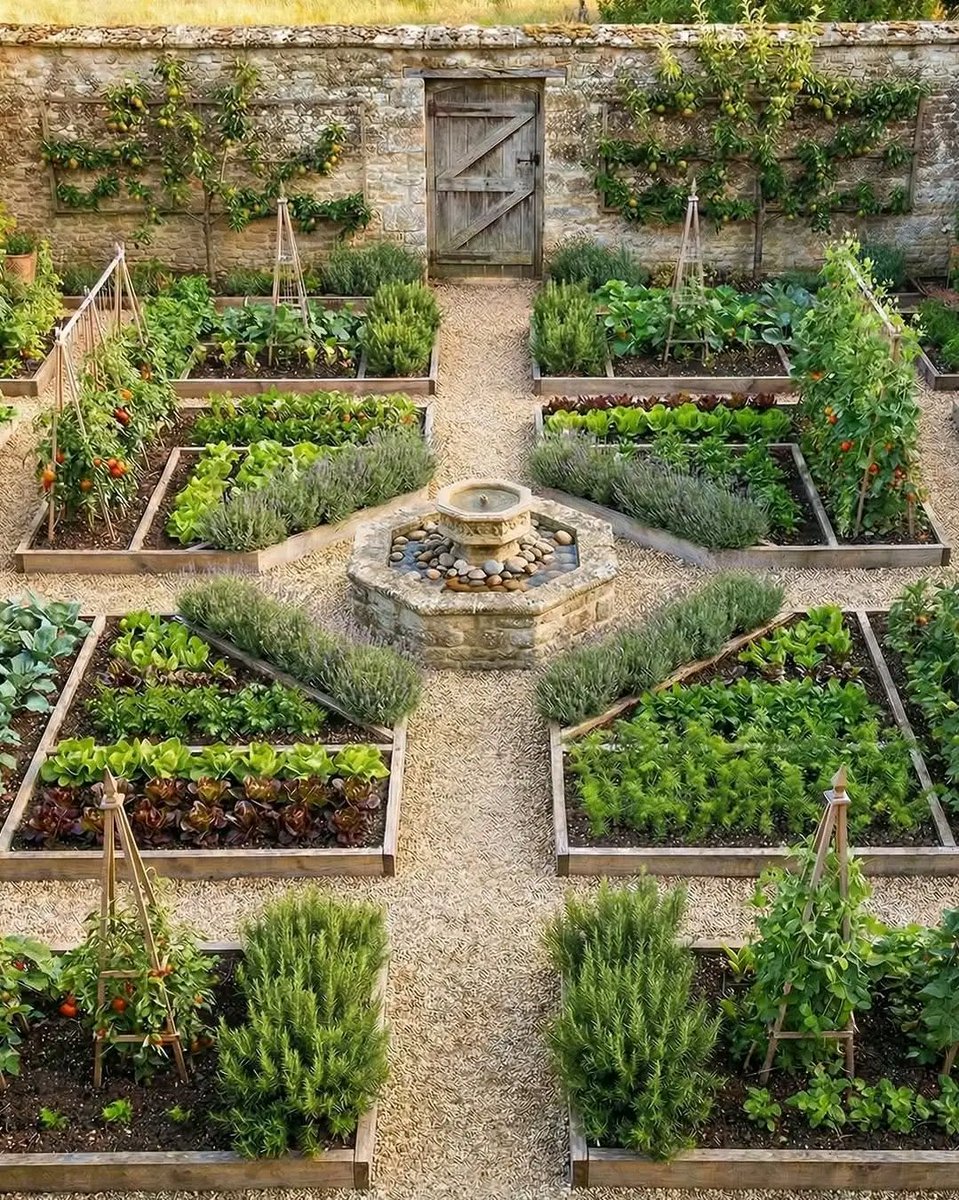
A productive potager garden relies entirely on pollination. By placing a water feature right in the center of your growing space, you reduce the distance bees need to travel for hydration, keeping them working among your squash and tomato blossoms longer. This increased residency time directly translates to higher fruit set and larger harvests across the board.
Designing for Bee Safety, Not Peril
A standard, deep birdbath is often a death trap for beneficial insects. To make your central feature truly functional, you must mitigate the drowning risk. Fill the basin almost to the brim with smooth river stones, as shown here. These stones break the water's surface, providing countless safe landing pads where bees and butterflies can perch and sip without falling in.
Banish Mosquitoes with Circulation
The biggest fear gardeners have regarding water features is creating a breeding ground for mosquitoes. The solution is movement. A crucial, unseen element in this design is a small, low-voltage pump buried beneath the stones. This gentle circulation prevents stagnation, making it impossible for mosquito larvae to survive while keeping the water fresh for wildlife.
Structuring the Space Around the Hub
The geometry of the beds should emphasize the central feature. Use L-shaped or trapezoidal timber frames in the corners to maximize planting square footage while creating a clear visual path to the middle. Surround these beds with permeable gravel pathways to ensure mud-free access to the fountain for maintenance, regardless of recent rainfall.
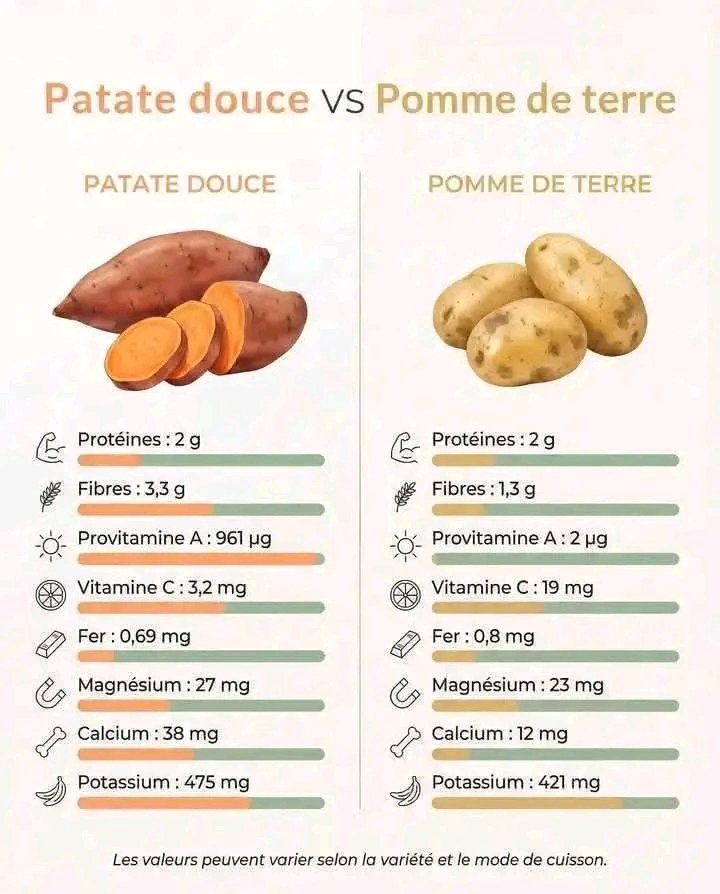
🍠🥔 Patate douce vs Pomme de terre
Souvent comparées, ces deux sources de glucides ont chacune leurs atouts.
Les intégrer intelligemment permet de varier les apports nutritionnels.
🍠 Patate douce
• 💪 Protéines : autour de 1,5 à 2 g /100 g.
• 🌾 Fibres : généralement un peu plus élevées, surtout avec la peau.
• 🧡 Bêta-carotène (provitamine A) : très riche, antioxydant majeur.
• 🩸 Minéraux : potassium intéressant, présence de magnésium et de fer.
• 🔥 Index glycémique : souvent modéré selon la cuisson.
🥔 Pomme de terre
• 💪 Protéines : proches de la patate douce (environ 2 g /100 g).
• 🌾 Fibres : correctes, surtout consommée avec la peau.
• 🍊 Vitamine C : bonne source lorsqu’elle est cuite à la vapeur ou à l’eau.
• 🧂 Potassium : également élevé.
• ⚡ Énergie : glucides facilement disponibles, idéale pour l’effort.
⚖️ Comment les intégrer
La patate douce apporte davantage de caroténoïdes et une saveur plus sucrée.
La pomme de terre reste polyvalente, rassasiante et économique.
Le mode de cuisson fait la différence :
vapeur, four ou cuisson douce permettent de préserver les nutriments et d’éviter l’excès de matières grasses.
Varier entre les deux reste la meilleure stratégie pour profiter de leurs bénéfices respectifs dans une alimentation équilibrée.
Egg Incubation Period Guide: Understanding Hatch Times for Common Poultry
The image above provides a helpful overview of incubation periods for various poultry species.
Knowing how long eggs take to hatch is essential for backyard farmers, homesteaders, and anyone using an incubator or allowing birds to brood naturally.
Below is a breakdown of typical incubation times and what to expect during the process.
🦃 Turkey – 28 Days
Turkey eggs typically hatch around day 28.
Tips for incubation:
Maintain a temperature of about 99.5°F (37.5°C) in a forced-air incubator.
Humidity should remain around 45–55% until the final three days.
Stop turning eggs after day 25 (lockdown period).
🐥 Quail – 16–23 Days
Quail eggs hatch quickly compared to most poultry species. Depending on the breed, hatch time ranges from 16 to 23 days.
Important notes:
Quail eggs are small and lose moisture quickly.
Stable humidity is critical to prevent shrink-wrapping during hatch.
🦆 Duck – 28 Days
Most domestic duck breeds hatch in about 28 days (Muscovy ducks take longer—about 35 days).
Incubation tips:
Slightly higher humidity than chickens.
Some duck breeders lightly mist eggs during later incubation to simulate natural nesting conditions.
🐔 Chicken – 21 Days
Chickens have one of the most predictable incubation periods—21 days.
Timeline:
Days 1–18: Turn eggs 3–5 times daily.
Day 18: Stop turning (lockdown).
Days 19–21: Chicks pip and hatch.
This makes chickens ideal for beginners learning incubation basics.
🪿 Goose – 28–35 Days
Goose eggs require a longer incubation period and careful humidity management.
Key considerations:
Larger eggs need slightly longer hatch times.
Some breeders cool eggs briefly during mid-incubation to mimic natural nesting patterns.
🐓 Guinea Fowl – 26–28 Days
Guinea fowl eggs typically hatch in about 26–28 days.
They are hardy birds but may require consistent incubator monitoring for best hatch rates.
🦚 Peafowl – 28–30 Days
Peafowl eggs usually hatch between 28 and 30 days.
Because peafowl eggs are similar in size to turkey eggs, their incubation requirements are also comparable.
🦩 Ostrich – 42–46 Days
Ostrich eggs have one of the longest incubation periods among commonly farmed birds.
Special requirements:
Larger incubators
Precise humidity control
Lower humidity compared to chickens
Careful egg rotation due to egg size
General Incubation Guidelines
Regardless of species, successful hatching depends on:
Stable temperature
Proper humidity levels
Regular egg turning (until lockdown)
Clean incubator conditions
Good egg fertility and quality
Even small fluctuations in temperature or humidity can significantly affect hatch rates.
Final Thoughts
Understanding incubation periods allows you to plan effectively, whether you're managing a backyard flock or expanding into larger poultry projects. Each species has unique requirements, but with proper preparation and monitoring, successful hatching becomes a rewarding experience.
For anyone building a coop or starting a small homestead, mastering incubation timing is a key step toward sustainable poultry keeping. 🐣🌿