One habit has served me well throughout my career.
Stay curious.
Why does this take so long?
Why do we do it this way?
Has anyone tried something different?
Those questions have led to some of the biggest improvements in every industry, not just transportation.
Experience is valuable.
Experience combined with curiosity is even more valuable.
Because that's where innovation usually begins.
It's About Time!
Some of the most valuable lessons I've learned didn't come from a classroom.
They came from loading sites.
Construction projects.
Plants.
Customers.
And conversations with other drivers.
The transportation industry has an incredible amount of practical knowledge.
Sometimes we just don't slow down long enough to listen to it.
Good ideas rarely belong to one person.
They're usually built from years of shared experience.
It's About Time!
For the drivers out there...
What's the one part of your day that feels least productive?
Not the hardest.
Not the most stressful.
The least productive.
Is it waiting?
Paperwork?
Loading?
Unloading?
Traffic?
Every driver has a different answer, but those answers can teach us a lot about where the industry still has room to improve.
I'd genuinely like to hear your perspective.
Early in my career, I believed bigger equipment automatically meant better productivity.
Experience changed that perspective.
Some of the most challenging deliveries aren't about hauling more.
They're about maneuvering safely.
Getting into tight spaces.
Working around existing infrastructure.
Reducing unnecessary risk.
Sometimes the most productive solution isn't the biggest one.
It's the one that's best suited for the job at hand.
That's true in transportation and in business.
It's About Time!
When you're new to transportation, you notice the trucks.
After a few years, you notice the customers.
After a decade, you notice the bottlenecks.
After nearly 30 years, you start noticing something else...
The things everyone accepts without questioning.
Those "that's just how it's done" moments become harder to ignore.
Experience doesn't just teach you how to do the job.
It teaches you which parts of the job deserve a second look.
It's About Time!
When people hear "innovation," they often picture advanced software or cutting-edge electronics.
Sometimes innovation is much simpler.
Sometimes it's looking at a familiar process and asking:
"Is there a better sequence?"
"Can fewer steps accomplish the same result?"
"Can we eliminate work instead of making work faster?"
The most valuable innovation isn't always adding something new.
Sometimes it's removing something unnecessary.
That principle has shaped improvements across nearly every industry.
There's no reason bulk logistics should be any different.
It's About Time!
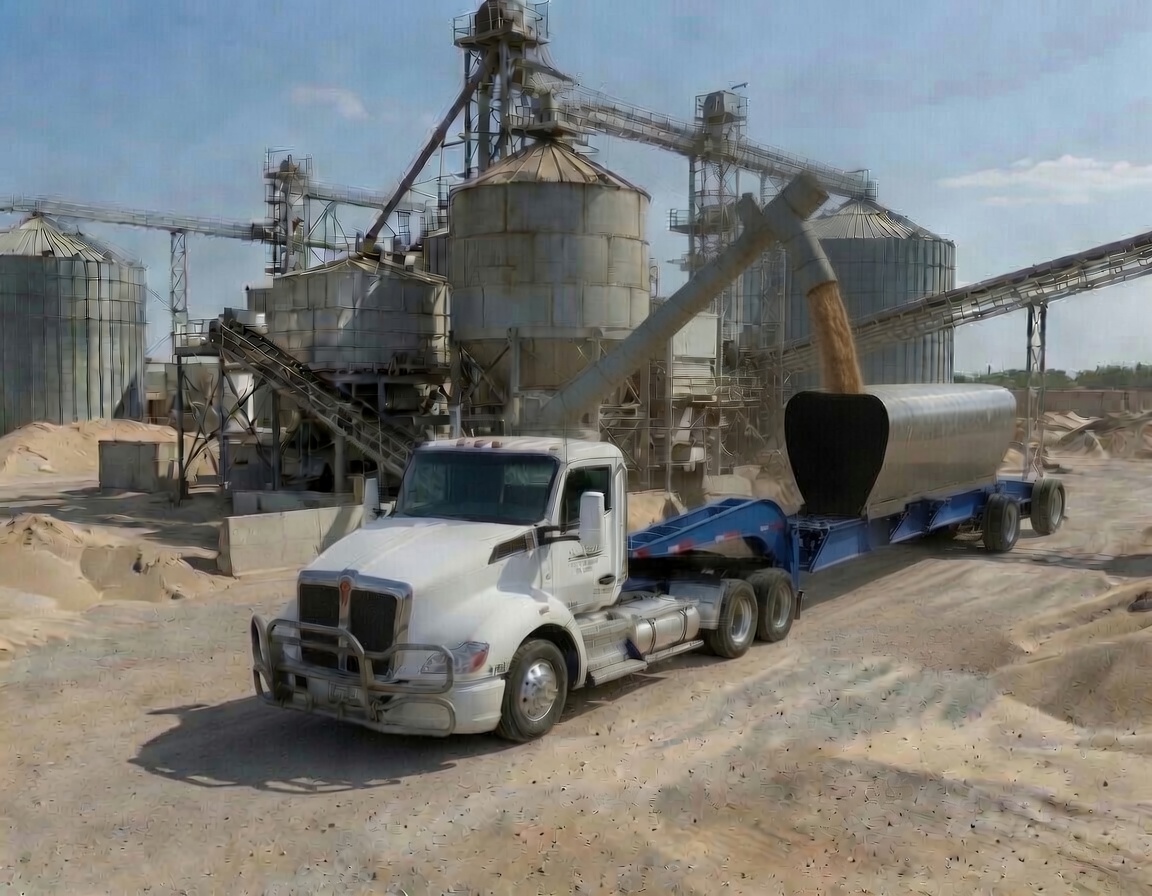
(Note: Image is an AI-generated rendering)
I've always thought one of the most expensive words in operations is...
"Normal."
It's normal to wait.
It's normal to idle.
It's normal to lose a little product.
It's normal to clean up spills.
It's normal to work around bottlenecks.
Maybe.
But normal isn't the same as optimal.
Every industry has habits that become accepted simply because they've existed for a long time.
Progress usually begins when someone asks:
"Why is this normal?"
It's About Time!
If you were designing a bulk material delivery system from scratch today...
...with today's technology...
...today's labor market...
...today's safety expectations...
Would it look exactly like the systems we've used for decades?
Or would you build something different?
Sometimes the best ideas begin with a blank sheet of paper.
It’s About Time!
It's easy to assume the way we've always done something is the best way to do it.
History tells a different story.
Containerized shipping changed global trade.
Forklifts changed warehousing.
Pallets changed manufacturing.
Barcodes changed inventory.
None of those ideas seemed "normal" when they were introduced.
They became normal because they solved real operational problems.
Which of today's accepted processes do you think will look outdated 10 years from now?
Over the years, trucks have become more reliable.
Engines are more efficient.
Safety systems have improved.
Telematics have transformed fleet management.
But here's a question I come back to often...
Have we spent as much time improving what happens after the truck arrives?
Sometimes we focus so much on improving transportation that we overlook the transfer process itself.
The truck may be modern.
The workflow may not be.
That's worth thinking about.
It's About Time!
I've never met an operation that intentionally wanted trucks sitting around.
Delays happen because systems evolve over time.
Processes get added.
Requirements change.
Equipment ages.
Facilities expand.
Eventually, yesterday's solution becomes today's bottleneck.
That's normal.
What's important is recognizing when it's time to ask whether the process still serves the operation, or whether the operation has simply adapted to the process.
Sometimes asking that question is where meaningful improvement begins.
It's About Time!
Recruiting drivers is difficult.
But I sometimes wonder if we focus so much on finding more drivers that we spend too little time asking how we can better utilize the excellent drivers we already have.
Every minute spent waiting is a minute that experience isn't creating value.
The transportation industry has some of the most skilled professionals anywhere.
The question is:
Are we designing systems that allow them to spend most of their day doing what they do best?
It's About Time!
Here's something I've wondered for years.
If you could give every driver back one extra productive hour each day...
Where would you want that hour to come from?
• Loading?
• Unloading?
• Route planning?
• Paperwork?
• Something else?
The answer probably says a lot about where your operation's biggest opportunity exists.
One thing I've always appreciated about driving is that you don't just see your part of the operation.
You see everyone's part.
You see loading delays.
You see unloading delays.
You see bottlenecks.
You see wasted motion.
You see when a site is organized...
…and when it isn't.
Drivers often have one of the clearest views of how an operation actually functions because they experience every handoff along the way.
Sometimes the best operational insights come from the people who spend the most time inside the process.
It's About Time!
Some of the best ideas in transportation don't come from conference rooms.
They come from truck cabs.
They come from drivers who have spent thousands of hours watching the same problems repeat themselves.
When you've backed into enough tight jobsites, waited through enough unloading delays, and hauled enough miles over difficult terrain, patterns begin to emerge.
Experience has a way of asking questions that spreadsheets never do.
That's often where innovation begins.
It's About Time!
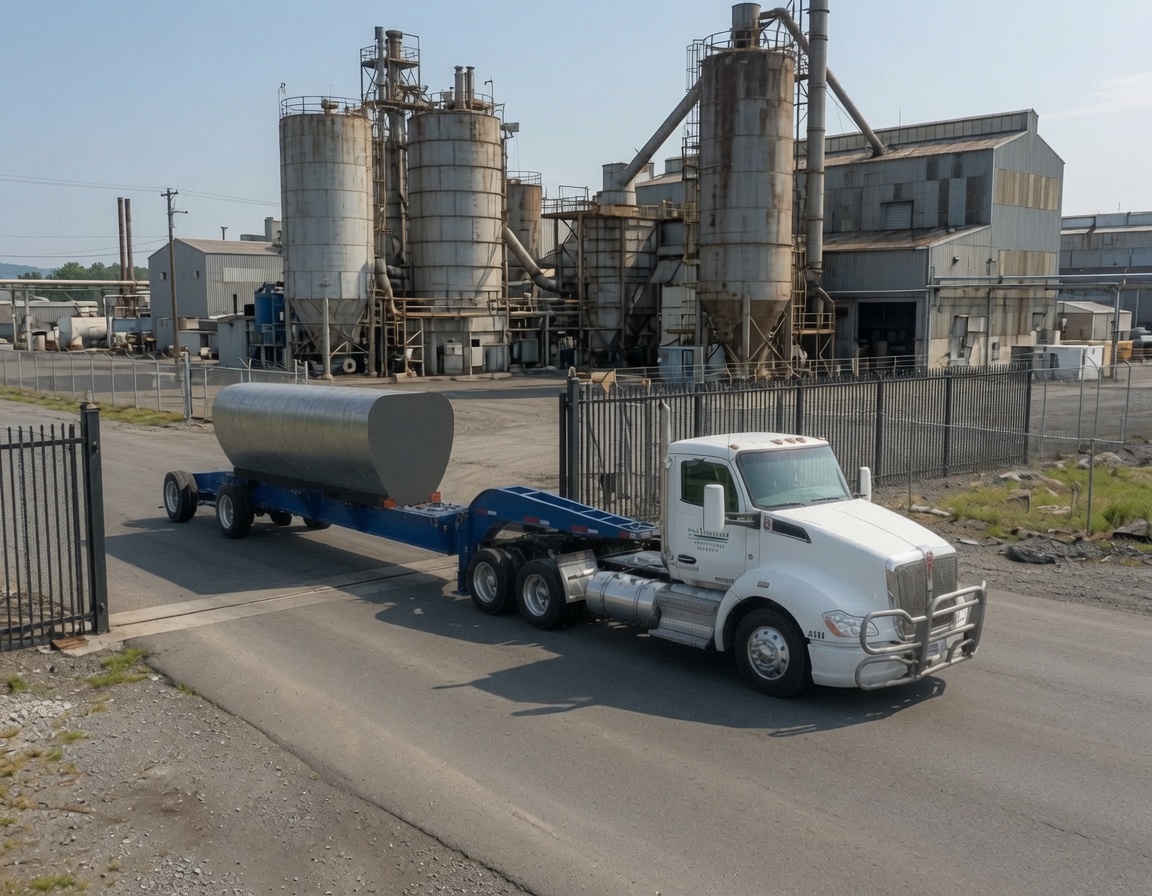
(Note: Image is an AI-generated rendering)
For years, our industry has asked:
"How can we move more material?"
Maybe there's another question worth asking.
How can we spend less time not moving material?
Sometimes progress is simply re-evaluating your current process structure.
After all, nearly every major improvement in transportation started because someone challenged an assumption that everyone else accepted.
Perhaps the next breakthrough in bulk logistics starts the same way.
It's About Time!
Waiting is expensive...even when nobody notices
The most expensive operational problems aren't always the easiest to see.
Fuel has a cost.
Maintenance has a cost.
Insurance has a cost.
Waiting has a cost too.
The difference is that waiting usually gets absorbed into the workday. It becomes "just part of the process."
But multiply an extra 30 or 60 minutes by hundreds, or even thousands, of deliveries each year, and suddenly that "normal" process represents a significant investment of time, labor, and equipment.
The first step toward improving any operation is recognizing where time quietly disappears.
It's About Time!
Question for the industry:
If you could permanently eliminate one of these from your operation...
• Waiting to load
• Waiting to unload
• Traffic delays
• Equipment downtime
...which would have the biggest impact?
There isn't a universal answer.
Every operation is different.
But asking questions like this often reveals where the real bottlenecks exist.
Sometimes we become so accustomed to a process that we stop questioning whether it still makes sense.
I'm curious where others in the industry see the greatest opportunity.
It's About Time!
We measure the wrong things:
Fleet size.
Trailer count.
Fuel economy.
Those are all important metrics.
But here's one we rarely discuss:
How many productive hours does each truck actually create every day?
A truck can be busy all day without being productive all day.
Time spent idling...
Waiting...
Standing by...
Those hours rarely show up on a dashboard, but they affect profitability just the same.
Sometimes the biggest opportunity isn't buying another truck.
It's getting the trucks you already own back on the road sooner.
It's About Time!
After nearly 30 years in bulk transportation, one thing has become increasingly clear to me:
The industry spends a lot of time optimizing miles.
We spend far less time optimizing minutes.
Yet every hour a truck spends waiting to load or unload is capacity that can never be recovered.
The truck isn't moving.
The driver isn't driving.
The customer isn't receiving another load.
Waiting has quietly become one of the most accepted costs in our industry.
Maybe it's time we started treating it like the operational challenge it really is.
It's About Time!