A family owned trading, elevator and export company. Ontario based Providing one-to-one direct grain marketing, and elevator services for your Ag business.
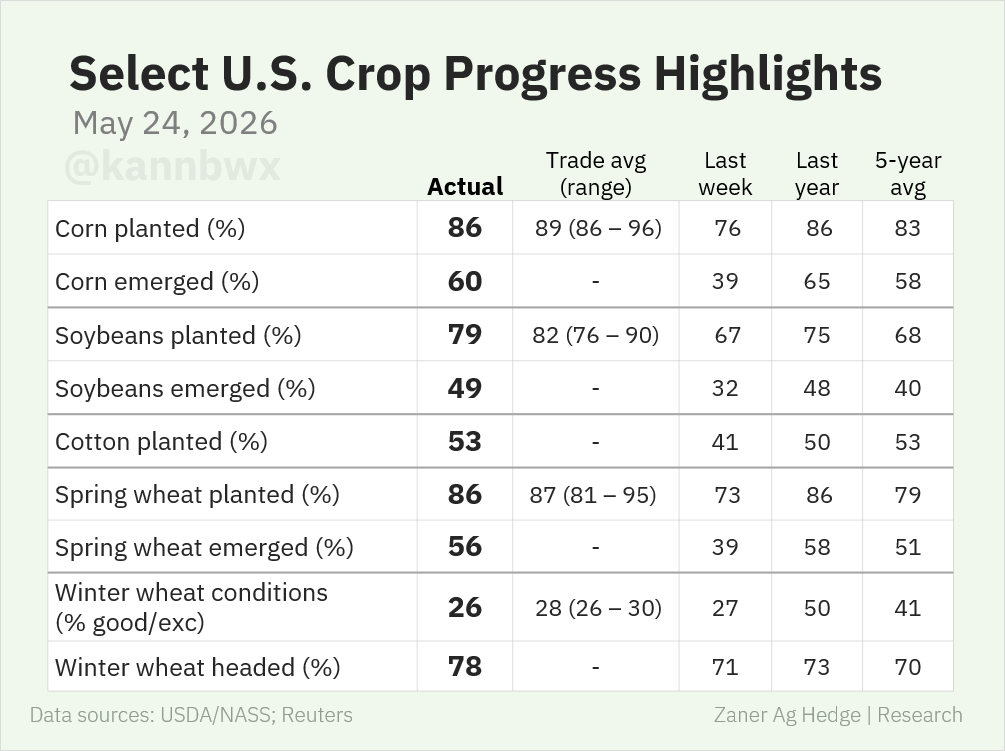
🌾U.S. winter wheat conditions fell to 26% good/excellent as of Sunday, the date's worst rating in records back to 1986.
Corn planting remains ahead of average despite landing at the low end of estimates this week. Soybean planting is no longer the date's fastest (83% in 2012).
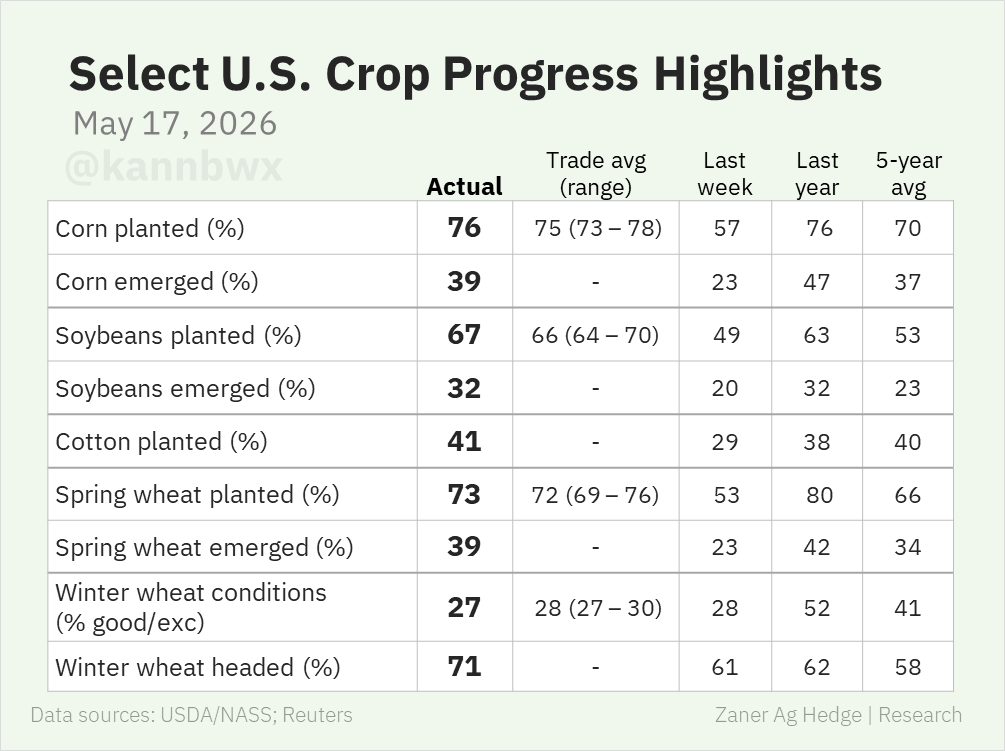
🇺🇸U.S. winter wheat conditions slipped to 27% good/excellent, the date's lowest rating since 1989.
Wheat rated poor/very poor rose 3 pts to 43%, the date's highest share in over a decade.
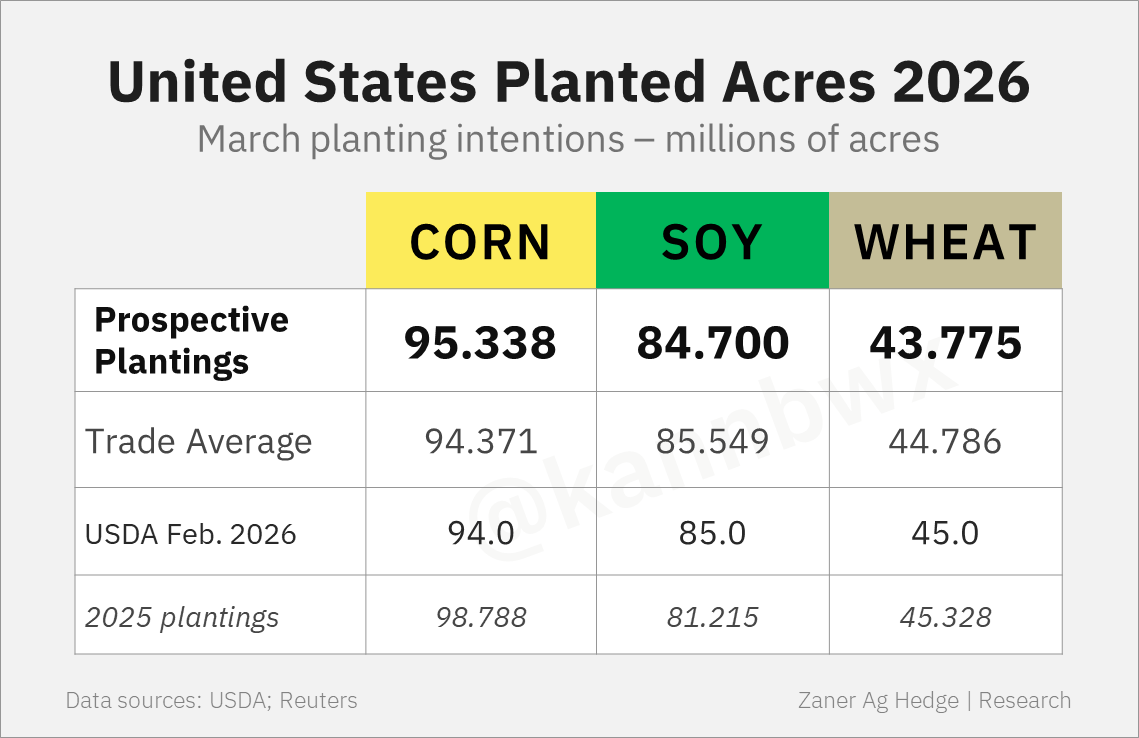
Spring planting (corn, soybeans, wheat, cotton) continues at an above-average pace.
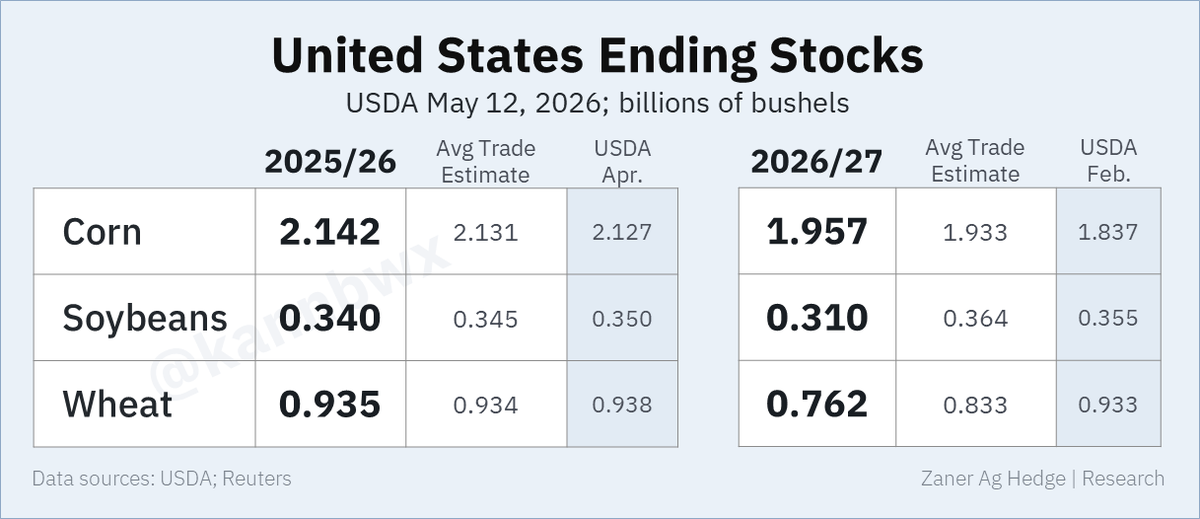
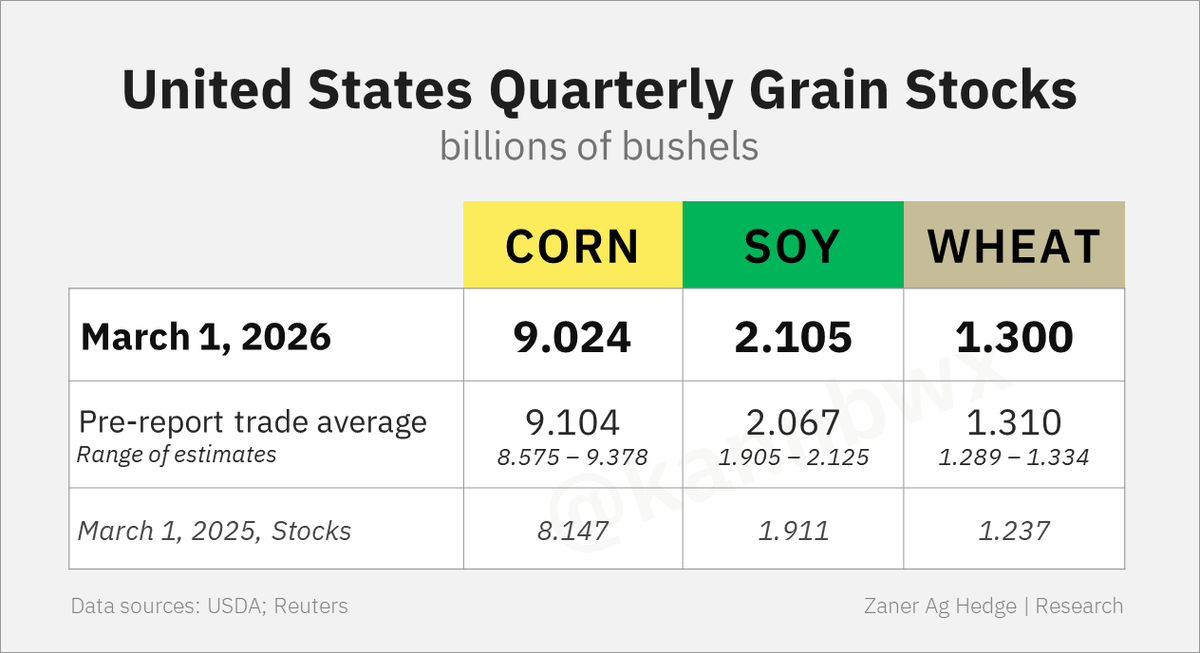
🇺🇸U.S. corn, soybean and wheat ending stocks in 2026/27 are all set to decline from the prior year. Wheat stocks came in well below expectations because of a shockingly small winter wheat crop.
🇺🇸U.S. winter wheat conditions unexpectedly dropped to 28% good-to-excellent as of Sunday, the date's lowest reading in 30 years.
U.S. corn and soybean planting remained ahead of average pace, with progress slightly topping analyst expectations.
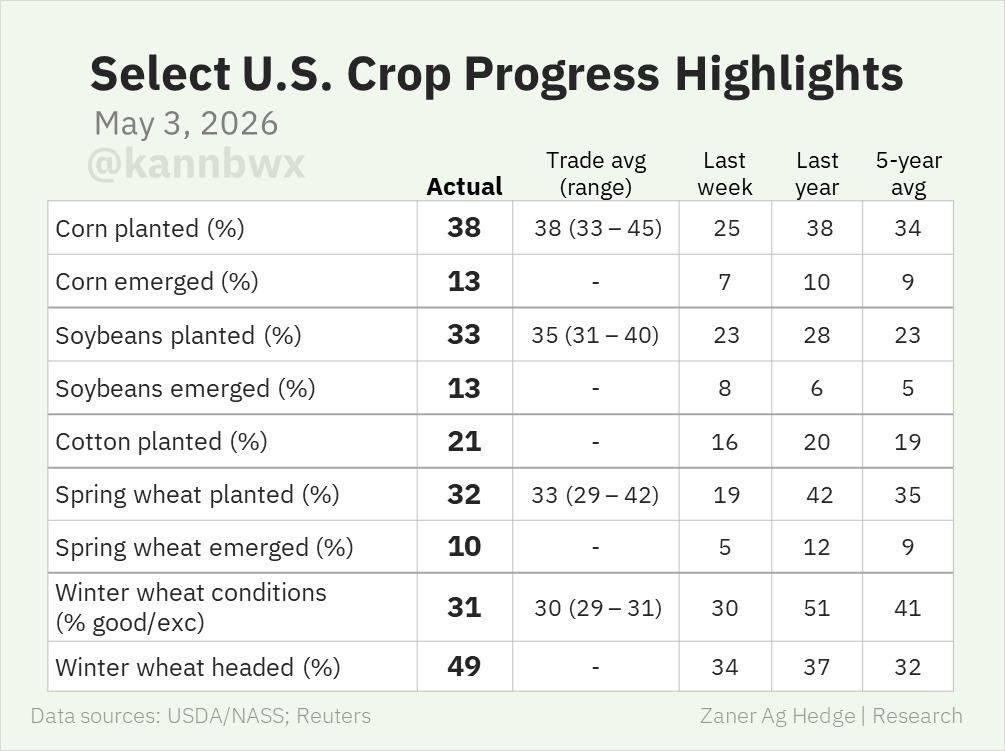
🇺🇸U.S. corn is 38% planted, equal to last year and ahead of average. At 33% planted, soybeans remain on their record fast pace, but analysts expected more progress last week. Winter wheat conditions improved 1 point.
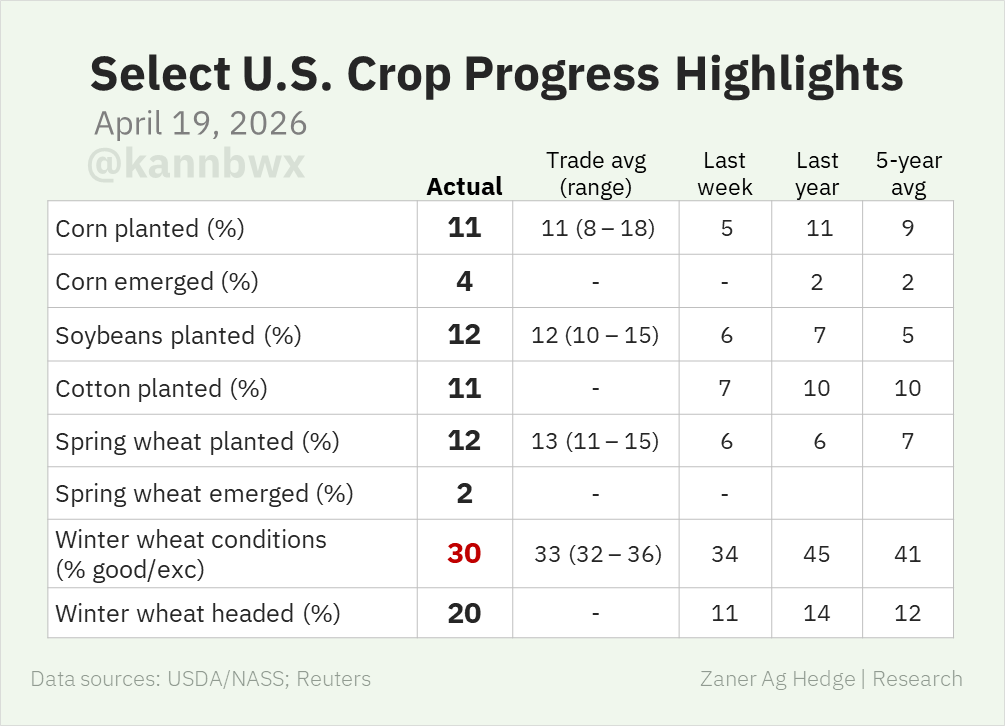
🇺🇸U.S. winter wheat conditions fell below all trade estimates to 30% good/excellent. That's approaching 2022 & 2023, among the lowest scoring years in recent memory.
Despite some wet weather, U.S. corn & bean planting pace met expectations and remain ahead of average levels.
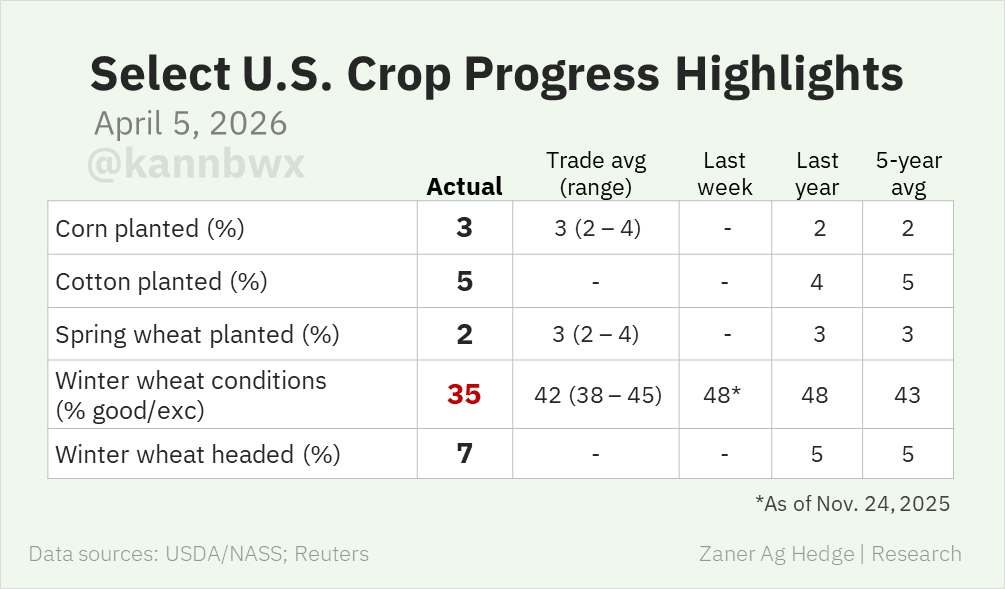
🇺🇸Only 35% of U.S. winter wheat is in good or excellent condition, below all trade estimates and down notably from late Nov. This is the week's fourth lowest rating of the last decade.
Corn, cotton and spring wheat planting have just begun, right on schedule.
Starting to see stories/reports that nations are banding together to try and provide safe passage thru the Strait of Hormuz.
No guarantees it will work but if it does, it could limit the damage to fertilizer and could have corrections coming.
Timing is everything.
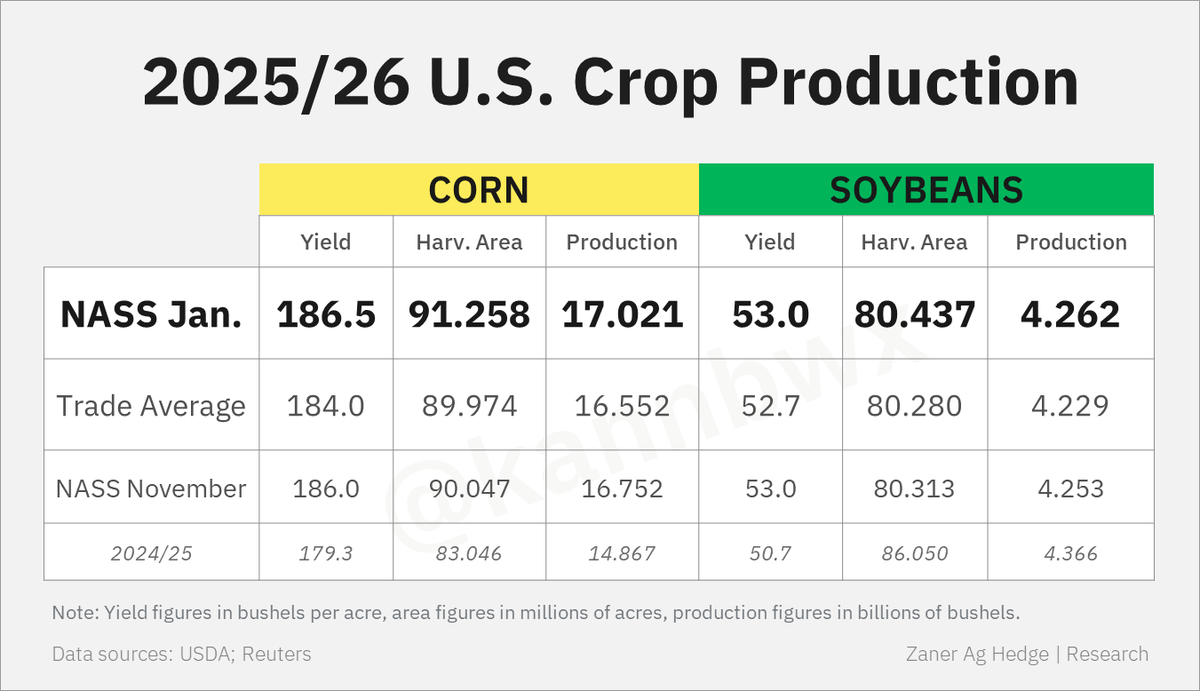
U.S. corn harvested area was raised significantly from September, pushing production over 17 billion bushels. That's up 4.5 million acres since the June acreage survey, which is completely unprecedented.
China buys at least 14 cargoes of US soybeans for Dec-Jan shipment, traders say
🇺🇸🌱⛴️🇨🇳
CHICAGO, Nov 17 (Reuters) - China's state-owned grain trader COFCO bought at least 14 cargoes of U.S. soybeans on Monday, or at least 840,000 metric tons, for shipment in December and January, two traders with knowledge of the deals told Reuters.
Eight of the vessels were for shipment in December and January from U.S. Gulf Coast terminals, while the rest were for shipment in January from Pacific Northwest ports, one trader said. A second trader estimated around 75% of the sales were for Gulf shipment, with the remainder from the PNW.
The sales total may ultimately be larger if more deals are finalized, the traders said.
China has largely shunned U.S. soybeans this season due to a heated trade war with Washington, sourcing supplies from export rivals Brazil and Argentina instead.
Monday's U.S. soy purchases were China's largest since a summit between U.S. President Donald Trump and Chinese President Xi Jinping in South Korea last month. The White House said China had agreed to buy 12 million metric tons of U.S. soybeans this year, but only a small volume of sales had occurred before Monday.
Trump on Friday said sales would be on track by the spring.
U.S. soybean futures Sv1 on the Chicago Board of Trade rallied nearly 3% on Monday to a 17-month high on the trade optimism.
Cash premiums for soybeans delivered to Gulf Coast and PNW terminals in the coming months and loaded for export jumped by 10 cents a bushel or more, traders said.
(Reporting by Karl Plume in Chicago; Editing by Chris Reese and Bill Berkrot)