Vivaldi grew Four Roses Bourbon's UK presence by doing the opposite of what most brands do.
They hid it.
The results speak for themselves: https://t.co/73x5Z8C04e
AI recommendations reveal which brands shaped the structure of a category.
That insight may redefine how leaders think about strategy.
https://t.co/CJrDXTDc6l
AI advantage isn’t about a single tool.
It’s about connecting three systems: customer, value interaction, and brand, creating compounding learning loops.
Why this matters in 2026: https://t.co/s0u9RzVhJF
Brand debates love simple answers.
Real strategy isn’t simple.
Why reducing branding to one idea might be the biggest distraction right now.
Read the full article: https://t.co/r3WyrMsF1E
Samsung was the world's biggest phone manufacturer. It still didn't have a store to rival Apple's.
Here's the retail masterplan that changed that.: https://t.co/YTXKQMxiQ5
Nike had huge awareness and distribution. It still lost the moment that decided the sale.
Here's what it missed about where demand actually gets shaped: https://t.co/MProVvMHxx
Nivea still has the trust and the shelf space. It grew 0.9 percent in 2025 while Beiersdorf's problem-specific Derma brands grew 11.7 percent.
Same company, different starting point for demand: https://t.co/Vl4kYnKA4h
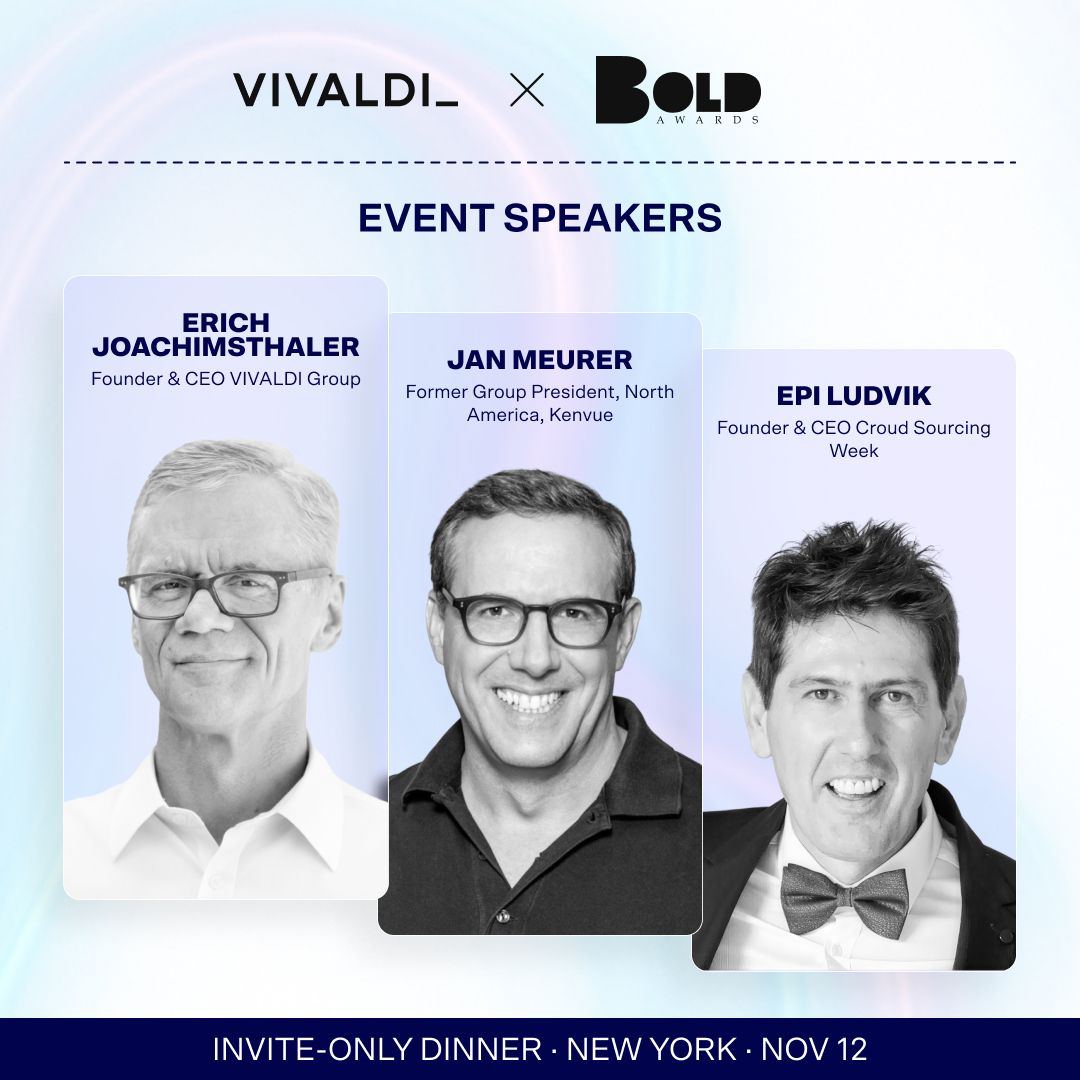
Three speakers, one question: How does marketing win the budget conversation with finance?
Erich Joachimsthaler, Vivaldi
Jan Meurer, ex-Kenvue
Epi Ludvik, Crowdsourcing Week
Invite-only, New York, Nov 12
To be considered for this or future events visit https://t.co/Womg4uW5ta
Market share measures categories. Demand spaces reveal where customers actually make decisions.
That distinction could change how companies pursue growth.
https://t.co/EJ1VmwmrMe
Amex's competitive edge was putting the customer first. The risk was that staying true, at scale, across a huge organization, without it becoming just a slogan.
Here's how they solved it: https://t.co/idWlUeXhfB
Category-creating industries grow at 10% a year. Everyone else at 4%. They nearly tripled their share of market cap.
Nobody got there by improving penetration inside a category that already existed.
https://t.co/IJpz9txnV7
Your brand is no longer built through what it says. It is built through what it does, repeatedly, in the customer's life. Campaign planning was built for a different world.
Full article explains what that looks like in practice: https://t.co/TsleAn74db
Airbnb. Instacart. La Roche-Posay. Three brands that understand something most do not: in an AI-mediated market, category logic is a competitive structure question.
The full article explains what they built and why it matters now.
https://t.co/RX1mvuJ8yN
Marketing looses the budget argument before it starts. Usually, the case is made in a language finance doesn't trust.
Four shifts, ahead of our invitation-only event in New York: https://t.co/y5NLHSkpOf
To be considered for this or future events visit: https://t.co/Womg4uW5ta
An insight says there is an interesting tension.
A demand space says here is the motivational architecture underneath it.
A future-back methodology asks what must become true to make it real at scale: https://t.co/iqHuC4kp26
LEGO was growing fast, but shortcomings in brand strategy and identity were working against it from the inside. Here's how that got fixed, block by block
Here's how it got built: https://t.co/jtxQEV9bHg
Dyson built one of the most engineering-driven companies in the world.
It also cracked the translation problem most technical organizations never solve.
The answer was not better marketing.
Read what it actually was: https://t.co/sy2ufvJHqh
Describing what growing brands look like and explaining what caused them to grow are two different claims. Marketing keeps treating them as one.
Here's why that matters: https://t.co/9SWXod7dNY